
Cold Brew vs Iced Coffee (2026): Taste, Caffeine, Acidity, and How to Make Each
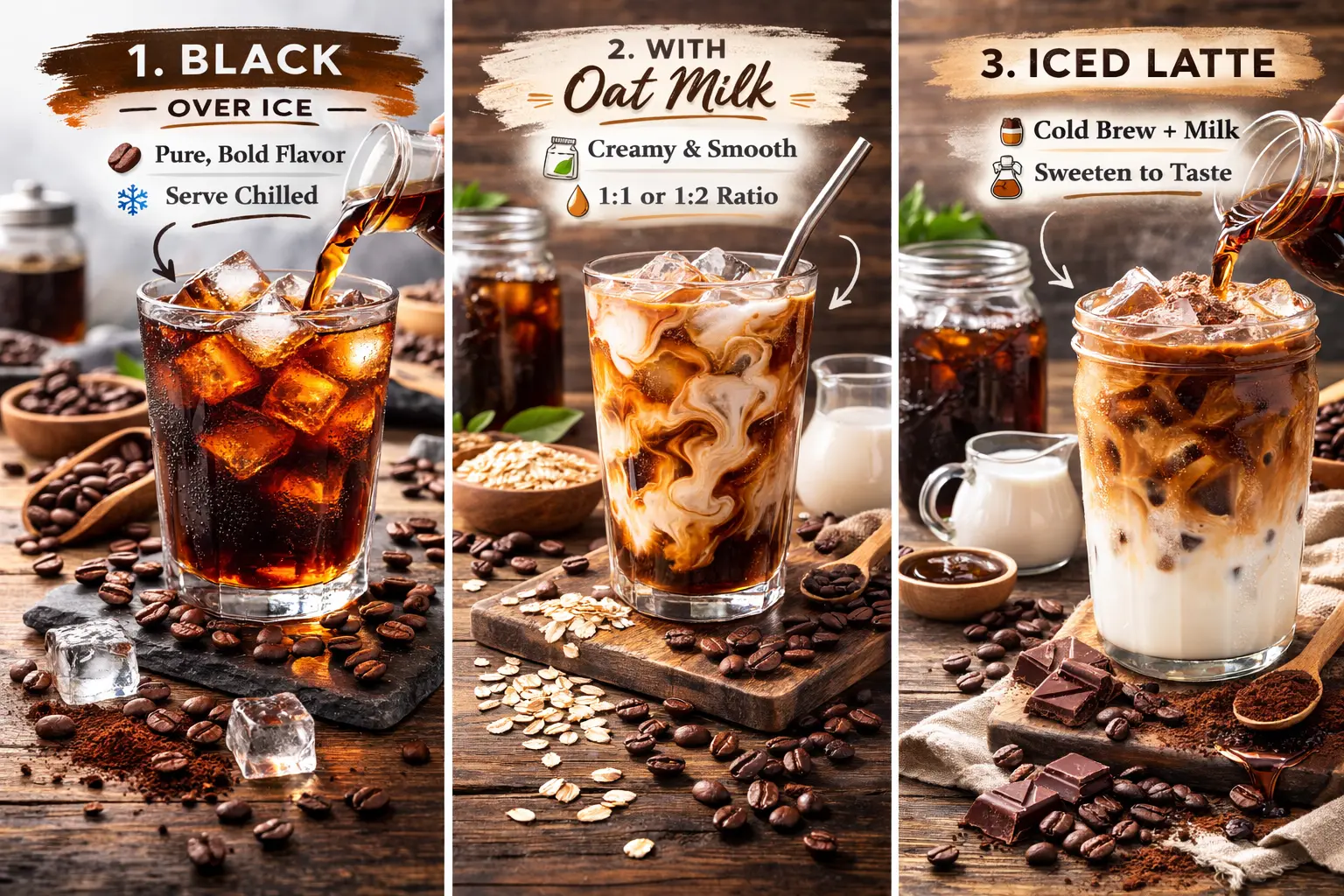
Editorial standards: this comparison is based on published brewing guides, peer-reviewed research on cold brew chemistry, Specialty Coffee Association standards, and CoffeeGearHub’s existing cold brew and iced coffee guides. CoffeeGearHub does not claim hands-on testing where it has not occurred.
At a glance
What this cold brew vs iced coffee comparison covers
How each drink is made, why water temperature changes the flavor, what the research says about acidity, how caffeine really compares, starting recipes for both, the gear worth buying, how to keep each fresh, and which one fits your routine.
Editorial analysis
The difference is the water temperature, not the ice
Both drinks are served cold, so they get lumped together. The real difference happens before the ice: iced coffee is brewed hot and then chilled, while cold brew is never heated at all. It steeps in cold or room-temperature water for many hours.
That one change shifts the flavor, the routine, and how far ahead you can make it. Iced coffee is fast and bright; cold brew is slow, smooth, and easy to batch for the week.
The 30-Second Answer
Iced coffee is hot-brewed coffee cooled over ice; it is quick, bright, and close to the taste of regular coffee. Cold brew steeps coarse grounds in cold water for about 12–24 hours; it is smoother, rounder, and tastes less sharp, and a batch keeps for several days.
Choose iced coffee, especially the Japanese flash-brew method, if you want a fresh glass in minutes and like lively, fruity flavors. Choose cold brew if you want a mellow drink waiting in the fridge every morning, or if bright acidity bothers you.
Compare current options
Start with these representative choices
Representative gear for each style. Our best cold brew coffee makers guide compares more options.
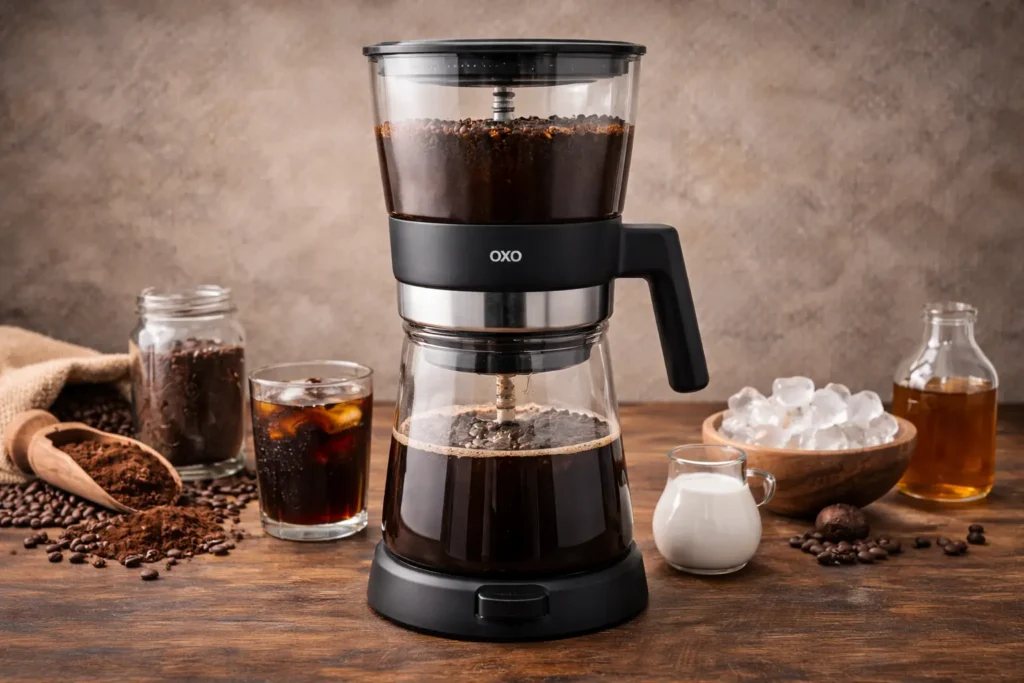
OXO Good Grips Cold Brew — Easy batch concentrate
A beginner-friendly system with a rainmaker lid that spreads water over the grounds and a release switch that drains concentrate into a glass carafe.
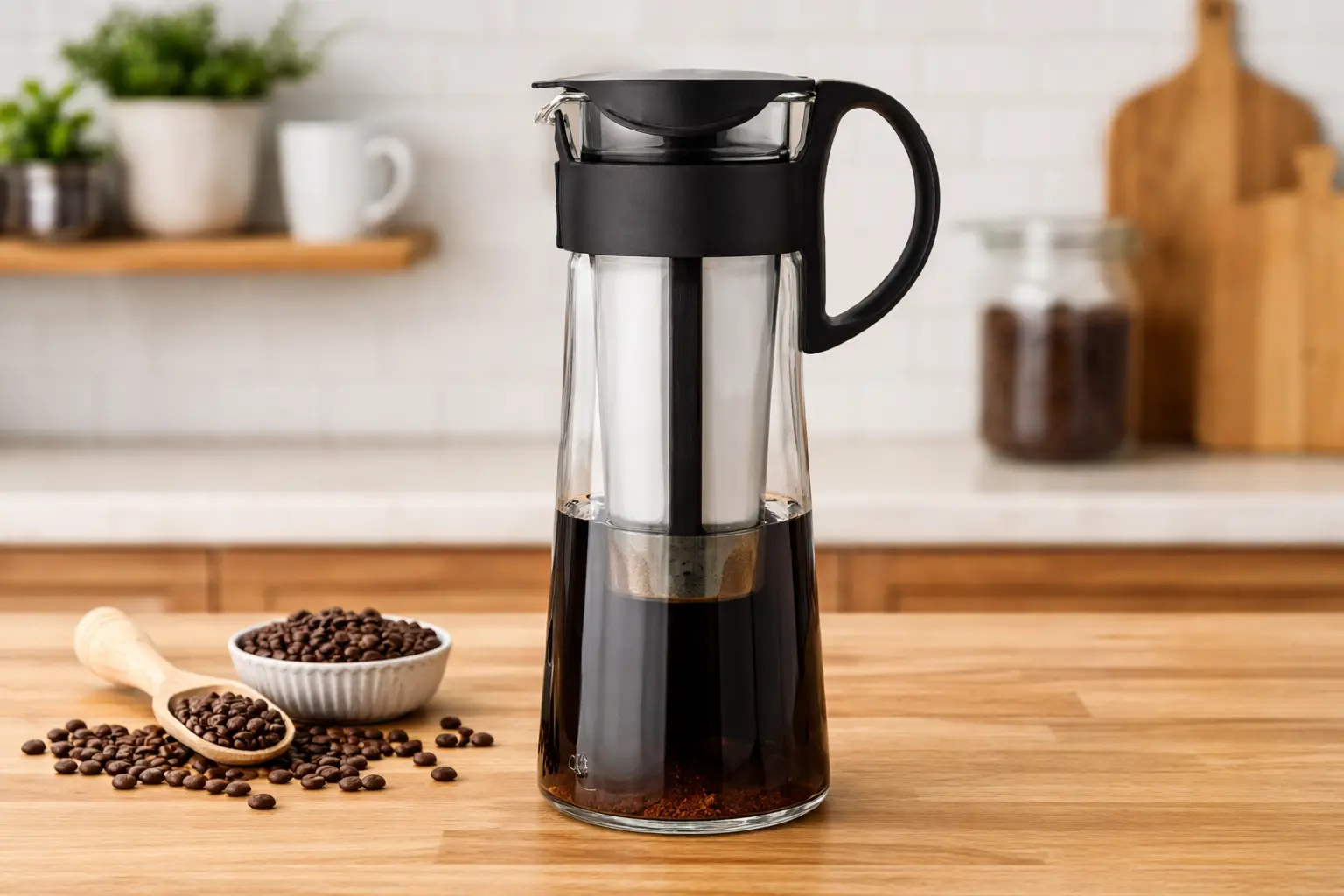
Hario Mizudashi — Simple cold brew pitcher
A compact pitcher with a fine mesh filter. Brew ready-to-drink cold brew in the fridge and pour straight from it.
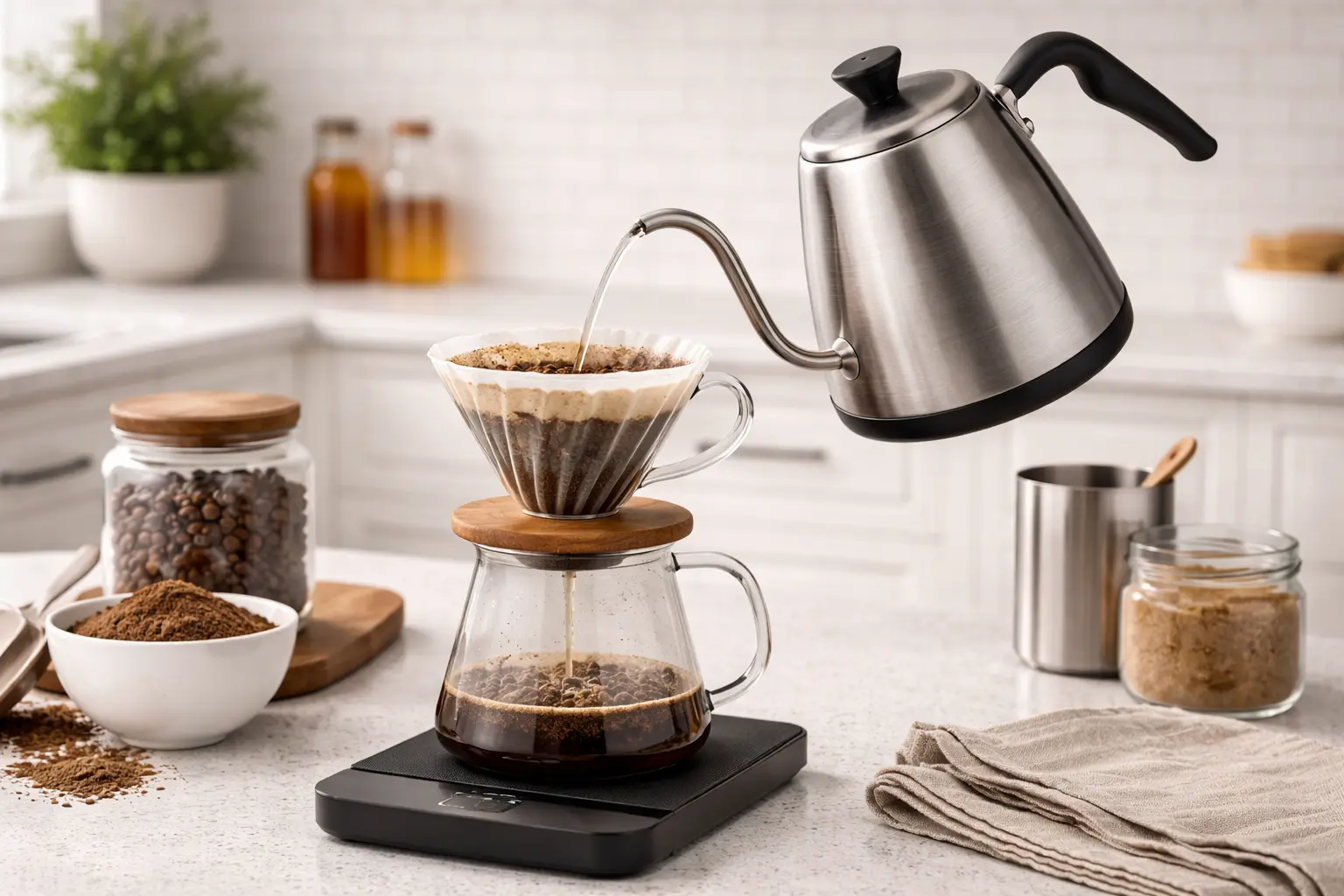
Hario V60 — For flash-brew iced coffee
Brew hot coffee directly onto ice in the server. The fastest way to a bright, fresh-tasting glass of iced coffee.
Affiliate disclosure: Amazon links may earn CoffeeGearHub a commission at no additional cost to you. Prices and availability can change.
Cold Brew vs Iced Coffee Side by Side
Pour the two into matching glasses and they can look almost identical: dark coffee, plenty of ice, maybe a splash of milk. The difference starts long before the glass. One was brewed with hot water a few minutes ago and chilled fast; the other sat in cold water overnight and was strained this morning. That single choice about water temperature cascades into almost everything else, from flavor and perceived acidity to how far ahead you can make it.
| Cold brew | Iced coffee | |
|---|---|---|
| How it is brewed | Coarse coffee steeped in cold or room-temperature water | Brewed hot, then cooled over or with ice |
| Brew time | About 12–24 hours | A few minutes |
| Taste | Smooth, round, chocolatey; less sharp | Brighter and more aromatic; closer to hot coffee |
| Make ahead | Concentrate is best within about 5–7 days | Best the same day |
The table makes the trade-off clear. Iced coffee gives you speed and flavor clarity but has to be made fresh. Cold brew asks for planning, then rewards you with a week of ready coffee and a softer taste that many people find easier to drink black. Neither is the better drink; they suit different mornings, and the rest of this comparison explains why each tastes the way it does and how to get the best from both.
Iced Coffee Is Hot Coffee, Cooled Fast
The simplest iced coffee is hot coffee poured over ice. Done naively, with coffee brewed at normal strength, it turns weak and watery as the ice melts, which is why so many homemade versions disappoint. The fix is to brew stronger, around 1:12–1:14 instead of the usual 1:15–1:17, so the melting ice brings the drink back to normal strength rather than below it.
The refined version is Japanese flash brew. You put part of your recipe water in the server as ice, commonly about 40 percent by weight, then brew the remaining 60 percent as hot water straight onto it, for a total ratio near 1:15. The coffee hits the ice within seconds of leaving the grounds, so it chills instantly and locks in aroma that would otherwise drift away as steam. A Hario V60 over an ice-filled server is the classic setup, but an AeroPress, Kalita, or even a drip machine with ice in the carafe will do the job. Our Hario V60 recipe covers the bloom and pour pattern if you are new to the dripper.

What does not work well is brewing a pot and putting it in the fridge. Coffee that cools slowly loses its aromatics and picks up a flat, slightly stale taste within hours. If you like iced coffee but find yours dull, switching to flash brew is the single biggest improvement you can make. Our how to make iced coffee at home guide has full recipes for all three methods.
Cold Brew Trades Heat for Time

Cold brew skips heat entirely. Very coarse coffee is combined with cold or room-temperature water and left to steep, usually for 12–24 hours, before the grounds are strained or filtered out. Because cold water extracts so slowly, the recipe compensates with a lot of coffee: most people brew a concentrate at about 1:4–1:5 and dilute it roughly one to one with water or milk when serving, while a ready-to-drink batch at about 1:8 can go straight over ice.
The method is forgiving in a way hot brewing is not. There is no pour technique to master and no temperature to hit, and an extra hour of steeping rarely ruins a batch. What it demands is planning: you start tonight’s batch for tomorrow’s coffee, and once you have a jar in the fridge, the routine becomes the easiest in home coffee. Our cold brew guide, cold brew ratio chart, and French press cold brew guide walk through the steps.
Water Temperature Changes What Ends Up in the Cup
Hot water is an aggressive solvent. In a few minutes it pulls acids, aromatic oils, sugars, and some bitter compounds out of the grounds, which is why a pour-over is finished in three minutes and why hot coffee tastes lively and layered. Cold water dissolves the same compounds far more slowly, and some of them barely dissolve at fridge temperature at all. To reach full strength, cold brew leans on time, a high coffee-to-water ratio, and a coarse grind that is easy to strain, and the result is heavy on body and sweetness but lighter on the bright, volatile notes that heat releases.
Aroma is where the two drinks part ways most clearly. Many of the compounds you smell in a fresh cup are volatile, and hot brewing frees them strongly. Flash brewing captures them by dropping the temperature within seconds, which is why Japanese iced coffee smells and tastes much closer to a fresh pour-over than to cold brew. Cold brew, by contrast, never released many of those aromatics in the first place, so it reads as mellow and rounded rather than vivid. For a deeper look at how temperature, time, and grind shape flavor, see our coffee extraction science guide.
Smooth vs Bright, and the Acidity Question
In the glass, cold brew tastes smooth, heavy, and mellow, often with chocolate, nut, and caramel notes. It is forgiving of darker roasts, shines with milk, and holds up well in sweetened drinks. Iced coffee keeps more of a coffee’s character, so a flash-brewed light roast can taste fruity and floral, much like a chilled pour-over. That points to a simple rule for beans: medium and dark roasts are the popular choice for cold brew, while fruity light roasts usually show their best as flash-brewed iced coffee.
Cold brew is widely sold as less acidic, and it does taste less sharp. The chemistry is more nuanced than the marketing. A 2018 study in Scientific Reports by Rao and Fuller found that cold brew and hot brew coffee had similar pH, but hot brew had higher titratable acidity, a measure of the total acids that contribute to a bright, sour taste. In practice, cold brew usually tastes smoother and less acidic without being a dramatically different drink chemically. If you are limiting coffee for medical reasons, check with your doctor rather than relying on cold brew as a low-acid substitute.
Caffeine Depends on the Recipe, Not the Method
Neither drink is automatically stronger. The caffeine in your glass depends mostly on how much coffee goes into each serving and how much you dilute it. Cold brew concentrate is very strong straight, because it uses so much coffee relative to water, but diluted one to one it lands in a similar range to a normal cup. Ready-to-drink cold brew at about 1:8 is a different story: it uses more coffee per glass than a typical iced coffee, so a full glass can carry noticeably more caffeine.
Iced coffee brewed at 1:12–1:14 and then diluted by melting ice usually ends up close to a regular cup of hot coffee. Store-bought cold brews vary widely, so check the label rather than assuming. If you are watching your intake at home, the reliable approach is to weigh your dose and keep your dilution consistent; our coffee scale guide shows how.
Starting Recipes for Each
These two recipes are reliable starting points. Treat the numbers as a first batch, then adjust the ratio or steep time to taste.
| Flash-brew iced coffee | Cold brew concentrate | |
|---|---|---|
| Coffee | 30 g, medium-fine | 100 g, very coarse |
| Water | 270 g hot water (about 92–96°C) onto 180 g ice | 400–500 g cold, filtered water |
| Time | About 3 minutes | 12–24 hours, then strain |
| Serve | Swirl to melt the ice, pour over fresh ice | Mix about 1:1 with water or milk over ice |
Both recipes depend on a consistent grind, medium-fine for flash brew and very coarse for cold brew, and that range is wide. A burr grinder that covers both ends, such as the KINGrinder K6, makes a real difference, because pre-ground coffee is usually too fine for cold brew and turns it muddy and bitter. A 0.1 g scale makes the ice-to-water split for flash brew easy to repeat.
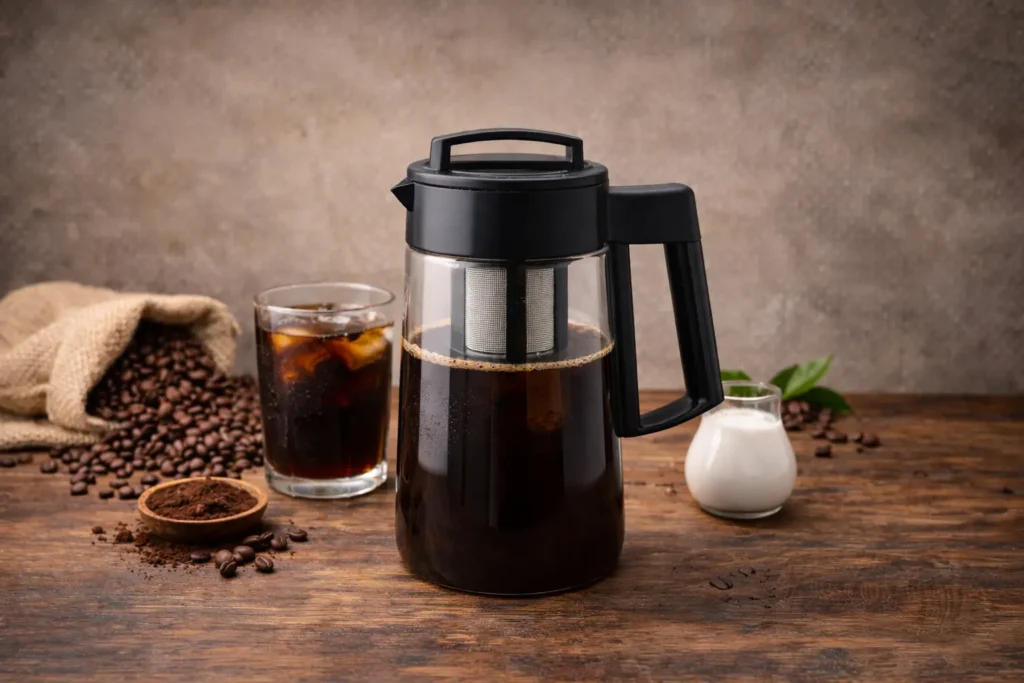
If cold brew becomes a daily habit, batch size starts to matter. A 2-quart pitcher such as the Takeya Deluxe lets you brew once and pour all week, which suits a household that drinks cold brew every morning. Our cold brew ratio chart scales the recipe up for larger batches.
Choosing Gear for Either Style
You can make either drink with a jar, a sieve, or the brewer you already own; dedicated gear simply makes the routine cleaner and easier to repeat. Our picks are based on manufacturer specifications, established brewing practice, and our best cold brew coffee makers guide rather than hands-on testing, and the first decision is whether you want concentrate or ready-to-drink cold brew.
For concentrate, the OXO Good Grips Cold Brew Coffee Maker is the easiest system to live with. A perforated rainmaker lid spreads water evenly over the grounds, and a release switch drains the finished concentrate into a glass carafe, so the grounds never sit in the coffee you store. An optional paper filter cleans the cup further. It has more parts and takes more counter space than a pitcher, but for iced lattes and sweetened drinks the low-sediment concentrate is worth it. Heavy users who want larger batches often move to the Toddy Cold Brew System, a long-standing concentrate maker with felt or paper filters.
If you drink cold brew black and want the simplest routine, a pitcher makes more sense. The Hario Mizudashi is a slim pitcher with a fine mesh basket: add coffee, fill with water, steep in the fridge, lift the basket out, and pour. It suits small kitchens and frequent small batches, though it is not designed for concentrate. The County Line Kitchen 2-quart jar takes a different approach, with wide-mouth glass that does not hold odors and a removable stainless filter that is easy to clean, at the cost of letting a few more fines through.
For iced coffee, you do not need a special device at all. Any dripper over a server filled with ice works, and the Hario V60 is simply the most common choice for flash brew.
Keeping Each Fresh and Fixing Common Problems
Cold brew’s biggest advantage is how well it keeps. Strain it as soon as it tastes right, store it sealed in the fridge, and the concentrate stays at its best for about 5–7 days before the flavor turns flat. Dilute only what you are about to drink, because diluted cold brew fades faster. Hot-brewed iced coffee is the opposite: it tastes best the day you make it and goes noticeably flat within about 24 hours, so brew it fresh. Our guide to how long cold brew lasts covers concentrate versus diluted cold brew, freezing, and the signs a batch has gone bad.
Most problems trace back to a few causes. Watery iced coffee almost always means regular-strength coffee poured over ice, and the cure is brewing stronger or switching to flash brew. Weak cold brew usually comes from a low ratio or too short a steep, while bitter or woody cold brew means the grounds steeped too long or were ground too fine; start tasting at 12 hours and strain sooner, and see our guide to how long to steep cold brew for fridge and counter timing. Muddy cold brew is a filtration issue, fixed by a more even grind and one pass through a paper filter. One small habit helps both drinks: sugar barely dissolves in cold coffee, so keep a jar of simple syrup, equal parts sugar and hot water cooled, in the fridge.
Our Recommendation: Which Should You Make?
Make iced coffee, flash-brewed if you can, if you want a fresh glass in a few minutes, you love fruity or floral light roasts, or you would rather not buy another gadget. It shows off good beans in a way cold brew cannot, and it needs nothing more than the brewer you already own and a tray of ice.
Make cold brew if you want coffee waiting in the fridge every morning, you find hot coffee too sharp, or you mostly drink iced lattes and sweetened coffee. A batch on Sunday covers most of the week, and its smooth, rounded flavor stands up well to milk and syrup.
If you can only make one, choose cold brew for convenience and iced coffee for flavor clarity. Many people end up doing both: a jar of concentrate for busy weekdays and a flash brew on the weekend, when there is time to enjoy a bright single-origin coffee.
Gear for Either Style
A cold brew maker makes weekly batches easy; a dripper is all you need for flash-brewed iced coffee.
As an Amazon Associate, CoffeeGearHub earns from qualifying purchases.
Editorial bottom line: Iced coffee and cold brew suit different mornings. Flash-brewed iced coffee is fast and bright and shows off light roasts. Cold brew is slow, smooth, and ready when you are. Choose cold brew for convenience and iced coffee for flavor clarity.
Frequently Asked Questions
Can I heat cold brew?
Yes. Dilute cold brew concentrate with hot water instead of cold for a smooth, low-bitterness hot cup. It will taste rounder and less aromatic than coffee brewed hot.
Can I make iced coffee with a regular coffee maker?
Yes. Brew stronger than usual, about 1:12–1:14, and pour it over a carafe or glass of ice, or put ice in the carafe and let the machine brew directly onto it.
Can I make cold brew without a cold brew maker?
Yes. Steep coarse coffee in a jar or French press, then strain it through a fine sieve and a paper filter. Our French press cold brew guide walks through it.
Should cold brew steep in the fridge or on the counter?
Either works. Room-temperature steeps extract faster, often 12–16 hours; fridge steeps usually need 16–24 hours. Strain promptly and refrigerate the finished brew either way.
What grind size is best for cold brew?
Very coarse, similar to coarse sea salt. Fine grounds make cold brew muddy, bitter, and hard to strain.
What is nitro cold brew?
Cold brew infused with nitrogen and served from a tap, usually without ice. The tiny bubbles give it a creamy texture and a foamy head without any milk.
Sources and Further Reading
Acidity findings are from Rao and Fuller, “Acidity and Antioxidant Activity of Cold Brew Coffee,” Scientific Reports (2018). Recipes follow CoffeeGearHub’s existing iced coffee and cold brew guides and the Specialty Coffee Association brewing standards. Treat recipe numbers as starting points.
CoffeeGearHub product shortlist
Continue with related products on CoffeeGearHub
Review product categories and current verified merchant offers on CoffeeGearHub before leaving the site.