
Coffee Water Quality: Hardness, Minerals & Better Flavor
Editorial standards: manufacturer documentation, intended use, practical workflow, maintenance, cost, and product limitations are separated where relevant.
At a glance
What this guide covers
A practical guide to coffee-brewing water: how hardness, alkalinity, chlorine, and total dissolved solids affect extraction and flavor; when filtered tap water is enough; and how better water can improve taste while reducing scale in brewers and espresso machines.
Editorial analysis
What matters most in this guide
Water quality affects coffee flavor by controlling extraction. Because coffee is about 98% water, the minerals in your water determine how much sweetness, acidity, and bitterness are pulled from coffee grounds during brewing.
Water that is too soft often produces thin, sour coffee, while water that is too hard can mute flavor and create bitterness or chalky aftertastes. For most home brewers, balanced water with moderate mineral content is the fastest way to improve coffee flavor—often more impactful than upgrading beans or equipment.
The Practical Starting Point
For most home brewers, better coffee water starts with a simple question: does the water taste clean on its own? If it smells strongly of chlorine, tastes metallic, or leaves heavy mineral deposits in a kettle, those characteristics will follow the water into the cup. Coffee is mostly water, so there is only so much fresh beans and careful technique can do to hide a poor starting point.
The goal is not to chase a single “perfect” number. Brewing water needs enough mineral content to help extract flavor, while hardness and alkalinity need to stay in a range that supports the coffee rather than flattening acidity or encouraging excessive scale. For espresso in particular, the machine manufacturer’s water guidance matters alongside flavor because the same minerals that affect extraction also affect boilers, thermoblocks, valves, and small water passages.
A sensible first experiment is filtered tap water. Compare a cup brewed with filtered water against one brewed with your normal tap water before spending money on more specialized solutions. If scale is already a problem, add a hardness test so you know whether the issue is water chemistry rather than brewing technique.
Why Water Quality Matters for Coffee Brewing
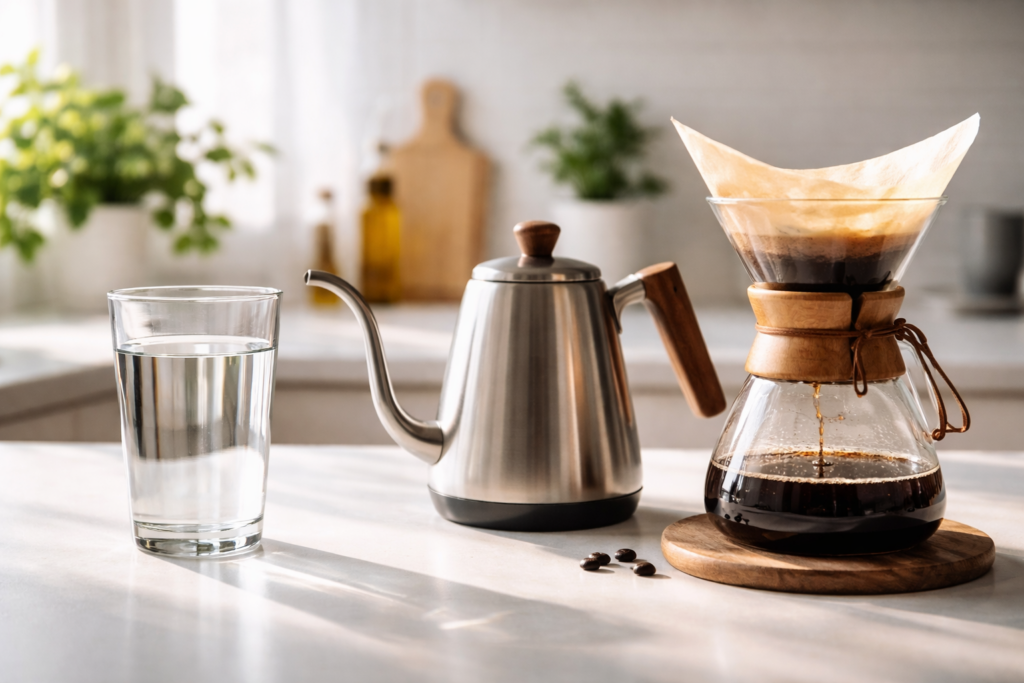
Brewing water is not just a neutral carrier. As hot water moves through coffee, its mineral composition and buffering capacity influence which compounds dissolve readily and how the resulting acidity, sweetness, and bitterness are perceived. That is why the same coffee can taste noticeably different when brewed with two different waters, even when the grinder, dose, temperature, and technique stay the same.
Very low-mineral water can make extraction and flavor balance difficult, while water with high hardness or high alkalinity creates a different set of problems. Hardness can increase scale risk inside kettles and espresso machines; alkalinity can suppress the lively acidity that gives many coffees clarity and structure. The useful goal is balance rather than maximum mineral content in either direction.
Water is also only one part of the system. Once the water is clean and reasonably balanced, grind consistency and brewing technique again become dominant variables. If cups remain erratic after a water change, look next at the grinder and recipe rather than assuming the water needs ever-finer adjustment. Our coffee grinder guide and burr-versus-blade comparison explain that side of the equation.
The Key Elements of Coffee Brewing Water
Total Dissolved Solids (TDS)
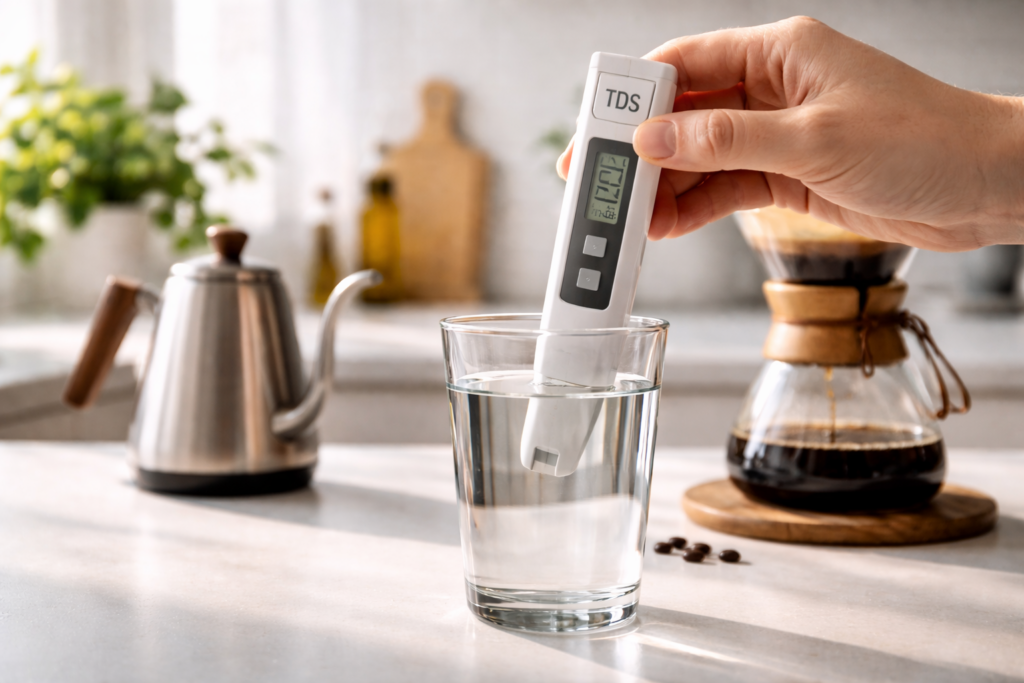
TDS is useful, but it is easy to ask it to do more than it can. A meter estimates the total amount of dissolved material in the water; it does not tell you how much of that material is calcium, magnesium, bicarbonate, sodium, or something else. Two waters can show a similar TDS reading and behave very differently in coffee.
That makes TDS most useful as a consistency check. If a water source suddenly reads very differently from its usual value, something has changed. For diagnosing scale risk or building a repeatable coffee-water profile, hardness and alkalinity measurements are more informative than TDS alone.
Calcium & Magnesium (Hardness)
Calcium and magnesium are the main minerals associated with water hardness, and both can participate in coffee extraction. Their exact sensory effect depends on the rest of the water chemistry and the coffee itself, so it is more useful to think in terms of overall balance than to treat one mineral as universally “better” for flavor.
Hardness also matters mechanically. Heated hard water can deposit scale, which is why an espresso owner may need to think about water differently from someone brewing only with a French press. Flavor and equipment protection overlap, but they are not always the same optimization problem.
Alkalinity (Buffering Capacity)
Alkalinity controls how water buffers acids in coffee. High alkalinity can flatten acidity (coffee tastes dull). Very low alkalinity can make acidity taste sharp or harsh. Balanced alkalinity helps your coffee taste sweet and “complete.”
Chlorine, Chloramine & Off-Flavors
Municipal water often contains chlorine or chloramine for disinfection. Even small amounts can ruin coffee flavor. Sediment, metallic tastes, and odors also show up clearly in brewed coffee.
How Water Problems Show Up in the Cup
Water problems rarely announce themselves as “bad water.” They usually look like brewing problems. A coffee can taste flat even when the beans are fresh, or sharp and sour even after the grind has been adjusted carefully. Bitterness can linger despite shortening the brew, and two apparently identical recipes can behave differently from one week to the next.
That is why water is worth checking before replacing equipment. If several different coffees develop the same dull, harsh, or strangely inconsistent character, the common ingredient is often the water. Chlorine and other off-flavors are especially easy to identify because they can be tasted in the water before brewing. Mineral balance is subtler: it changes how acids and soluble compounds are extracted and how those flavors are perceived.
The useful diagnostic approach is comparative. Brew the same coffee with your usual water and with a known clean alternative. If the cup improves immediately, you have learned more than another round of grinder adjustments would have told you.
Is Tap Water Good Enough for Coffee?
Often, yes. Tap water does not need to be laboratory-perfect to make good coffee. If it tastes clean, has no obvious chlorine or metallic character, and does not create excessive scale, it may already be a perfectly workable brewing water. The problem is that municipal water is not chemically identical everywhere, and it can change with treatment practices, source water, plumbing, and season.
The easiest first test is sensory. Taste the water cold, then smell it after heating. Chlorine and other treatment-related flavors often become easier to notice when the water is warm. Next, look at what happens inside your kettle or coffee machine. Fast mineral buildup is a practical sign that hardness deserves more attention, particularly if you use an espresso machine.
Carbon filtration is a sensible first intervention when taste and odor are the main problems. It can reduce chlorine and some unwanted flavors without automatically stripping the water down to near-zero mineral content. If the concern is scale rather than taste, filtration needs to be chosen with hardness in mind; a basic carbon filter and a hardness-reducing system solve different problems.
Useful first checks
Improve the water before replacing the coffee gear
These are the three tools most directly connected to this guide: a basic filter for taste and odor, hardness testing for scale risk, and a TDS meter for checking whether a water source is staying consistent.
Affiliate disclosure: These links may earn CoffeeGearHub a commission at no additional cost to you. As an Amazon Associate, we earn from qualifying purchases. Prices and availability can change.
Choosing Water for Home Brewing
Filtered Tap Water: The Best First Experiment
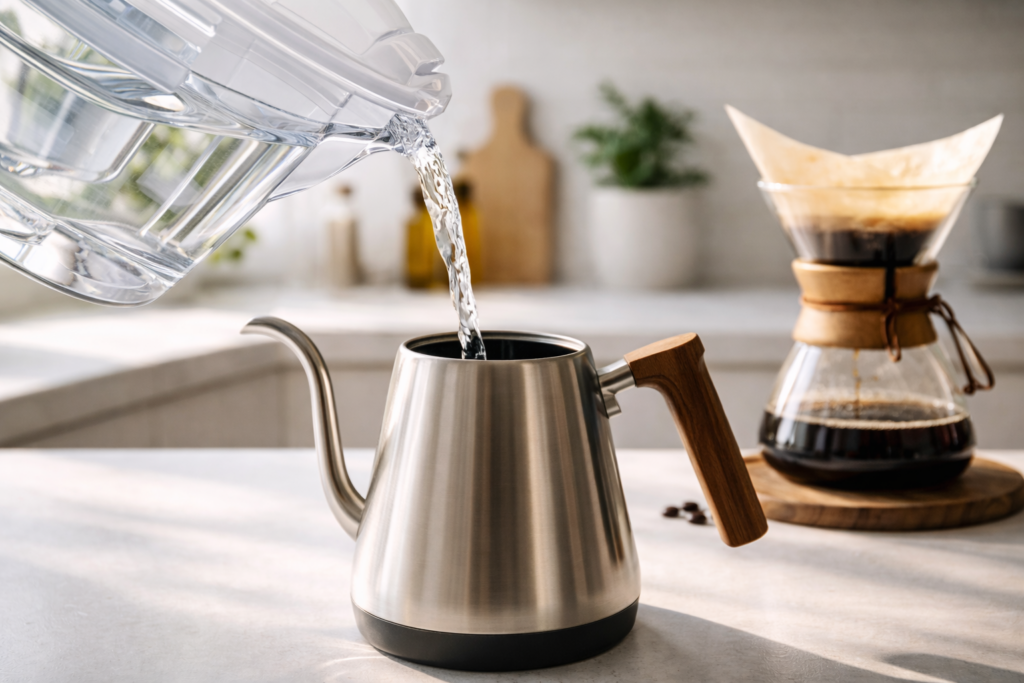
For most households, filtered tap water is the most practical place to start because it changes the variables that are easiest to taste without turning water preparation into a separate hobby. A good carbon filter can improve chlorine, odor, and sediment problems while leaving much of the existing mineral structure intact.
The important limitation is that ordinary carbon filtration is not the same thing as softening. If your kettle scales rapidly or an espresso-machine manufacturer specifies a lower hardness range than your tap water provides, you may need a system that addresses hardness specifically rather than relying on taste filtration alone.
Bottled Spring Water: Useful When the Profile Is Known
Bottled spring water can be a useful comparison water or a consistent everyday option, but “spring water” is not a chemistry specification. Mineral content varies significantly among brands and sometimes among sources used by the same brand. That variability is why the label matters more than the marketing language.
If you rely on bottled water, look for a published mineral analysis and pay attention to consistency. The advantage is convenience; the disadvantages are recurring cost, packaging, and the possibility that a brand changes source or composition without fitting the exact brewing profile you had become accustomed to.
Distilled or Reverse-Osmosis Water: A Starting Canvas, Not a Finished Recipe
Very low-mineral water gives you control, but it is not automatically better coffee water. Mineral content affects extraction, and some coffee machines rely on water conductivity or have manufacturer requirements that make untreated distilled or very low-mineral reverse-osmosis water a poor routine choice.
Where this approach becomes useful is controlled remineralization. Starting with low-mineral water and adding a known mineral recipe can produce excellent repeatability while allowing hardness and alkalinity to be managed deliberately. If you go that route, follow a documented coffee-water recipe or a purpose-made remineralization product rather than adding minerals by guesswork. CoffeeGearHub’s Third Wave Water product page is one example of a structured remineralization option.
What to Measure Before You Change the Water
Water testing is most useful when it answers a specific question. If you are worried about scale, test hardness. If your coffee tastes flat despite otherwise sound technique, alkalinity is worth understanding because it changes how strongly coffee acidity is buffered. If you simply want to know whether the same water source is changing over time, a TDS meter is a quick consistency check.
Hardness and Alkalinity Explain More Than TDS Alone
Hardness is largely associated with calcium and magnesium, while alkalinity describes the water’s acid-buffering capacity. Those measurements tell you more about extraction behavior and scale potential than a single TDS number. This distinction matters most for espresso, where water chemistry affects both cup quality and the inside of the machine.
Use TDS to Track Change, Not to Declare Water “Good”
A TDS meter remains useful because it is fast and repeatable. If the same water usually reads in one neighborhood and suddenly changes substantially, that is a reason to investigate. What it cannot tell you is which dissolved minerals changed. Treat it as a dashboard warning light rather than a complete water analysis.
That also means you do not need a drawer full of water gadgets. For most home brewers, clean-tasting filtered water plus an occasional hardness check is enough. More detailed testing becomes worthwhile when you are troubleshooting scale, managing an expensive espresso machine, or deliberately building your own mineral recipe.
Water Quality by Brew Method
Different brew methods respond differently to mineral content and extraction dynamics. If you’re choosing a brewing style based on taste preferences and gear, see our coffee brewing methods comparison guide for a side-by-side breakdown.
| Brew method | What water changes most | What to watch |
|---|---|---|
| Pour-over | Clarity, acidity, and extraction balance are especially noticeable. | Chlorine/off-flavors, very low mineral content, and excessive alkalinity can flatten or distort the cup. |
| Espresso | Water affects both extraction and machine reliability. | Hardness and alkalinity matter for flavor, while scale risk and manufacturer water requirements matter for equipment. |
| French press | The method is somewhat more forgiving, but water still shapes sweetness and bitterness. | Use clean-tasting water and avoid assuming that a full-bodied brew can hide chlorine or stale-water flavors. |
| Cold brew | Long contact time can make off-flavors easy to notice even when acidity is muted. | Start with clean water and consistent mineral content so recipe changes are easier to interpret. |
Water, Scale & Equipment Maintenance
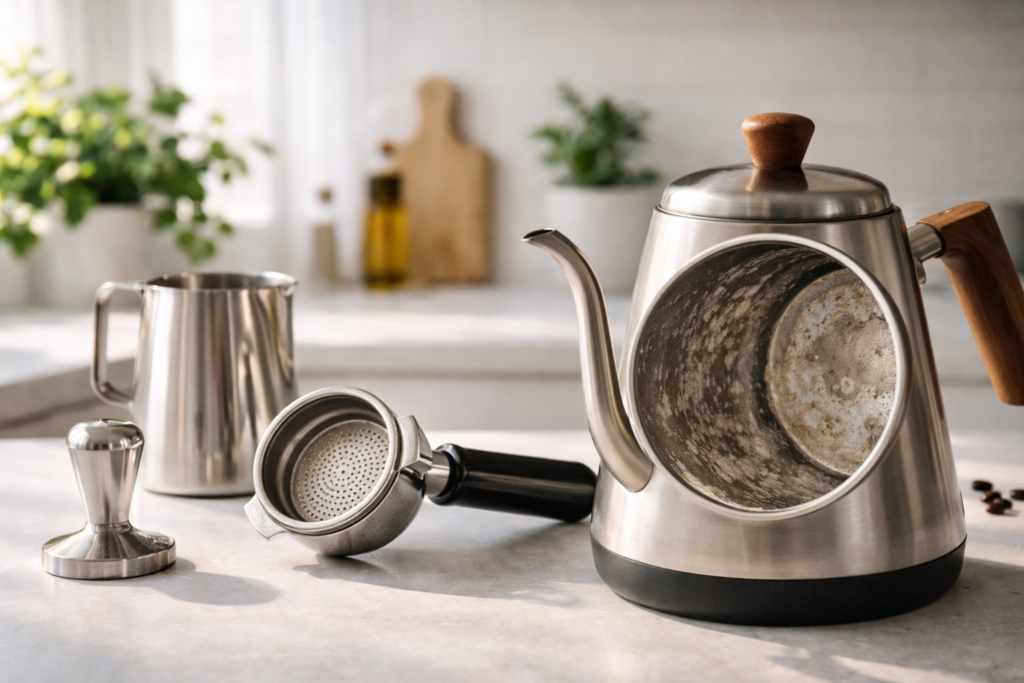
Water chemistry becomes an ownership issue the moment heat is involved. Kettles reveal scale visibly, but espresso machines can accumulate deposits inside boilers, thermoblocks, valves, and narrow passages that are much harder to inspect. That is why scale prevention is usually better than waiting for performance to decline and then descaling aggressively.
The right maintenance strategy starts with knowing the water that actually enters the machine. If hardness is modest and the manufacturer approves the water profile, routine maintenance may be straightforward. If hardness is high, improving the water source can reduce maintenance burden and may be more sensible than simply shortening the interval between descaling cycles.
For espresso specifically, use the machine manufacturer’s instructions as the controlling reference. CoffeeGearHub’s espresso machine maintenance schedule explains the broader cleaning routine, while the descaling guide covers when mineral removal belongs in that routine.
FAQs
What is the best water for brewing coffee?
Clean-tasting water with a balanced mineral profile is a good starting point. The exact target depends on hardness, alkalinity, brew method, and equipment; filtered tap water is often the simplest first step when it tastes good on its own.
Can I use distilled water for coffee?
You can, but very low-mineral water often benefits from remineralization for flavor and may not meet the water requirements of every coffee machine. Check the brewer or espresso-machine guidance before using it routinely.
Is bottled water good for brewing coffee?
Some bottled spring waters work well, but mineral content can vary by brand and source. A published mineral profile and consistent supply make a bottled water easier to use predictably.
What TDS is best for coffee?
TDS alone does not define good coffee water because it does not tell you how much of the dissolved material is hardness, alkalinity, or other minerals. Use TDS as a consistency check, then evaluate hardness and alkalinity when you need a more precise brewing-water profile.
What’s the easiest way to improve coffee water at home?
If tap water has chlorine or obvious off-flavors, start with carbon filtration. If flavor or scale problems remain, test hardness and alkalinity and adjust filtration or mineral content from there.
CoffeeGearHub shortlist
Compare CoffeeGearHub product pages
Review specifications and current verified merchant offers on CoffeeGearHub before leaving the site.
Continue Learning
Use these guides to connect water quality with extraction, brewing technique, and long-term equipment care.
In this guide
- The Practical Starting Point
- Why Water Quality Matters for Coffee Brewing
- The Key Elements of Coffee Brewing Water
- How Water Problems Show Up in the Cup
- Is Tap Water Good Enough for Coffee?
- Choosing Water for Home Brewing
- What to Measure Before You Change the Water
- Water Quality by Brew Method
- Water, Scale & Equipment Maintenance
- FAQs