
AeroPress vs Pour Over (2026): Which Brewing Method Is Better?
Editorial standards: the two methods were compared on brewing mechanics, published manufacturer specifications and instructions, Specialty Coffee Association brewing guidance, and practical factors such as technique, cleanup, travel, and cost. CoffeeGearHub does not claim hands-on testing where it has not occurred.
At a glance
AeroPress favors speed and forgiveness; pour over favors clarity and ritual
How each brewer works, a head-to-head comparison, flavor differences, ease of use, brew time and cleanup, travel, brewing for more than one person, grind size and beans for each method, example gear, who should choose which, and fixes for common problems.
Editorial analysis
The biggest difference is how much technique the brewer exposes
Both methods can make excellent coffee. The AeroPress hides much of the technique: the coffee steeps fully submerged, so small differences in how you pour barely matter, and the result is consistent from the first try. Pour over exposes the technique: the speed, height, and pattern of your pour change how water moves through the bed, which gives more control and more ways to get it wrong.
So the choice depends less on which method is better and more on whether you want a quick, forgiving cup or a slower ritual you can refine. Fresh beans and a good grinder matter more than either brewer.
The 30-Second Answer
Choose the AeroPress if you want fast, forgiving, full-bodied coffee with easy cleanup and excellent portability. Choose pour over, such as a Hario V60 or Kalita Wave, if you want the clearest, most aromatic cup and enjoy the ritual of brewing. Pour over usually needs a gooseneck kettle; both benefit from a burr grinder such as the KINGrinder K6.
If you brew for two or more people at once, pour over scales more easily; the AeroPress makes about one mug per press.
Compare current options
Start with these representative choices
Three starting points: a forgiving immersion brewer, a classic cone dripper, and one hand grinder that serves both. Travel, pour-over, kettle, and electric grinder options follow below.
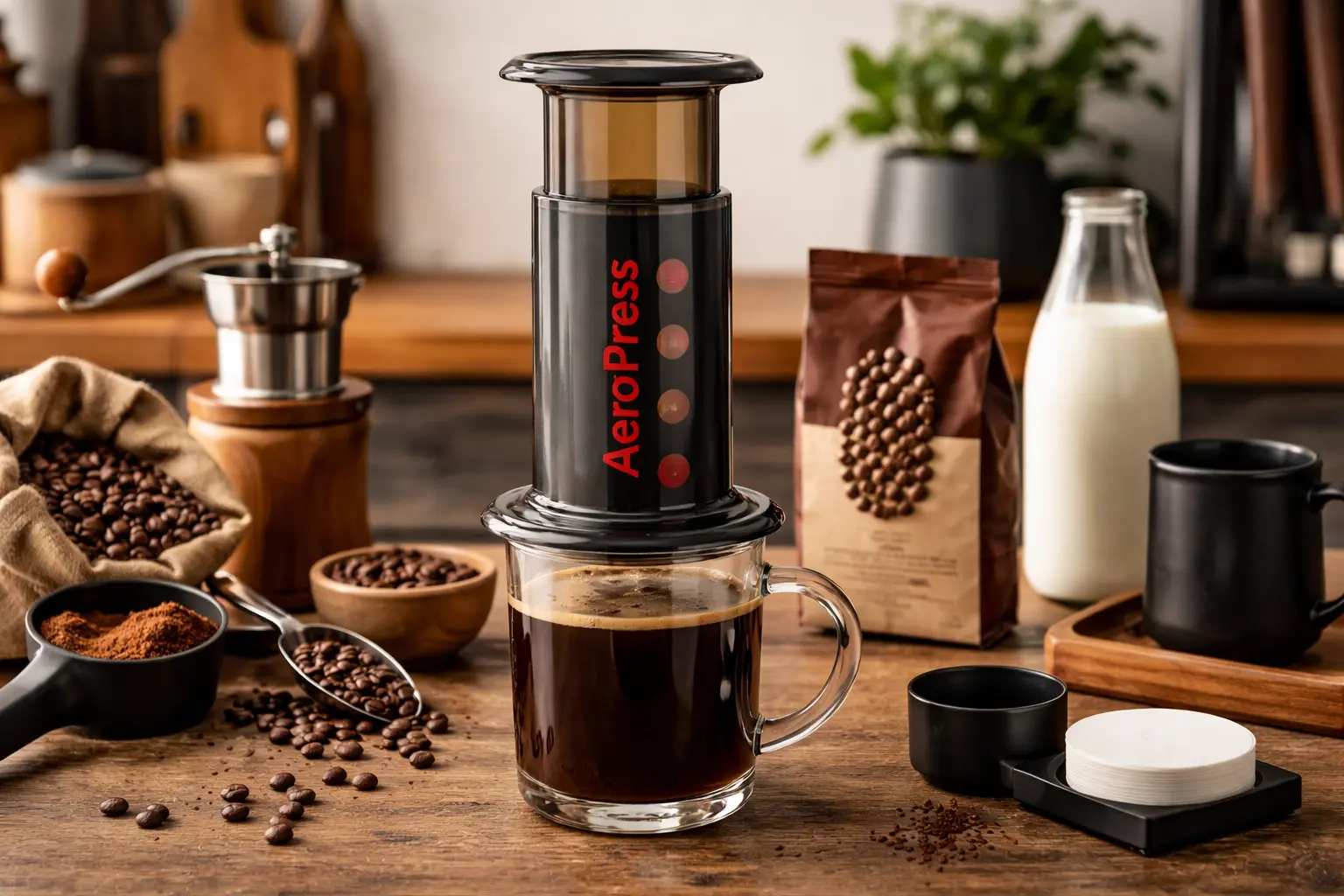
AeroPress Original — Fast and forgiving
Immersion plus a short press for a clean, full-bodied mug in about two minutes, with cleanup in seconds.
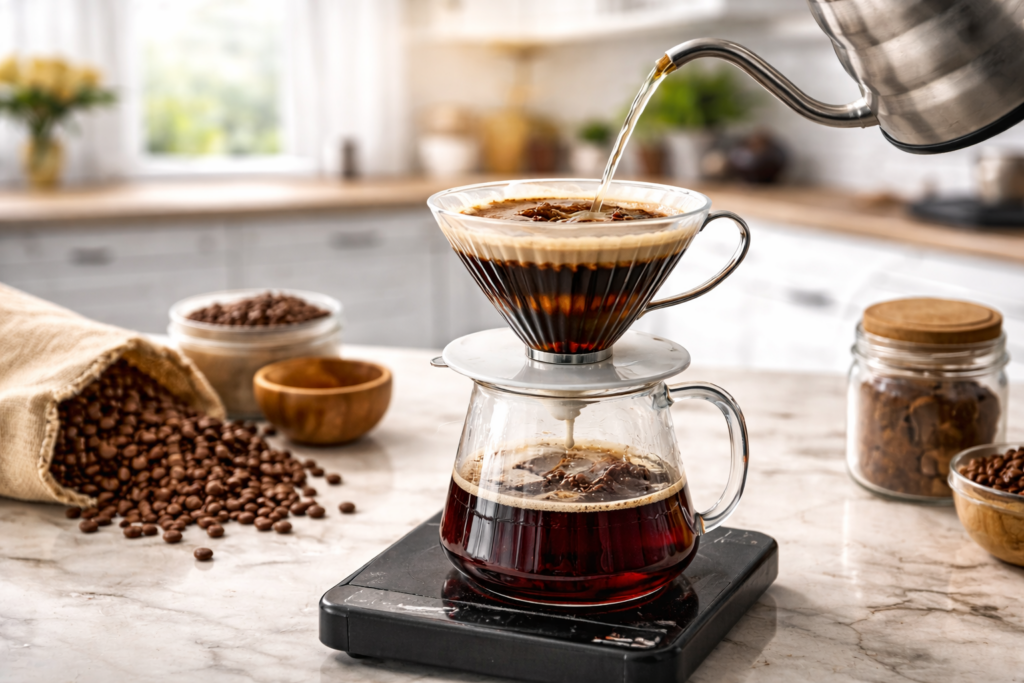
Hario V60 — Clarity and control
A cone dripper with a large opening that rewards a careful pour with a bright, clean, aromatic cup.
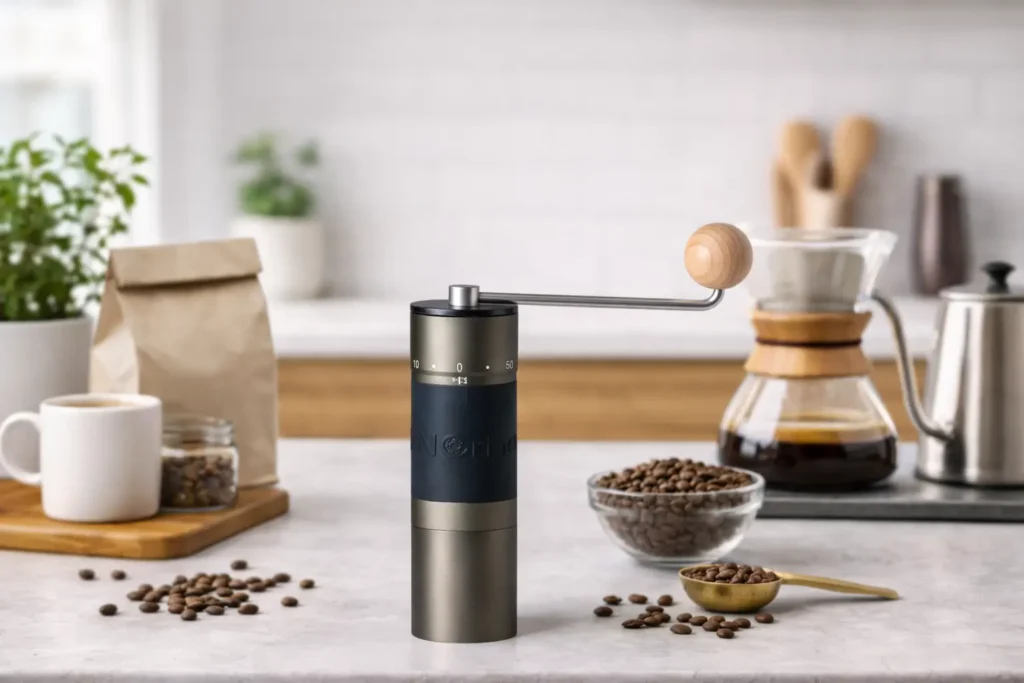
KINGrinder K6 — One grinder for both
48 mm burrs and a numbered dial that move easily between AeroPress and pour-over settings.
Affiliate disclosure: Amazon links may earn CoffeeGearHub a commission at no additional cost to you. Prices and availability can change.
How Each Method Works
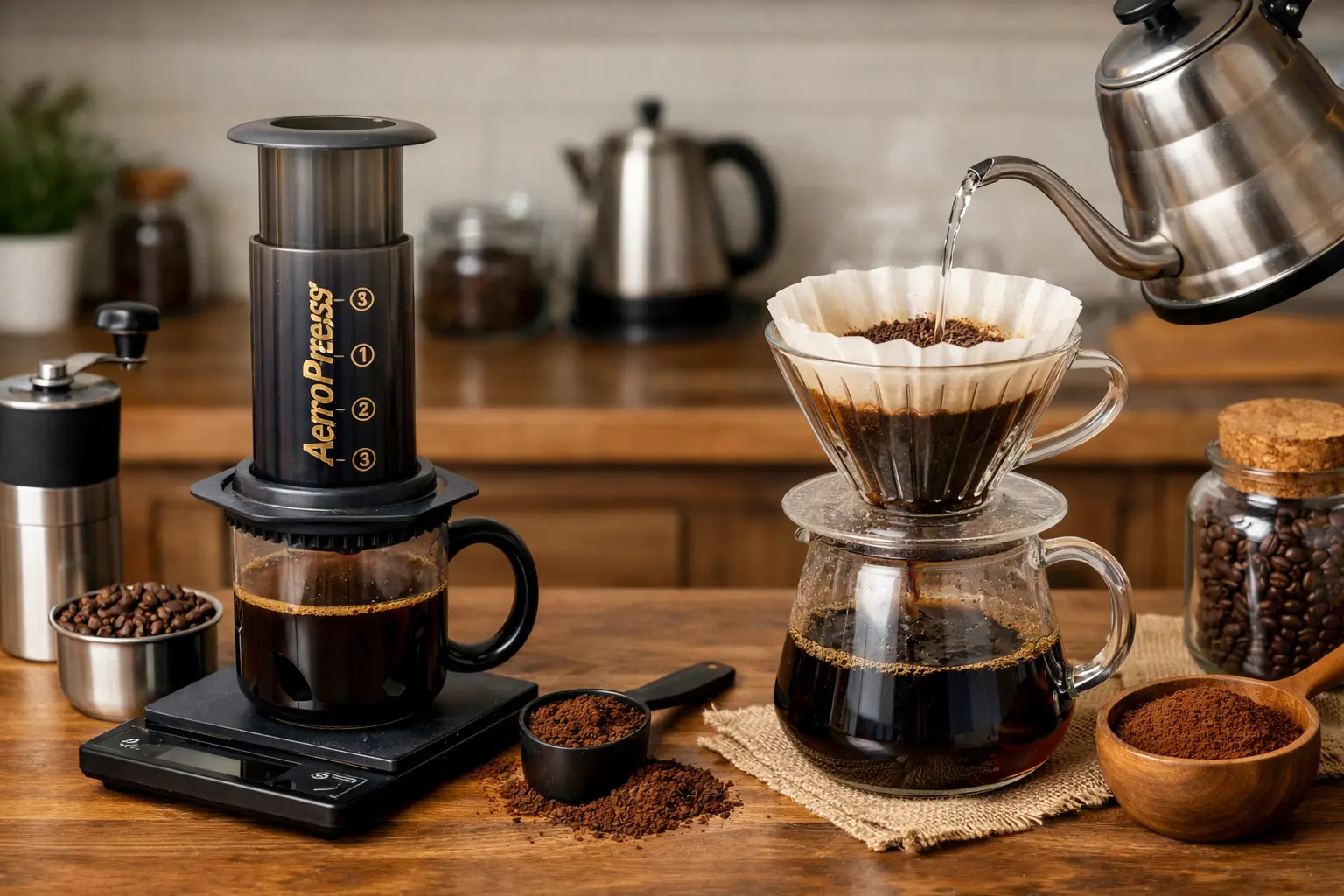
The AeroPress is an immersion brewer with a pressure finish. You put ground coffee in the chamber, add hot water, stir, and let it steep, typically for one to two minutes. Then you press the plunger, which pushes the coffee through a paper microfilter into your mug. Because all of the coffee is submerged for the whole steep, every particle gets similar contact with the water, and the short press finishes the brew quickly and cleanly.
Pour over is a percolation method. You place a paper filter in a dripper such as a Hario V60 or Kalita Wave, add ground coffee, and pour hot water over it in stages. Water flows through the bed and out the bottom by gravity, so how you pour, how fast, and where, affects how evenly the coffee extracts. Brewers usually start with a short bloom, wetting the grounds to release gas, then pour the rest in a slow spiral.
That difference shapes everything else. The AeroPress controls contact time for you, which makes it consistent and forgiving. Pour over lets the pour control contact time, which gives more control over the cup but asks more of the brewer. Our AeroPress brew guide and pour over guide walk through each method step by step.
AeroPress vs Pour Over: Head-to-Head Comparison
The table summarizes how the two methods compare on the factors that usually decide the choice. The sections below explain each one in more detail.
| Factor | AeroPress | Pour over |
|---|---|---|
| Brew style | Immersion plus press | Percolation by gravity |
| Flavor | Full-bodied, rich, clean | Bright, clear, aromatic |
| Learning curve | Gentle | Moderate |
| Total brew time | About 2 minutes | About 3–4 minutes |
| Cleanup | Eject and rinse | Discard filter, rinse dripper |
| Travel | Excellent | Fair |
| Multiple cups | About one mug per press | Scales to larger brewers |
| Extra gear | Kettle (any) | Gooseneck kettle recommended |
Flavor: Which Tastes Better?
AeroPress coffee tends to be full-bodied, rich, and smooth. Immersion gives even extraction, the paper filter keeps it clean, and many recipes use a relatively high coffee-to-water ratio, so the cup often tastes stronger than pour over. It flatters medium and darker roasts, chocolatey and nutty coffees, and blends, and it handles a wide range of recipes from short concentrates to longer, lighter steeps.
Pour over tends to be brighter, lighter in body, and more transparent. The paper filter and gravity flow produce a very clean cup in which acidity, fruit, and floral aromas stand out, which is why it is the favorite method for light-roasted single-origin coffees. A V60 emphasizes clarity; a flat-bottom Kalita Wave gives a slightly rounder, more balanced cup.
Neither is objectively better. If you like a rich, rounded cup or drink coffee with milk, the AeroPress will probably suit you. If you enjoy tasting the differences between origins and prefer a lighter, more delicate cup, pour over is the better tool. Many coffee lovers use both depending on the beans.
Which Is Easier to Use?
The AeroPress is the easier method. Because the coffee steeps fully submerged, you do not need a special kettle or a careful pouring technique, and small variations from day to day barely change the cup. Most people make a good AeroPress coffee on their first attempt by following the instructions, and fine-tuning is mostly a matter of grind and steep time.
Pour over takes more practice. The grind has to suit your dripper and pour speed, the bloom and pouring pattern affect extraction, and a fast, uneven pour can leave dry pockets or channel water through the bed. A gooseneck kettle and a scale make it much easier, and a flat-bottom dripper like the Kalita Wave is more forgiving than a cone like the V60. For people who enjoy the process, that learning curve is part of the appeal.
Brew Time and Cleanup
A standard AeroPress brew takes about two minutes from adding water to pressing, plus the time to heat water and grind. Cleanup is one of its best features: you unscrew the cap, push the spent puck and filter straight into the bin, and rinse the plunger. It is ready for the next cup in under a minute.
Pour over usually takes three to four minutes of brewing, plus the bloom and the time to pour in stages, and it asks for your attention throughout. Cleanup is still easy: lift out the paper filter with the grounds, rinse the dripper, and wipe the server. The extra minutes are small, but if mornings are rushed, the AeroPress’s speed and hands-off steep are a real advantage.
Travel and Portability
The AeroPress is one of the best travel brewers available. It is light, has no glass, needs only hot water, and the AeroPress Go packs the brewer, filters, and stirrer into its own mug. Paired with a hand grinder, it makes good coffee in hotel rooms, offices, and campsites. Pour over can travel too, with a plastic V60 and a stack of filters, but it brews best with a gooseneck kettle and a scale, which are bulkier to carry. For travel, the AeroPress is the clear choice.
Brewing for More Than One Person
The AeroPress makes about one mug per press. You can brew a concentrate and dilute it to serve two, or press several times in a row, but it is fundamentally a single-serve brewer. Pour over scales more easily: larger drippers such as the V60 size 02 or the Kalita Wave 185 handle two or three cups at once, and bigger brewers such as a Chemex make a full carafe. If you regularly make coffee for two or more people at the same time, pour over is the more practical method.
Grind Size and Beans for Each Method
Both methods use a grind in the medium-fine to medium range, and both benefit greatly from a burr grinder. A standard AeroPress recipe usually starts at medium-fine, roughly like table salt, going finer for short steeps and concentrates and coarser for long steeps. Pour over usually starts at medium-fine to medium, slightly coarser than AeroPress, and depends on the dripper: a V60 often runs a little finer than a Kalita Wave or a Chemex. Adjust by taste and by how quickly the water drains.
One grinder can serve both methods; you simply change the setting. The KINGrinder K6, with its numbered external dial, makes that quick and repeatable, and the Baratza Encore ESP is a good electric option. For beans, medium roasts, blends, and chocolatey coffees shine in the AeroPress, while light-roasted single origins, especially washed Ethiopian and Kenyan coffees, are where pour over really stands out. Buy whole beans with a roast date and grind just before brewing.
| Starting point | AeroPress | Pour over (V60) |
|---|---|---|
| Grind | Medium-fine | Medium-fine to medium |
| Ratio | About 1:12 to 1:16 | About 1:15 to 1:17 |
| Water temperature | About 80–96°C by roast | About 90–96°C |
| Brew time | About 1–2 minute steep | About 2:30–3:30 total |
Gear for Each Method
The AeroPress Original is the standard version and the one most recipes are written for. It works with paper or metal filters and handles standard, inverted, concentrate, and iced recipes. For travel, the AeroPress Go uses the same method in a smaller package that nests inside its own mug, with a slightly smaller brew capacity.
An AeroPress needs only a kettle that can heat water, though a variable-temperature kettle helps you match temperature to the roast. A burr grinder is the most important accessory for either method.
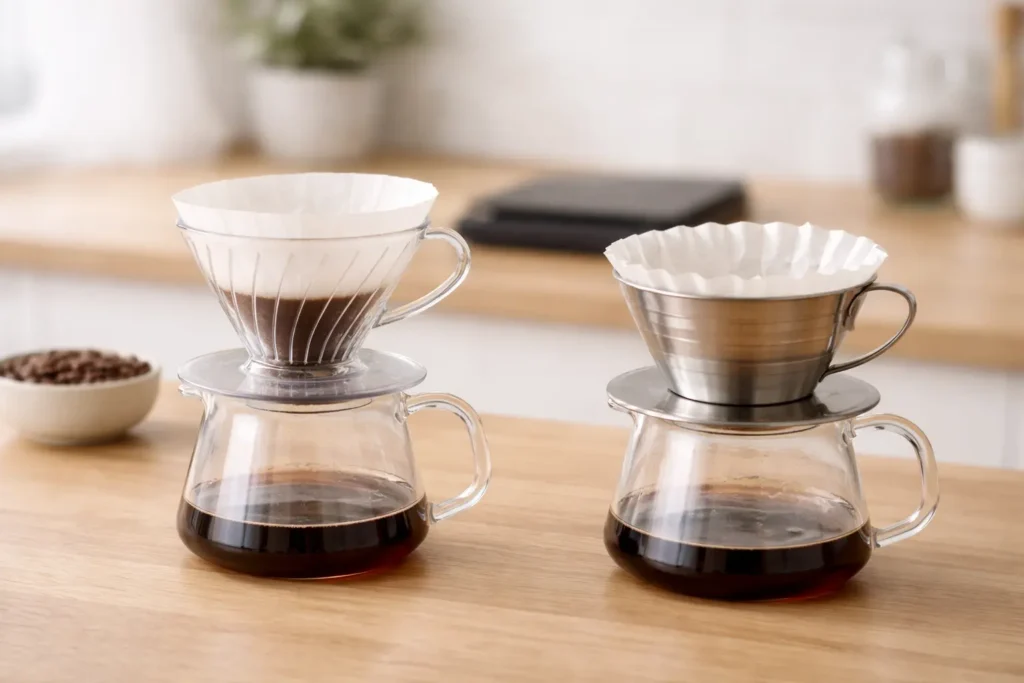
For pour over, the Hario V60 is the classic cone dripper. Its large single opening and spiral ribs give fast, clean flow, which rewards a careful pour with a bright, aromatic cup. The Kalita Wave 185 is a flat-bottom dripper with three small holes and wave filters, which slow and even out the flow. It is more forgiving of an uneven pour and gives a slightly rounder cup, which makes it a good first pour-over brewer.
Our best pour over coffee makers guide compares more drippers, including larger brewers for several cups.
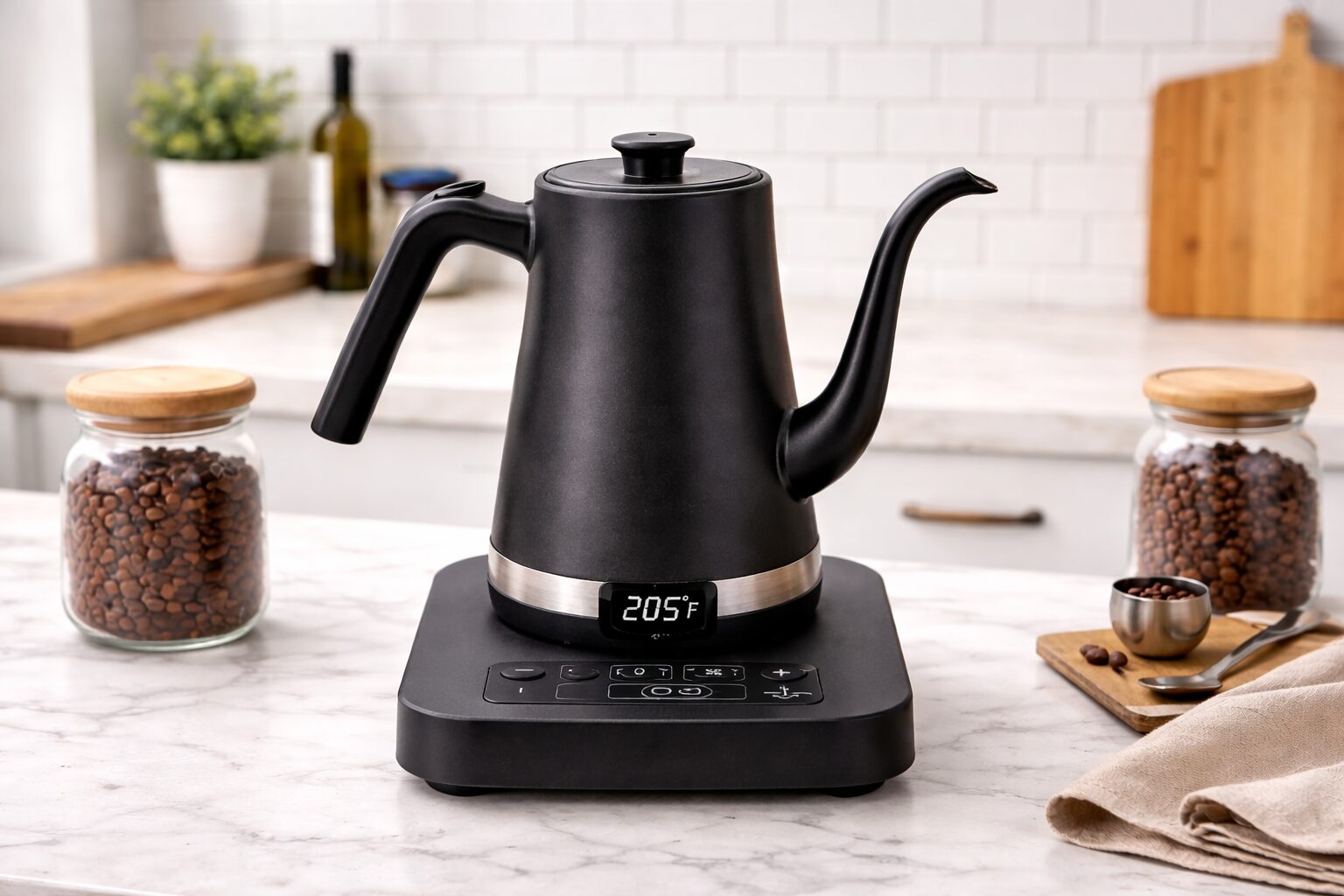
A gooseneck kettle makes pour over far easier. The Fellow Stagg EKG combines a slim, controllable spout with variable temperature and a hold mode, so it suits both pour over and AeroPress. For grinding, the KINGrinder K6 is a precise hand grinder that covers both methods, and the Baratza Encore ESP is an electric option with a wide range that also reaches espresso.
If you are building a setup from scratch, a burr grinder gives the biggest improvement, followed by a gooseneck kettle for pour over and a scale for repeatable recipes. Our best burr grinders for pour over guide covers grinder choices in more detail.
Who Should Choose Which?
Choose the AeroPress if you want a quick, consistent cup with minimal fuss, if you brew mostly for yourself, if you travel or want coffee at work, or if you like a fuller-bodied cup or drink coffee with milk. It is also the better first brewer for someone new to specialty coffee, because it delivers good results while you learn about grind and beans, and it is inexpensive enough to sit alongside other brewers later.
Choose pour over if you enjoy the ritual of brewing, want to taste the full character of light-roasted single-origin coffees, or brew for two or three people at once. It rewards practice and attention with a cup that is hard to match for clarity. Many people end up owning both: the AeroPress for weekday speed and travel, and pour over for slower weekend brewing and special beans.
Troubleshooting Common Problems
In the AeroPress, sour or thin coffee usually means under-extraction: grind a little finer, use hotter water, or steep longer. Bitter or harsh coffee means the opposite. A very hard press means the grind is too fine. Muddy coffee usually points to excess fines from an uneven grinder. Our AeroPress troubleshooting guide covers these in more depth.
In pour over, a brew that drains too fast and tastes sour or weak needs a finer grind or a slower pour; one that drains slowly and tastes bitter or dry needs a coarser grind. Uneven drawdown, with a cratered or lopsided bed, suggests an uneven pour or too much agitation; pour in steady circles and give the dripper a gentle swirl after the last pour. In both methods, stale beans make flat coffee no matter how well you brew, so use fresh, roast-dated coffee.
Our Recommendation
For most people who want great coffee with little fuss, start with the AeroPress: it is fast, forgiving, portable, and inexpensive. If you love bright, clean coffee and enjoy the process of brewing, choose pour over, starting with a Kalita Wave for forgiveness or a Hario V60 for maximum clarity, and add a gooseneck kettle. Whichever you pick, put a burr grinder such as the KINGrinder K6 at the center of the setup. For a broader grounding, our Complete Home Barista Guide covers both methods.
Pick the Brewer That Fits Your Routine
The AeroPress suits quick, forgiving cups and travel; the Hario V60 suits clarity and ritual.
As an Amazon Associate, CoffeeGearHub earns from qualifying purchases.
Editorial bottom line: AeroPress and pour over both make excellent coffee. Choose the AeroPress for speed, forgiveness, and travel, and pour over for clarity and control, then invest in a burr grinder and fresh beans for either.
Frequently Asked Questions
Is AeroPress better than pour over?
Neither is better overall. The AeroPress is faster, more forgiving, and more portable, with a fuller body. Pour over gives a cleaner, more aromatic cup and more control, but takes more technique. Choose by the cup you prefer and how much time you want to spend.
Does AeroPress or pour over taste stronger?
AeroPress coffee often tastes stronger and fuller because many recipes use a higher coffee-to-water ratio or brew a concentrate. Pour over tends to taste lighter and clearer. Strength depends mainly on the ratio, which you can change in either method.
Do I need a gooseneck kettle for pour over?
It helps a lot. A gooseneck gives the slow, controlled pour that pour over depends on. For AeroPress it is optional, because the coffee steeps fully submerged. Our pour-over setup guide covers the essentials.
Which is easier for beginners?
The AeroPress. Its immersion brewing is forgiving, and most people make a good cup on the first try. Pour over takes some practice with grind and pouring, though a flat-bottom dripper like the Kalita Wave is more forgiving than a V60.
Can you use the same grinder for AeroPress and pour over?
Yes. Both use a medium-fine to medium grind, with pour over usually a little coarser. A burr grinder with clear settings, such as the KINGrinder K6 or Baratza Encore ESP, makes switching between them easy.
Which is better for travel?
The AeroPress, especially the AeroPress Go. It needs only hot water, has no glass, and packs small. Pour over can travel with a plastic dripper, but it works best with a gooseneck kettle, which is bulky.
Sources and Further Reading
Brewing mechanics and recipes follow AeroPress’s and Hario’s published brewing instructions and the Specialty Coffee Association’s brewing standards. Product details come from manufacturer specifications for AeroPress, Hario, Kalita, Fellow, KINGrinder, and Baratza. Recipes and grind settings are starting points that vary with beans and equipment. CoffeeGearHub did not test these brewers hands-on; comparisons rely on published specifications and independent reviews.
CoffeeGearHub product shortlist
Continue with related products on CoffeeGearHub
Review product categories and current verified merchant offers on CoffeeGearHub before leaving the site.