
Best Burr Grinders for Pour-Over (2026): Electric and Manual Picks
Editorial standards: this guide compares manufacturer specifications, published grind charts and manuals, and independent owner and reviewer reports. Grind settings are starting points that vary with beans, roast, and dripper. CoffeeGearHub does not claim hands-on testing where it has not occurred.
At a glance
Start with the brewer and your tolerance for manual work
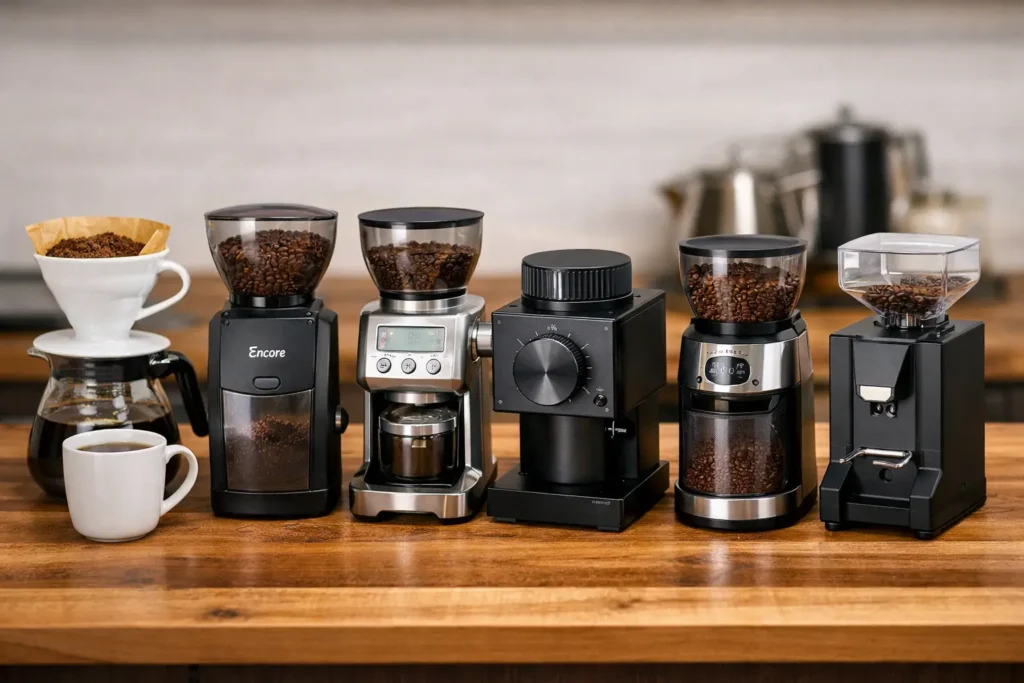
Five current burr grinders for pour-over, what matters in a filter grinder, an in-depth look at each pick, electric versus manual, flat versus conical burrs, retention, troubleshooting by taste and drawdown, and cleaning.
Editorial analysis
Grind consistency in the medium-fine range decides the cup
Pour-over is gravity-driven, so the grind controls both extraction and flow. An uneven grind lets fines over-extract and stall the drawdown while boulders under-extract, which is why a burr grinder usually improves pour-over more than a new dripper or kettle.
The best choice depends on how you brew. A filter-only flat-burr electric suits daily light-roast pour-over, a versatile conical electric suits mixed methods, and a good hand grinder gives excellent grind quality for one or two cups at a lower cost.
The 30-Second Answer
The Fellow Ode Gen 2 is the best electric grinder for dedicated pour-over brewers, with 64 mm flat burrs and a filter-only design. The Baratza Encore ESP is the best value electric if you want one repairable grinder for pour-over and occasional espresso. For hand grinding, the KINGrinder K6 is the value pick and the Comandante C40 MK4 the premium one.
On a tight budget, the OXO Brew Conical Burr Grinder is a solid step up from any blade grinder.
Compare current options
Start with these representative choices
Three starting points: a filter specialist, a versatile repairable electric, and a precise manual grinder.
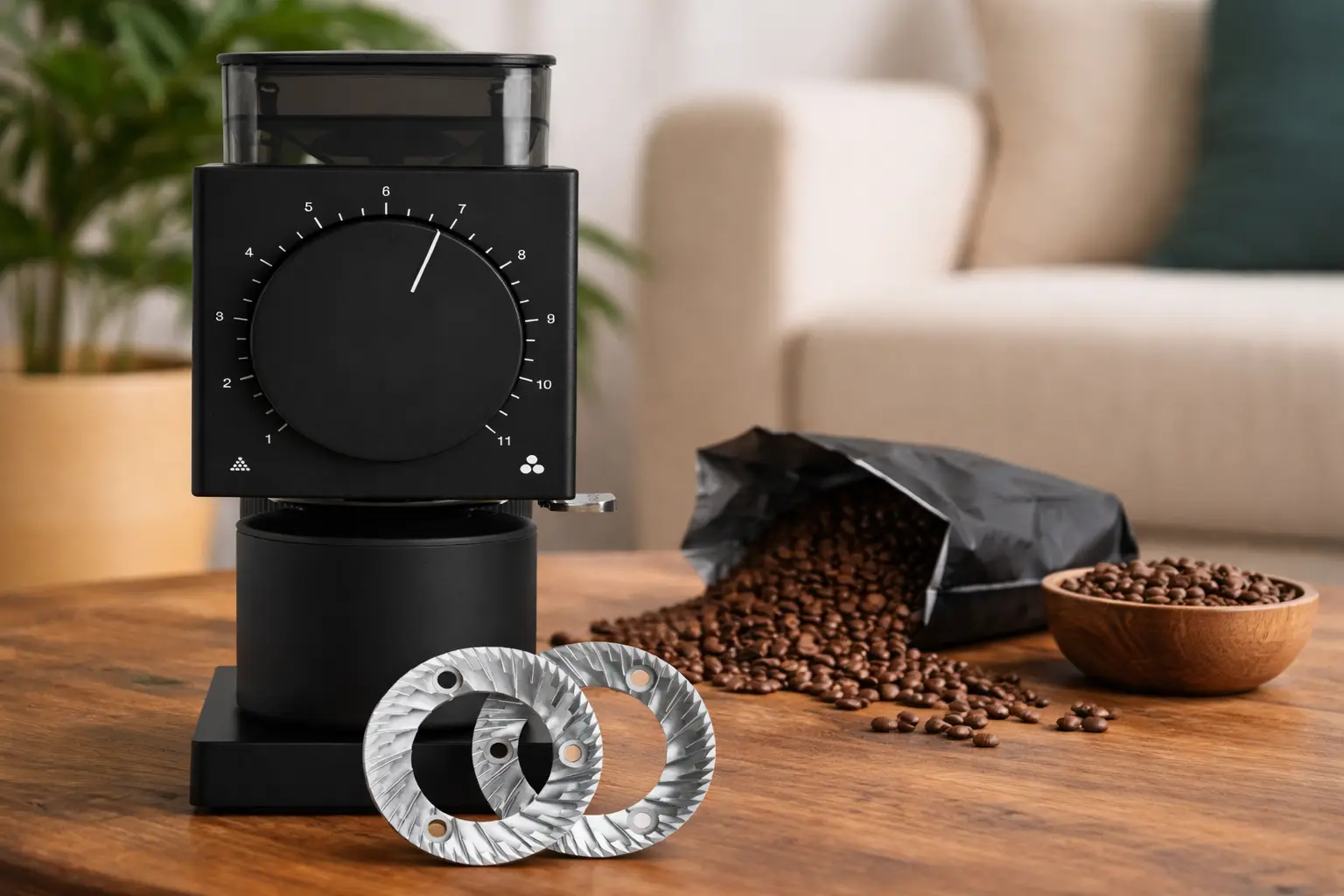
Fellow Ode Gen 2 — Filter specialist
64 mm flat burrs, 31 grind steps, and a single-dose design built for filter coffee rather than espresso.
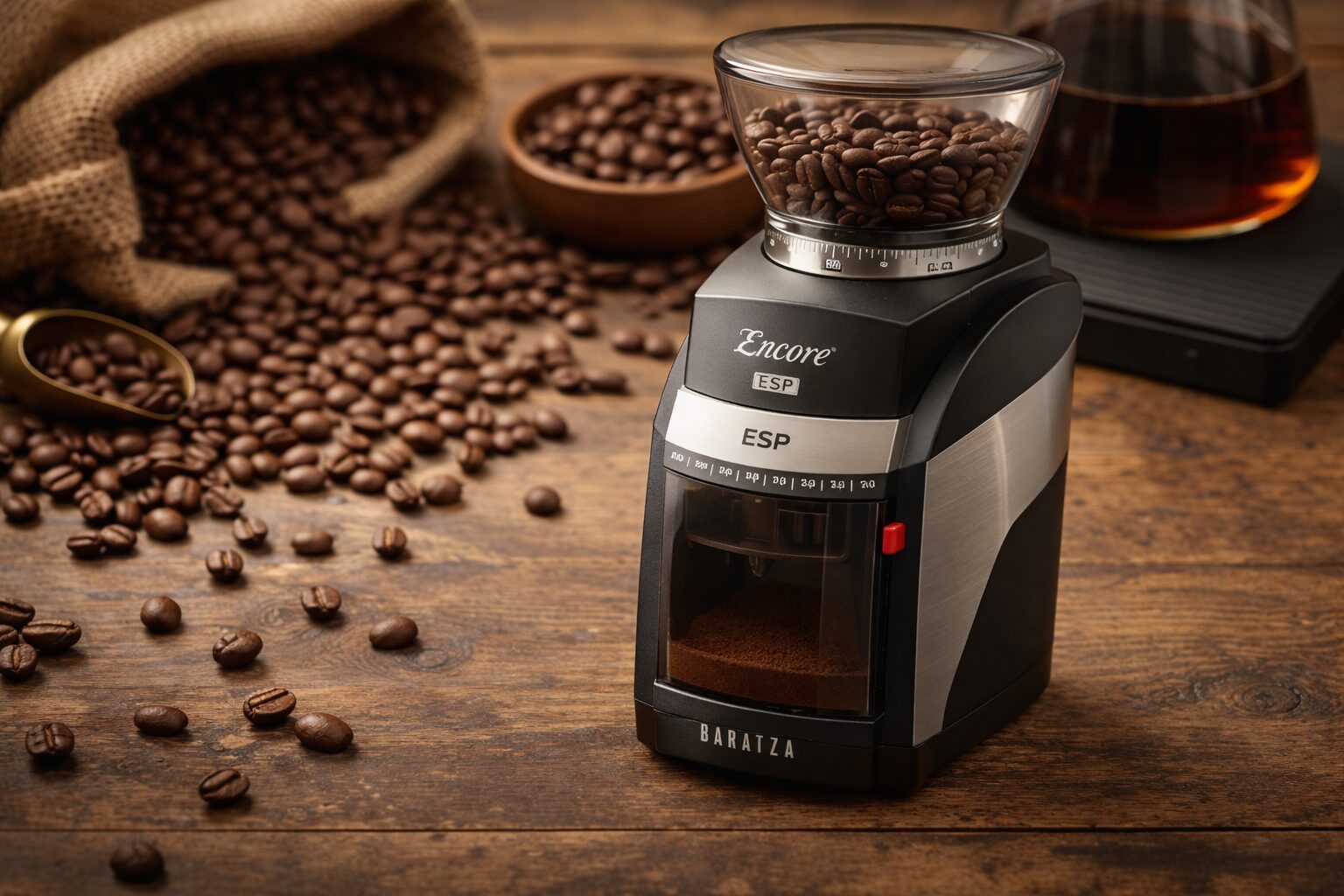
Baratza Encore ESP — Versatile value
40 mm conical burrs and 40 settings, with a dedicated filter range and widely available replacement parts.
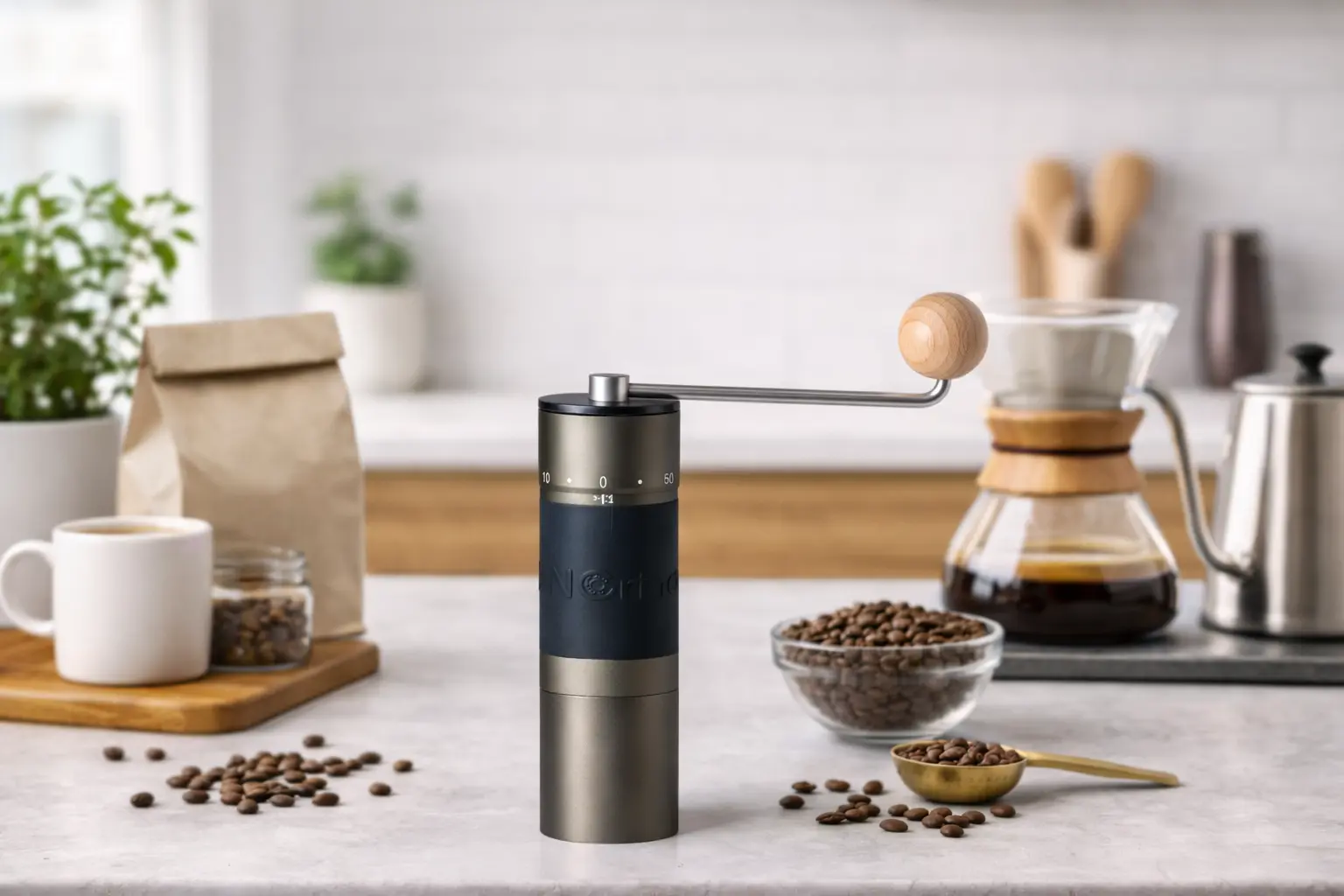
KINGrinder K6 — Manual precision
48 mm heptagonal steel burrs with external adjustment in small steps, covering pour-over through espresso.
Affiliate disclosure: Amazon links may earn CoffeeGearHub a commission at no additional cost to you. Prices and availability can change.
Burr Grinder Comparison for Pour-Over
The table summarizes each grinder’s published burr and adjustment specifications. All five grind well in the pour-over range; the differences are in workflow, versatility, and how finely you can adjust around medium-fine.
| Grinder | Type | Burrs and adjustment | Best fit |
|---|---|---|---|
| Fellow Ode Gen 2 | Electric | 64 mm flat steel; 11 settings, 31 steps; brewed coffee only | Dedicated filter brewers |
| Baratza Encore ESP | Electric | 40 mm conical; 40 settings, 21–40 for filter | Filter plus occasional espresso |
| OXO Brew Conical | Electric | Stainless conical; 15 settings plus micro-steps | Budget electric upgrade |
| KINGrinder K6 | Manual | 48 mm heptagonal steel; external adjustment, 16 μm per click | Manual value and travel |
| Comandante C40 MK4 | Manual | Nitro Blade high-nitrogen steel burrs | Premium manual grinding |
What Matters in a Pour-Over Grinder
Pour-over is more sensitive to grind quality than most brew methods because the same particles control both extraction and how fast water drains. The first thing to look for is consistency: a grinder that produces particles close to the target size, with fewer fines and boulders, gives a cup that is sweet and clear rather than sour and bitter at once. The second is adjustment resolution in the medium to medium-fine range, where pour-over lives, so you can make small changes instead of jumping between settings that are too coarse and too fine.
Retention and repeatability matter next. Grounds left inside a grinder end up in your next dose, so low-retention designs and single-dose workflows keep cups more consistent, especially when you switch coffees. You also want to return to the same setting reliably day after day. Finally, consider versatility: the Fellow Ode Gen 2 does not grind for espresso, so if one grinder must handle both, look at the Encore ESP or a versatile hand grinder such as the K6. Our pour-over grind size guide explains how to dial in once you have a grinder.
Fellow Ode Gen 2: Best Overall for Pour-Over
The Fellow Ode Gen 2 is designed with filter coffee as its only priority. Its 64 mm flat stainless-steel burrs are larger than most grinders at this level, and reviewers and owners commonly describe its filter grind as clean and even, which suits light-roast single origins where clarity and sweetness are the goal. Fellow’s Gen 2 redesign updated the burrs and added a single-dose workflow with a magnetic catch cup and features aimed at reducing retained grounds and static.
Its 11 numbered settings divide into 31 total steps, giving fine control across the pour-over range. The one firm limitation is that it does not grind fine enough for espresso, and its single-dose design means weighing each dose rather than using a hopper. For V60, Chemex, Kalita Wave, and batch brew, it is the clearest electric upgrade in this guide. Our Fellow Ode Gen 2 review covers it in more depth.
Baratza Encore ESP: Best Value Electric
The Baratza Encore ESP is one of the most recommended first electric burr grinders, and for pour-over its strength is versatility with a sensible layout. Its 40 mm conical burrs and 40 numbered settings split into two ranges: settings 1 to 20 are high-resolution espresso steps, and settings 21 to 40 cover filter, French press, and cold brew. That makes it a practical single grinder for households that brew pour-over most days and pull the occasional shot.
Baratza’s repair-first approach is a real advantage: replacement burrs, motors, and parts are widely available, so the grinder can be maintained rather than replaced. The trade-off versus the Ode Gen 2 is a slightly wider particle spread from conical burrs, which is most noticeable with very light roasts. For medium roasts and everyday specialty coffee, it is a dependable, long-lived choice.
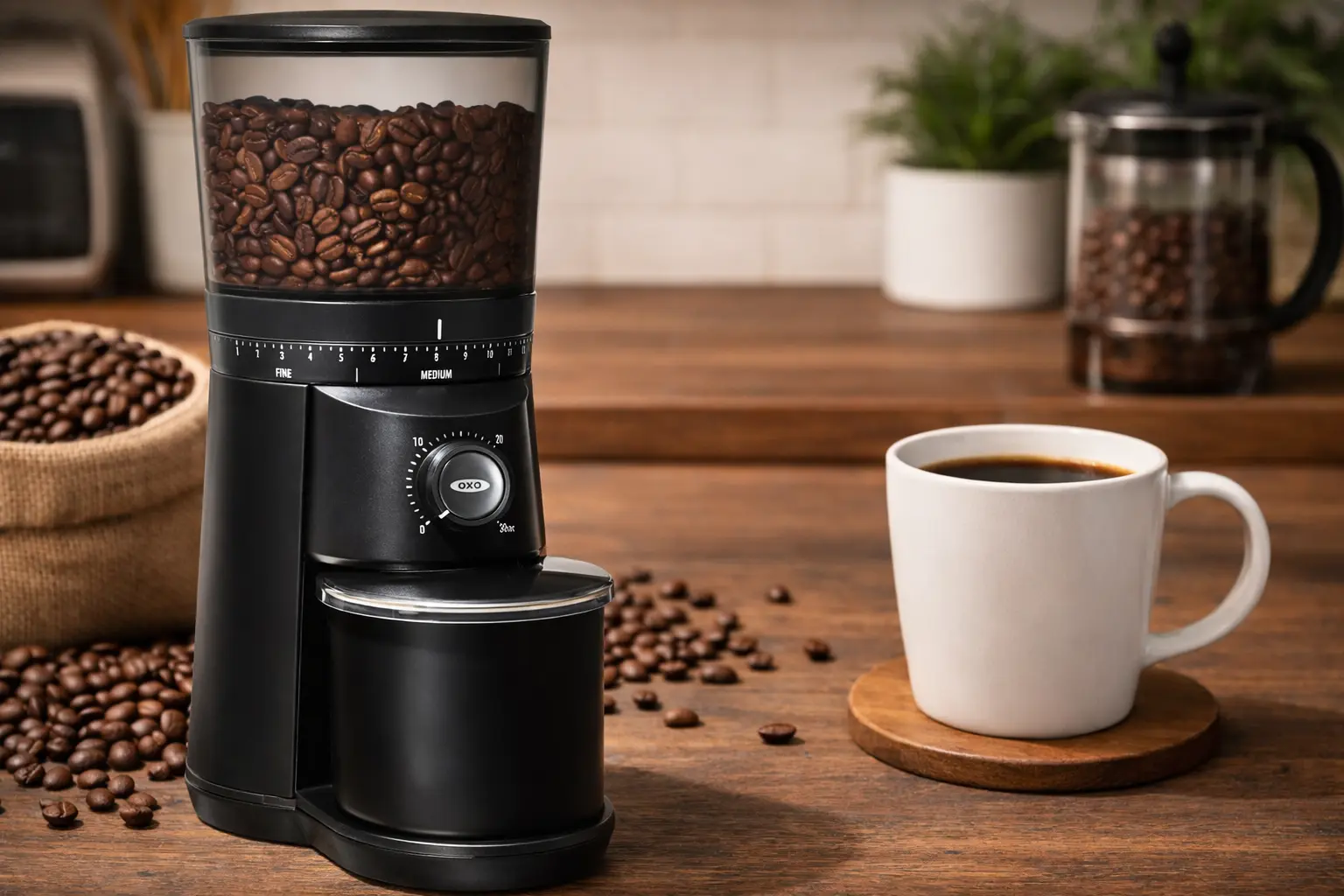
OXO Brew Conical Burr Grinder: Best Budget Electric
The OXO Brew Conical Burr Grinder is a practical entry into burr grinding. Its stainless-steel conical burrs give a far more consistent grind than any blade grinder, and anyone upgrading from a blade grinder should notice a cleaner, more balanced pour-over. Fifteen main settings with micro-steps between them provide enough range to dial in a V60 or flat-bottom dripper, and the timer-based controls are simple to learn.
It retains more grounds than single-dose and manual grinders, so purge a few grams when switching coffees, and it is louder and less precise in the medium-fine range than the Encore ESP. For a first burr grinder on a tight budget, or a household that brews medium roasts in larger batches, it is a sound choice.
KINGrinder K6: Best Manual Grinder for the Money
The KINGrinder K6 is one of the strongest values among hand grinders. Its 48 mm heptagonal stainless-steel burrs are large for a manual grinder, and the external adjustment ring offers 60 clicks per rotation at about 16 microns per click, giving finer control than many electric grinders. Retention is minimal, it is quiet, and it needs no power, which makes it a good fit for early mornings and travel.
KINGrinder’s current chart places medium-fine at roughly 60 to 90 clicks and medium at about 90 to 120, so a pour-over starting point near the transition between those ranges works well; then adjust by drawdown and taste. The trade-off is effort: grinding a single dose takes a minute or two of steady turning, which is fine for one or two cups but tiring for a crowd. The K6’s range also reaches espresso, which makes it a versatile companion.
Comandante C40 MK4: Best Premium Manual Grinder
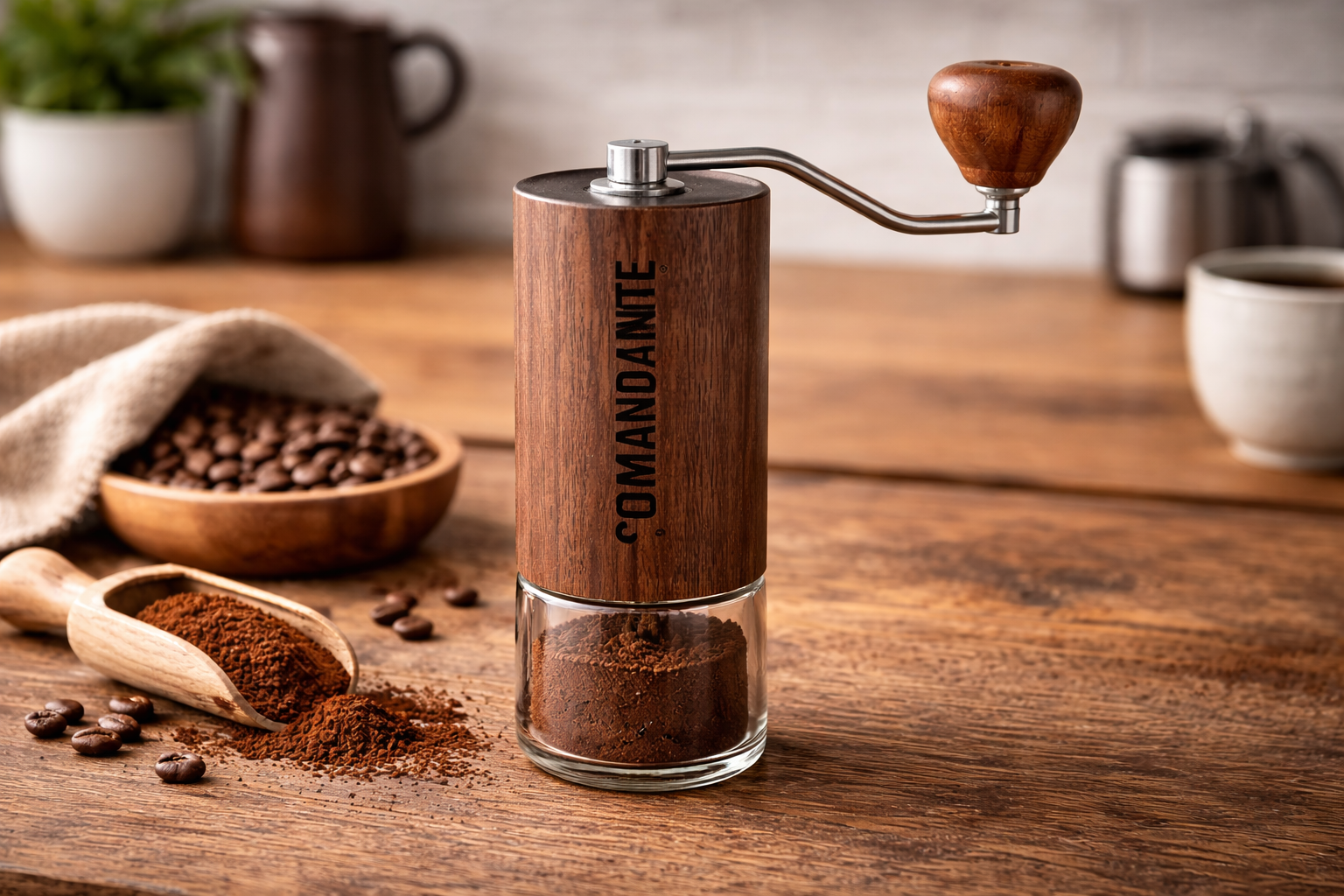
The Comandante C40 MK4 is a long-standing reference among hand grinders for filter coffee. Made in Germany, it uses Comandante’s Nitro Blade burrs in high-nitrogen stainless steel, and owners and reviewers consistently praise its even filter grind and smooth, solid grinding action. Comandante describes it as covering everything from coarse hand-brewing to very fine espresso.
It costs considerably more than the K6, and for medium-roast coffee the difference in the cup can be modest. Where it earns its place is with very light, complex single origins, for brewers who value build quality and feel, and for travelers who want a premium filter grind anywhere. Its standard adjustment is coarser per click than some competitors; Comandante sells an optional finer-adjustment axle for those who want more resolution.
How to Choose the Right Pour-Over Grinder
Start with how many cups you brew and how much hand work you will accept. If you brew several cups a day or for a household, an electric grinder is far more practical; if you brew one cup at a time and enjoy a quiet routine, a good hand grinder offers more grind quality for the money. Next, decide whether the grinder must also make espresso. The Fellow Ode Gen 2 cannot, so dual-use brewers should look at the Baratza Encore ESP or the KINGrinder K6.
Then consider the coffee you drink. Light-roast single origins benefit most from flat burrs and very consistent grinding, which favors the Ode Gen 2 or the Comandante. Medium roasts are more forgiving, so the Encore ESP, OXO Brew, or K6 will make excellent pour-over. Finally, think about ownership: Baratza’s parts support suits buyers who want a grinder they can repair for years, while manual grinders have no motor to fail at all.
If you can upgrade only one piece of a pour-over setup, make it the grinder. A basic plastic dripper with a good burr grinder generally produces better coffee than an expensive dripper paired with a blade grinder, because the grind determines how evenly every gram of coffee extracts. Our pour-over setup guide shows how the grinder fits with the rest of the gear.
Electric vs Manual Grinders for Pour-Over
Electric grinders win on speed and convenience. A dose takes seconds, they handle several cups back to back without effort, and they suit shared households and busy mornings. The trade-offs are noise, counter space, a motor that can eventually fail, and, at lower prices, grind quality that can lag behind similarly priced hand grinders.
Manual grinders give excellent grind quality for the money because the budget goes into burrs and bearings rather than a motor. They are near-silent, portable, and retain very little coffee. The cost is time and effort, a minute or two per dose, which becomes tiresome for multiple cups. Many pour-over enthusiasts own both: an electric for daily batches and a hand grinder for travel or single cups of special coffee. Our manual vs electric grinder guide compares them in more detail.
Burr Geometry and Retention: Why They Matter
When a grind is uneven, fine particles over-extract and add bitterness while coarse particles under-extract and add sourness, producing a cup that tastes harsh and sour at the same time. No pouring technique fully fixes that, which is why the grinder sets the ceiling for pour-over. Flat burrs cut beans between two parallel rings and are often associated with a tighter particle spread and more clarity, which is why the Ode Gen 2 uses them. Conical burrs use a cone inside a ring and tend to produce a few more fines, giving slightly more body; they are forgiving with medium roasts.
Retention is the other hidden variable. Coffee left inside a grinder from yesterday ends up in today’s dose, so a grinder that holds a gram or two mixes stale grounds into fresh ones and makes cups vary from day to day. Single-dose electrics and manual grinders keep retention low. With a higher-retention grinder, purge a few grams when switching coffees and brush out the chute regularly. Our grinder cleaning and retention guide explains how to measure and reduce it.
Troubleshooting Pour-Over by Grind
Most pour-over problems trace back to the grind. Coffee that tastes sour or thin with a fast drawdown usually means the grind is too coarse, so move a couple of steps finer. Coffee that tastes bitter or harsh with a slow, stalling drawdown usually means it is too fine or clogged with fines, so go a couple of steps coarser and check that your bloom is even. A cup that is sour and bitter at once points to an uneven grind, typically from a blade grinder, worn burrs, or misalignment.
If drawdown speed varies even at the same setting, level the bed by gently swirling or tapping the brewer before pouring, and check that you are weighing doses. Cups that taste different every day often come from a moved setting, retention, or aging beans, so mark your setting, purge when switching coffees, and buy fresher beans. Flat cups without sweetness can mean the grind is slightly too coarse or the water is not hot enough. Our pour-over troubleshooting guide covers technique issues beyond the grind.
Getting Better Results From Any Burr Grinder
Grind right before brewing, since ground coffee loses aroma quickly. Dial in using total brew time and taste together: for most single-cup pour-overs, a total of roughly three to four minutes is a reasonable target, then adjust by flavor. Change one variable at a time, starting with grind size, before touching dose, water temperature, or pour speed. Use filtered water with moderate minerals, because water chemistry affects extraction more than many brewers expect.
Mark your usual setting with tape or a pen so you can return after cleaning, and purge a few grams when switching beans. Store beans airtight away from heat and light, because even the best grinder cannot rescue stale coffee. Our pour-over brewing guide walks through a full recipe from bloom to drawdown.
Cleaning and Maintenance
Coffee oils, packed fines, and static gradually degrade grinding. Brush out the burr chamber and chute every week or two if you grind daily, and do a fuller cleaning roughly monthly, removing the upper burr where the manual allows and brushing both burrs clean. Grinder-cleaning tablets can help electric grinders between deep cleans; follow the manufacturer’s guidance on which products are safe.
Check calibration and burr condition occasionally. A grinder that slowly drifts toward more fines, more uneven drawdowns, or a different setting for the same coffee may need recalibration or new burrs. Baratza and other manufacturers sell replacement burrs and parts, and hand grinders need little more than brushing and occasional bearing care. A clean, well-maintained grinder keeps producing consistent pour-over for years.
Upgrade the Grinder First
The Fellow Ode Gen 2 suits dedicated filter brewers; the KINGrinder K6 gives excellent manual value.
As an Amazon Associate, CoffeeGearHub earns from qualifying purchases.
Editorial bottom line: Choose the Fellow Ode Gen 2 for filter-only electric grinding, the Baratza Encore ESP for repairable versatility, the OXO Brew on a budget, and the KINGrinder K6 or Comandante C40 for hand grinding. Dial in by taste and drawdown time, and keep the burrs clean.
Frequently Asked Questions
Do I really need a burr grinder for pour-over?
For consistent results, yes. Blade grinders produce a mix of dust and chunks, which makes pour-over taste sour and bitter at once and drain unpredictably. Even an entry-level burr grinder gives a far more even grind.
Are manual grinders good enough for pour-over?
Yes. Good hand grinders such as the KINGrinder K6 and Comandante C40 produce excellent filter grinds and often deliver more grind quality per dollar than budget electrics. The trade-off is a few minutes of hand grinding per cup.
What grind size should I use for pour-over?
Start medium-fine, roughly like coarse sand, and adjust by taste and drawdown time. Most single-cup pour-overs land around three to four minutes in total; grind finer if the cup is sour and fast, coarser if it is bitter and slow.
Flat or conical burrs for pour-over?
Flat burrs are often associated with a tighter particle spread and more clarity, which suits light roasts. Conical burrs tend to give a bit more body and are forgiving with medium roasts. Both make excellent pour-over; burr quality and alignment matter more than shape.
Can the Fellow Ode Gen 2 grind for espresso?
No. Fellow designs the Ode Gen 2 for brewed coffee only. If you need one grinder for pour-over and espresso, look at the Baratza Encore ESP or a versatile hand grinder such as the KINGrinder K6.
Why does my pour-over taste different every day?
Usually the grind setting moved, stale grounds from a high-retention grinder mixed in, or the beans are aging. Note your setting, purge a few grams when switching coffees, weigh doses, and use a timer.
Sources and Further Reading
Grinder specifications come from each manufacturer’s published product information and grind charts, including Baratza for the Encore ESP, and from Fellow, OXO, KINGrinder, and Comandante documentation. Grind and extraction concepts follow the Specialty Coffee Association’s brewing standards. CoffeeGearHub did not test these grinders hands-on; this guide relies on published specifications and owner and reviewer reports. Grind settings are starting points that vary with beans and brewer.
CoffeeGearHub product shortlist
Continue with related products on CoffeeGearHub
Review product categories and current verified merchant offers on CoffeeGearHub before leaving the site.