
Behmor 2000AB Plus Review (2026): Drum Roasting, Smoke Control, and Capacity
Editorial standards: this review is based on Behmor’s published specifications and manual, independent owner and reviewer reports, and comparison with other home roasters’ published specifications. Roast times are reference points that vary with beans, batch size, and line voltage. CoffeeGearHub does not claim hands-on testing where it has not occurred.
At a glance
A larger-batch drum roaster with indoor smoke suppression
Who the Behmor 2000AB Plus suits, its specifications, how the preset and A/B controls work, a first-roast walkthrough, profiles from City to Full City+, adjustments for different origins, what the smoke suppression can and cannot do, common problems, how it compares with the Fresh Roast SR800, SR540, and Aillio Bullet, cleaning, and useful accessories.
Editorial analysis
Capacity and indoor usability are its strongest arguments
The Behmor 2000AB Plus roasts up to a pound of green coffee at a time in a rotating drum, and its catalytic smoke suppression makes light-to-medium roasting indoors far more practical than with most home roasters. For a household that drinks a pound or more a week, that combination is hard to match at its price.
The trade-offs are control and visibility. You choose presets and press stop rather than adjusting heat and fan continuously, roasts take longer than fluid-bed machines, and dark roasts still produce smoke. It suits people who want to roast in batches and are happy to roast by sound and smell rather than by data.
The 30-Second Answer
The Behmor 2000AB Plus is the home roaster to buy if you want to roast up to a pound at a time indoors with manageable smoke. It is forgiving and good at City+ to Full City roasts for everyday drinking. Choose a fluid-bed roaster such as the Fresh Roast SR800 instead if you want faster roasts, finer control, and a full view of the beans.
Plan to roast light-to-medium indoors, crack a window for darker roasts, and keep the chaff tray and catalyst clean.
Compare current options
Start with these representative choices
The roaster plus two accessories that make home roasting more consistent: a scale for batch weights and a degassing canister for storing fresh roasts.
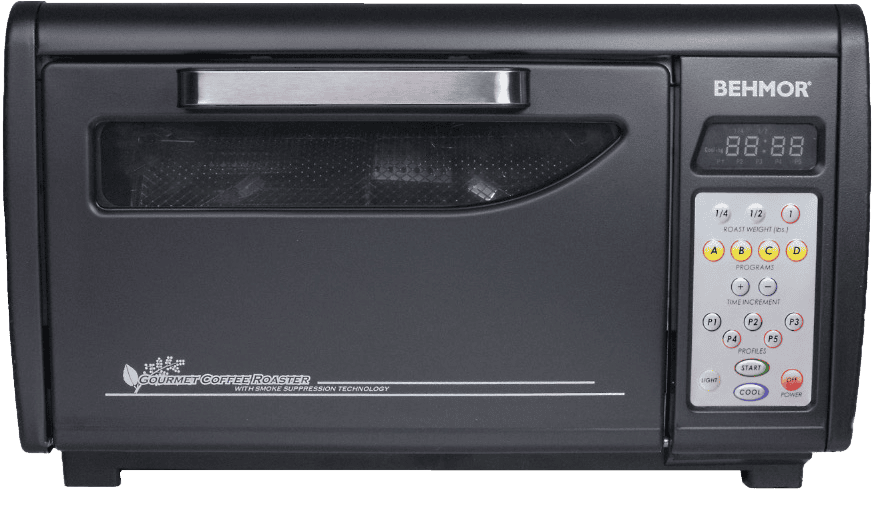
Behmor 2000AB Plus — The roaster
Roasts up to 1 lb in a rotating drum with five presets, A/B heat curves, and catalytic smoke suppression.
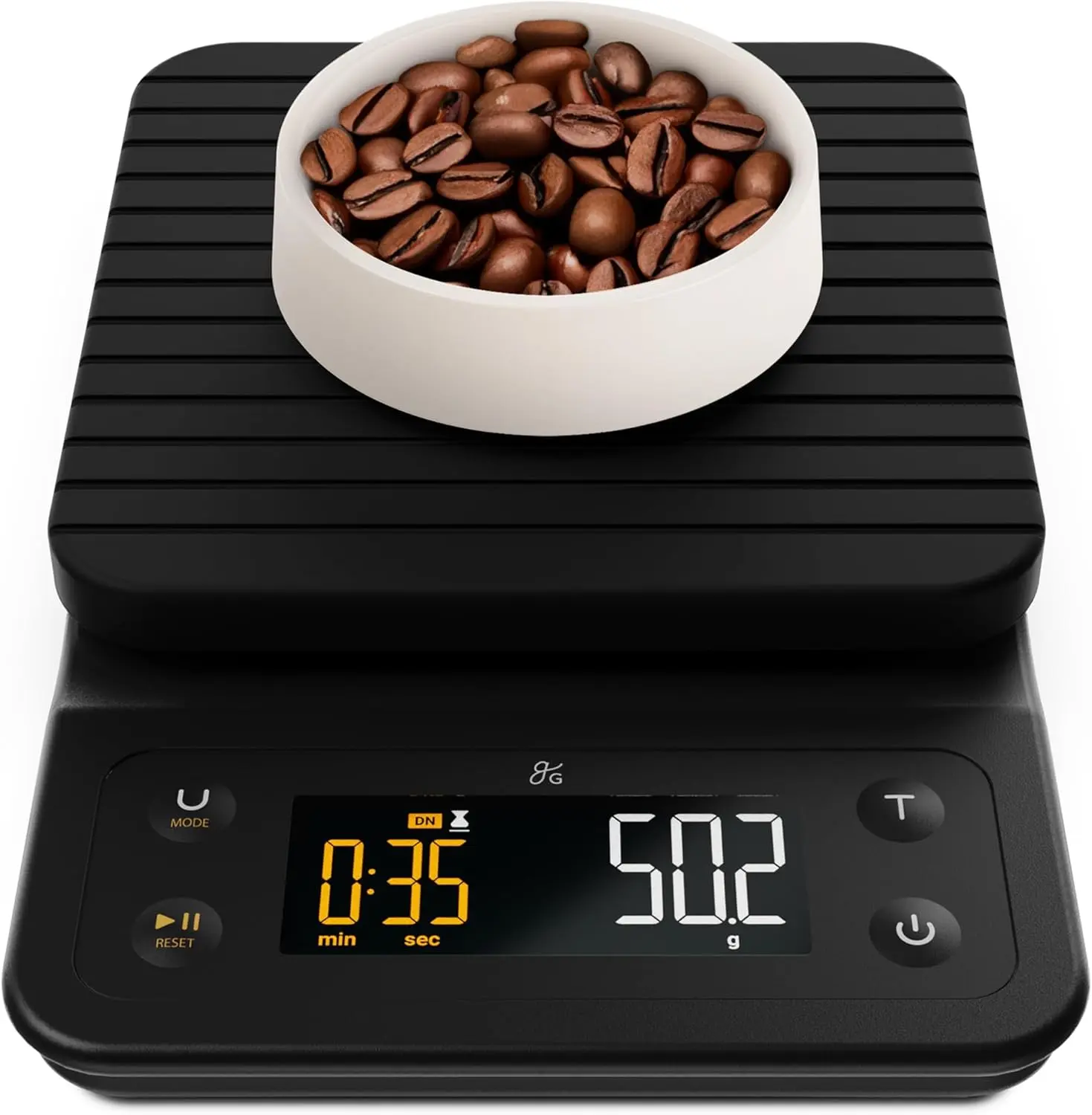
Digital scale — Batch weights
A 0.1 g scale keeps batch size constant, which is the key to repeatable roast times on any roaster.
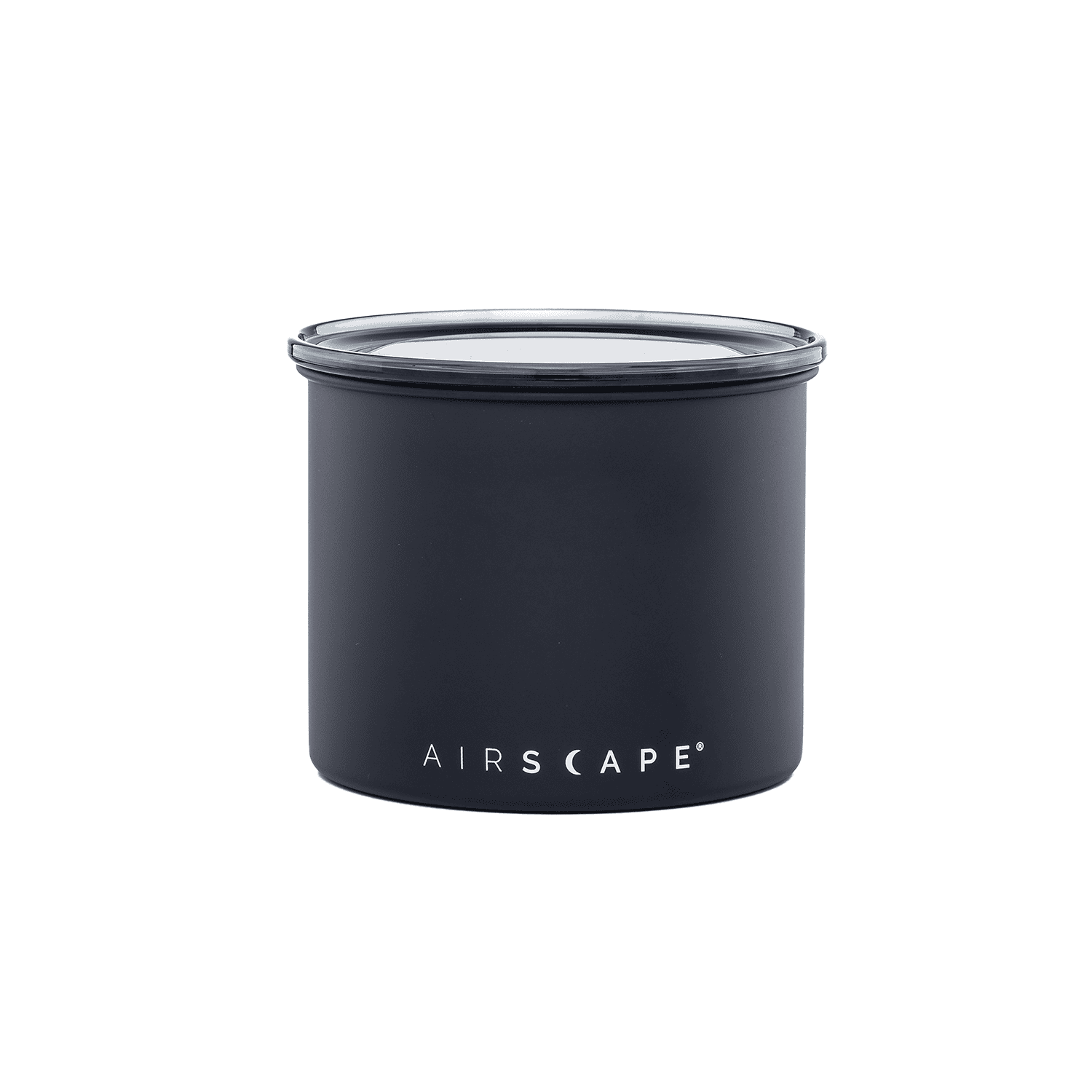
Airscape canister — Storage
Pushes air out above the beans so fresh roasts can rest and degas while staying protected from oxygen.
Affiliate disclosure: Amazon links may earn CoffeeGearHub a commission at no additional cost to you. Prices and availability can change.
Behmor 2000AB Plus Specifications
The Behmor 2000AB Plus is a drum-style home roaster that succeeds the Behmor 1600 and the original 2000AB, with updated smoke suppression and safety features. The table summarizes Behmor’s published specifications; check the current manual, since details such as warranty terms can change.
| Specification | Behmor 2000AB Plus |
|---|---|
| Roaster type | Rotating stainless drum |
| Batch size | Up to 1 lb (about 454 g) green; presets for 1 lb, 1/2 lb, 1/4 lb |
| Power | About 1,630 W, 120 V (North America) |
| Controls | Presets P1–P5, A/B heat curves, +/− time adjustment |
| Roast time | About 16–22 minutes, plus automatic cooling |
| Smoke suppression | Catalytic converter with recirculating airflow |
| Chaff handling | Removable chaff tray below the drum |
| Footprint | About 17 × 12 × 10 inches; roughly 18 lb |
Build Quality, Drum Design, and Footprint
The Behmor 2000AB Plus looks like a countertop oven, and in a sense it is one: quartz heating elements warm a stainless-steel drum that rotates the beans throughout the roast. The tumbling drum gives an even, forgiving roast at larger batch sizes, which is the main reason people choose it over fluid-bed machines that roast smaller amounts in a column of hot air. A removable tray below the drum collects chaff, and an interior light lets you check the beans through a small window, although the view is limited compared with a glass fluid-bed chamber.
It is larger than fluid-bed roasters, roughly the size of a toaster oven, so plan counter space near an outlet and a window. It ships assembled and ready to use. Behmor offers replacement drums, chaff trays, and catalyst screens, though aftermarket upgrades are fewer than for some fluid-bed models.
How the Presets, A/B Curves, and Timer Work
The Behmor works differently from roasters with separate heat and fan dials. You choose a preset that sets the total roast time and the heat profile for a batch size: P1 for one pound, P2 for half a pound, P3 for a quarter pound, P4 for a gentler one-pound profile suited to dense or natural-process beans, and P5 for a custom profile you have saved. Then you choose heat curve A, which ramps up more gently, or B, which reaches full power sooner. The plus and minus buttons add or remove time in short steps.
The most important thing to understand is that the preset time is a maximum, not a target. Your main job during the roast is to listen for first crack, watch and smell the beans, and press stop when they reach the roast you want, which starts the automatic cooling cycle. Many owners add a couple of minutes of buffer time before starting so the timer never ends the roast before the beans are ready. The manual also describes a safety feature that requires you to confirm you are present late in the roast; follow it, because unattended roasting is a fire risk with any roaster.
Your First Roast on the Behmor
Start with a forgiving washed coffee from Central or South America and a batch slightly under the maximum, around 12 ounces. Weigh it, load the drum, empty the chaff tray, and select P1 with curve B, adding a couple of minutes of buffer time. Roast near a window or under a range hood, and stay with the machine. For the first several minutes the beans dry and turn from green to yellow to tan with a grassy, bread-like smell; then they brown as caramel aromas build.
First crack, a series of popping sounds like popcorn, usually arrives somewhere past the middle of the roast. Note the time. For a City roast, press stop as the popping slows near the end of first crack; for City+ or Full City, let the roast continue for one to three minutes after first crack ends, watching the color carefully. Let the cooling cycle run without opening the door, then rest the beans for at least a day before brewing so carbon dioxide can escape. Keep notes on batch weight, settings, first crack time, and stop time so you can repeat or adjust the roast. Our home coffee roasting guide explains the stages in more depth.
Roast Profiles From City to Full City+
These reference points assume about 12 ounces to a pound of washed coffee on P1 with curve B. Your times will shift with bean density, batch size, room temperature, and line voltage, sometimes by a few minutes, so trust sound, color, and smell over the clock.
| Roast level | When to press stop | Best for |
|---|---|---|
| City | As first crack slows to an end | Bright pour-over and AeroPress |
| City+ | About 1 minute after first crack ends | Everyday filter and espresso |
| Full City | About 2–3 minutes after first crack, before second crack | Sweet, rounded drip and espresso |
| Full City+ | At the first snaps of second crack | Chocolatey espresso and milk drinks |
City+ to Full City is where the Behmor shines: the drum produces sweet, balanced roasts with good body, well suited to drip, French press, and espresso. Very light roasts are possible but less of a strength than on fast fluid-bed roasters, and darker roasts need close attention and ventilation. Our coffee roast levels guide describes each stage’s flavor.
Adjusting for Different Coffees
Dense, high-grown coffees such as many Ethiopian and Kenyan lots take longer to roast through, so many owners use the gentler P4 profile or curve A, add extra buffer time, and roast slightly smaller batches to keep heat moving into the bean. Natural-process coffees, which are often fruitier and roast less evenly, also benefit from a gentler start and slightly smaller batches, around 10 to 12 ounces.
Softer, lower-grown coffees such as many from Brazil roast faster and can scorch if pushed, so the standard P1 with curve B and a normal batch usually works well, with a careful eye after first crack. Wet-hulled Indonesian coffees such as Sumatra are often taken darker for body and earthiness, which brings more smoke, so ventilate well. Whatever the coffee, change one setting at a time between roasts and record what you did; a green coffee sampler is a good way to learn how different origins behave.
Smoke Suppression: What It Does and Its Limits
Smoke suppression is the Behmor’s defining feature. Roasting exhaust is drawn through a catalytic converter that burns off much of the smoke before air leaves the machine. At City and City+ levels, the result is far less visible smoke than most home roasters produce; you will still smell roasting coffee, but light-to-medium roasting in a kitchen becomes realistic for many households.
It does not eliminate smoke at dark roast levels. Toward Full City+ and beyond, the volume of smoke and oils can overwhelm the catalyst, so open a window or roast under a range hood. Keeping the catalyst and chaff tray clean preserves its effectiveness, and the smoke detector in your kitchen will still have opinions about darker roasts. Plan for ventilation even with the Behmor, and it will make indoor roasting much more comfortable than it would otherwise be.
Common Behmor Problems and Fixes
Roasts that end before first crack are the most common frustration. The timer reached zero before the beans were ready, usually because the batch was large, the beans were dense, or the line voltage was low. Add buffer time before starting, use a slightly smaller batch, and avoid sharing the circuit with other appliances. Uneven roasts with a mix of light and dark beans often come from mixing different coffees, overloading the drum, or very small batches where beans slide instead of tumbling; stay between the minimum and maximum batch sizes.
Excess smoke usually means a darker roast or a dirty catalyst and chaff tray, so clean them and ventilate. Chaff escaping into the room points to an overfull chaff tray. If the machine stops unexpectedly late in the roast, it may be the presence-check safety feature waiting for a button press, so check the manual. Baked, flat-tasting coffee suggests the roast took too long; try curve B, a smaller batch, or preheating as the manual allows.
Behmor 2000AB Plus vs Fresh Roast and Aillio
The Behmor and the Fresh Roast SR800 suit different roasters. The SR800 is a fluid-bed machine that roasts up to about half a pound in a clear glass chamber with separate heat and fan control, so roasts are faster, more visible, and more adjustable, but it has no smoke suppression. The Behmor roasts up to a pound in a drum with smoke suppression and preset-based control, so it suits larger weekly batches and set-and-monitor roasting. Many experienced home roasters own one of each. Our Fresh Roast SR800 review covers that machine in depth.
The Fresh Roast SR540 is the smaller, cheaper fluid-bed option, roasting a few ounces at a time, which suits one-person households and learning but means frequent roasts. At the other end, the Aillio Bullet is a premium induction drum roaster with continuous control and larger batches, aimed at serious hobbyists and very small businesses. The Behmor sits between them: more capacity than the Fresh Roast models and far less cost and complexity than the Bullet.
Cleaning and Maintenance
Empty the chaff tray after every roast; letting chaff build up affects airflow and is a fire risk. Brush out the drum, the chamber, and the area around the elements regularly with a soft roaster cleaning brush once the machine is cool. The catalyst and chamber benefit from periodic deeper cleaning following Behmor’s manual, which also describes cleaning products and intervals. Never immerse the base or spray liquids inside.
Keep the machine on a heat-resistant surface with clearance around it, and never leave it running unattended. Inspect the drum and door for damage periodically, and replace worn parts with Behmor’s replacement drums, trays, and catalyst screens. A clean Behmor roasts more evenly, suppresses smoke better, and lasts longer.
Useful Accessories
A digital scale with 0.1 g resolution is the most useful accessory, because consistent batch weights are what make roast times repeatable. Weigh the green coffee before each roast and the roasted coffee after, and you can track weight loss as a rough measure of roast level.
For storage, an Airscape canister lets you push the air out above the beans while they rest and degas, which helps fresh roasts keep their aroma. Add a soft cleaning brush for the drum and chaff tray, and a supply of green coffee to experiment with. Our coffee storage guide explains how long to rest and keep home-roasted beans.
Who Should Buy the Behmor 2000AB Plus
The Behmor is a strong choice if your household drinks a pound or more of coffee a week, you want to roast indoors with less smoke, and you are happy to roast by sound, smell, and timer rather than by adjusting heat and fan continuously. It suits people who prefer medium roasts for drip, French press, and espresso, and who value fewer, larger roasting sessions.
It is less suited to people who want to see the beans clearly throughout the roast, chase very light, bright roasts, or fine-tune every stage with precise controls. Those buyers will be happier with a fluid-bed roaster like the Fresh Roast SR800, or, with a bigger budget, a more controllable drum roaster. Outside North America, check voltage, since the 2000AB Plus is a 120 V model.
Our Verdict
The Behmor 2000AB Plus remains one of the most practical home roasters for larger batches. A one-pound drum, forgiving preset controls, and catalytic smoke suppression make it well suited to weekly household roasting at light-to-medium levels. Its limits are a less detailed view of the beans, slower roasts, and smoke at darker levels. If capacity and indoor comfort matter most, it is an easy recommendation; if control and visibility matter most, look at a fluid-bed roaster instead.
Roast a Pound at a Time, Indoors
The Behmor 2000AB Plus suits larger household batches; pair it with a scale for repeatable roasts.
As an Amazon Associate, CoffeeGearHub earns from qualifying purchases.
Editorial bottom line: Choose the Behmor 2000AB Plus for one-pound batches and indoor light-to-medium roasting with smoke suppression. Roast by sound and color, press stop when the beans are ready, and keep the chaff tray and catalyst clean.
Frequently Asked Questions
Is the Behmor 2000AB Plus good for beginners?
Yes, for beginners who want larger batches. The presets do most of the work, so your main job is listening for first crack and pressing stop at the right time. Beginners who want to see the beans and learn by adjusting heat and fan may prefer a fluid-bed roaster.
Can you roast indoors with the Behmor 2000AB Plus?
For light-to-medium roasts, usually yes. Its catalytic smoke suppression greatly reduces smoke at City and City+ levels. Darker roasts still produce smoke, so ventilate or roast near an open window for Full City+ and beyond.
How much coffee can the Behmor 2000AB Plus roast?
Up to 1 lb (about 454 g) of green coffee per batch, with presets for 1 lb, half-pound, and quarter-pound batches. Many owners find slightly less than the maximum gives more even results with dense or natural-process coffees.
How long does a Behmor roast take?
Typically around 16 to 22 minutes of roasting depending on batch size, preset, and target roast, followed by an automatic cooling cycle of several minutes. Line voltage and room temperature can shift timing noticeably.
Can the Behmor do dark roasts?
It can, but it is better suited to light-to-medium and medium roasts. Dark roasts produce more smoke than the catalyst can handle and take careful attention near the end of the roast.
How does it compare with the Fresh Roast SR800?
The Behmor roasts larger batches with smoke suppression; the SR800 roasts smaller batches faster, with finer heat and fan control and a clear view of the beans. Our Fresh Roast SR800 review compares them in detail.
Sources and Further Reading
Specifications and operating guidance come from Behmor’s published product information and user manual; roaster comparisons use published specifications from Fresh Roast and Aillio. Roast level terminology follows common specialty coffee usage and the Specialty Coffee Association’s standards. Roast times are reference points that vary with beans, batch size, and line voltage. CoffeeGearHub did not test this roaster hands-on; the review relies on published specifications, the manual, and independent owner reports.
CoffeeGearHub product shortlist
Continue with related products on CoffeeGearHub
Review product categories and current verified merchant offers on CoffeeGearHub before leaving the site.