
Last Updated: February 2026 • 20–26 min read
Great cold brew starts with the right beans—more than any fancy brewer. Cold water extraction highlights sweetness, rounds off sharp acidity, and can make the wrong beans taste flat or muddy. This guide covers the best coffee beans for cold brew (with Amazon best-selling picks), plus an easy framework to choose beans by roast level, flavor profile, and how you drink cold brew (black, with oat milk, or iced latte style).
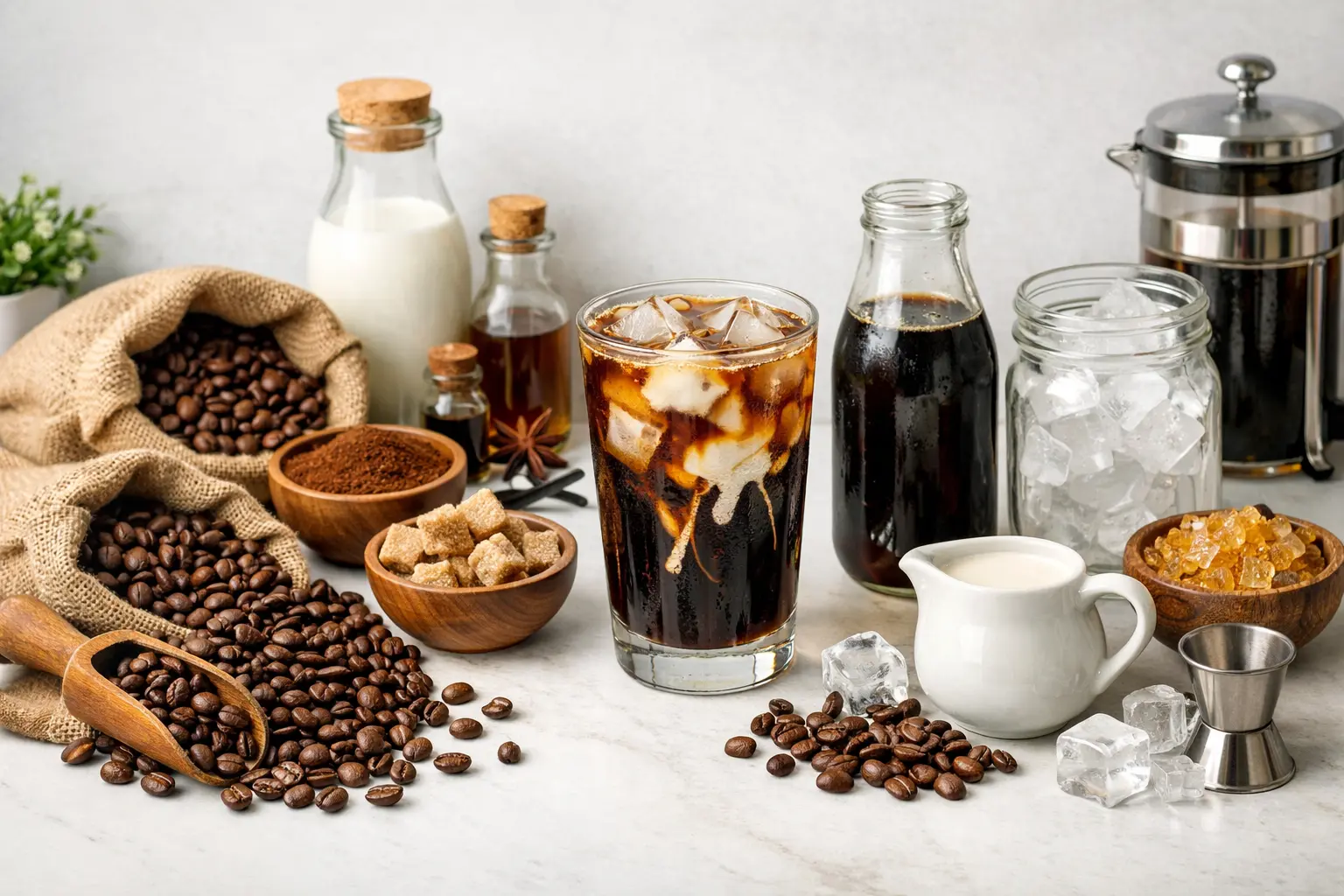
Key Takeaways (Fast Picks)
- Best “safe pick” for most people: medium roast with chocolate/caramel notes (smooth, sweet, hard to mess up).
- Best for ultra-smooth low-acid cold brew: “smooth & sweet” medium roasts and Brazil/Central America profiles.
- Best for iced lattes: medium-dark/dark roasts or “creamy” blends that stay present in milk.
- Whole bean usually wins: coarse grind reduces sludge and bitterness; pre-ground is often too fine.
- If your cold brew is bitter: grind too fine or steep too long—don’t blame the beans first.
Helpful internal reads: How to Make Cold Brew Coffee at Home • Best Cold Brew Coffee Makers • How to Store Coffee Beans
Bizzy Organic “Smooth & Sweet”
Classic smooth, sweet cold brew with minimal bitterness.
Kicking Horse (Medium Roast)
Great value with rich chocolate/brown sugar flavor direction.
Lavazza Super Crema
Creamy concentrate base that holds up in milk drinks.
Table of Contents
- Quick Shop Grid (Top 3 Picks)
- Comparison Table: Top Amazon Best-Selling Beans for Cold Brew
- How to Choose Beans for Cold Brew (Roast, Origin, Flavor)
- Best Roast Level for Cold Brew (Light vs Medium vs Dark)
- Top Picks: Best Coffee Beans for Cold Brew (Reviews + Who Each Is For)
- Whole Bean vs Pre-Ground (What Actually Matters)
- Cold Brew Recipe: Ratios, Grind Size, Steep Time
- Troubleshooting: Weak, Bitter, Muddy, Sour Cold Brew
- Storage: Keep Beans + Concentrate Fresh
- FAQ
Top Cold Brew Bean Picks (Quick Shop)
Want the fastest “buy with confidence” option? These three cover the most common needs: smooth black cold brew, iced lattes, and best value.
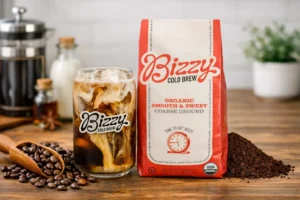
Bizzy Organic “Smooth & Sweet”
Medium roast • sweet & smooth • best beginner pick.
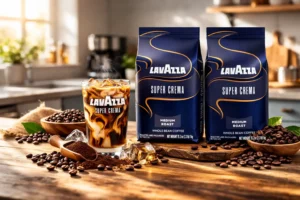
Lavazza Super Crema
Creamy concentrate base • ideal for iced lattes.
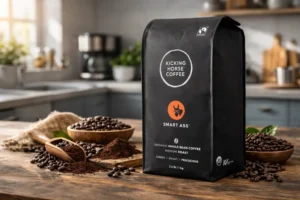
Kicking Horse (Medium Roast)
Great value • rich chocolate notes • flexible options.
Comparison Table: Top Amazon Best-Selling Beans for Cold Brew
This table compares popular Amazon best sellers that work especially well in cold extraction. If you want the easiest path: pick a medium roast “smooth & sweet” blend for black cold brew, or a medium-dark/dark roast if you mostly drink iced lattes.
| Bean | Roast | Format | Flavor Direction | Best For | Watch-Out |
|---|---|---|---|---|---|
| Bizzy Organic “Smooth & Sweet” | Medium | Whole bean / coarse ground | Caramel/nutty sweetness | Beginner-friendly black cold brew | Whole bean gives best control |
| Stone Street Cold Brew (Colombian) | Dark | Whole bean / coarse ground | Bold, smooth, low-acid style | Bold cold brew + milk drinks | Over-steeping can push bitterness |
| Stumptown Hair Bender | Medium | Whole bean | Sweet + dark chocolate + lift | More complex cold brew | Needs a decent coarse grind |
| Lavazza Super Crema | Medium (espresso-leaning) | Whole bean | Creamy, nutty/sweet | Concentrate for iced lattes | Blend may feel “stronger” |
| Starbucks Pike Place | Medium | Whole bean | Cocoa/praline richness | Reliable household batch brew | Freshness matters a lot |
| Peet’s Major Dickason’s | Dark | Whole bean | Robust, full-bodied | Milk drinks + bold fans | Can feel heavy black |
| Kicking Horse (various) | Medium/Dark options | Whole bean | Chocolate/brown sugar | Great value + rich cold brew | Pick roast to match your style |
| Death Wish (high caffeine) | Dark or Medium | Whole bean | High-caffeine intensity | Maximum kick | Not ideal if sensitive to bitterness |
Gear pairing: if you’re also choosing a brewer, see Best Cold Brew Coffee Makers.
How to Choose Beans for Cold Brew (Simple Framework)
Cold brew rewards beans that emphasize sweetness, chocolate, caramel, and nutty depth. Use this framework and you’ll choose well every time—even if you swap brands.
Step 1: Decide how you drink cold brew
- Black over ice: medium roasts and Brazil/Central America profiles (sweet, smooth, low harshness).
- With oat milk/cream: medium-dark or dark roasts (coffee flavor stays present after dilution).
- Iced latte style: concentrate + milk—creamy blends and espresso-leaning mediums shine.
- Bright/fruity cold brew: lighter roasts (more tea-like; not for everyone).
Step 2: Choose roast level (this matters most)
Cold water pulls fewer acids and aromatics than hot brewing. That’s why ultra-light roasts can taste thin unless you tighten ratio and steep longer. Medium and medium-dark are the most consistently delicious for cold brew.
Step 3: Choose flavor direction (avoid “guessing”)
- Chocolate/cocoa/brown sugar: easiest to love, lowest risk.
- Caramel/hazelnut/praline: naturally sweet cold brew; excellent for beginners.
- Citrus/berry/floral: adventurous; can be bright or “tea-like.”
- Smoky/very dark: bold; can skew bitter if over-steeped.
Internal link: Want to decode origin + flavor labels faster? See The Ultimate Coffee Bean Buying Guide.
Best Roast Level for Cold Brew (Light vs Medium vs Dark)
If you only remember one thing: medium roast beans make the most consistently great cold brew. Here’s when to choose light or dark instead.
Light Roast
Bright, fruity, sometimes tea-like. Can taste thin unless you use a tighter ratio (1:6) and longer fridge steep (18–24 hours).
Medium Roast (Best Overall)
Sweet, smooth, forgiving. Chocolate/caramel notes show up beautifully in cold extraction. Best starting point for most people.
Dark Roast
Bold, heavy body—excellent with milk. Keep grind coarse and steep 12–16 hours to prevent bitterness.
Internal link: For a universal taste-fix framework (weak/bitter/sour), see How to Dial In Coffee at Home.
Top Picks: Best Coffee Beans for Cold Brew (Amazon Best Sellers)
These picks match what cold brew needs: sweetness, smoothness, and a profile that still tastes good cold and diluted. Use them as anchors—then branch out once you know your style.
1) Best Overall (Smooth, Sweet, Beginner-Friendly): Bizzy Organic “Smooth & Sweet”
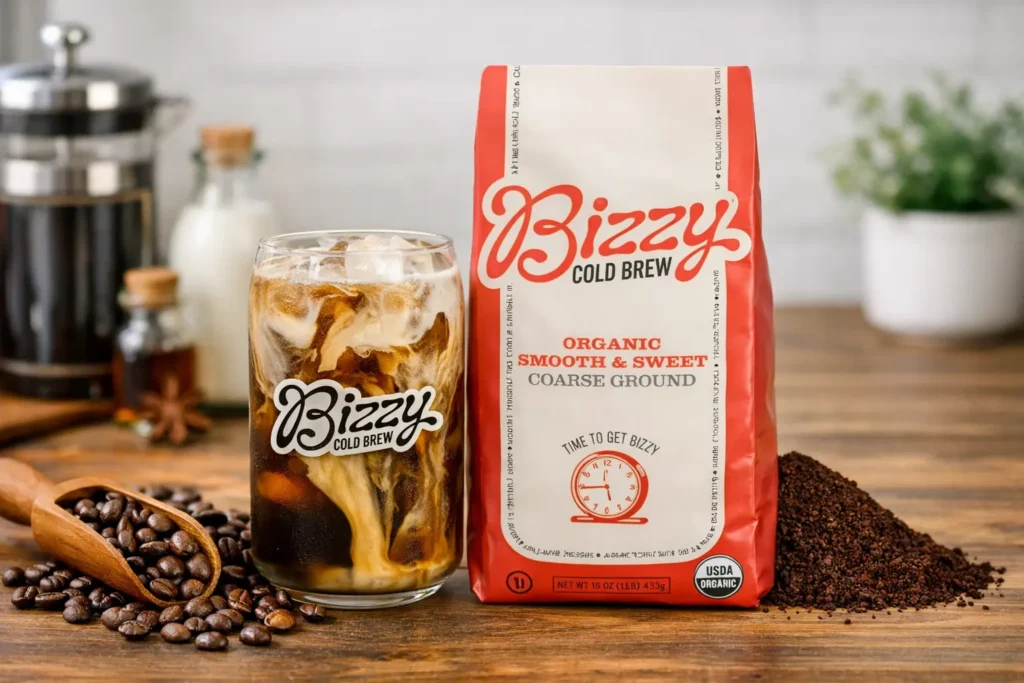
Bizzy Organic Cold Brew Coffee (Smooth & Sweet)
Why it works: This is the “classic cold brew profile” in bean form—smooth, sweet-leaning, and forgiving. If you want cold brew that tastes good black over ice (without needing perfect technique), start here.
- Best for: black cold brew, beginners, batch brewing
- Flavor direction: caramel/nutty sweetness
- Best method: 1:8 ready-to-drink or 1:4 concentrate
Affiliate disclosure: As an Amazon Associate, Coffee Gear Hub may earn from qualifying purchases.
2) Best Bold / Low-Acid Style: Stone Street Cold Brew Coffee (Colombian)
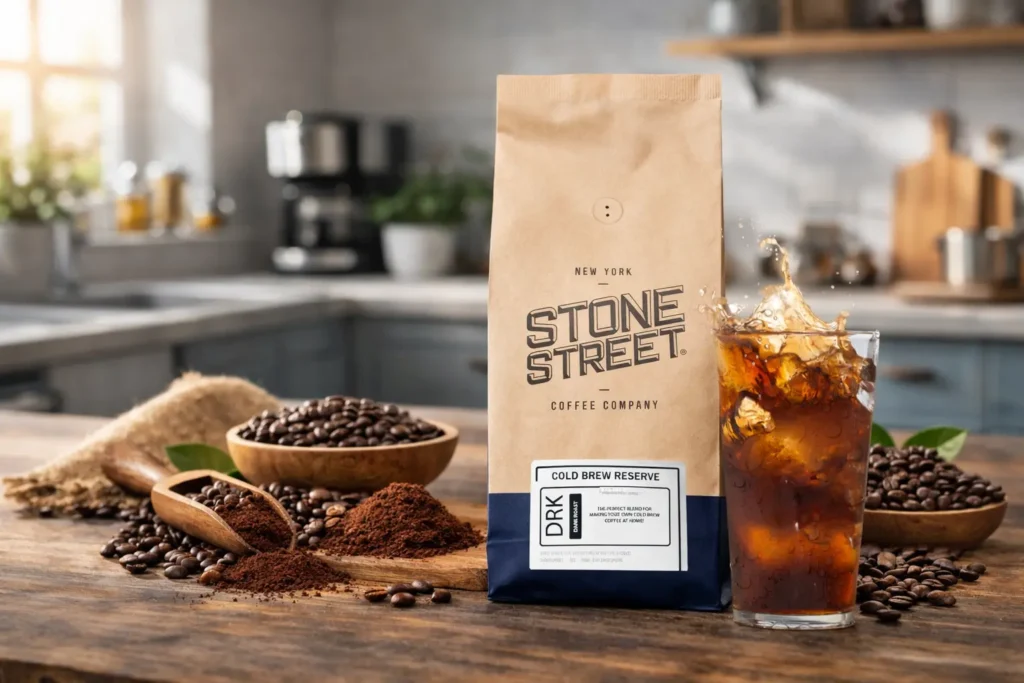
Stone Street Cold Brew Coffee (Colombian)
Why it works: If you want “strong but smooth,” this is a popular cold brew-specific option. Colombian profiles often land in chocolate/caramel territory—perfect for cold extraction and dilution.
- Best for: bold black cold brew, concentrate, milk drinks
- Pro tip: keep steep time tighter (12–16 hours) if you’re bitterness-sensitive
3) Best “Specialty-Style” Flavor: Stumptown Hair Bender (Whole Bean)
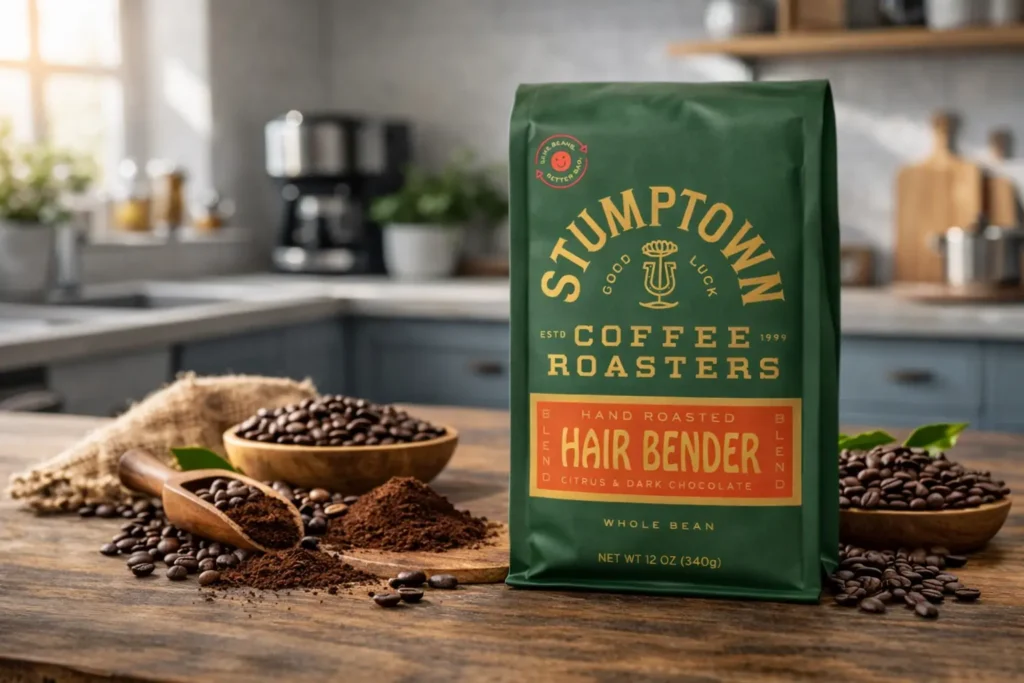
Stumptown Hair Bender (Whole Bean)
Why it’s different: If you want cold brew that still feels “interesting,” Hair Bender tends to balance sweetness with deeper chocolate notes and a subtle bright lift. Cold brew mutes acidity, so the result often tastes “smooth but not boring.”
- Best for: more complex cold brew, black over ice, “specialty-ish” flavor
- Pro tip: grind consistency matters—use a burr grinder and keep it coarse
4) Best for Iced Lattes (Creamy Concentrate): Lavazza Super Crema (Whole Bean)
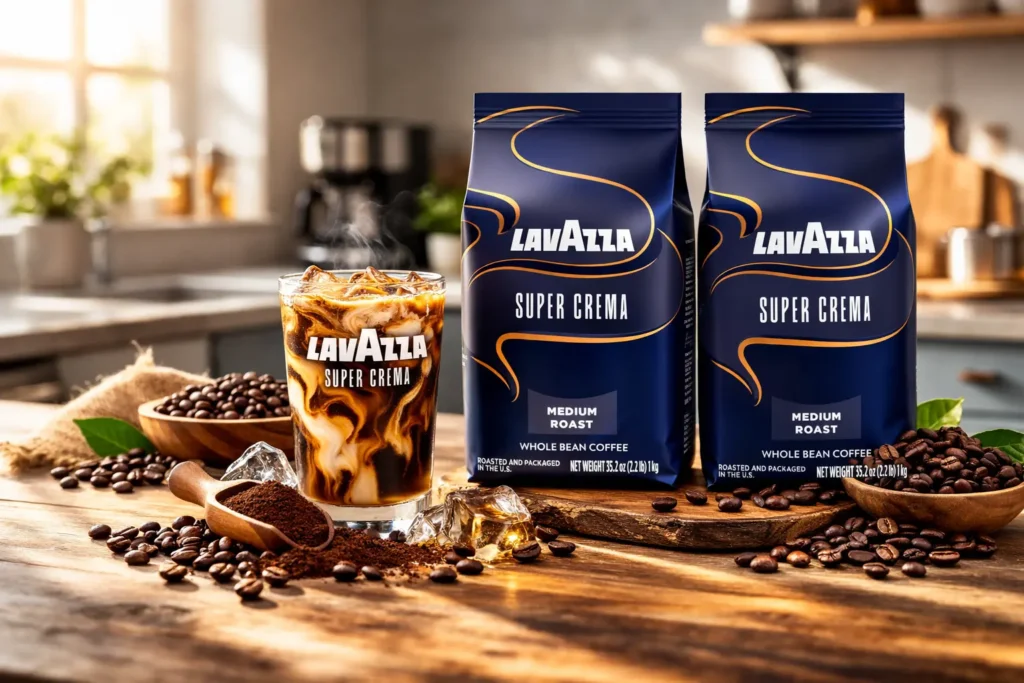
Lavazza Super Crema (Whole Bean)
Why it’s a latte favorite: While often used for espresso, it makes an excellent cold brew concentrate base for milk drinks—creamy, sweet-leaning, and strong enough to stay noticeable after dilution.
- Best for: concentrate + milk, iced lattes, “coffee shop” style drinks
- Best method: brew 1:4 concentrate, then dilute with milk 1:1 (adjust to taste)
5) Best Widely Available “Grocery Staple”: Starbucks Pike Place (Whole Bean)
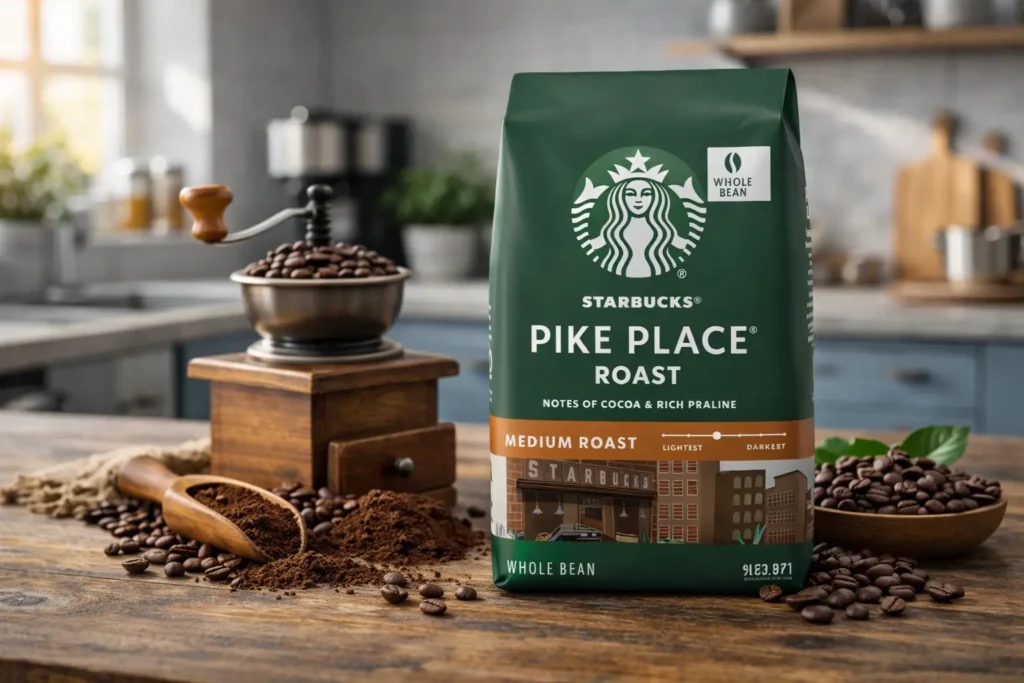
Starbucks Pike Place (Whole Bean)
Why it’s reliable: A straightforward medium roast with cocoa-like richness that works well in cold brew. It’s a simple “no surprises” option for households with mixed preferences.
- Best for: batch cold brew, dependable everyday cups
- Pro tip: beans taste sweeter when stored airtight and ground right before brewing
6) Best Dark Roast for Milk Drinks: Peet’s Major Dickason’s Blend (Whole Bean)
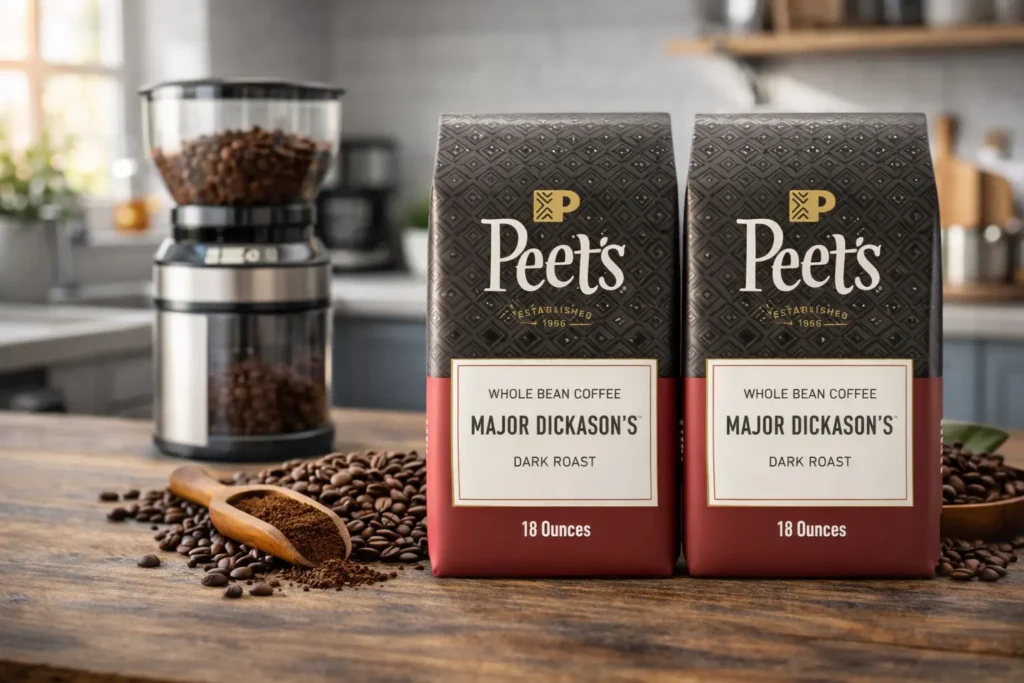
Peet’s Major Dickason’s Blend (Whole Bean)
Why it works: Dark roasts can feel heavy black, but they’re excellent with milk. This blend’s robust profile holds up in iced lattes and sweetened cold brew, so the coffee flavor doesn’t disappear.
- Best for: iced lattes, cream + sugar cold brew, bold fans
- Pro tip: steep 12–16 hours and keep grind coarse to avoid bitterness
7) Best Organic Value (Flexible Roasts): Kicking Horse Coffee (Whole Bean)
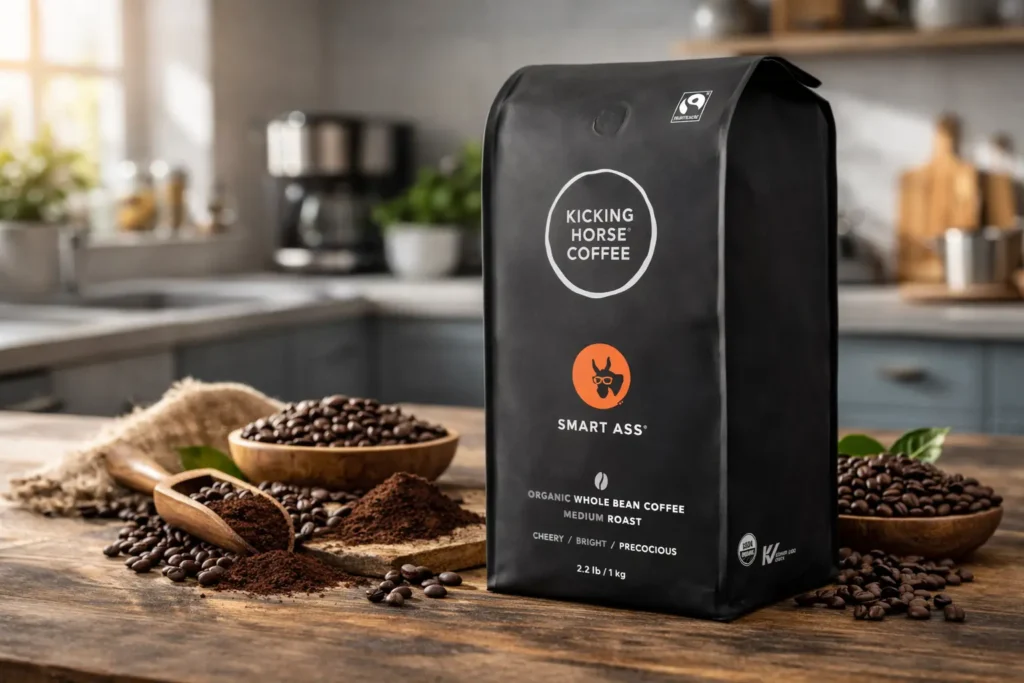
Kicking Horse Coffee (Whole Bean)
Why it’s a strong cold brew candidate: Multiple roast levels that often lean chocolate/brown sugar—excellent for classic cold brew. Pick medium roast for black cold brew, or go darker for milk drinks.
- Best for: organic value, rich flavor, flexible roast options
- Pro tip: steep 14–18 hours in the fridge for smooth sweetness
8) Best for Maximum Caffeine: Death Wish Coffee (Whole Bean)
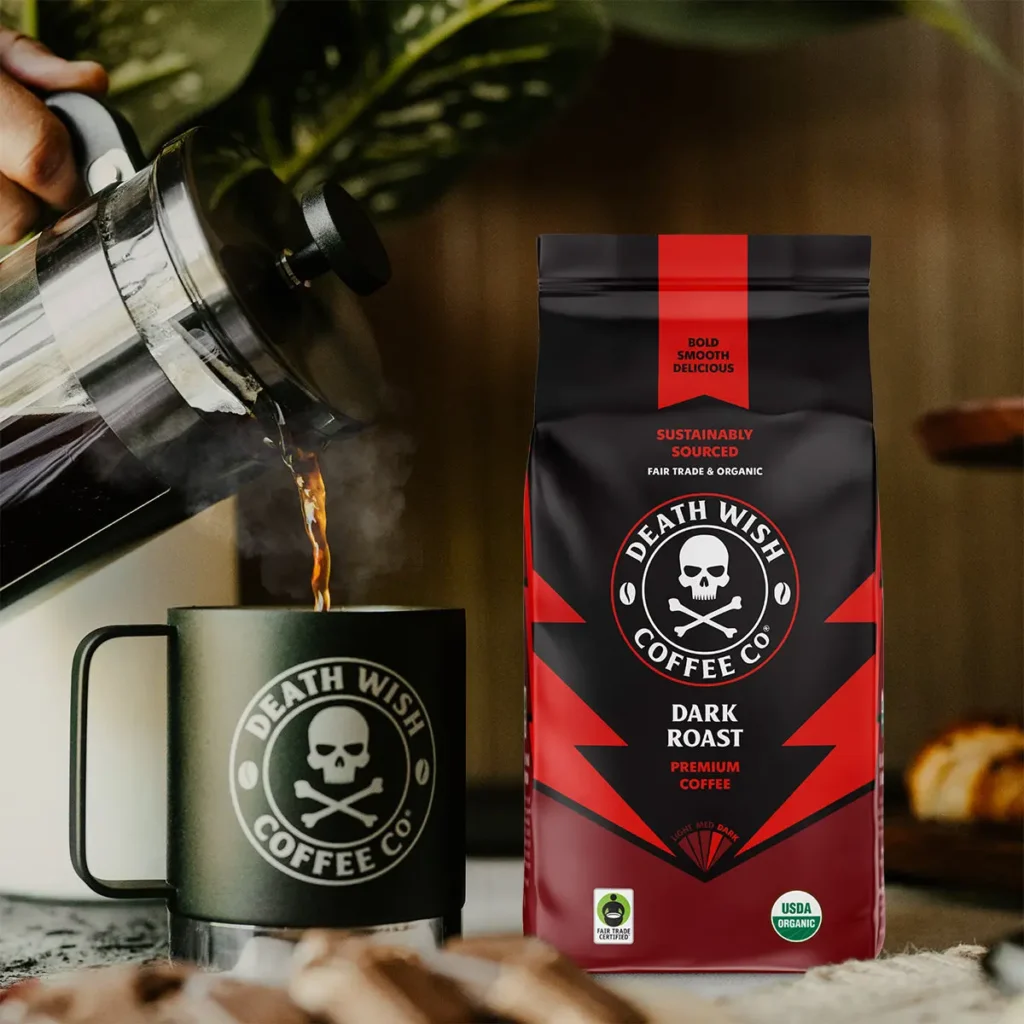
Death Wish Coffee (Whole Bean)
Why people buy it: If your main goal is “strong,” this is one of the most well-known high-caffeine options. It can work well as cold brew concentrate—just keep extraction controlled to avoid harshness.
- Best for: maximum kick, concentrate batches
- Pro tip: coarse grind + 12–16 hour steep; dilute before judging flavor
Whole Bean vs Pre-Ground for Cold Brew
Whole bean is almost always better because grind size is the #1 driver of clarity and bitterness. Cold brew uses long contact time. If coffee is ground too fine (common with pre-ground), you’ll extract more harsh compounds and push fines through filters—resulting in muddy cold brew.
When pre-ground is okay
- You buy coarse ground made for cold brew (not standard drip grind).
- You’re willing to pour through a paper filter after brewing.
- You value convenience over maximum cup clarity.
Upgrade that matters: A burr grinder makes cold brew taste cleaner and sweeter immediately. If you want help, see How to Dial In Coffee at Home.
Cold Brew Recipe (Dial It In Once)
Use this repeatable baseline and adjust only one variable at a time. For a full walkthrough, see How to Make Cold Brew Coffee at Home.
Grind size
Coarse grind (raw sugar/coarse sea salt). If your filter clogs or your cup is muddy, go coarser.
Ratios (by weight)
| Goal | Coffee : Water | Example | How to Serve |
|---|---|---|---|
| Concentrate | 1:4 | 200 g coffee + 800 g water | Dilute 1:1 with water or milk (adjust) |
| Strong ready-to-drink | 1:6 | 150 g coffee + 900 g water | Over ice; splash of milk optional |
| Standard ready-to-drink | 1:8 | 125 g coffee + 1000 g water | Over ice as-is |
Steep time
- Fridge: 12–18 hours (up to 24 hours for darker/stronger results)
- Room temp: 10–14 hours (go shorter if bitterness appears)
Troubleshooting: Fix Weak, Bitter, Muddy, or Sour Cold Brew
If your cold brew is weak / watery
- Increase coffee dose (ratio) before changing grind.
- Extend steep time by 2–4 hours (fridge steep is slower).
- Choose medium-dark/dark if you use lots of ice/milk.
If your cold brew is bitter / harsh
- Grind coarser (most common fix).
- Reduce steep time (especially room temp).
- Don’t squeeze the filter (pushes fines through).
- Paper-filter once after brewing if needed.
If your cold brew is muddy / gritty
- Grind coarser and reduce fines.
- Paper-filter after brewing (biggest clarity upgrade for mesh systems).
- Let it settle 5 minutes, then decant slowly.
If your cold brew tastes sour
- It’s usually under-extracted: increase dose or steep longer.
- Try a medium roast instead of very light roast.
- Keep steep time long enough in the fridge (12–18 hours).
Internal link: For a deeper dialing-in method (grind/ratio fundamentals), see How to Dial In Coffee at Home.
Storage: Keep Beans + Concentrate Fresh
Cold brew can hide some flaws, but it can’t fix stale beans. Store beans airtight, cool, and away from light. Keep brewed concentrate sealed in the fridge and aim to drink it within about a week for best flavor.
Internal link: How to Store Coffee Beans (airtight canisters, freezer myths, and what actually works).
FAQs
What roast is best for cold brew coffee?
Medium roast is best for most people because it balances sweetness, body, and smoothness. Medium-dark and dark roasts work well for milk drinks. Light roasts can taste brighter but may come across thin unless you use a tighter ratio and longer steep.
What beans make the smoothest cold brew?
Beans with chocolate, caramel, nutty, and brown sugar notes tend to produce the smoothest cold brew—especially medium roast blends and Brazil/Central America origins.
Whole bean or ground coffee for cold brew?
Whole bean is usually better because you can grind coarse, which reduces bitterness and sludge. Pre-ground is often too fine. If you buy ground, look for coarse ground made specifically for cold brew.
What grind size is best for cold brew?
Coarse grind (raw sugar/coarse sea salt). Too fine increases bitterness and pushes fines through filters, causing a muddy cup.
What ratio should I use for cold brew concentrate?
Start at 1:4 by weight (for example, 200 g coffee to 800 g water). Dilute 1:1 with water or milk, then adjust to taste.
How long should cold brew steep?
In the fridge, 12–18 hours is a reliable sweet spot; up to 24 hours for darker, stronger results. At room temperature, 10–14 hours is often enough to avoid harshness.
Why is my cold brew bitter?
Common causes are grinding too fine, steeping too long (especially warm), or too many fines. Fix it by grinding coarser, reducing steep time, and filtering through paper once if needed.
Do expensive beans taste better in cold brew?
Not always. Cold brew can mute delicate acidity and aromatics, so many mid-priced medium roasts perform extremely well. Freshness and grind control often matter more than price.
Next Reads (Coffee Gear Hub)
| Article | Why it helps |
|---|---|
| How to Make Cold Brew Coffee at Home | Step-by-step process + timing + serving options |
| Best Cold Brew Coffee Makers | Pick the right brewer style for your routine |
| How to Store Coffee Beans | Keep beans fresh so cold brew tastes sweet, not flat |
| How to Dial In Coffee at Home | Grind + ratio fundamentals that fix weak/bitter brews |
| Coffee Bean Buying Guide | Origins, processing, roast levels, and how to buy smarter |

