
Last Updated: February 23, 2026 • 12–16 min read • Brewing Guide: Ratios + Steep Time + Gear Picks + Troubleshooting

✍️ Editorial note: This guide is researched and written by the editors at CoffeeGearHub.com using published brewing science and established specialty-coffee community knowledge. All product links are affiliate links — we may earn a commission at no additional cost to you. This does not affect our recommendations.
The 30-Second Answer
So you want to learn how to make cold brew coffeee at home? Cold brew is smoother, less acidic, and cheaper than café iced drinks — and one of the easiest batch brews you can make at home. Use a coarse grind, steep in the fridge for 14–16 hours, and start at a 1:5 ratio (concentrate) diluted 1:1 before serving. Medium to medium-dark roasts with chocolate or caramel notes are the easiest starting point. That’s it.
- Best grind: coarse (French press texture) — fine grinds make cold brew cloudy and bitter
- Best beginner ratio: 1:5 concentrate, dilute 1:1 with water or milk before serving
- Best steep time: 14–16 hours refrigerated — start here and adjust by taste
- Best roast: medium or medium-dark for chocolate and caramel sweetness
- Shelf life: up to 2 weeks refrigerated; best flavor within the first 7–10 days
Who This Guide Is For — Jump to What You Need
☕ First time making cold brew
Read What Cold Brew Is then follow the Step-by-Step Recipe.
⚖️ Getting the ratio right
Jump to Coffee-to-Water Ratios and the Steep Time guide.
🛒 Ready to buy gear
Skip straight to Cold Brew Maker Picks.
🔧 Fixing a bad batch
Jump to Troubleshooting for a fast diagnosis.
Table of Contents
What Cold Brew Coffee Is (and Why It Tastes Smoother)
Cold brew is defined by the brew method — not by the serving temperature. Instead of brewing with hot water in a few minutes, you steep coarsely ground coffee in cold or room-temperature water for 12–18 hours, then filter. That long, gentle extraction tends to pull more of coffee’s chocolate and caramel sweetness and less of the sharp perceived acidity and bitterness that hot water extraction produces.
💡 Simple mental model: Hot water extracts fast — including more sharp compounds. Cold water extracts slower and more selectively, so the cup typically reads as smoother and sweeter. The trade-off is time: 14–16 hours instead of 5 minutes.
Cold Brew vs Iced Coffee
These two drinks get mixed up constantly, but they’re made differently and taste different in the cup.
| Factor | Cold Brew | Iced Coffee |
|---|---|---|
| How it’s made | Steeped in cold or room-temp water | Brewed hot, then chilled or poured over ice |
| Brew time | 12–18 hours | 5–10 minutes |
| Perceived acidity | Lower / smoother | Higher / brighter |
| Shelf life | Up to ~2 weeks refrigerated | 1–2 days |
| Dilution | Less affected by melting ice (if concentrated) | Waters down quickly |
What You Need to Make Cold Brew
- Container: Mason jar, French press, or a dedicated cold brew pitcher.
- Filter: Built-in mesh filter, fine sieve plus paper filter, or cheesecloth.
- Grinder: A burr grinder set to coarse is ideal. Pre-ground coffee labeled “French press” or “cold brew” works in a pinch but gives you less control.
- Water: Filtered water is worth using — cold brew concentrates flavors, including water quality.
🔬 The grinder matters more than the container. A blade grinder produces inconsistent particle sizes — some chunks, some powder — that cause uneven extraction, cloudiness, and bitterness in cold brew. A burr grinder set to coarse gives you uniform particles that extract cleanly and filter easily. The KINGrinder K6 covers cold brew’s coarse range as well as every other brew method you’re likely to try.
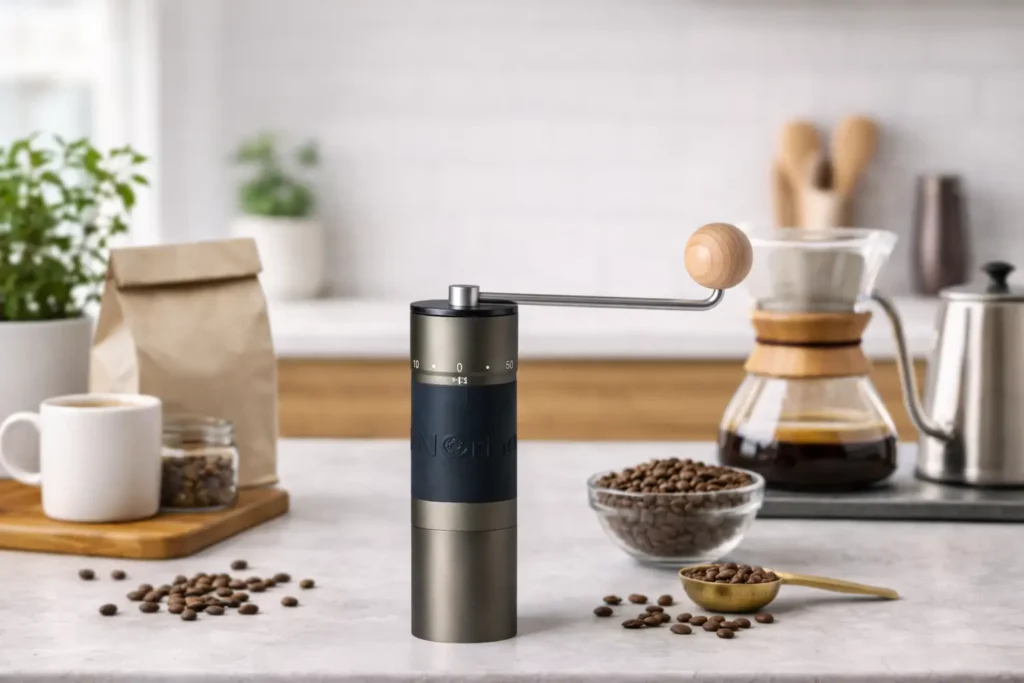
KINGrinder K6 — Best Grinder for Cold Brew
The K6’s numbered click system makes it easy to dial in the coarse setting cold brew needs, record it, and return to it exactly next batch. Near-zero retention means no stale grounds between sessions. Also covers pour-over, AeroPress, French press, and moka pot in one grinder.
Disclosure: CoffeeGearHub may earn from qualifying purchases.
Coffee-to-Water Ratios (Concentrate vs Ready-to-Drink)
The right ratio depends on whether you want a concentrate (strong, diluted before serving) or a ready-to-drink batch (pour over ice immediately). Most home brewers find concentrate more flexible — you can adjust strength at serving time.
| Style | Ratio (coffee:water) | What you do after brewing | Best for |
|---|---|---|---|
| Concentrate (bold) | 1:4 | Dilute ~1:2 before serving | High-caffeine fans, milk drinks |
| Concentrate (standard) ⭐ | 1:5 | Dilute 1:1 with water or milk | Most home brewers — start here |
| Middle ground | 1:7 | Usually drink straight over ice | Less math, less dilution |
| Ready-to-drink | 1:8 | Pour over ice directly | Grab-and-go weekly batches |
💡 Don’t forget: If you brew concentrate, always dilute before drinking. Start at 1:1 (equal parts concentrate + water or milk), then adjust by taste — go stronger or weaker based on your preference.
Step-by-Step: Cold Brew Recipe (Beginner-Proof)
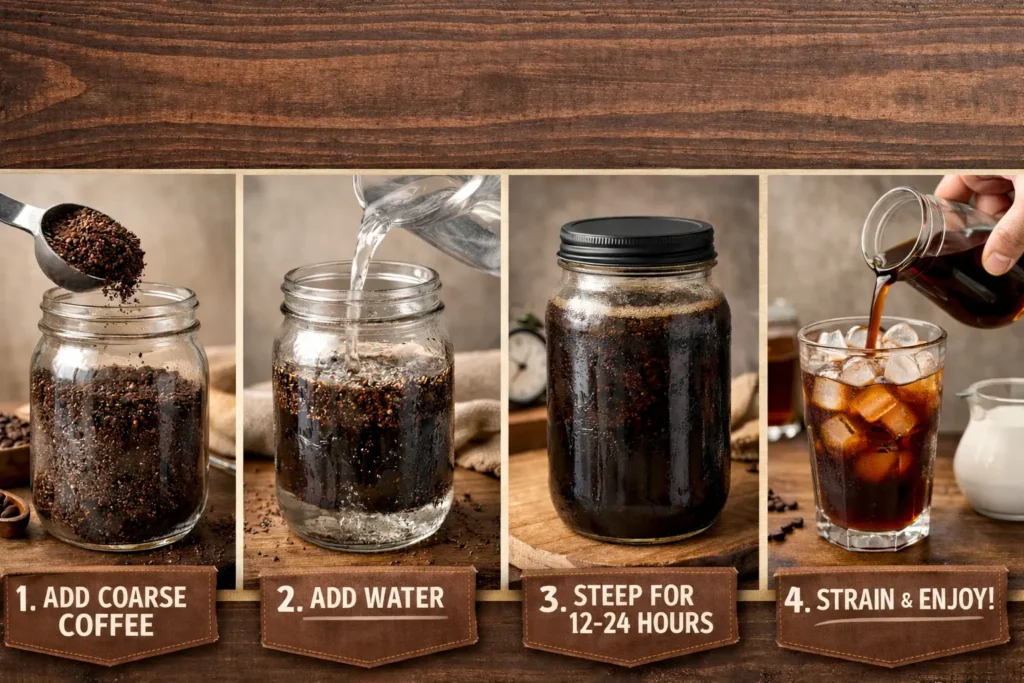
This recipe makes a 1:5 concentrate — the most popular home method. It scales easily: just multiply everything by the same factor.
- Weigh your coffee: 100g coarsely ground coffee (about 1 cup by volume, though weight is more accurate).
- Add water: 500ml cold filtered water.
- Stir gently: Make sure all grounds are fully saturated — no dry pockets sitting at the top.
- Steep: Cover and refrigerate for 14–16 hours.
- Filter: Remove the filter basket, or strain through a fine mesh sieve lined with a paper filter for extra clarity.
- Serve: Dilute 1:1 with water or milk, pour over ice, and enjoy.
Steep Time: The Sweet Spot (and When It Goes Wrong)
Cold brew is forgiving compared to most brew methods, but steep time still has a meaningful effect on body and balance. Start in the middle of the recommended range and adjust from there.
| Steep time | Expected result | Use this if… |
|---|---|---|
| 8–10 hours | Lighter body, milder flavor | You’re using a light roast and want subtlety |
| 12–14 hours | Balanced, smooth, sweet | You want a reliable everyday batch |
| 14–18 hours ⭐ | Fuller body, deeper chocolate notes | You like richer cold brew — recommended starting point |
| 18–24 hours | Can drift bitter or woody | You know your beans well and like it intense |
Best Coffee Beans for Cold Brew
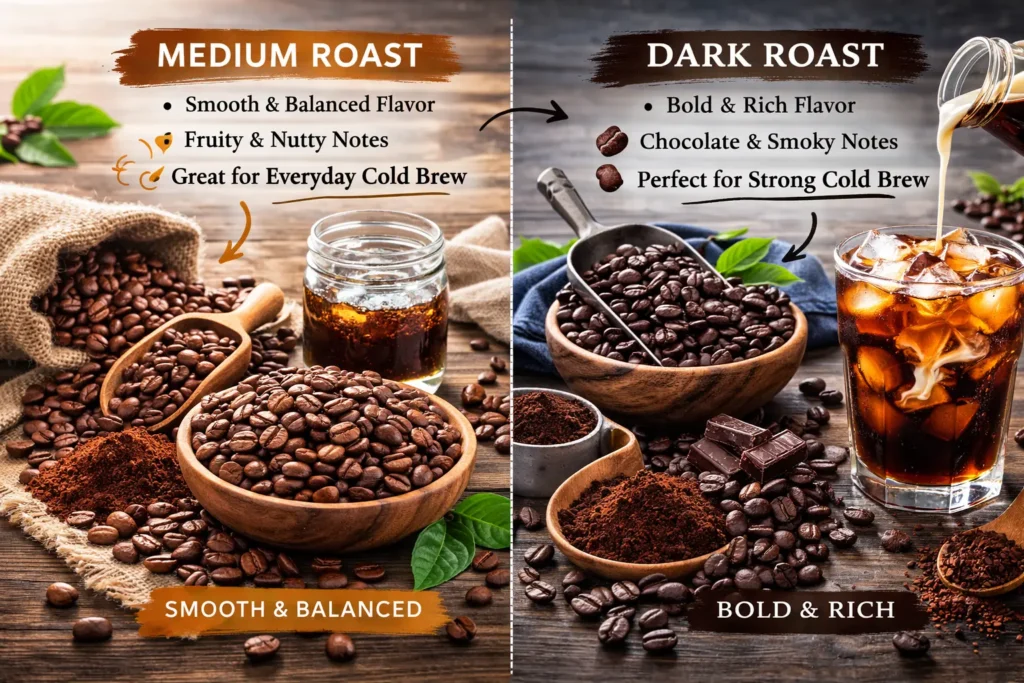
Cold brew usually tastes best with beans that naturally lean sweet — chocolate, caramel, toffee, nuts, dark fruit. Medium and medium-dark roasts are the easiest starting point because their sweetness comes through clearly without the sharp acidity of lighter roasts or the smokiness of very dark roasts.
| Roast level | Cold brew flavor | Suggested steep |
|---|---|---|
| Light | Floral, fruity, lighter body | 16–18 hours |
| Medium | Balanced sweetness, mild acidity | 14–16 hours |
| Medium-dark | Chocolate, caramel, rich body | 12–16 hours |
| Dark | Bold, smoky, lowest perceived acidity | 10–14 hours |
Cold Brew Maker Picks on Amazon
You can make cold brew with a mason jar and a filter — that genuinely works. But a dedicated cold brew pitcher is cleaner, easier, and produces more consistent batches. These are the three most reliable options at different price points.
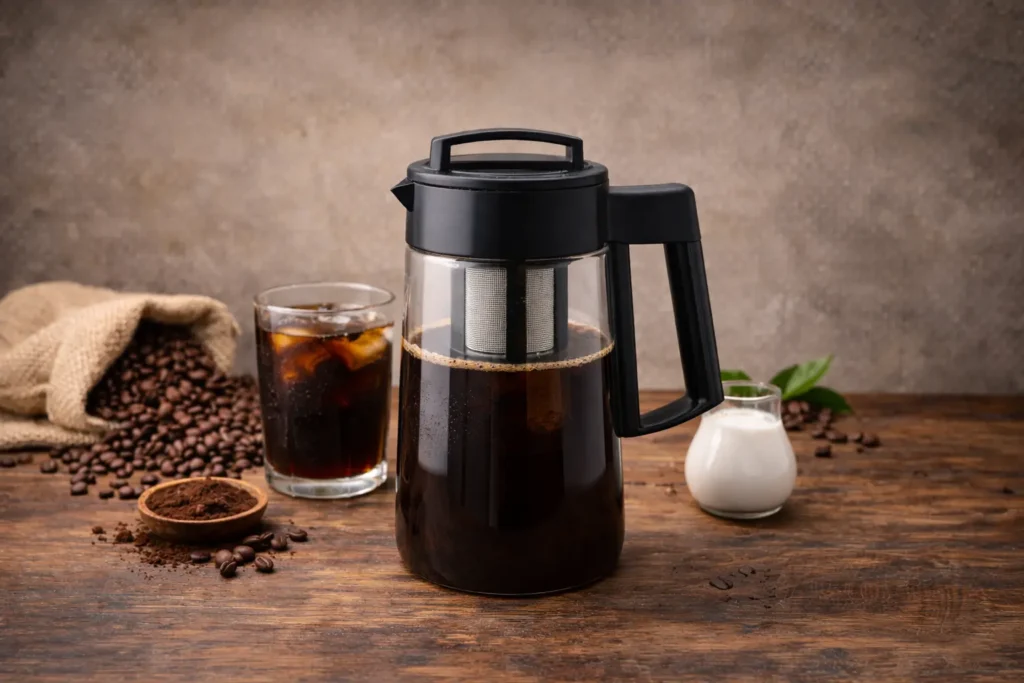
Takeya Deluxe — Best Overall Value
Why it’s here: Simple, durable, easy filtration, and one of the most consistently reviewed cold brew pitchers on Amazon. The built-in infuser basket keeps setup and cleanup fast.
- Large capacity — sized well for weekly batch brewing
- Built-in infuser filter keeps cleanup minimal
- Airtight lid helps concentrate stay fresh longer
Disclosure: CoffeeGearHub may earn from qualifying purchases.
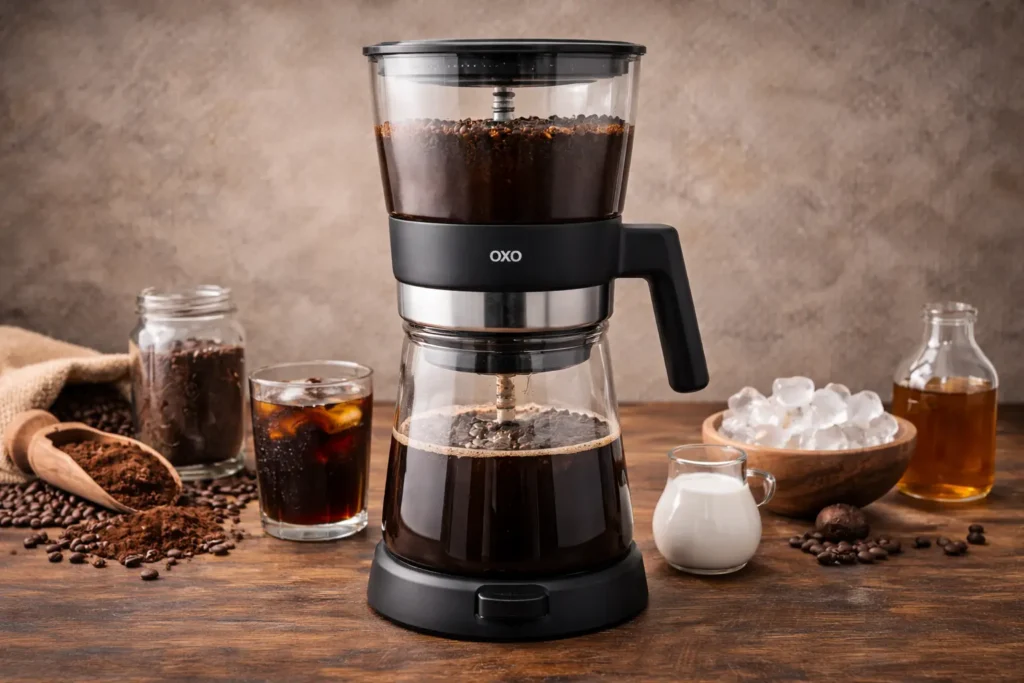
OXO Good Grips — Premium Pick
Why it’s here: Excellent even saturation of the grounds, clean filtering, and a polished workflow. If you make cold brew every week and want a “set it and forget it” tool with a cleaner final cup, this is the step up.
- Even wetting promotes more consistent batch-to-batch extraction
- Cleaner cup with less sediment than most pitchers
- Solid build quality for frequent use
Disclosure: CoffeeGearHub may earn from qualifying purchases.
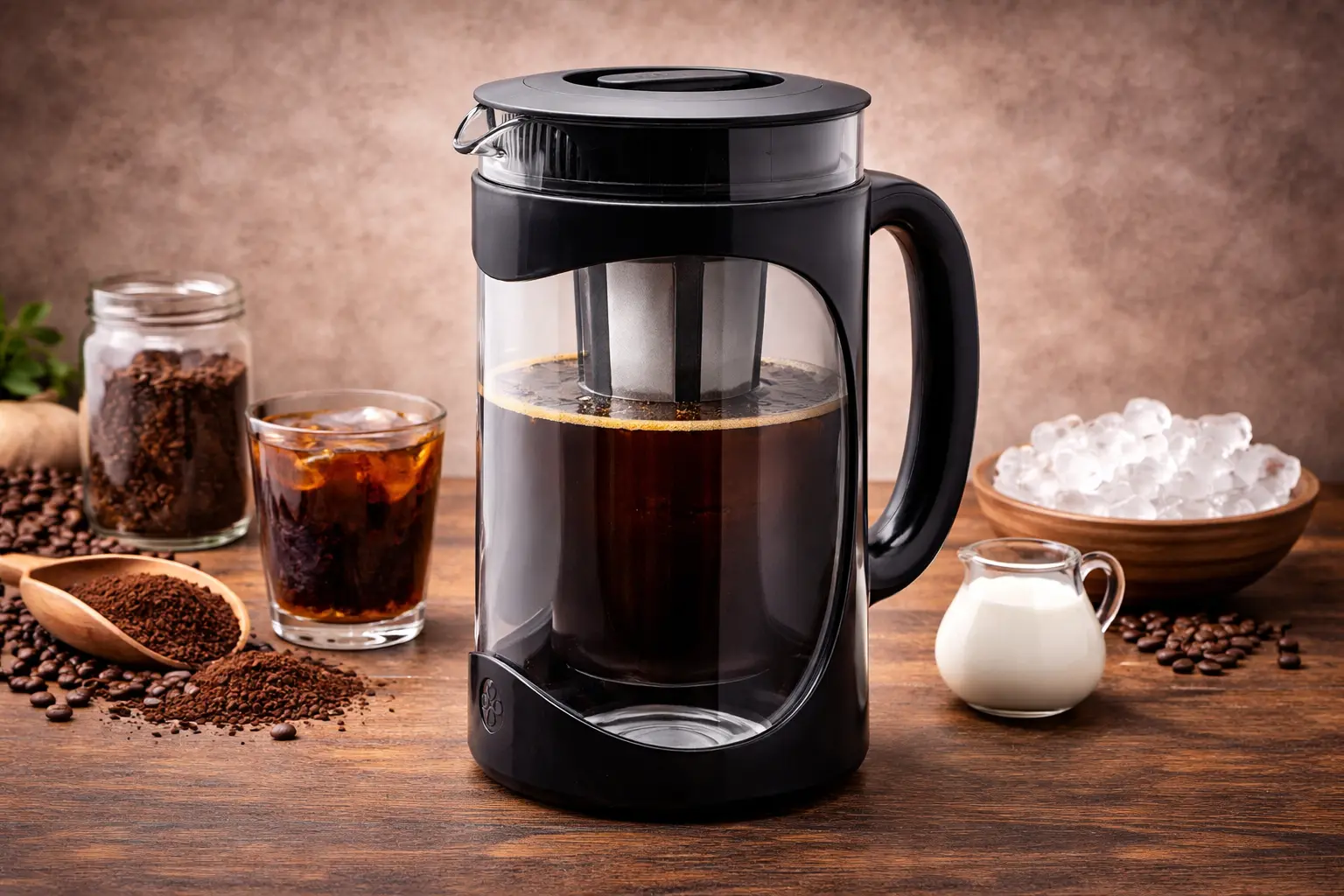
Primula Burke — Best Value Glass Option
Why it’s here: A budget-friendly glass carafe with a stainless mesh filter — the right choice if you prefer keeping glass in the fridge over plastic. Easy to clean and holds a good weekly batch volume.
- Glass body — no plastic contact with your concentrate
- Good household capacity for regular batches
- Simple stainless mesh filter, easy cleanup
Disclosure: CoffeeGearHub may earn from qualifying purchases.
All Picks at a Glance
| Product | Best for | Filter type | Link |
|---|---|---|---|
| Takeya Deluxe | Beginners + best value | Infuser basket | View on Amazon → |
| OXO Good Grips | Clarity + consistency | Mesh + optional paper | View on Amazon → |
| Primula Burke | Glass carafe on a budget | Stainless mesh | View on Amazon → |
| Mason jar DIY | First-timers, no spend | Paper or cheesecloth | No purchase needed |
Serving Ideas
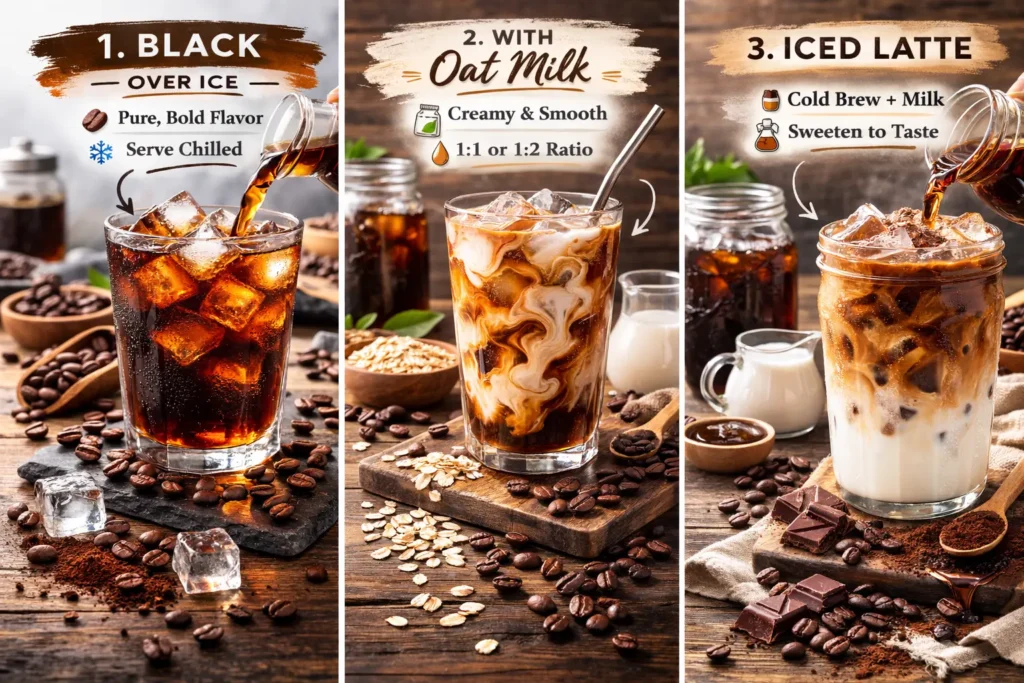
- Classic: 1:1 cold brew concentrate + water over ice.
- Cold brew latte: 1:1 concentrate + milk or oat milk over ice.
- Cold brew tonic: concentrate + tonic water over ice — refreshing and surprisingly bright.
- Sweetener tip: Use simple syrup or honey syrup — granulated sugar won’t dissolve well in cold liquid.
Troubleshooting: Taste → Fix
Change one variable at a time. Grind and steep time are the two highest-leverage variables in cold brew.
| Problem | Most likely cause | Fix — try this first |
|---|---|---|
| Weak / watery | Ratio too low or steep too short | Use 1:5 ratio and steep 14–18 hours |
| Bitter / harsh | Grind too fine or steep too long | Coarsen grind; reduce to 12–14 hours |
| Cloudy / gritty | Fine grounds or insufficient filtering | Double-filter through a paper filter |
| Sour / “off” flavor | Old or stale beans; warm steep | Use fresher beans; always steep in the fridge |
| Not strong enough after dilution | Diluting too much at serving | Try 2:1 concentrate:water, or brew at 1:4 |
Ready to Start Brewing?
Pick up a cold brew maker and get your first batch steeping tonight — you’ll have smooth, sweet cold brew ready by tomorrow morning.
Affiliate disclosure: CoffeeGearHub may earn from qualifying purchases via the Amazon Associates program.
FAQs: How to Make Cold Brew Coffee at Home
Does cold brew have more caffeine than regular coffee?
Cold brew concentrate can have more caffeine per ounce than drip coffee, but most people dilute it before drinking. Once diluted at a 1:1 ratio, a typical serving is usually comparable to strong drip coffee — depending on your ratio, beans, and serving size.
What is the best coffee-to-water ratio for cold brew?
For the most common home method (concentrate), start at 1:5 by weight — 100g coffee to 500ml water — then dilute 1:1 with water or milk before serving. For ready-to-drink cold brew that requires no dilution, use about 1:8.
How long should I steep cold brew in the fridge?
Most people get the best balance at 12–18 hours. Start at 14–16 hours, then adjust: steep shorter for lighter body, longer for richer body. Avoid pushing past 24 hours as the cup can start to taste woody or bitter.
Can I use pre-ground coffee for cold brew?
Yes, but aim for coarsely ground coffee at a French press or cold brew setting. Standard drip pre-ground is typically too fine and can make cold brew cloudy, bitter, and harder to filter cleanly.
Why is my cold brew bitter?
The most common causes are grinding too fine or steeping too long. Coarsen the grind and reset to a 12–14 hour steep as your baseline, then adjust from there.
How long does cold brew last in the fridge?
Cold brew concentrate stored in an airtight container can keep for up to approximately 2 weeks refrigerated. For the best flavor, aim to finish it within 7–10 days. Once you add milk to a serving, drink within 2–3 days.
Do I need a special cold brew maker?
No. A mason jar plus a fine mesh strainer or paper filter works perfectly well. A dedicated cold brew pitcher is simply cleaner and more convenient — it has built-in filtration, a fridge-friendly shape, and an airtight lid for storage.
How do I make cold brew taste sweeter without adding sugar?
Use a medium or medium-dark roast with chocolate or caramel notes, steep in the refrigerator for 14–16 hours, and avoid a fine grind. Those three changes together typically increase perceived sweetness significantly without any added sweetener.
What is the difference between cold brew and iced coffee?
Cold brew is steeped in cold or room-temperature water for 12–18 hours without heat. Iced coffee is brewed hot in 5–10 minutes, then poured over ice. Cold brew tends to taste smoother and less acidic; iced coffee has brighter, more acidic flavors but can be made in minutes rather than overnight.
Should I steep cold brew at room temperature or in the fridge?
Steeping in the fridge is recommended for most home brewers. Refrigerator steeping is slower and produces a cleaner, sweeter result with less risk of bacterial growth over the long steep time. Room-temperature steeping works but typically requires a shorter steep time of 8–12 hours.
Continue Learning
☕
Written by the CoffeeGearHub Editorial Team
CoffeeGearHub is a specialty coffee equipment resource produced by the CoffeeGearHub Editorial Team. Our guides are researched using published brewing science, manufacturer specifications, and established specialty-coffee community knowledge. We review and update our pillar content regularly. About CoffeeGearHub →