
Best Coffee Makers for Offices and Small Businesses (2026): Commercial Keurigs, Thermal Carafes, and Hybrids
Editorial standards: office recommendations are based on manufacturer specifications, commercial-use documentation, product manuals, recurring supply needs, and practical workflow differences. CoffeeGearHub does not claim hands-on testing where it has not occurred.
At a glance
Match the brewer to the office workload
How to choose an office coffee maker by team size, single-serve versus batch workflow, reservoir or carafe capacity, cleanup burden, commercial-duty requirements, and ongoing coffee cost, with seven machines matched to specific workplaces.
Editorial analysis
Office coffee is a workload decision before it is a feature decision
A brewer that works well for two people at home can frustrate a workplace where it cycles repeatedly, gets refilled by different users, and receives less careful cleaning. Capacity, recovery time, durability, and ease of use matter more as the team grows.
The practical split is convenience versus shared-volume efficiency. Single-serve systems reduce waiting and suit different preferences; thermal batch brewers lower per-cup cost when several people drink coffee at the same time. Commercial-duty equipment matters once the machine faces sustained daily traffic.
The 30-Second Answer
For a small office where convenience matters most, start with the Keurig K155 OfficePRO, because Keurig builds and certifies it for business use rather than adapting a home brewer. If the team prefers a shared pot, the Cuisinart DCC-3400 is the practical thermal-carafe choice. The OXO Brew 9-Cup suits small teams that put flavor first, and the Keurig K-Duo suits offices that genuinely need both pods and a carafe.
For a client-facing space, the Technivorm Moccamaster KBGV Select adds premium batch coffee, and the Mr. Coffee 12-Cup covers a lightly used budget break room.
Compare current options
Start with these representative choices
Two common office workflows: a hybrid brewer for mixed single-cup and carafe use, and a shared thermal-carafe brewer for teams that mostly drink the same batch.
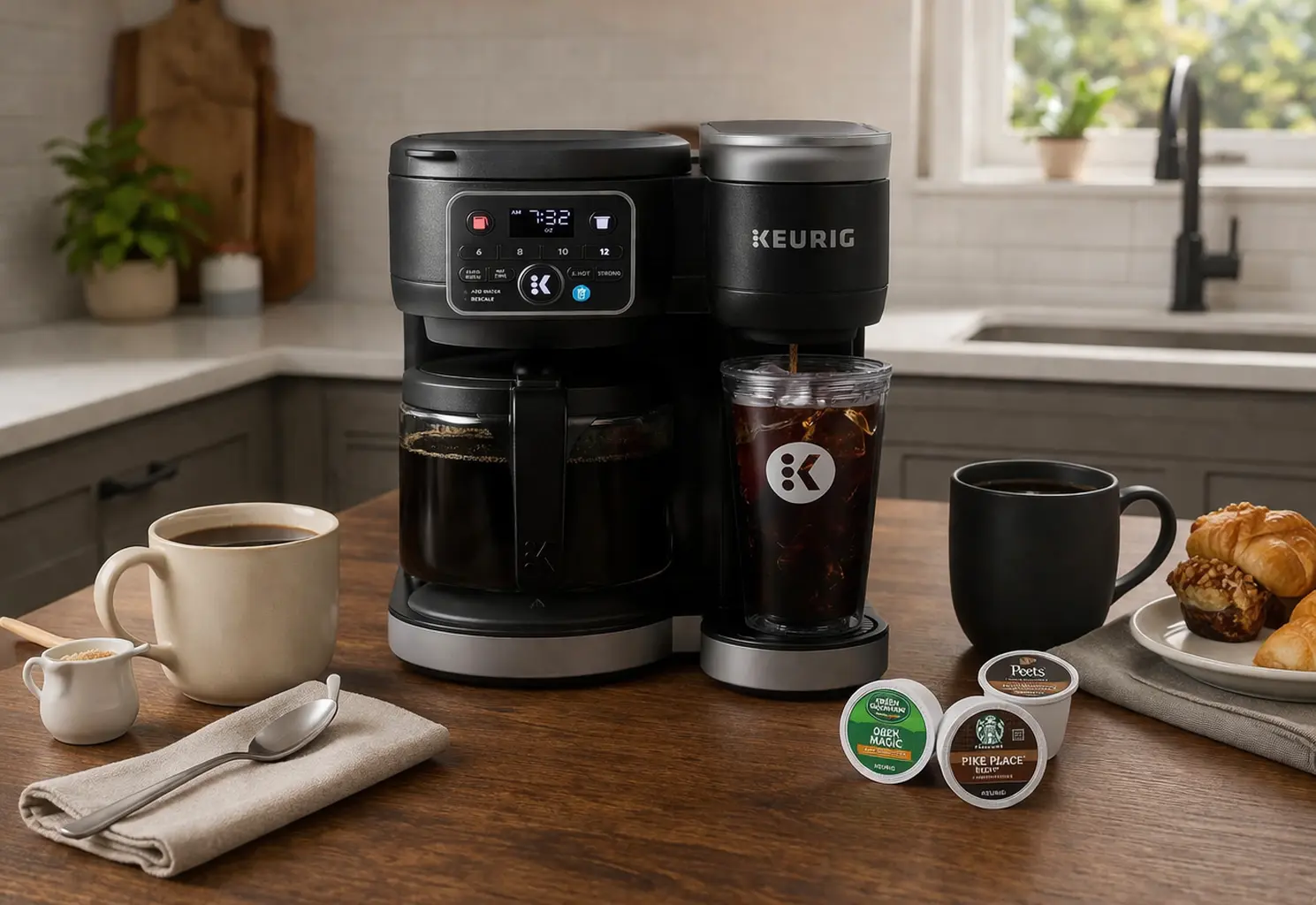
Keurig K-Duo Gen 2 — Hybrid
Combines K-Cup brewing with a ground-coffee carafe for small offices with mixed preferences.
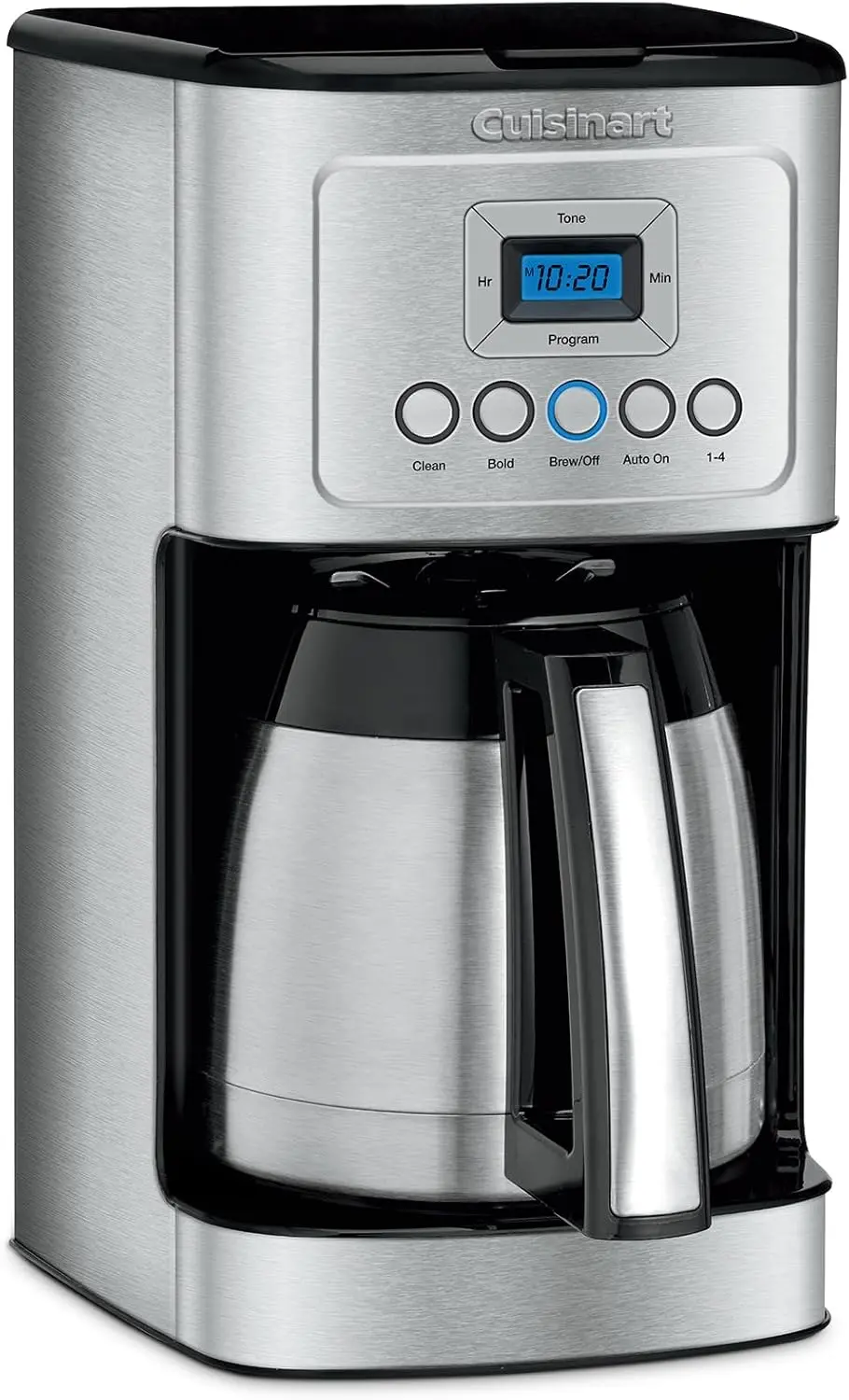
Cuisinart DCC-3400 — Shared pot
A 12-cup thermal-carafe brewer for teams that drink coffee in batches at a lower cost per cup.
Affiliate disclosure: Amazon links may earn CoffeeGearHub a commission at no additional cost to you. Prices and availability can change.
How We Chose the Best Coffee Makers for Offices
At home, a coffee maker may brew one pot in the morning and sit idle for the rest of the day. In an office, the same machine may be used repeatedly by people who do not know when it was last cleaned, how much water is left, whether someone already started a brew, or which parts are dishwasher-safe. That makes four factors more important than they are at home: throughput, reservoir or carafe capacity, cleanup simplicity, and how many drink preferences the system has to serve.
We compared each machine on daily user count, repeat brewing, capacity, cleanup burden, drink variety, ongoing coffee cost, and whether the manufacturer positions it as commercial-duty or home equipment. A single-serve machine solves the everyone-wants-something-different problem but raises cost per cup, while a shared drip brewer lowers cost and makes more coffee at once when the office can agree on one batch. A conference room that makes six cups before a meeting differs from a front desk offering coffee all day, so the recommendations below are grouped by workplace need rather than forced into one ranking.
Keurig K155 OfficePRO: Best Commercial Single-Serve Brewer
The Keurig K155 OfficePRO belongs in this guide for a reason home-focused Keurigs cannot claim: Keurig lists it as a commercial brewer. Its documentation specifies a 90-ounce reservoir, four cup sizes from 4 to 10 ounces, a full-color touch screen, NSF certification for foodservice, and a commercial UL listing. That combination suits offices, clinics, waiting rooms, salons, and studios where many users want individual drinks through the day.
The workflow needs almost no training: choose a pod, select a size, brew, and leave. There is no shared pot to coordinate and no stale carafe sitting on a burner. The trade-off is recurring pod cost, which in a busy office can matter more than the machine itself, so it pays to estimate weekly cup counts before committing.
Keurig K-1550: Best Large-Reservoir Small-Business Upgrade
Keurig positions the K-1550 specifically for small businesses. Its commercial specifications list a 96-ounce reservoir, Strong Brew, four cup sizes, Quiet Brew Technology, automatic on and off, and a drainable internal tank. It suits small businesses, conference rooms, and executive areas that want commercial-oriented hardware without plumbing a water line.
Compared with the K155, the K-1550 gives up the large color touch screen but gains a slightly larger reservoir and simpler controls, which some offices prefer because there is less to explain to visitors. It is single-serve only, with no shared carafe mode, so a team that also wants a pot for meetings needs a second brewer or a hybrid. The drainable tank is useful when the machine moves between rooms or is stored over holidays.
Keurig K-Duo Hot and Iced Gen 2: Best Hybrid for Pods and a Pot
The Keurig K-Duo Gen 2 settles a familiar workplace argument: some people want a K-Cup now, while others want a carafe ready for a meeting. It combines single-serve K-Cup brewing with carafe brewing from ground coffee, and adds a setting for brewing over ice. That flexibility is useful in a small office where the machine will not run all day.
Keurig lists the K-Duo as a home-use model rather than a commercial brewer, so choose it because the mixed workflow matters, not because it is the most durable office option. It fits mixed-preference teams in lightly used spaces, and it lets an office serve pods for individuals and a lower-cost pot for groups from one footprint.
Cuisinart DCC-3400: Best Shared Thermal-Carafe Brewer
The Cuisinart DCC-3400 is the straightforward choice when the office wants a pot rather than individual capsules. Cuisinart lists a 12-cup thermal carafe, regular or bold strength control, 24-hour programming, a 1–4 cup setting, Brew Pause, a decalcification indicator, and a three-year limited warranty.
The thermal carafe matters in an office because coffee stays hot without sitting on a warming plate for hours, which avoids the burned, stale flavor that makes communal coffee notorious. Programming lets the first person in arrive to a fresh pot. The limitation is the lack of a single-serve option, so it suits teams with synchronized morning demand.
OXO Brew 9-Cup: Best Small-Team Quality Pick
The OXO Brew 9-Cup is not a commercial machine, but it fits a small professional office where better batch coffee matters more than maximum output. OXO says its brewing system controls brew time and keeps water between 197.6°F and 204.8°F, within the Specialty Coffee Association’s recommended range, and it uses a double-wall thermal carafe.
It suits roughly four to eight coffee drinkers making one or two fresh batches rather than leaving coffee out all day. The trade-off is capacity: nine cups disappears quickly in a larger office, so bigger teams should look at the 12-cup brewers or a commercial single-serve machine instead.
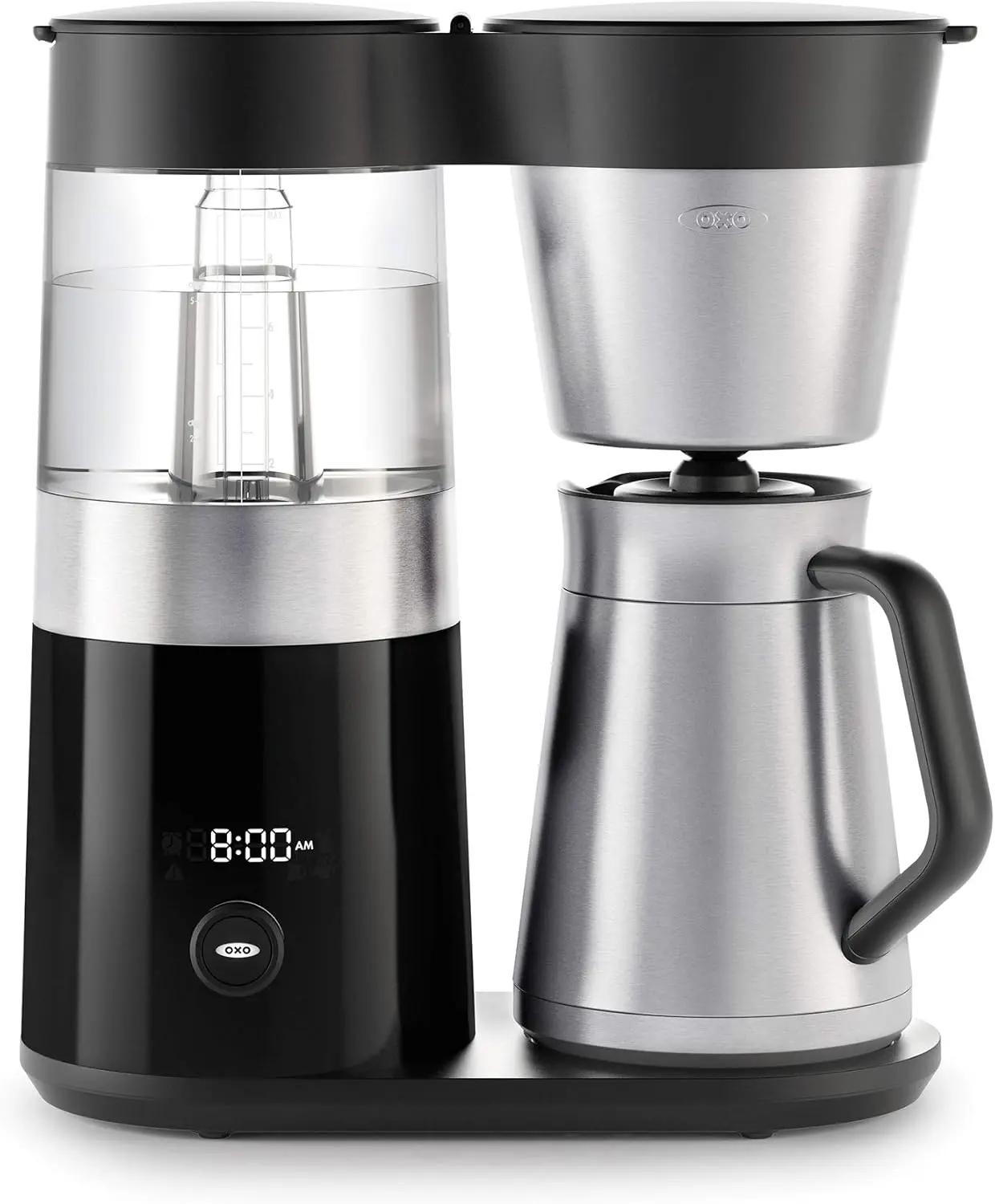
Technivorm Moccamaster KBGV Select: Best Premium Client-Facing Pick
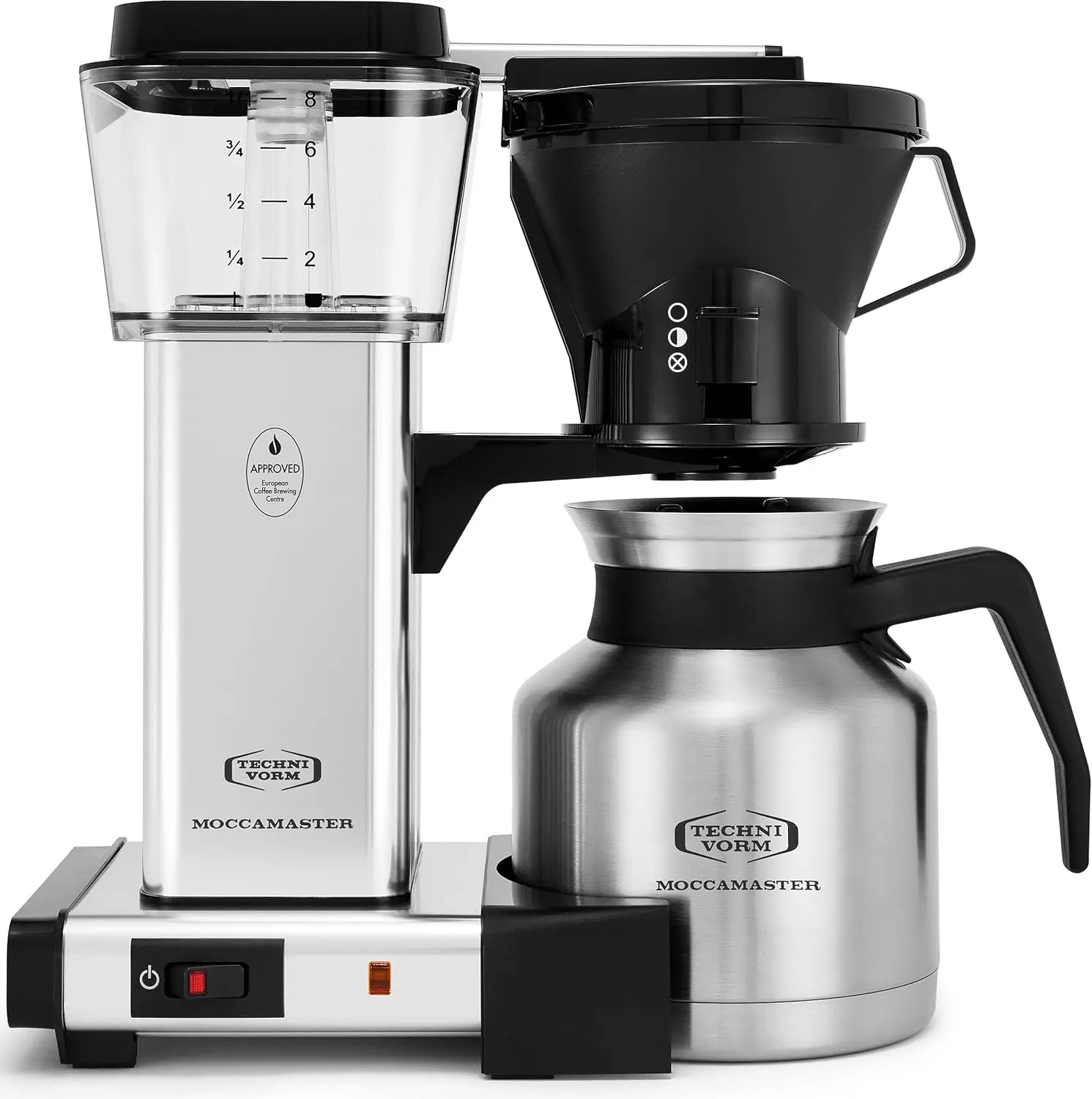
The Technivorm Moccamaster KBGV Select suits studios, real-estate offices, executive suites, and small businesses where the coffee station is part of the customer-facing space. It is simple to operate, visually distinctive, brews a full batch quickly, and Technivorm backs new brewers in the United States with a five-year warranty.
It is not the value pick, and it is not the right machine for a twenty-person break room that burns through pot after pot. Its glass carafe sits on a hot plate, so it works best when coffee is brewed fresh and served promptly. For smaller client-facing teams, it combines quality batch coffee with a strong visual presence.
Mr. Coffee 12-Cup Programmable: Best Budget Break-Room Option
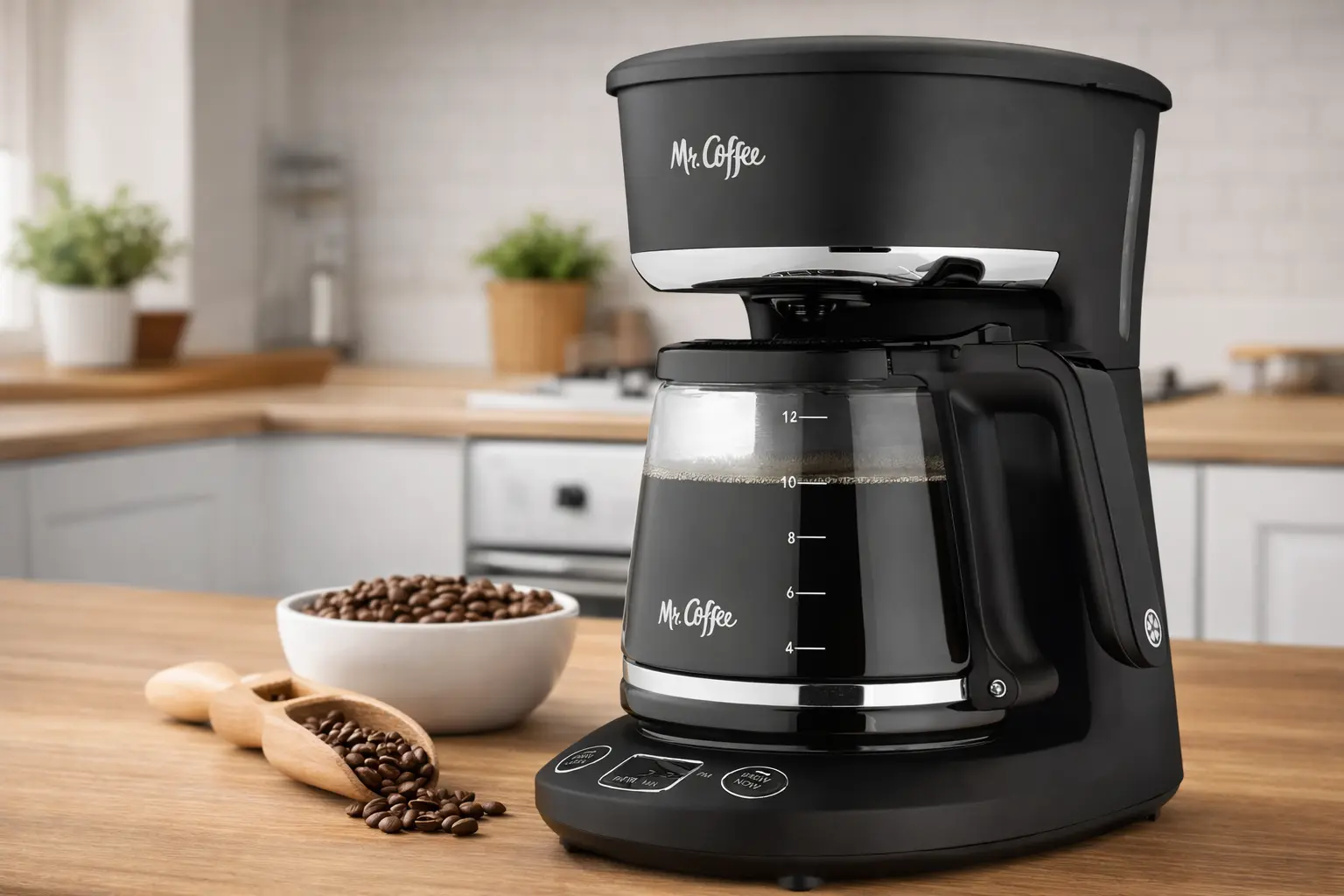
The Mr. Coffee 12-Cup Programmable suits small offices or secondary coffee stations where low upfront cost matters more than commercial durability. The current programmable lineup offers scheduled brewing, pause-and-pour, and automatic shutoff, and some versions add Strong Brew or multiple brew profiles.
The compromise is what you would expect: this is a budget home appliance, not a commercial-duty brewer, and its warming plate degrades coffee left out for hours. It works for lightly used break rooms where one or two pots are brewed and finished quickly, and it is easy to replace if it wears out.
Also Consider: BUNN Speed Brew Platinum Thermal
If the office’s biggest complaint is waiting for the next pot, the BUNN Speed Brew Platinum Thermal deserves a look. It keeps water hot in an internal stainless-steel tank, brews a 50-ounce carafe in about four minutes according to BUNN, and uses a vacuum-insulated thermal carafe. It is positioned as a home product rather than a commercial brewer, and the always-hot tank draws standby power, but its speed is genuinely useful for a small office that brews fresh batches frequently through the day.
Quick Comparison: Which Office Coffee Maker Fits Which Team?
| Machine | Best fit | Why it works | Main trade-off |
|---|---|---|---|
| Keurig K155 OfficePRO | Small to medium shared office | Commercial listing, 90 oz reservoir, touch screen | Pod cost adds up |
| Keurig K-1550 | Small business, frequent single-serve | 96 oz reservoir, Strong Brew, drainable tank | Single-serve only |
| Keurig K-Duo Gen 2 | Mixed-preference team | K-Cups plus a shared carafe | Home-use hardware |
| Cuisinart DCC-3400 | Shared morning batch | 12-cup thermal carafe, programmable | No single-serve |
| OXO Brew 9-Cup | Small team prioritizing flavor | Controlled brew temperature, thermal carafe | Lower capacity |
| Moccamaster KBGV Select | Client-facing space | Fast, quality batch brewing | Premium cost, hot plate |
| Mr. Coffee 12-Cup | Budget break room | Simple programmable batch brewing | Less durable |
Choose the System by Team Size, Not Just Machine Capacity
For one to five regular coffee drinkers, a quality thermal brewer such as the OXO 9-Cup or Moccamaster is usually enough. The team brews one fresh batch and avoids the ongoing cost and packaging of individual pods. For roughly five to fifteen users, workflow matters more. If everyone arrives at the same time, a 12-cup thermal batch brewer is efficient; if demand is spread through the day and people want different flavors, a commercial Keurig makes more sense. The K-Duo sits between those approaches for a lightly used office.
Beyond that range, especially when the brewer serves customers as well as staff, step up to genuinely commercial equipment. Keurig’s business lineup includes larger-reservoir and plumbed systems such as the K-2550 and K-3550, and at that point serviceability, plumbing, uptime, and supply contracts matter more than retail ratings. Our commercial vs home coffee makers guide covers that decision in more depth.
Pods vs Batch Coffee: Understanding Cost per Cup
The purchase price of the brewer is only part of the cost. Pods are convenient and portion-controlled, but each cup carries its own packaging and margin, so a busy single-serve office can spend far more on coffee over a year than on the machine. Batch brewing from whole-bean or ground coffee spreads one bag across many cups and produces less single-use waste, which is why thermal carafe brewers usually win on running cost.
Waste changes the math too. A pot brewed for twelve that only six people drink wastes half the coffee, while pods waste nothing beyond packaging. Offices with unpredictable demand often find that a hybrid or a mix of a small batch brewer and a single-serve machine balances cost and convenience. Our Keurig vs drip comparison walks through the trade-offs in detail.
The Brewer Is Only the First Purchase: Stocking the Station
A single-serve office needs a steady supply of K-Cup variety packs, decaf and tea options, single-serve creamers, cups and lids, and descaling solution. A shared-pot office needs whole-bean or ground coffee, bulk paper filters, airtight coffee storage, carafe cleaning supplies, and a grinder if it buys whole beans. Planning these recurring items up front avoids the empty-shelf moments that make office coffee frustrating.
For businesses that want work purchases kept separate from personal orders, Amazon Business is designed around organizational purchasing of break-room essentials, and you can browse office coffee supplies in one place. Our office coffee station setup guide turns the brewer choice into a complete system covering water, storage, and maintenance.
Commercial vs Home Coffee Makers: Where to Draw the Line
A home brewer can be perfectly reasonable in a small office. What matters is whether the workload still resembles home use: a six-person firm brewing one pot each morning does not automatically need a commercial machine. The warning sign is repeated high-volume use. If the machine brews all day, serves customers, or becomes a single point of failure, commercial certification, replaceable parts, technical support, and serviceability start to matter. The K155’s NSF and commercial UL listings are a meaningful distinction from the consumer K-Duo, even though both appear in business-oriented shopping results.
Also think about water. Reservoir machines are easier to install and relocate, while plumbed machines eliminate refill duty but require installation and make the station less portable. For most small businesses, a large reservoir is the simpler starting point unless daily volume clearly justifies a water line.
Keeping Shared Machines Clean
Shared brewers get less attention than home machines, so build cleaning into the routine. Empty and rinse carafes and brew baskets at the end of each day, wash removable parts regularly, and wipe pod needles and drip trays where coffee residue collects. Descale on the manufacturer’s schedule, more often in hard-water areas, because scale slows brewing and lowers water temperature.
A simple cleaning rota posted beside the machine prevents the common situation where everyone assumes someone else did it. Thermal carafes benefit from an occasional soak with a coffee-equipment cleaner to remove oil film. Our drip coffee maker cleaning guide covers descaling step by step.
Set Up Your Office Coffee
The K-Duo covers pods and a pot; the DCC-3400 covers shared batches.
As an Amazon Associate, CoffeeGearHub earns from qualifying purchases.
Editorial bottom line: Choose the Keurig K155 OfficePRO or K-1550 for commercial single-serve, the Cuisinart DCC-3400 for shared thermal batches, the OXO Brew 9-Cup for small teams that prioritize flavor, the K-Duo for mixed preferences, the Moccamaster for client-facing spaces, and the Mr. Coffee for a lightly used budget break room.
Frequently Asked Questions
What is the best coffee maker for a small office?
For single-serve convenience, a commercial-oriented Keurig such as the K155 OfficePRO or K-1550 is a practical start. If the team prefers one shared batch, a thermal carafe brewer such as the Cuisinart DCC-3400 or OXO Brew 9-Cup usually lowers cost per cup.
Should an office use a commercial coffee maker?
Not always. A home brewer can be reasonable for a small team making one or two batches a day. Commercial equipment matters when the machine sees all-day use, serves customers, or needs commercial certification, technical support, plumbing, or higher uptime.
Are K-Cups or drip coffee cheaper for an office?
Batch drip coffee is usually cheaper per cup because one bag of coffee serves many people and creates less single-use packaging. K-Cups cost more per cup but make it easy to offer different roasts, decaf, and tea without wasting a full pot.
What size coffee maker does an office need?
One to five regular drinkers can often use an 8- to 10-cup thermal brewer. For five to fifteen, a 12-cup batch brewer suits synchronized morning demand, while a large-reservoir single-serve system suits demand spread through the day.
How often should an office coffee maker be cleaned?
Rinse carafes and brew baskets daily, wash removable parts regularly, and descale on the manufacturer’s schedule, more often with hard water. Assigning cleaning to a rota prevents stale oils and scale from building up on shared machines.
Is Amazon Business useful for office coffee supplies?
It can help businesses keep work purchases separate from personal orders and buy recurring break-room supplies such as coffee, filters, cups, and cleaning products. Eligibility and account features vary.
Sources and Further Reading
Commercial positioning, reservoir sizes, brew sizes, and certifications come from Keurig Commercial product documentation for the K150/K155 and K-1500/K-1550 series. Other specifications come from Cuisinart (DCC-3400), OXO (Brew 9-Cup), Technivorm, Mr. Coffee, and BUNN (Speed Brew Platinum Thermal) published product information. Brewing temperature guidance follows the Specialty Coffee Association’s brewing standards. CoffeeGearHub did not test these machines hands-on. Verify the exact model number and bundle before buying, because retailer listings change.
CoffeeGearHub product shortlist
Continue with related products on CoffeeGearHub
Review product categories and current verified merchant offers on CoffeeGearHub before leaving the site.
Continue Learning
Office coffee planning
Brewing and maintenance
In this guide