
Commercial vs Home Coffee Makers for an Office: Which Should You Buy? (2026)
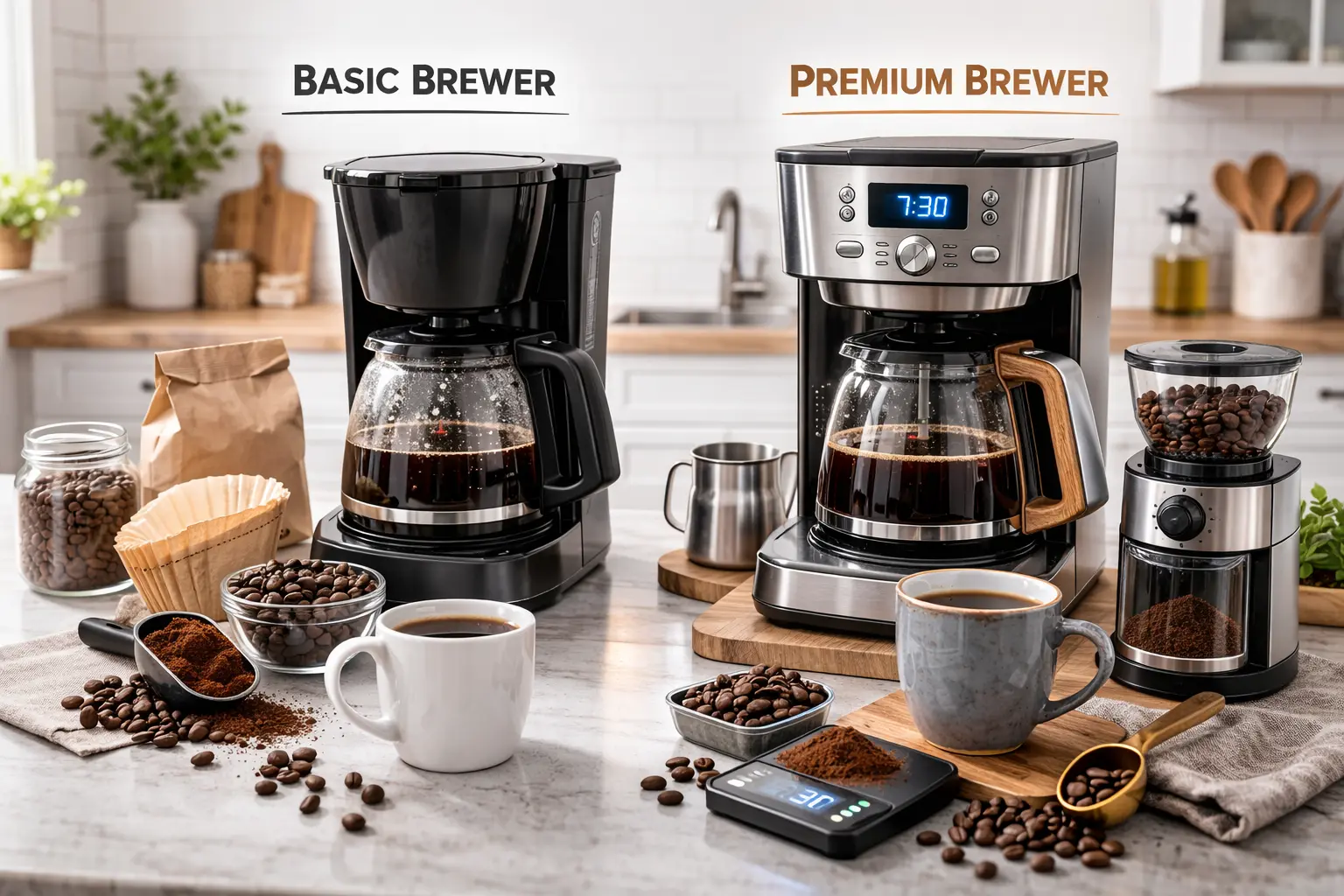
Editorial standards: this guide compares manufacturer classifications, published specifications, warranty and support terms, and office-use requirements, along with owner and reviewer reports. Specifications can change, so confirm the exact model before buying. CoffeeGearHub does not claim hands-on testing where it has not occurred.
At a glance
Choose by workload, not by the word “commercial”
What commercial classification actually changes, when a home brewer is enough, how to size by peak demand, reservoirs and plumbing, certifications and support, example machines in each class, total cost, and who should own the station.
Editorial analysis
The right machine is the one built for your actual duty cycle
Headcount alone is a poor buying metric. Peak demand, repeated use through the day, water access, who maintains the station, and how disruptive downtime would be matter far more than the number of desks.
A lightly used five-person office can be well served by a quality home brewer, while a busy office or customer-facing space benefits from equipment designed, certified, and supported for shared use. The goal is to avoid both overbuying and underbuying.
The 30-Second Answer
A good home coffee maker is usually enough for an office with up to about five regular drinkers and one or two predictable brew times. Commercial-oriented equipment makes more sense when many people use the machine throughout the day, when refills become a constant chore, when customers are served, or when foodservice certification and business support matter.
For small teams, a thermal-carafe brewer such as the Cuisinart DCC-3400 is a sensible start. For busier single-serve offices, Keurig’s business platforms such as the K-1500 series and K155 add larger reservoirs and shared-use features.
Compare current options
Start with these representative choices
Two reference points: a home thermal-carafe brewer for small teams and a business-oriented single-serve platform for shared use.
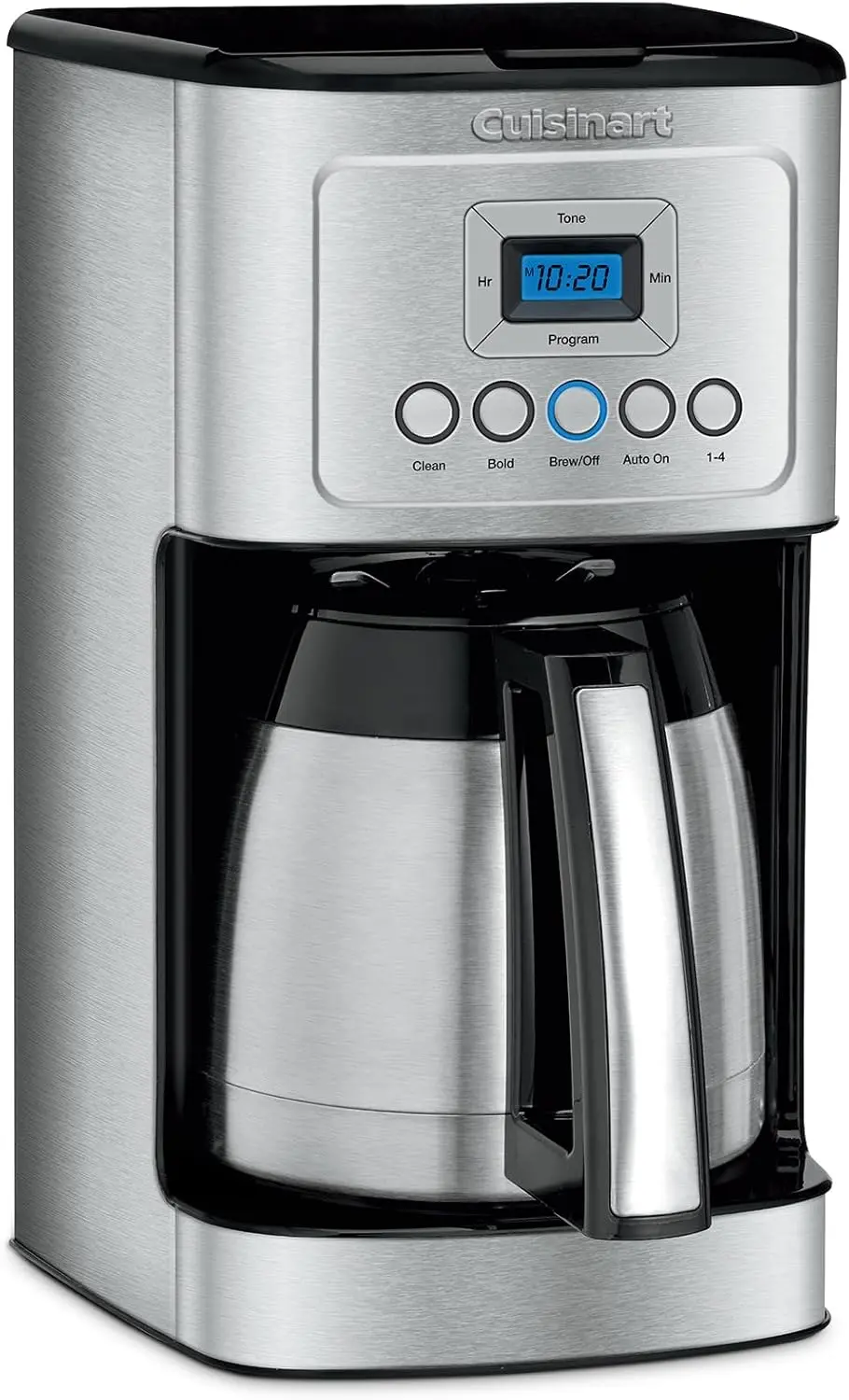
Cuisinart DCC-3400 — Small offices
A 12-cup thermal-carafe home brewer with programming and strength control for one or two daily batches.
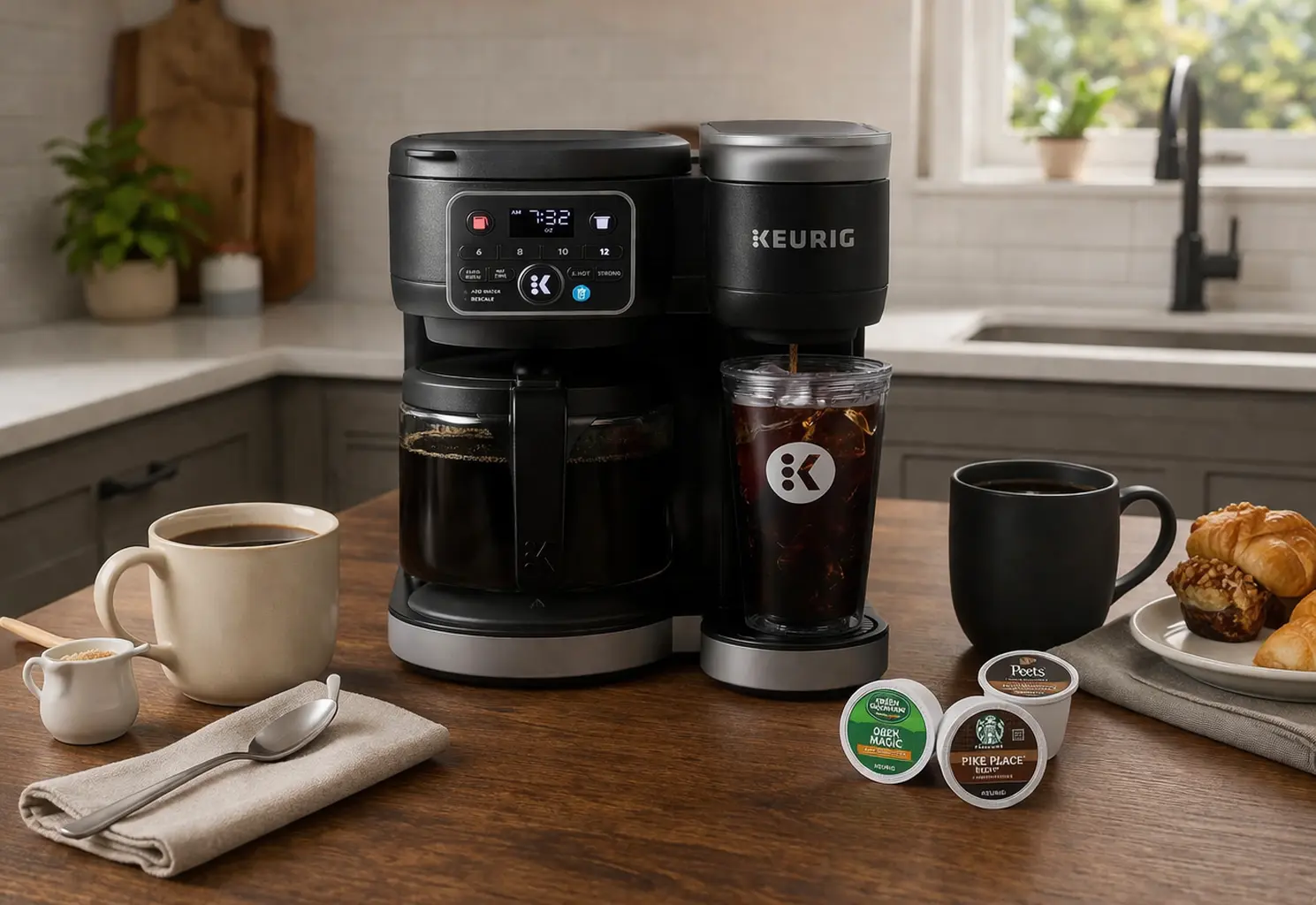
Keurig K-Duo — Light hybrid use
A home-class brewer that makes both single cups and a carafe, suited to light office demand.
Affiliate disclosure: Amazon links may earn CoffeeGearHub a commission at no additional cost to you. Prices and availability can change.
What “Commercial” Actually Changes
“Commercial” is only useful when it describes real differences in how a brewer is built, certified, and supported. Keurig’s K150 platform, for example, is documented as a commercial brewing system, with the K155 listing a 90-ounce reservoir, foodservice NSF certification, and commercial UL listing. The K-1500 series is positioned for small businesses, with a 96-ounce reservoir, strong and quiet brew modes, automatic on and off, multiple cup sizes, and a drainable internal tank.
Those features do not guarantee better-tasting coffee. They show that the machine is designed and sold around a shared workflow, with capacity, durability expectations, and support channels that suit a workplace rather than a household kitchen. In practice, that shows up as bigger water capacity, simpler shared controls, and a support path built for businesses.
Commercial classification also does not mean every office needs it. Many home brewers are reasonable choices when use is light. The useful question is whether your office’s actual workload resembles a household or a small café, and whether the extra capacity, certifications, and support would solve a real problem rather than adding cost.
When a Home Coffee Maker Is Enough
A home brewer is easiest to justify when the office behaves like a household: a few regular coffee drinkers, one or two predictable brew periods, and long idle stretches between uses. In that setting, a quality home machine handles the workload comfortably and costs less to buy and maintain.
It also helps when one person or a small group takes responsibility for cleanup, the office does not need direct plumbing or a very large reservoir, and there is no requirement for foodservice certification. If those conditions describe your office, spend on a good home thermal-carafe brewer, a decent grinder or good pre-ground coffee, and a simple cleaning routine rather than commercial hardware.
When Commercial Equipment Makes More Sense
The strongest case for commercial equipment is repeated shared use. Once the brewer becomes workplace infrastructure that many people rely on throughout the day, refill interruptions, confusing controls, breakdowns, and weak support become real costs in lost time and frustration.
Commercial-oriented machines solve specific workflow problems. Larger reservoirs mean fewer refills, drainable tanks make moving and servicing easier, direct-plumb options remove refilling entirely, and business support channels help when the brewer is part of the office’s operations. Customer-facing spaces such as waiting rooms and showrooms also benefit from machines designed for frequent, unattended use.
Commercial equipment is not maintenance-free, however. Shared machines still need regular cleaning, descaling, supply management, and someone responsible for the station. Buying commercial hardware without assigning ownership simply moves the problem rather than solving it. Budget for descaling supplies and water filtration from the start, since scale is a leading cause of slow brewing and breakdowns in busy machines.
Size by Peak Demand, Not Headcount
Two ten-person offices can have very different coffee needs. In one, four people drink coffee at 8:30 and nobody touches the machine again; in another, staff, visitors, and customers make drinks continuously from morning to late afternoon. The better planning question is how many drinks are made during the busiest hour.
Peak demand decides whether people wait for a fresh batch, queue at a single-serve machine, or keep refilling the reservoir. Count drinks in your busiest window for a week, then choose a brewer and water system that can serve that burst comfortably.
| Peak pattern | What usually works | What to watch |
|---|---|---|
| 3–5 drinks in one morning window | Home thermal-carafe or single-serve | Avoid overbuying capacity |
| 5–10 drinks spread through the day | Large-reservoir single-serve or batch brewer | Refill frequency, cleanup |
| 10+ drinks in short bursts | Commercial-oriented single-serve or batch | Queueing, reservoir recovery |
| Staff and customers all day | Commercial equipment | Downtime, sanitation, support |
Batch Brewing vs Single-Serve in an Office
Batch brewers make a full pot or carafe at once, which serves a morning rush efficiently and keeps cost per cup low. Thermal carafes hold coffee hot without a hot plate, which avoids the burnt taste that develops when a glass carafe sits on a warmer. The downside is waste when the office brews more than it drinks, and flavor that fades after an hour or two.
Single-serve machines make each drink fresh, let everyone choose their own coffee, and waste almost nothing, but they cost more per cup and can create queues during busy periods. Many offices combine the two: a batch brewer for the morning and a single-serve machine for the afternoon and visitors. Our Keurig vs drip guide compares the two approaches in more detail.
Reservoir Size and Plumbing
At home, one person notices when the reservoir runs dry. In an office, an empty reservoir becomes a shared annoyance that nobody owns. If several people use a single-serve machine, reservoir capacity matters more than extra drink settings, which is why business-oriented brewers such as the K155 and K-1500 series use reservoirs of 90 ounces or more.
Direct plumbing removes refilling entirely, and some commercial platforms offer plumbed configurations. It requires a nearby water line and installation, so it makes most sense where people are constantly carrying pitchers to the machine. For small offices, a large refillable reservoir is usually simpler and avoids installation work. If your water is hard, add filtration either way, since scale is a leading cause of slow brewing and breakdowns.
Certifications and Business Support
Some business-oriented brewers carry certifications and listings relevant to shared or foodservice use. Keurig documents the K155 as NSF certified for foodservice and commercially UL listed. Whether you need those listings depends on your environment and local rules, but they confirm the manufacturer designed the machine for a different context than a home model.
Support is the other practical difference. Keurig, for example, runs separate commercial sales and technical support channels for its business systems. When a brewer is important to a customer-facing space or a busy team, a business support path and clear warranty terms can be worth more than another convenience feature.
Durability, Duty Cycle, and Warranty
Home brewers are generally designed for a few cycles a day. Running one continuously in a busy office shortens its life and often falls outside the expected use described in the warranty, so read the warranty terms before relying on a home machine for heavy shared use. Pumps, heating elements, and seals wear faster when a machine rarely cools down.
Commercial and small-business brewers are built and warranted around more frequent use, and their parts and service are designed for workplaces. That does not make them indestructible, but it means a busy office is using the machine as intended. For moderate use, a home brewer with a strong warranty and a clear descaling routine can still be a sensible compromise.
Cuisinart DCC-3400: Home Brewer for Small Teams
Cuisinart’s DCC-3400 is a 12-cup thermal-carafe home brewer with regular and bold strength settings, 24-hour programming, a small-batch setting for one to four cups, brew pause, and a descaling indicator. Cuisinart backs it with a three-year limited warranty, and the thermal carafe keeps coffee hot without a warming plate.
It suits a small office that brews one or two pots a day. Programming it to start before people arrive means coffee is ready without anyone waiting, and the thermal carafe avoids the burnt flavor of a glass pot left on a hot plate. It is not designed for continuous all-day use, so pair it with a simple cleaning and descaling schedule.
Keurig K-Duo: Home Hybrid for Light Use
The Keurig K-Duo brews both single K-Cup pods and a carafe of ground coffee. Keurig labels its K-Duo models for home use only, which makes it a clear example of a machine that can still suit a light office because its hybrid workflow matters more than commercial classification.
It fits a small office that genuinely wants a shared morning carafe and individual pods later in the day, with fairly light total demand. Choose it for flexibility rather than durability, and if use grows to dozens of drinks a day, move to a business-oriented platform. Our Keurig guide compares other models.
BUNN Speed Brew: Fast Batches, Home Class
BUNN sells the Speed Brew Platinum Thermal as a home coffee maker, though it uses an internal stainless-steel hot-water tank that keeps water ready. BUNN says it brews a full 50-ounce thermal carafe in about four minutes and backs Speed Brew models with a three-year warranty. You can see BUNN Speed Brew listings on Amazon.
It is a useful reminder that one commercial-style component does not make a whole machine commercial equipment. For a small office that values very fast batch brewing for a morning rush, it can still be an attractive home-class option. Because the tank stays heated, it uses some standby energy, and it needs regular descaling in hard-water areas.
Keurig K-1500 Series: Small-Business Single-Serve
Keurig positions the K-1500 series for small businesses. Published specifications include a 96-ounce reservoir, strong and quiet brew modes, four cup sizes, automatic on and off, and a drainable internal tank that makes moving or servicing the machine easier. You can see K-1550 listings on Amazon.
It suits offices with frequent single-serve demand that want a simple business-oriented machine without direct plumbing. The large reservoir cuts refill frequency compared with home Keurig models, and the business positioning comes with Keurig’s commercial support channels. Check the exact model and bundle before buying, since listings vary by seller.
Keurig K155 OfficePRO: Commercial Single-Serve
The Keurig K155 OfficePRO is part of Keurig’s K150 commercial platform. Published documentation lists a 90-ounce reservoir, brew sizes from 4 to 10 ounces, a color touchscreen, NSF foodservice certification, and commercial UL listing, and the platform includes plumbed configurations.
It suits shared offices and customer-facing spaces that want easy individual drinks with business classification and support. It is more machine than a small team needs, but for waiting rooms, showrooms, and busy break rooms, the certifications and support path can justify the step up. Confirm current availability, since commercial models change over time.
Decision Table: Which Class Fits Your Office?
| Office situation | Home equipment | Commercial equipment |
|---|---|---|
| 1–5 drinkers, one morning brew | Usually reasonable | Often unnecessary |
| 5–10 users, staggered single-serve | Possible if use is light | Worth considering |
| 10–25 regular users | Can become a bottleneck | Often the logical start |
| Waiting room or customer area | Possible for light use | Stronger fit when frequent |
| Continuous use all day | Not ideal | Prioritize business equipment |
Compare Total Cost, Not Just Purchase Price
A cheaper machine does not always mean a cheaper setup. Ongoing costs include coffee or pods, filters, water filtration, cleaning products, cups, creamers, and the staff time spent refilling, cleaning, and restocking. Over a year, these usually outweigh the difference in machine price.
Single-serve systems are convenient but cost more per drink than batch brewing. Batch brewers lower coffee cost but waste coffee when the office routinely brews more than it drinks. Plumbed brewers reduce refill labor but add installation. Compare the complete workflow over time, and see our office coffee station guide for supplies and restocking.
If the same account buys coffee, filters, cups, and cleaning supplies along with other workplace essentials, an organizational account can simplify purchasing and invoicing. You can explore Amazon Business to compare business purchasing options separately from personal shopping. Business accounts can also make it easier to track coffee spending across a team and keep receipts in one place.
Assign Someone to Own the Station
The most common office coffee problem is not the machine but the lack of an owner. Without a named person or rotation, carafes sit unwashed, descaling never happens, and supplies run out on Monday morning. Assign responsibility for daily cleanup, weekly restocking, and monthly descaling, and post a short checklist near the machine.
Keep simple instructions next to the brewer, especially for shared single-serve machines, and label which supplies go where. Our cleaning and descaling guide covers routines that keep both home and commercial brewers working reliably and tasting better. A few minutes of routine care each week prevents most of the problems people blame on the machine itself.
When to Upgrade From Home to Commercial
Watch for the signs that an office has outgrown a home brewer: people waiting for the machine at peak times, the reservoir running dry several times a day, repeated breakdowns or slow brewing, or customers using the station regularly. Any one of these suggests the workload has moved beyond what a home machine is designed for.
When you upgrade, size the new machine for the next year or two of growth rather than today’s exact headcount, and consider whether a batch brewer, a business single-serve platform, or both would serve your peak demand best. Our office coffee maker guide compares current options by office size.
Start With the Right Class
The Cuisinart DCC-3400 suits small teams; the K-1500 series suits busier single-serve offices.
As an Amazon Associate, CoffeeGearHub earns from qualifying purchases.
Editorial bottom line: Buy for your office’s real workload. A good home thermal-carafe brewer such as the Cuisinart DCC-3400 is enough for a few regular drinkers and one or two daily brews. Move to business-oriented equipment such as Keurig’s K-1500 series or K155 when use is continuous, refills are constant, customers are served, or certification and support matter.
Frequently Asked Questions
Does a small office need a commercial coffee maker?
Not necessarily. An office with a handful of regular drinkers and one or two predictable brew times can usually use a good home brewer. Commercial-oriented equipment becomes worthwhile as daily use, refill frequency, customer service, and support needs increase.
What is the difference between a commercial and a home coffee maker?
The meaningful differences are how the manufacturer classifies and supports the machine, reservoir size or direct-plumbing options, shared-use features, and certifications such as foodservice listings. Commercial does not automatically mean better-tasting coffee.
Can I use a home Keurig in an office?
A home Keurig can work in a lightly used small office, but Keurig separates home-use models from its commercial systems. For heavier shared use, its business platforms such as the K-1500 series and K155 offer larger reservoirs and business support.
When should an office consider a plumbed coffee maker?
When refilling the reservoir happens often enough to interrupt the day. Small offices usually do well with a large refillable reservoir and avoid installation work, while busy offices and customer areas benefit most from direct plumbing.
Is the BUNN Speed Brew a commercial coffee maker?
BUNN sells the Speed Brew line as home coffee makers. They use an internal stainless-steel hot-water tank for fast brewing, but they remain part of BUNN’s home line rather than its commercial equipment.
How should an office size its coffee maker?
Size by the busiest hour rather than total headcount. Count how many drinks are made in the peak window, then choose a brewer and reservoir that can serve that burst without constant refills or waiting.
Sources and Further Reading
Classifications and specifications come from Keurig’s commercial brewer documentation for the K150 and K-1500 series, Cuisinart’s published DCC-3400 specifications, and BUNN’s published Speed Brew Platinum Thermal information. Brewing quality references follow the Specialty Coffee Association’s brewing standards. CoffeeGearHub did not test these machines in an office setting; recommendations draw on published information and owner and reviewer reports.
CoffeeGearHub product shortlist
Continue with related products on CoffeeGearHub
Review product categories and current verified merchant offers on CoffeeGearHub before leaving the site.
Continue Learning
Office coffee planning
Maintenance and buying
In this guide
- The 30-Second Answer
- What Commercial Changes
- When Home Is Enough
- When Commercial Makes Sense
- Size by Peak Demand
- Batch vs Single-Serve
- Reservoirs and Plumbing
- Certifications and Support
- Durability and Warranty
- Cuisinart DCC-3400
- Keurig K-Duo
- BUNN Speed Brew
- Keurig K-1500 Series
- Keurig K155
- Decision Table
- Total Cost
- Who Owns the Station
- When to Upgrade
- FAQ
- Sources
- Continue Learning