
Espresso Machine Maintenance Schedule: Cleaning, Backflushing & Descaling
Editorial standards: manufacturer documentation, intended use, practical workflow, maintenance, cost, and product limitations are separated where relevant.
At a glance
What this guide covers
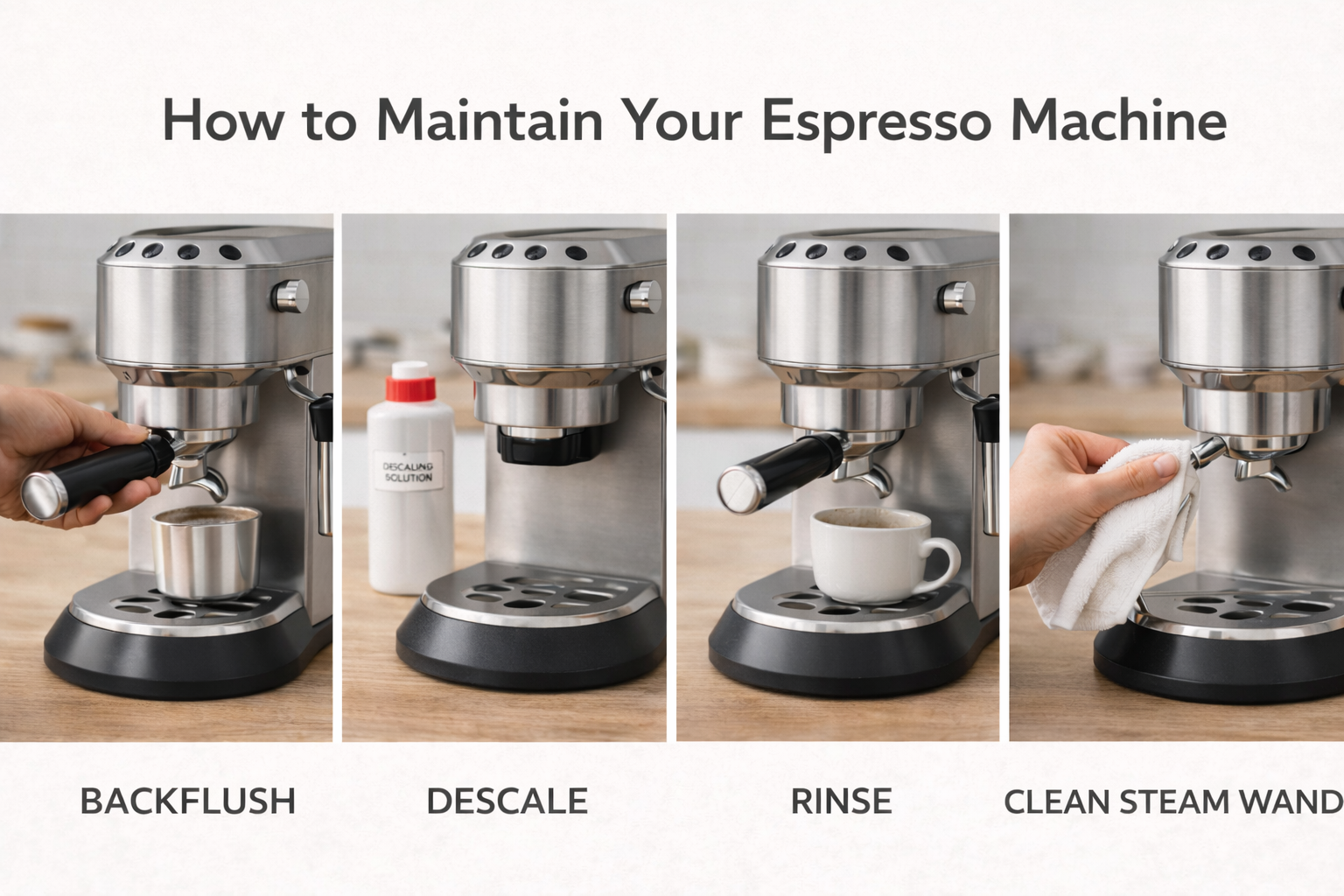
A practical ownership schedule for keeping an espresso machine reliable: daily cleaning, weekly group-head care and backflushing where supported, monthly inspection, descaling based on water hardness, and the maintenance habits that prevent coffee-oil buildup and mineral scale.
Editorial analysis
What matters most in this guide
Espresso machines are not ordinary kitchen appliances. They are compact systems that combine heat, pressure, water chemistry, and mechanical movement in a very small space. Every espresso shot stresses internal components—boilers, thermoblocks, pumps, solenoid valves, seals, sensors, and fittings—whether the machine is used once a week or ten times a day.
What separates espresso machines that last ten to fifteen years from those that fail after two or three is rarely brand alone. It’s maintenance—specifically, whether you control the two slow “silent killers” inside espresso machines: coffee oils and mineral scale. Coffee oils go rancid and build up in hidden areas, damaging flavor and clogging valves. Mineral scale narrows water pathways, insulates heating elements, and makes pumps work harder—often long before the machine shows visible symptoms.
This guide is written as a true ownership reference, not a shallow checklist. You’ll learn how espresso machines actually fail, why specific maintenance steps prevent those failures, and how to build a routine that fits your machine type and water quality. If you’re newer to espresso, you’ll also benefit from the CoffeeGearHub hub pages and comparisons linked throughout.
Helpful starting points: If you’re building a full setup or still learning the basics, start with Start Here and browse the manual vs automatic espresso machine comparison for maintenance tradeoffs by machine type.
Key Espresso Machine Maintenance Takeaways
- Maintenance prevents hidden damage: espresso machines degrade gradually, not suddenly.
- Water quality matters most: water chemistry often determines lifespan more than usage volume.
- Oil buildup ruins flavor first: rancid coffee oils cause bitterness before mechanical failure appears.
- Scale disrupts temperature & pressure: mineral scale damages heating systems and strains pumps long before leaks form.
- Routine beats intensity: consistent small habits outperform occasional deep cleans.
What This Guide Covers
- How espresso machines fail and what maintenance actually prevents
- Daily, weekly, monthly, and quarterly maintenance schedules
- Backflushing (what it is, when it’s required, and what can go wrong)
- Descaling (frequency, safe steps, and common mistakes)
- Water quality fundamentals (hardness, TDS, filters, and safe water choices)
- Wear items: gaskets, shower screens, valves, and steam tips
- Brand-specific guidance for Breville, Gaggia, and De’Longhi machines
- Troubleshooting symptoms mapped to maintenance causes
- FAQ at the end.
How Espresso Machines Actually Fail (And Why Maintenance Works)
Most espresso machines do not fail because a single part “breaks.” They fail because multiple small problems accumulate over time and compound into bigger issues. A machine can still turn on, heat up, and even produce “something like espresso” while internal components are deteriorating.
Mineral scale slowly narrows internal water pathways. As flow restriction increases, the pump must work harder, pressure becomes less stable, and temperature control becomes less accurate. Scale also insulates heating surfaces, meaning the machine has to run hotter and longer to achieve the same water temperature—which increases wear.
Coffee oils accumulate behind shower screens and inside valves. Over time, these oils oxidize, harden, and become sticky deposits that restrict valve movement and create persistent bitterness. This is why many “my espresso suddenly tastes bitter” problems are solved by cleaning rather than changing beans.
Milk residue is the fastest way to clog steam pathways and milk circuits. Milk dries into stubborn deposits that restrict flow and can create hygiene issues inside automatic milk systems. This is also one of the most common causes of declining steam power.
Maintenance works because it interrupts these failure paths early. Done consistently, it converts catastrophic failures into manageable wear items—like replacing a gasket or shower screen on schedule instead of dealing with leaks, poor extraction, or expensive repairs later.
The Practical Maintenance Schedule (Daily → Quarterly)
If you want reliability and consistent espresso, you need a routine that matches how espresso machines actually get dirty. Think in layers:
| Cadence | What to do | Why it matters |
|---|---|---|
| After each use / Daily | Rinse the portafilter and basket, flush the group, purge and wipe the steam wand, empty the drip tray as needed. | Prevents rancid coffee oils, dried milk, and loose grounds from hardening. |
| Weekly | Brush the group face and shower screen; backflush only if your machine supports it. | Cleans hidden oil buildup before it affects valves, water dispersion, and flavor. |
| Monthly | Deep-clean removable metal parts, inspect the shower screen and gasket, and check for leaks or declining flow. | Catches wear items early, before they become reliability or extraction problems. |
| Quarterly / As water requires | Review filter condition, water hardness, and scale risk; descale according to the manufacturer and your actual water conditions. | Controls mineral scale without over-descaling the machine. |
Your exact timing depends on usage and water hardness, but this schedule is strong enough to prevent the most common failures for most home users.
Maintenance essentials
Supplies used throughout this guide
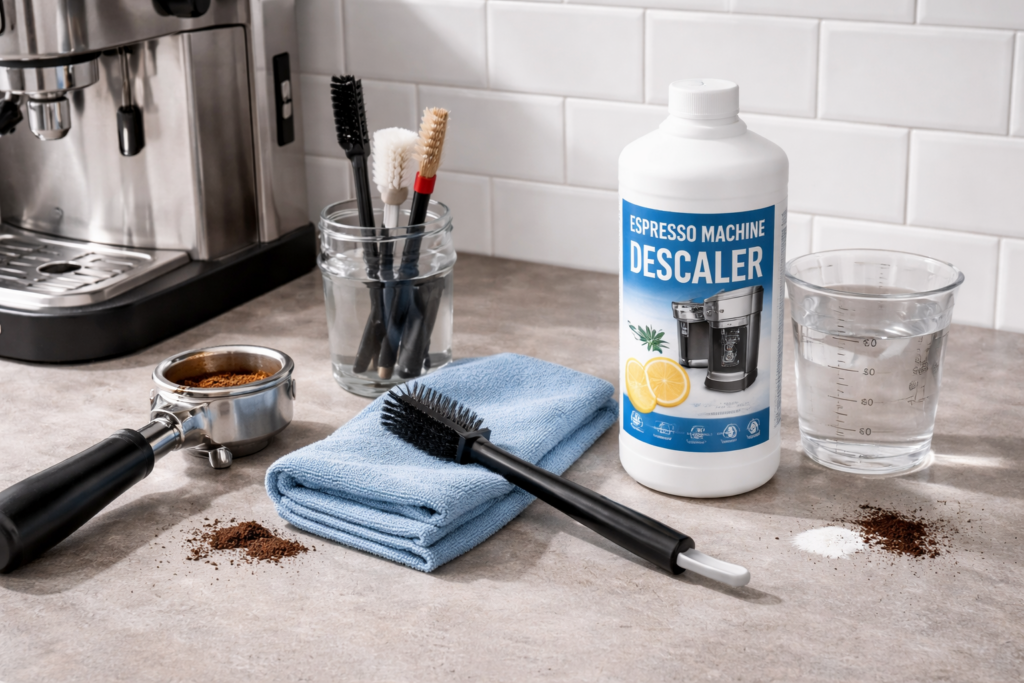
You do not need a large maintenance kit. The most useful items are a coffee-equipment cleaner, backflush tools for compatible machines, an approved descaler, and a simple water-hardness test.
Affiliate disclosure: These links may earn CoffeeGearHub a commission at no additional cost to you. As an Amazon Associate, we earn from qualifying purchases. Prices and availability can change.
Daily Espresso Machine Maintenance: Coffee Oils & Milk Residue
Daily maintenance is about preventing fast-degrading residues from turning into hard-to-remove buildup. Done well, it protects both espresso flavor and the parts that contact water and steam most frequently.
1) Clean the Portafilter and Basket (Every Session)
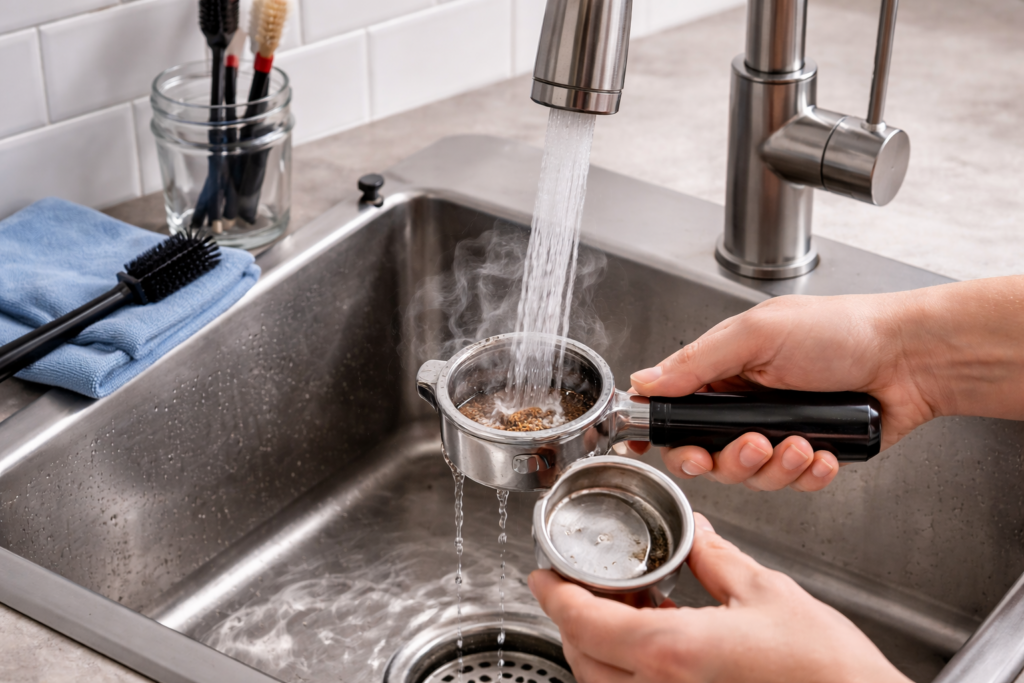
After brewing, knock out the puck, rinse the basket and portafilter with hot water, and wipe the basket rim. This seems small, but it prevents oil film from turning rancid and clinging to metal. If you taste bitterness that seems to appear “out of nowhere,” start here before changing your grind or beans.
Extra step (recommended 2–3x per week): Remove the basket and rinse underneath the lip. That hidden rim collects oily residue quickly, especially with darker roasts.
2) Flush the Group Head (10–20 Seconds)
After your last shot, run water through the group head for a short flush. This clears loose grounds from the shower screen and reduces oil residue at the group face. On machines that sit for days between uses, this step is especially useful because it prevents residue from drying into the screen.
3) Purge and Wipe the Steam Wand (Immediately After Milk)
Milk dries quickly and becomes stubborn. Purge the wand for 1–2 seconds, wipe with a damp cloth, then purge again. This prevents milk from being sucked back into the tip and drying inside the wand.
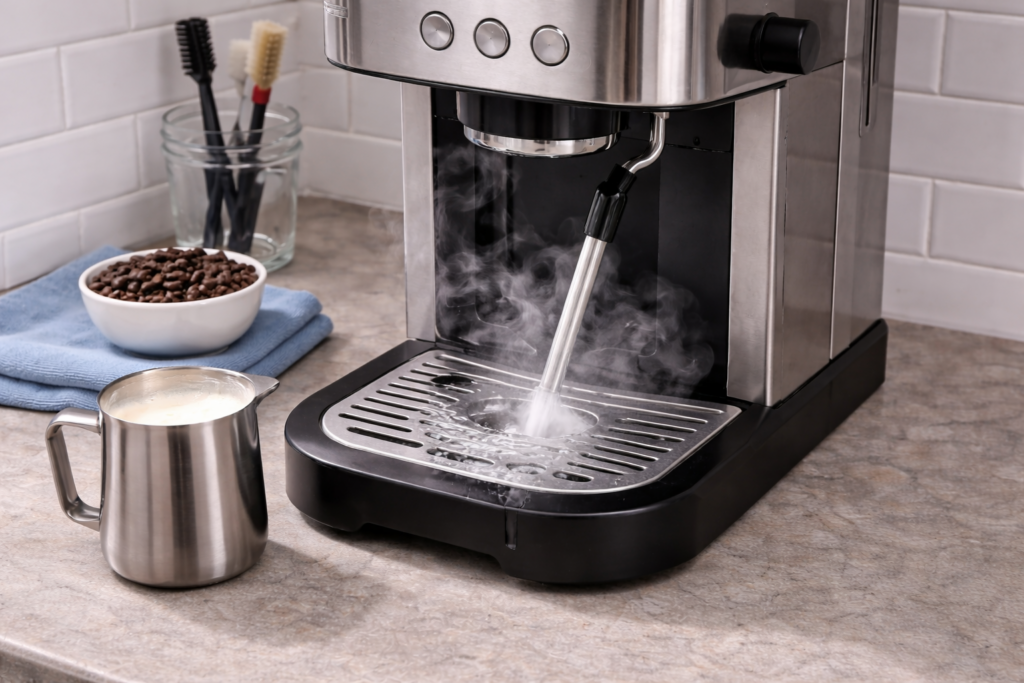
Tip: If you frequently make milk drinks, keep a small cup of hot water near your station. Dipping the wand tip briefly (after purging) makes wiping easier and keeps residue from baking on.
Weekly Espresso Machine Maintenance: Shower Screen, Group Head, and Backflushing
Weekly maintenance targets “hidden” areas where oils collect and harden. This is where many long-term problems start, including sticky valves, uneven water dispersion, and persistent bitterness that does not improve with dialing-in.
1) Scrub the Group Face and Shower Screen
Use a group brush to scrub around the shower screen and gasket area. A quick scrub loosens oils and grounds trapped in grooves and reduces early gasket wear. If your machine allows removal of the shower screen (many do), remove it occasionally for a deeper clean.
2) Backflushing (If Your Machine Supports It)
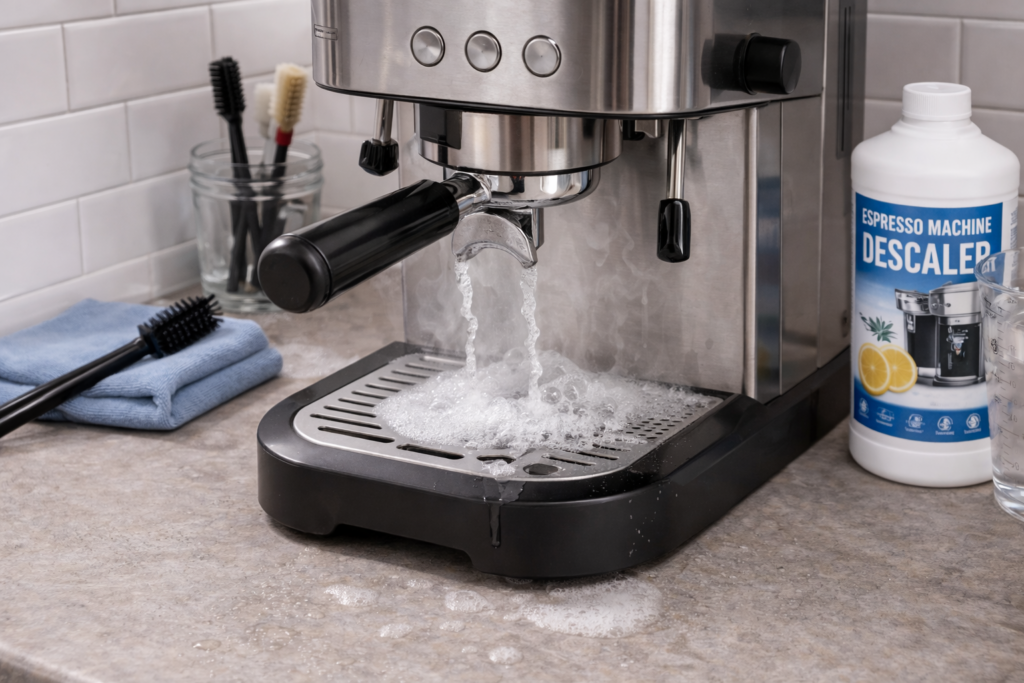
Backflushing is one of the most important maintenance steps on machines with a three-way solenoid valve. It forces water and detergent backward through the group head and valve pathway, dissolving oils you cannot reach from the outside.
Important: Not all machines should be backflushed. Many entry-level machines without a solenoid valve should not be backflushed with detergent. If you’re unsure, check your manual or reference machine type comparisons in our manual vs automatic espresso machine guide.
- Insert a blind basket into your portafilter
- Add a small amount of espresso detergent (per product instructions)
- Run the pump 5–10 seconds, stop, wait a few seconds
- Repeat 4–6 times
- Rinse with multiple water-only cycles until clean
For compatible machines
Need a blind basket or backflush tools?
Use these only if your espresso-machine manual confirms that backflushing is supported.
Affiliate disclosure: CoffeeGearHub may earn a commission from qualifying purchases at no additional cost to you.
Monthly Maintenance: Deep Cleaning, Inspection, and Wear Items
Monthly maintenance is where you prevent the annoying problems that slowly creep in: leaks around the portafilter, water dispersion issues, clogging steam tips, and “my espresso tastes off no matter what I do.” Many of these come down to wear items and buildup in parts you don’t touch daily.
1) Soak Portafilter Baskets and Metal Parts
Soaking baskets and metal portafilter parts in espresso detergent removes stubborn oils that hot water won’t touch. Avoid soaking handles or rubberized components unless the manufacturer approves it. Rinse thoroughly after soaking to prevent chemical residue affecting flavor.
Deep-cleaning supply
Espresso cleaner for baskets and metal parts
A purpose-made coffee-equipment cleaner helps dissolve stubborn coffee oils. Follow the product directions and your machine manufacturer’s cleaning guidance.
Affiliate disclosure: CoffeeGearHub may earn a commission from qualifying purchases at no additional cost to you.
2) Inspect and Clean the Shower Screen
If your shower screen is removable, take it out monthly or every couple of months. A clogged or uneven screen can cause channeling, uneven extraction, and inconsistent shot times. A clean screen improves water dispersion and makes your espresso more repeatable.
3) Check Group Gasket Condition
Group gaskets are wear items. Heat cycling and coffee oils degrade them. Symptoms of a worn gasket include water leaking around the portafilter during brewing or needing to tighten the portafilter further than before to get a good seal. If leaks start, don’t ignore them—leaks often worsen quickly and can damage surrounding parts.
Descaling Espresso Machines: Frequency, Safe Steps, and Mistakes to Avoid
Mineral scale is the single most destructive force inside an espresso machine. It forms when calcium and magnesium precipitate out of heated water and adhere to internal surfaces. Scale narrows channels, reduces flow, strains pumps, and destabilizes brew temperature by insulating heat transfer surfaces.
The tricky part is that scale often harms performance before you see obvious symptoms. Your machine may still “work,” but shots become inconsistent, brew temperatures drift, steam power declines, or recovery time gets slower. These changes are easy to misdiagnose as grinder issues or beans—until descaling fixes them.
For a complete step-by-step guide, see our detailed tutorial: How to Descale an Espresso Machine. This pillar focuses on the why and the decision logic.
How Often Should You Descale? Use Water Hardness, Not Guesswork
- Start with the manufacturer’s schedule: some machines use alerts, filter-change intervals, or model-specific descaling procedures.
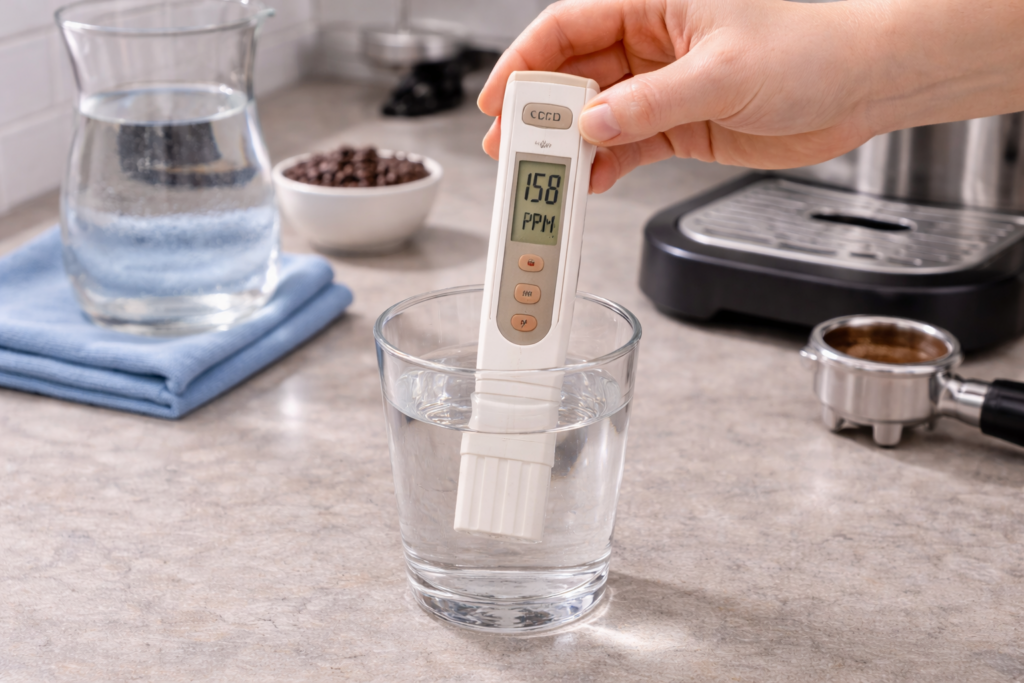
- Use actual hardness data: test the water feeding the machine rather than assuming tap water is “soft” or “hard.”
- Harder water generally increases scale risk: improve filtration or water treatment before simply descaling more aggressively.
- Do not descale by calendar alone: frequency should reflect the machine design, water chemistry, filtration, and manufacturer guidance.
If you don’t know your water hardness, you’re essentially running your machine blind. This is why water testing is one of the highest-ROI maintenance steps you can take.
Safe Descaling Basics (Applies to Most Home Machines)
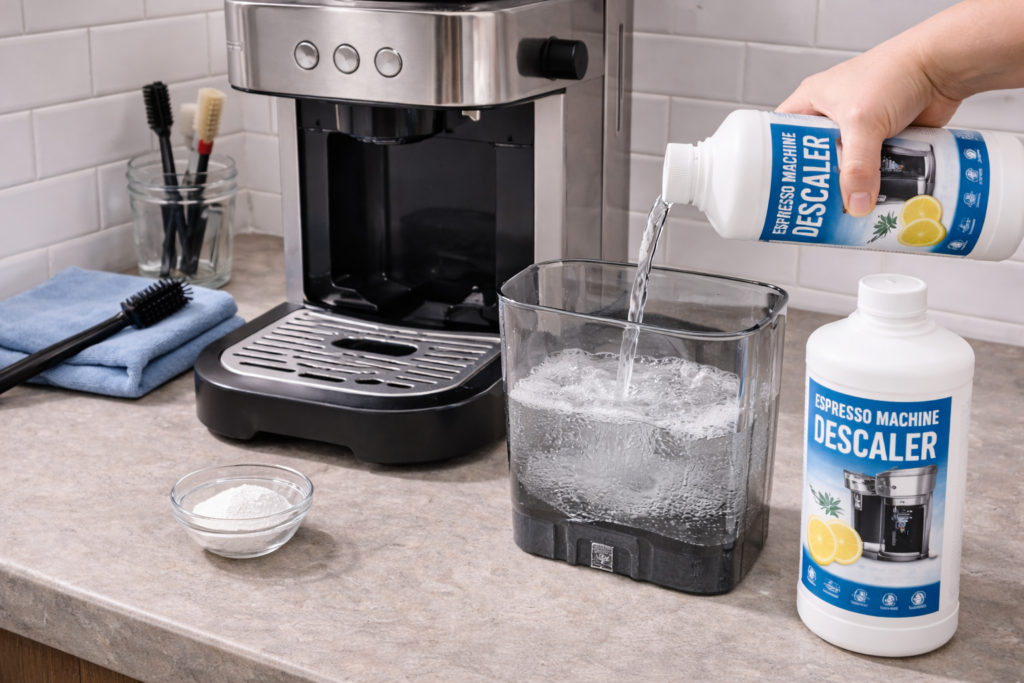
- Use espresso-machine-approved descaler (avoid vinegar)
- Follow the product dilution instructions exactly
- Run solution through brew and steam circuits as instructed
- Rinse thoroughly with full tanks of fresh water
- Do not “over-descale” (too frequent, too strong) — it can stress seals
Important note on vinegar: do not assume vinegar is safe for your machine. Use the cleaning/descaling method specified by the manufacturer.
Descaling supply
Use a machine-appropriate descaler
Check your machine manual before choosing a descaler or starting a cycle. The product and procedure should match the manufacturer’s instructions.
Affiliate disclosure: CoffeeGearHub may earn a commission from qualifying purchases at no additional cost to you.
Water Quality: The Most Important Maintenance Decision You Make
Water is both an ingredient and a maintenance variable. The wrong water can destroy a machine even if you clean everything else perfectly. Hard water accelerates scale. Distilled water can be corrosive and may cause sensor or boiler issues. Extremely soft water can also extract poorly, producing sour or thin espresso.
For a deeper look at water and flavor, read: Water Quality for Coffee: How Water Chemistry Affects Flavor. For maintenance purposes, your goal is to reduce scale risk while maintaining safe mineral content.
Practical Water Choices for Home Espresso
- Good: filtered water with moderate mineral content
- Higher scale risk: untreated hard tap water, especially when the manufacturer specifies lower-hardness water.
- Check before using very low-mineral water: distilled or reverse-osmosis water may not meet the requirements of every espresso machine; use the water specification in your machine manual or remineralize when appropriate.
If your water is hard, filtration or mixing strategies can dramatically reduce maintenance burden. Some users also use espresso-safe mineral packets or recipes to standardize water, but filtration alone is often a practical first step for home setups.
Water check
Test hardness instead of guessing
Hardness testing is more useful for scale-risk decisions than a TDS reading alone.
Affiliate disclosure: CoffeeGearHub may earn a commission from qualifying purchases at no additional cost to you.
Don’t Ignore Grinder Maintenance (It’s Part of Espresso Machine Maintenance)
If your grinder is dirty, your espresso will taste stale even if your machine is spotless. Coffee oils accumulate inside grinders too, especially in the chute and burr chamber. Old grounds and oils cause bitterness, muted flavor, and inconsistent flow—often mistaken for espresso machine problems.
Use our grinder resource to keep your workflow consistent: Best Espresso Grinders. Even if you’re not shopping, the maintenance tips and burr considerations apply.
Brand-Specific Espresso Machine Maintenance Considerations
Core maintenance principles apply to all espresso machines, but design choices from each manufacturer create unique maintenance priorities. Understanding these differences helps prevent avoidable failures and extends lifespan.
Breville Espresso Machine Maintenance (Thermoblock/Thermocoil + Built-In Alerts)
Breville espresso machines are popular for built-in convenience: integrated grinders on many models, thermoblock or thermocoil heating, and cleaning/descaling alerts. These machines can be extremely reliable for home use, but they are also more sensitive to scale buildup because the internal pathways and heating system are compact.
What to prioritize on Breville:
- Follow descaling prompts promptly—ignoring alerts often leads to temperature instability and slow recovery time.
- Replace water filters on schedule (if your model uses them). Filter neglect often translates into faster scale buildup.
- Clean the built-in grinder regularly if your model has one; old oils and fines degrade taste and consistency.
If you’re deciding whether a Breville-style machine fits your lifestyle, our comparison can help: Manual vs Automatic Espresso Machines.
Gaggia Espresso Machine Maintenance (Classic/Pro + Backflushing Discipline)
Gaggia machines (especially Classic-style models) are known for a commercial-ish workflow and strong parts availability. They can last a very long time—but they benefit from consistent backflushing and gasket care. Coffee oil buildup behind the shower screen is a common cause of sticky valves and leakage on these models.
What to prioritize on Gaggia:
- Weekly backflushing with detergent (if supported) to prevent oil deposits in the solenoid pathway.
- Proactive gasket replacement if you notice leaks or increased portafilter tightening.
- Descale carefully based on water hardness—scale and heat cycling are long-term wear multipliers.
For descaling logic and safe step-by-step flow, see: How to Descale an Espresso Machine.
De’Longhi Espresso Machine Maintenance (Thermoblock + Milk Circuit Hygiene)
De’Longhi machines often use thermoblocks and, on many models, automatic milk systems. These features are convenient, but they make milk hygiene a top priority. Skipping rinse cycles can lead to internal deposits that are difficult to remove without disassembly.
What to prioritize on De’Longhi:
- Daily milk rinse cycles (non-negotiable if your model has an auto milk circuit).
- Regular descaling—thermoblocks can show performance decline faster when scale narrows channels.
- Monitor water hardness and use filtration if needed to reduce scale frequency.
Maintenance Troubleshooting: Symptoms → Likely Causes → Best Fix
This section is here to prevent wasted time. Many espresso problems look like “dial-in issues” but are actually maintenance issues. Use this as a quick diagnostic map before you change grinders, beans, or recipes.
Final Thoughts: Maintenance Is Part of Brewing (Not an Optional Extra)
Great espresso doesn’t come only from better grinders or more expensive machines. It comes from stability: clean water pathways, consistent temperature, reliable pressure, and components that move freely. Maintenance is how you protect that stability.
If you build a routine that matches your machine and water quality, you’ll get better espresso, fewer headaches, and a machine that lasts years longer. If you want the full foundational path for improving at home, revisit Start Here and the espresso comparisons linked throughout this guide.
FAQs
How often should I clean my espresso machine?
Clean exposed parts daily, including the portafilter, basket, and steam wand. Clean the group face weekly, and backflush weekly if your machine supports it. Descale based on water hardness rather than time alone.
Do all espresso machines need descaling?
Any espresso machine that heats mineral-containing water can accumulate scale over time. How quickly scale develops depends on water hardness, usage, filtration, and the machine design, so follow the manufacturer’s instructions and your actual water conditions.
Does espresso machine maintenance really affect flavor?
Yes. Old coffee oils can add bitterness and mute flavor, while mineral scale can disrupt brew temperature and water flow. Both can make extraction less consistent.
Is vinegar safe for descaling an espresso machine?
Do not assume vinegar is safe for your machine. It can affect seals, components, or leave persistent odors on some models. Use the descaling method and product recommended by the manufacturer.
Why does my espresso machine leak around the portafilter?
A dirty or worn group gasket is a common cause. Clean the gasket groove and group area first, then replace the gasket if the leak continues and the manufacturer’s guidance supports replacement.
How do I know if my water is too hard for espresso?
Use water hardness test strips or a proper water test rather than relying on taste alone. Frequent scale residue, declining flow, or repeated descaling needs can indicate that water hardness is contributing to buildup.
CoffeeGearHub shortlist
Compare CoffeeGearHub product pages
Review specifications and current verified merchant offers on CoffeeGearHub before leaving the site.
Continue Learning
Build on the maintenance routine with guides covering water, descaling, troubleshooting, and better espresso preparation.
Machine care & troubleshooting
Improve your espresso
In this guide
- Key Espresso Machine Maintenance Takeaways
- What This Guide Covers
- How Espresso Machines Actually Fail (And Why Maintenance Works)
- The Practical Maintenance Schedule (Daily → Quarterly)
- Daily Espresso Machine Maintenance: Coffee Oils & Milk Residue
- Weekly Espresso Machine Maintenance: Shower Screen, Group Head, and Backflushing
- Monthly Maintenance: Deep Cleaning, Inspection, and Wear Items
- Descaling Espresso Machines: Frequency, Safe Steps, and Mistakes to Avoid
- Water Quality: The Most Important Maintenance Decision You Make
- Don’t Ignore Grinder Maintenance (It’s Part of Espresso Machine Maintenance)
- Brand-Specific Espresso Machine Maintenance Considerations
- Maintenance Troubleshooting: Symptoms → Likely Causes → Best Fix
- Final Thoughts: Maintenance Is Part of Brewing (Not an Optional Extra)
- FAQs