
Fellow Ode Gen 2 Review (2026): The Best Filter Grinder for Home Brewers?
Editorial standards: this review synthesizes Fellow’s specifications as published by retailers, measured results and impressions from independent reviewers including Homegrounds, Brew Coffee Home, and The Coffee Locator, and long-term owner reports from Home-Barista. Every score below is tied to a cited source. CoffeeGearHub does not claim hands-on testing where it has not occurred.
At a glance
What this Fellow Ode Gen 2 review covers
A scored verdict, what changed from the original Ode, specifications, what reviewers measured, grind quality and range by brew method, why it is not an espresso grinder, workflow, static and retention, noise, long-term ownership, how it compares with the Baratza Encore ESP, OXO Brew, and hand grinders, and who should buy it.
Editorial analysis
A specialist that does one job very well
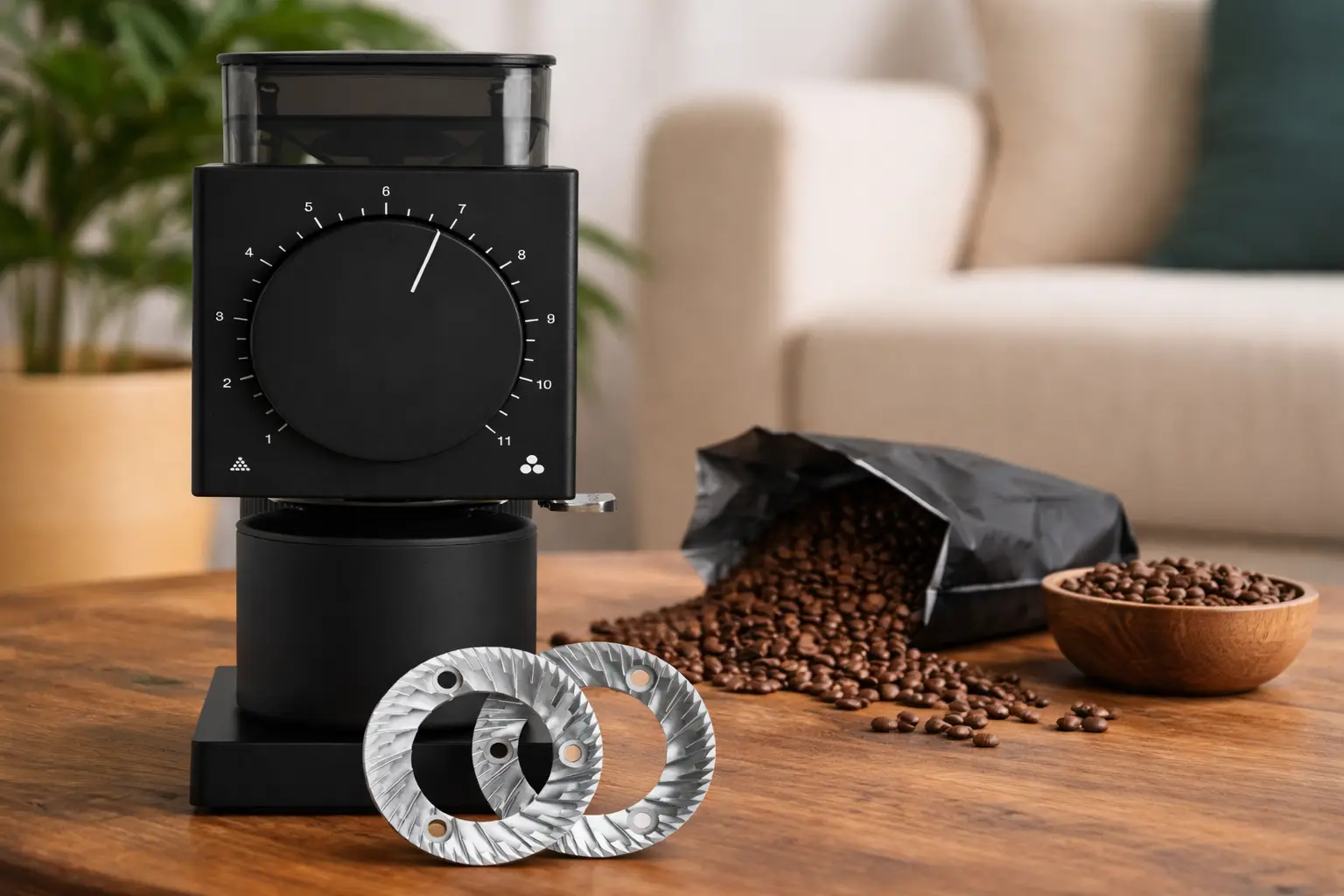
The Ode was designed for one thing: grinding coffee for filter brewing at home, quickly and quietly, one dose at a time. The Gen 2 keeps that focus and fixes most of the original’s complaints, with new burrs that grind finer and more evenly, a larger load chute, and an anti-static system that cuts down on mess.
What it still is not is an all-rounder. Fellow positions the Ode as a brew grinder, and every reviewer we read agrees it is not suitable for espresso. If you brew pour-over, AeroPress, drip, or French press, that focus is a strength; if you also want espresso, it is the wrong grinder.
The 30-Second Answer
The Fellow Ode Gen 2 earns a 7.9/10 research score. It is one of the best electric grinders for filter coffee at home, with 64 mm flat burrs, fast single-dose grinding, low retention, and quiet operation. Buy it if you brew pour-over, AeroPress, drip, or French press and want café-level grind quality.
Skip it if you want espresso: its 31 steps are too coarse for dialing in shots. For one grinder that covers both, consider the Baratza Encore ESP. Our best burr grinders for pour-over guide compares more options.
Compare current options
Start with these representative choices
The Ode and two alternatives depending on how you brew. Picks are based on published specifications and reviews, not our own testing.
Fellow Ode Gen 2 — Best for filter coffee
64 mm flat burrs, 31 settings, single-dose workflow, and anti-static design for pour-over through French press.
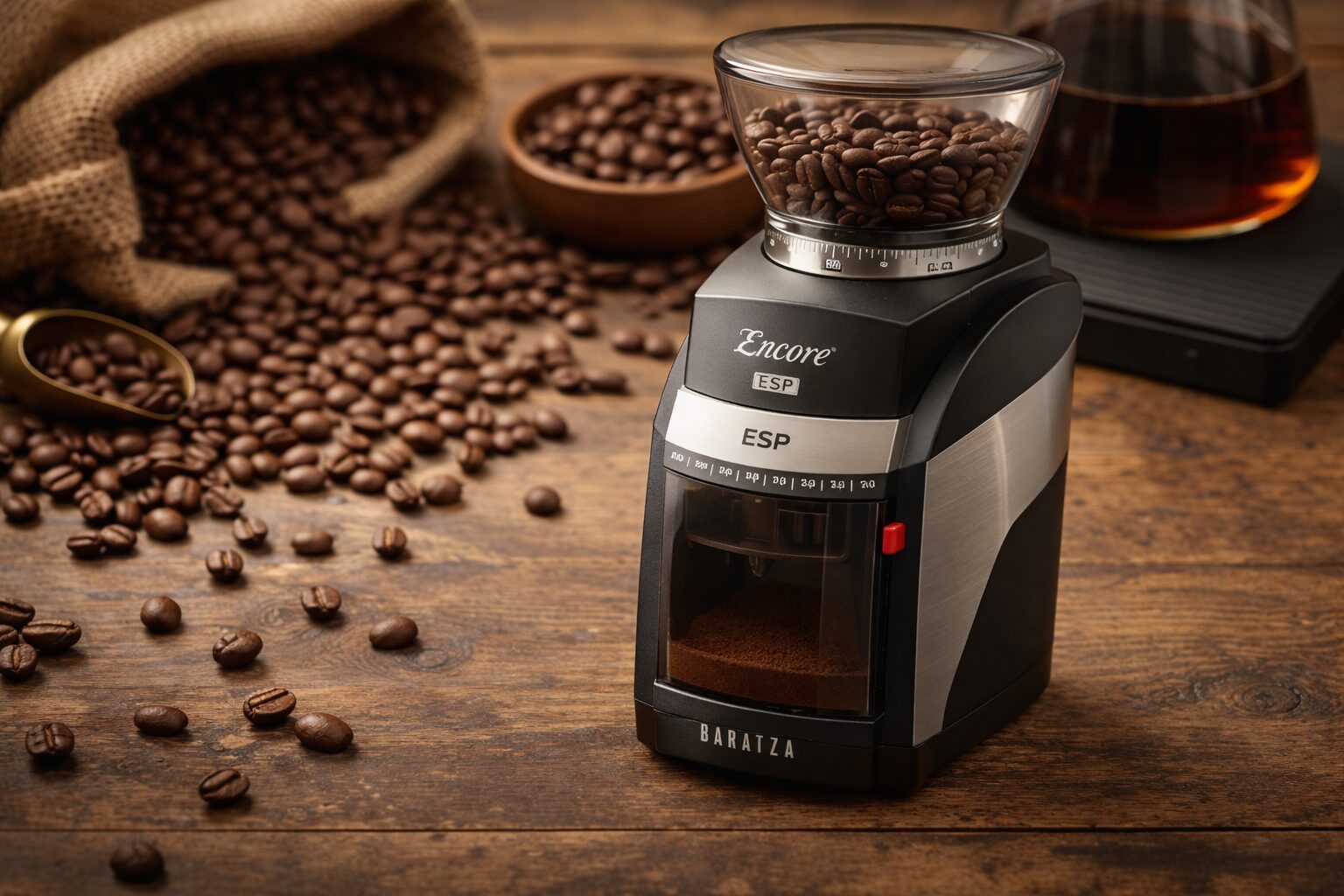
Baratza Encore ESP — If you also want espresso
A conical burr grinder with a dedicated fine espresso range and a broad filter range.
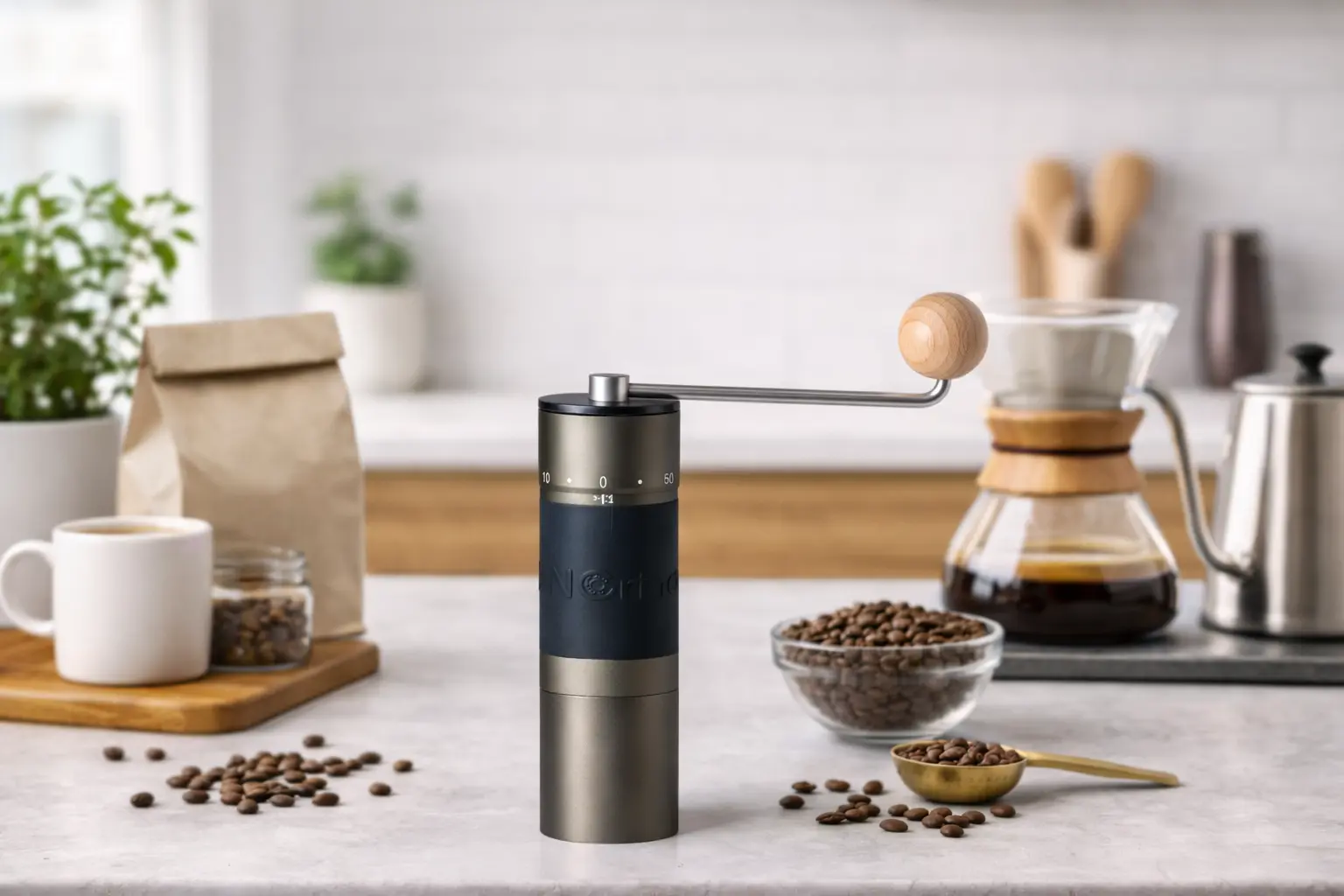
KINGrinder K6 — Budget manual alternative
A hand grinder with fine external adjustment that covers espresso through French press.
Affiliate disclosure: Amazon links may earn CoffeeGearHub a commission at no additional cost to you. Prices and availability can change.
Our Research-Based Score
CoffeeGearHub research score
7.9 / 10 overall, weighted toward filter grind quality
We do not test grinders ourselves, so this score is built from what independent reviewers measured and reported, retailer specifications, and long-term owner experience. Filter grind quality carries the most weight because that is what the Ode is designed for; grind range carries enough weight to reflect the real cost of its biggest limitation.
The result is a clear profile. The Ode Gen 2 scores near the top for what it does, grinding evenly and quickly for filter coffee, and loses points mainly for what it cannot do. That makes it an excellent choice for some buyers and the wrong choice for others, which is more useful to know than a single average.
The scores also reflect how reviewers describe living with the grinder rather than only bench numbers. Speed, noise, and mess shape every morning, so they carry real weight here. Value is judged against the obvious alternatives at different budgets: a versatile electric grinder that also handles espresso, a cheaper electric grinder with a hopper, and a quality hand grinder. Against those, the Ode is the strongest option specifically for people who brew only filter coffee and want it to be quick and repeatable.
What Changed From the Original Ode
The original Ode launched to praise for its design and workflow, and criticism for a grind that could not go fine enough for some pour-over recipes, plus static and retention. The Gen 2 targets those complaints directly. According to Brew Coffee Home, the most important change is a new set of burrs with two-stage grinding geometry that grind more finely than the original, while the dial keeps 31 steps. Homegrounds puts the finest grind at about 300 microns, versus about 600 microns for the Gen 1, and Whole Latte Love’s listing cites about 250 microns.
| Spec | Fellow Ode Gen 2 |
|---|---|
| Burrs | 64 mm flat, stainless steel, Gen 2 brew geometry |
| Grind settings | 31 stepped settings |
| Motor | Smart Speed PID direct drive, about 1,400 RPM |
| Load chute | Up to 100 g (Gen 1: 80 g) |
| Anti-static | Built-in system plus grounds knocker |
| Size | About 9.8 x 4.1 x 9.4 in |
| Weight | About 10 lb |
| Warranty | 2 years (Fellow) |
The smaller changes matter in daily use too. The load chute now holds 100 g instead of 80 g, so a full Chemex or a large batch of cold brew fits in one go. The catch cup is larger and its lid fits better, the dial markings were revised, and the start and stop beep was removed. Brew Coffee Home also reports noticeably less static mess and fewer grounds left behind when you use the knocker.
Owners of the original Ode can buy the Gen 2 burrs separately and fit them with a screwdriver, which reviewers describe as a straightforward swap. If you already own a Gen 1 and like it, that upgrade captures most of the improvement for much less than a new grinder.
What Independent Reviewers Measured
Published measurements of the Ode Gen 2 vary in method, but they point the same way: fast, quiet, low-retention grinding with very even particle sizes for filter coffee. The table collects the most useful figures.
| Source | Key findings |
|---|---|
| Homegrounds | 30 g ground medium in under 20 s; about 82 dB; finest grind about 300 microns |
| The Coffee Locator | 20 g in 12–15 s; retention 0.3–0.4 g over 30 grinds; about 65 dB; fewer fines than Gen 1 |
| Whole Latte Love | About 60 dB listed; 1,400 RPM; finest grind about 250 microns |
| Home-Barista owner | Retention rose from about 0.1 g to 0.5–0.7 g as static returned; cleaning fixed it |
The noise figures differ widely because measurement distance, beans, and settings all affect the reading, so treat them as a range rather than a precise number. The retention figures are the more useful finding: under normal use the Ode leaves well under a gram behind, which matters for single-dose brewing, but that depends on keeping the chute and anti-static parts clean.
Grind Quality by Brew Method
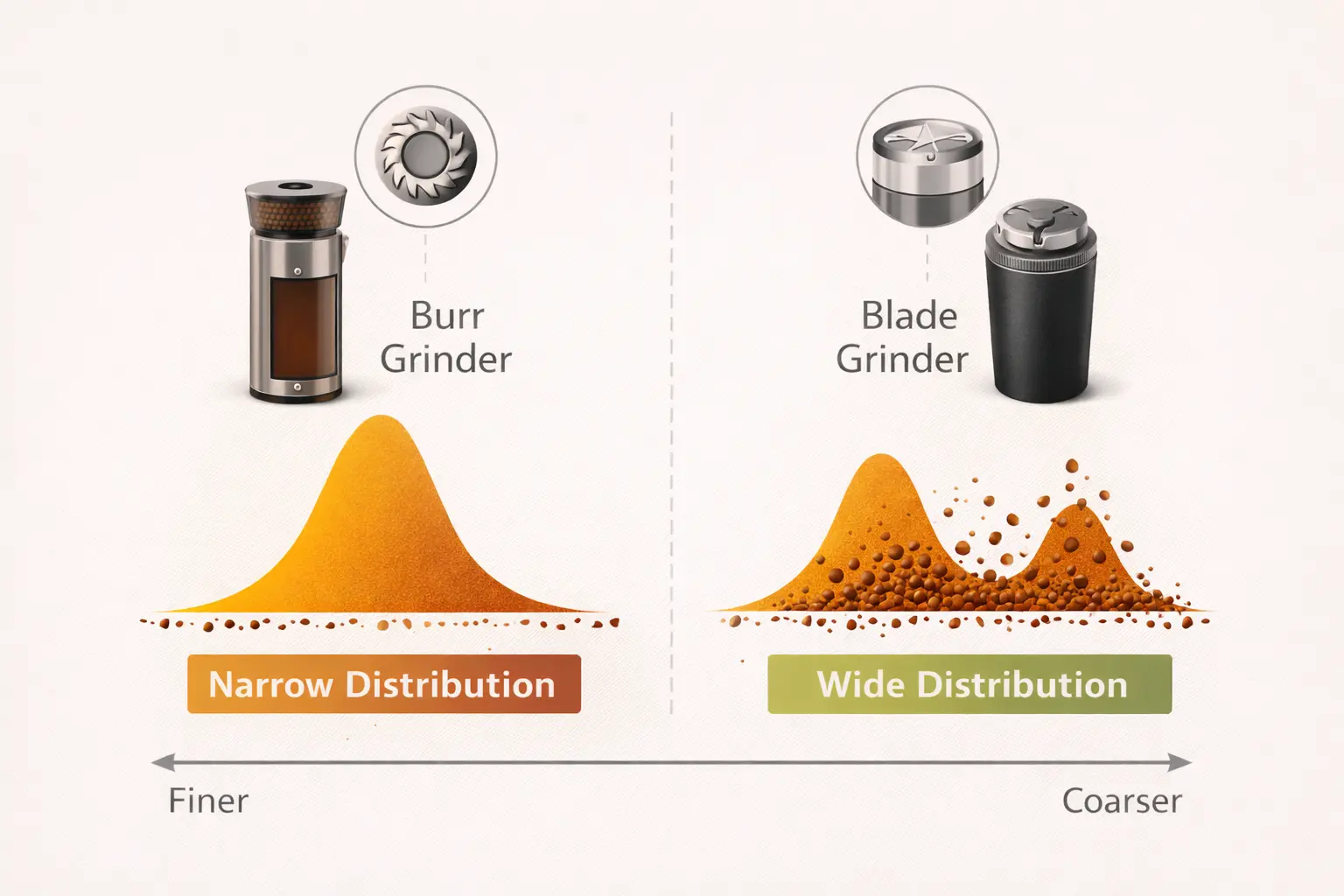
Flat burrs tend to produce a narrow spread of particle sizes, which means more even extraction and clearer flavor in filter coffee. Every review we read praises the Ode Gen 2’s consistency across the medium-fine to coarse range, and The Coffee Locator reports roughly 30 percent fewer sub-300-micron fines than the original Ode. Fewer fines means less bitterness and faster, more predictable drawdowns in pour-over.
Reviewer starting points are helpful for a first brew: around settings 10 to 12 for a V60, 16 to 19 for a Chemex, and 24 to 27 for French press. AeroPress and drip machines sit in between. At the coarse end, The Coffee Locator found the coarsest settings slightly fine for long cold brew steeps, producing more sediment than ideal, while Homegrounds used the coarsest setting successfully for cold brew. Our Hario V60 recipe pairs well with the Ode’s pour-over range.
Why the Ode Is Not an Espresso Grinder
The Gen 2 burrs can reach particle sizes in the espresso range, so it is reasonable to ask why the Ode is not recommended for espresso. The answer is adjustment, not fineness. Espresso is extremely sensitive to tiny grind changes, and the Ode’s 31 stepped settings are far too widely spaced to make them. Homegrounds notes that the steps lack the precision espresso needs, and Brew Coffee Home states the burrs are still not designed for espresso brewing.
If espresso is part of your plans now or later, buy a grinder built for it. The Baratza Encore ESP has a dedicated fine range for espresso plus a filter range, and our best espresso grinders guide covers more. Many home baristas end up with two grinders, an Ode-style filter grinder and a dedicated espresso grinder, because no single affordable grinder is ideal for both.
Daily Workflow: Single-Dose by Design
The Ode is a single-dose grinder: you weigh your beans, pour them into the load chute, press the button, and it grinds everything and switches off automatically. There is no large hopper to store beans in, which keeps coffee fresher in an airtight container and makes switching beans easy. Pair it with a 0.1 g scale such as the Timemore Black Mirror Basic 2 so every dose is consistent.
Speed is a strength. Reviewers report a typical pour-over dose in roughly 12 to 20 seconds, and the PID-controlled motor holds its speed steady under load. The main daily annoyance reviewers mention is the catch cup, which Homegrounds found hard to empty fully because grounds cling to its interior fins, and a stiff power cord. Neither affects the coffee, but both are worth knowing.
Static, Retention, and Cleaning
Static was one of the biggest complaints about the original Ode, and the Gen 2’s anti-static system is a clear improvement according to every review we read. Combined with the knocker, which you tap after grinding to release grounds from the chute, it keeps retention low enough for single dosing.
Long-term owner reports add an important caveat. In a Home-Barista owners’ thread, one owner found static and retention creeping back after about six weeks, with retention rising from around 0.1 g to 0.5 to 0.7 g; cleaning small tabs in the chute fixed it. The practical lesson is to brush out the chute and anti-static area regularly, and in dry weather to add a single drop of water to the beans before grinding, a technique known as RDT, which reduces static with almost any grinder. Homegrounds suggests a full cleaning roughly every 60 grinds.
Getting the Best Results From the Ode
A grinder this consistent rewards a consistent routine. Weigh every dose rather than estimating by volume, because the Ode grinds whatever you put in the chute and a few grams either way changes the brew ratio. Start from a reviewer setting for your brewer, brew, and then adjust one or two steps at a time based on taste and brew time: finer if the coffee tastes sour or drains too quickly, coarser if it tastes bitter or the drawdown stalls.
Keep notes on the setting that works for each coffee. Lighter roasts are denser and usually need a finer setting than darker roasts for the same brewer, so a new bag often needs a small adjustment. Because the Ode is a single-dose grinder with very low retention, switching between coffees or brew methods is quick, and the first dose after a change is not contaminated by much old coffee.
Water and technique still matter as much as the grind. A gooseneck kettle gives you control over pour rate, and water heated to roughly 92 to 96 degrees Celsius suits most filter recipes. Our how to make pour-over coffee guide walks through the full method, and the V60 recipe gives a precise starting point you can match to the Ode’s settings.
Long-Term Ownership
Fellow backs the Ode Gen 2 with a two-year warranty, longer than many grinders in its class, and replacement burrs are available. Third-party burr upgrades from SSP also fit the Ode for owners who want to experiment further, though they are an expensive addition and not necessary for great filter coffee.
The main long-term maintenance tasks are cleaning the chute and burrs and keeping the anti-static parts free of grounds. Owners who keep up with that report consistently good results; those who skip it are the ones who report static creeping back.
Fellow Ode Gen 2 vs Baratza Encore ESP, OXO Brew, and Hand Grinders
The Baratza Encore ESP is the better choice if you want one grinder for everything. Its conical burrs cover espresso and filter, and it is widely serviceable, but its filter grind is not as even as the Ode’s flat burrs. The OXO Brew Conical Burr Grinder is a budget-friendly electric option with a hopper and timer, suitable for drip and French press but less refined for pour-over.
Hand grinders are the other alternative. The KINGrinder K6 covers espresso to French press with fine external adjustment for far less money, and the 1Zpresso K-Ultra is a premium manual option with excellent filter performance. The trade-off is effort and time: hand grinding a 30 g pour-over dose takes far longer than the Ode’s few seconds. Our best burr grinders for pour-over guide compares all of these in more detail.
Who Should Buy the Fellow Ode Gen 2
Buy the Fellow Ode Gen 2 if you brew pour-over, AeroPress, drip, or French press and want an electric grinder that is fast, quiet, tidy, and capable of genuinely even filter grinds. It suits single-dose brewers who weigh their coffee and change beans often, and it pairs naturally with a gooseneck kettle such as the Fellow Stagg EKG Pro.
Skip it if you want espresso, now or later; choose the Baratza Encore ESP or a dedicated espresso grinder instead. Skip it too if you want a large bean hopper for grab-and-go grinding, or if your budget points toward a hand grinder, where the KINGrinder K6 offers excellent value.
Upgrade Your Filter Coffee
The Fellow Ode Gen 2 is a specialist filter grinder with fast, even, quiet grinding.
As an Amazon Associate, CoffeeGearHub earns from qualifying purchases.
Editorial bottom line: The Fellow Ode Gen 2 earns a 7.9/10 research score: excellent filter grind quality, fast single-dose workflow, low retention, and quiet operation, held back by no espresso capability and static that needs regular cleaning to stay in check. Buy it for filter coffee; choose the Encore ESP if you also want espresso.
Frequently Asked Questions
Can the Fellow Ode Gen 2 grind for espresso?
No. It can grind relatively fine, but its 31 steps are too widely spaced to dial in espresso, and Fellow designs it as a brew grinder. For espresso, choose a grinder with a dedicated espresso range such as the Baratza Encore ESP.
What changed in the Ode Gen 2?
New 64 mm flat burrs with two-stage grinding geometry that grind finer and more evenly, a larger 100 g load chute, an anti-static system, improved retention, a better-fitting catch cup, and revised dial markings.
Can I put Gen 2 burrs in my original Ode?
Yes. Fellow sells the Gen 2 burrs separately, and reviewers describe the swap as straightforward with a screwdriver and Fellow’s instructions.
What grind setting should I use for pour-over on the Ode Gen 2?
Reviewers report V60 starting points around settings 10 to 12, Chemex around 16 to 19, and French press around 24 to 27. Adjust by taste and brew time.
Does the Ode Gen 2 have static problems?
Much less than the original, thanks to its anti-static system. Some owners report static and higher retention returning over time; cleaning the chute and ionizer area or using a drop of water on the beans usually helps.
Is the Fellow Ode Gen 2 loud?
It is quieter than many electric grinders. Published measurements vary by method, from about 60 to 82 dB.
Sources and Further Reading
Specifications follow Whole Latte Love’s product listing. Gen 1 to Gen 2 changes follow Brew Coffee Home’s Gen 2 review. Measured results follow Homegrounds’ Ode review and The Coffee Locator’s Gen 2 review. Long-term owner experience follows a Home-Barista owners’ thread on static. Brewing guidance follows CoffeeGearHub’s pour-over and V60 recipe guides.
CoffeeGearHub product shortlist
Continue with related products on CoffeeGearHub
Review product categories and current verified merchant offers on CoffeeGearHub before leaving the site.