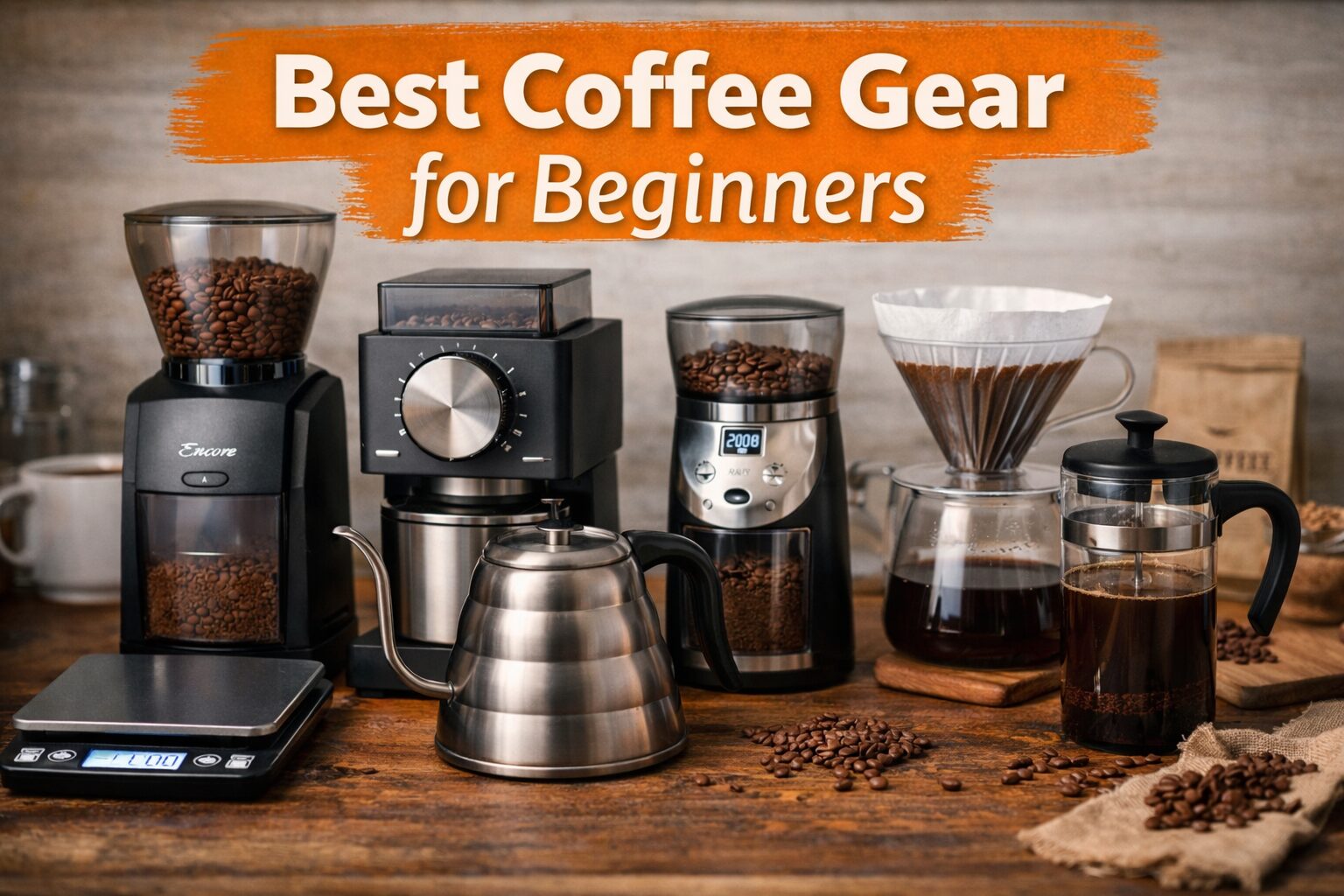
Best Coffee Gear for Beginners (2026): A Starter Setup That Actually Improves Your Coffee
Editorial standards: this guide compares manufacturer specifications with independent owner and reviewer reports and ranks gear by how much it improves a beginner’s cup. Recipes and settings are starting points. CoffeeGearHub does not claim hands-on testing where it has not occurred.
At a glance
A smaller, better-matched setup beats a drawer full of accessories
How to build a beginner setup in the right order, the five pieces that matter, specific starter picks for each, how to spend by priority rather than price, common mistakes, a first-week routine, and when to upgrade.
Editorial analysis
Buy for your workflow, not by product category
The easiest way to waste money on coffee gear is to shop category by category. Start with the drink you make most often: one clean cup each morning, a full carafe for the household, or milk drinks each call for different tools.
For almost every beginner, the order is the same: one brewer you will actually use, a burr grinder, a scale, fresh beans, and a kettle that suits the brewer. Everything else can wait until you can name the problem it solves.
The 30-Second Answer
A smart beginner setup is one brewer, a burr grinder, a basic scale, fresh whole-bean coffee, and a kettle matched to the brewer. Put the largest share of the budget into the grinder: the Baratza Encore ESP or OXO Brew Conical Burr Grinder for electric, or the KINGrinder K6 for manual.
For a brewer, start with a Hario V60 for clean pour-over or a Bodum Chambord French press for full-bodied coffee with almost no technique. Add a scale with a timer, and a gooseneck kettle only if you brew pour-over.
Compare current options
Start with these representative choices
Three starting points: a grinder, a brewer, and a scale, the three tools that improve a beginner’s coffee most.
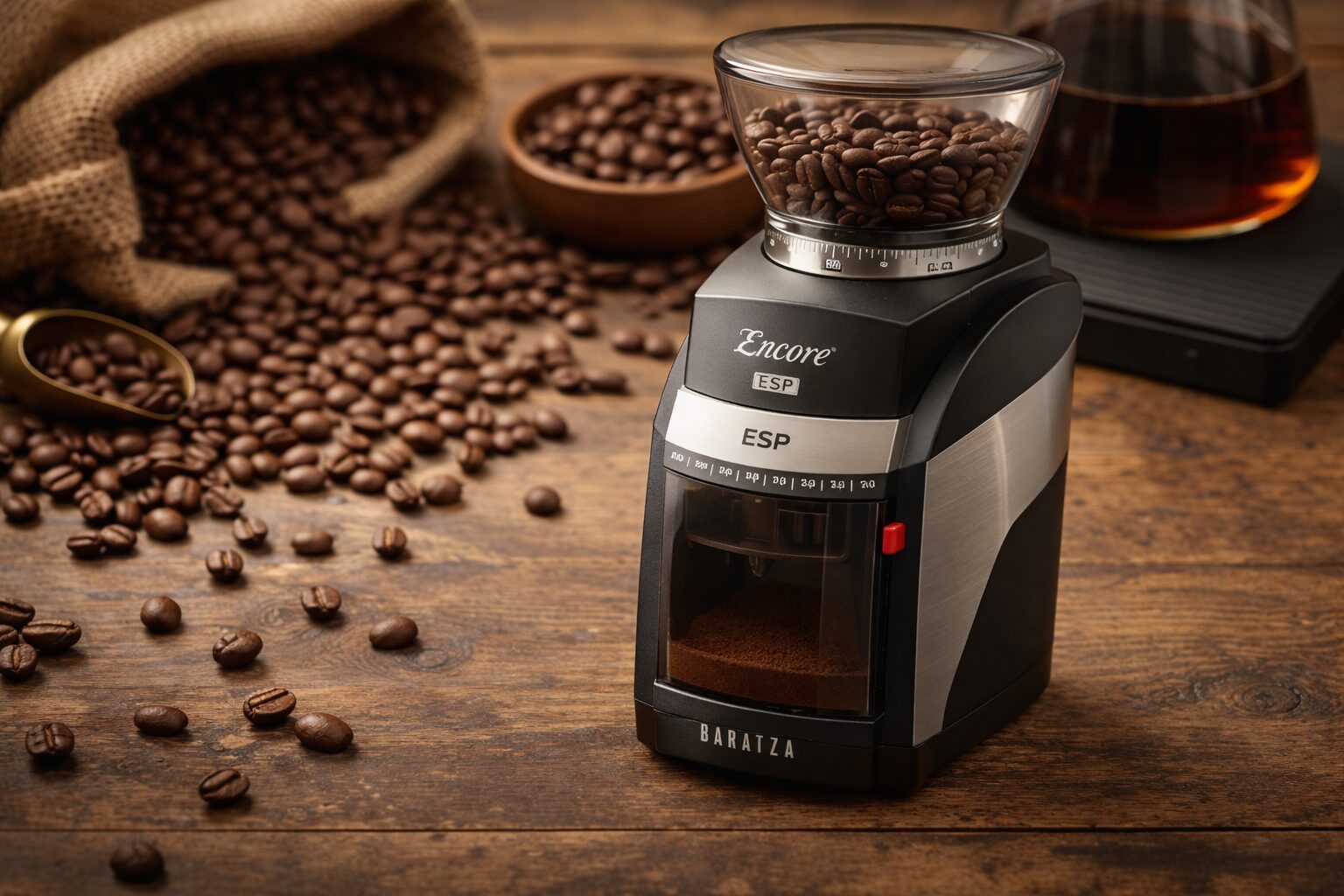
Baratza Encore ESP — Grinder
A simple, repairable electric burr grinder that covers every filter method and entry-level espresso.
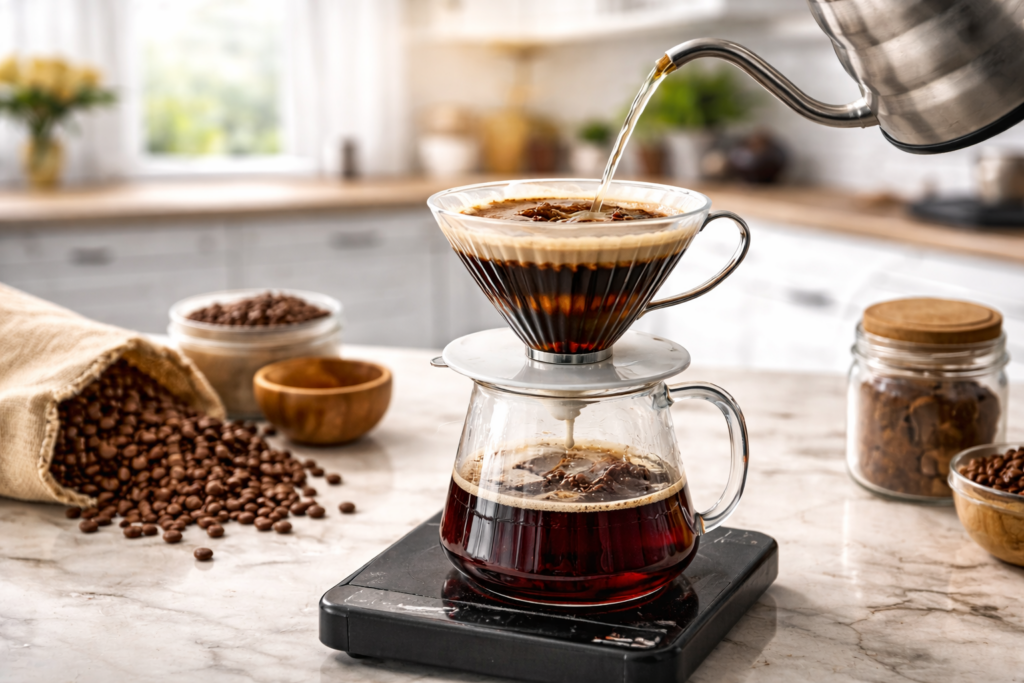
Hario V60 — Brewer
A low-cost pour-over cone that teaches grind, ratio, and pouring, and rewards good technique.
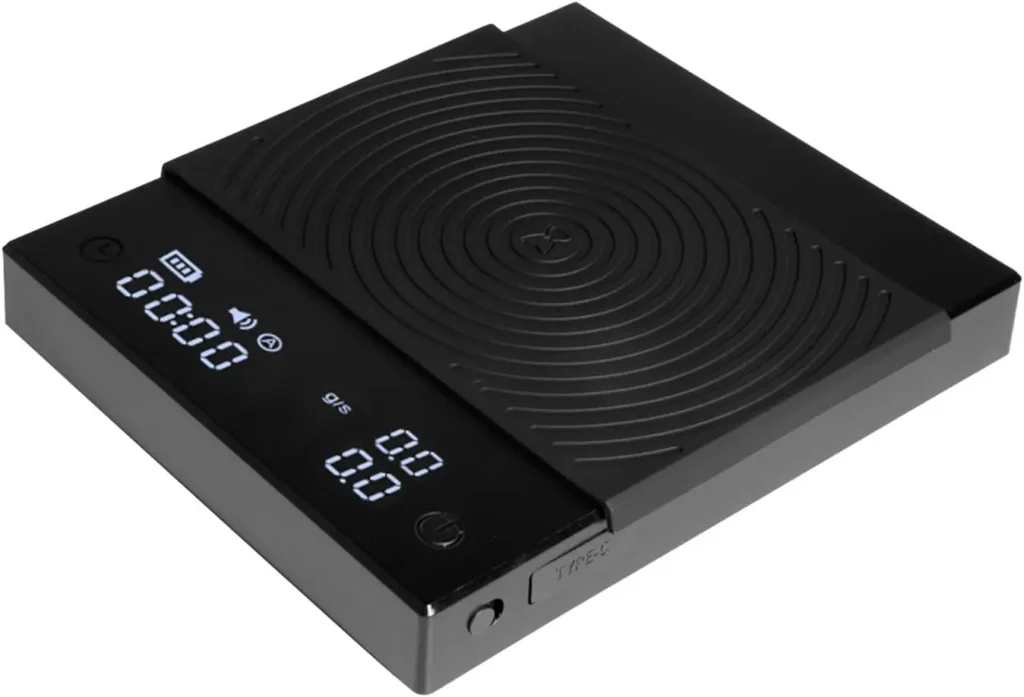
Timemore Black Mirror — Scale
A coffee scale with a built-in timer that makes every recipe repeatable.
Affiliate disclosure: Amazon links may earn CoffeeGearHub a commission at no additional cost to you. Prices and availability can change.
How to Build a Beginner Setup Without Overspending
Pick one primary brewer first. Choose a method that fits your serving size, cleanup tolerance, and morning routine: pour-over for one or two clean cups, French press for body with almost no technique, AeroPress for quick single cups and easy cleanup, a drip machine for larger batches, or a moka pot for strong stovetop coffee. You do not need several brewers to learn to make good coffee.
Then put more of the budget into the grinder than feels natural, add a scale before chasing advanced technique, and match the kettle to the brewer. Delay optional accessories such as distribution tools, specialty filters, and smart scales until your routine is stable. A useful rule: if you cannot name the specific brewing problem an accessory solves, it is probably not the next purchase.
Grinder: The Most Important Tool
A burr grinder improves coffee more than any other purchase because it produces particles of similar size, so they extract evenly and grind adjustments have a predictable effect. The Baratza Encore ESP is a strong all-round choice: simple controls, settings that cover drip through French press plus entry-level espresso, and replaceable parts. The OXO Brew Conical Burr Grinder is the easiest budget electric option, with a one-touch timer.
If you brew one or two cups at a time, a manual grinder such as the KINGrinder K6 often delivers better grind quality for the money because none of it goes into a motor, and it is quiet and compact. Whichever you choose, grind right before brewing. Our beginner grinder guide compares these options in detail.
Brewer for Clarity: Hario V60
The Hario V60 is the classic first pour-over brewer. It costs little, teaches the fundamentals of grind, ratio, and pouring, and produces a clean, bright cup that shows the character of different coffees. The plastic 02 size is light, durable, and holds heat well, and it brews one or two cups.
It is technique-dependent, so expect a few brews before the cup tastes the way you want, and it benefits from a gooseneck kettle and a scale. In return, it gives you the most direct feedback of any brewer, which makes it an excellent teacher. Use V60 paper filters and rinse each one before brewing.
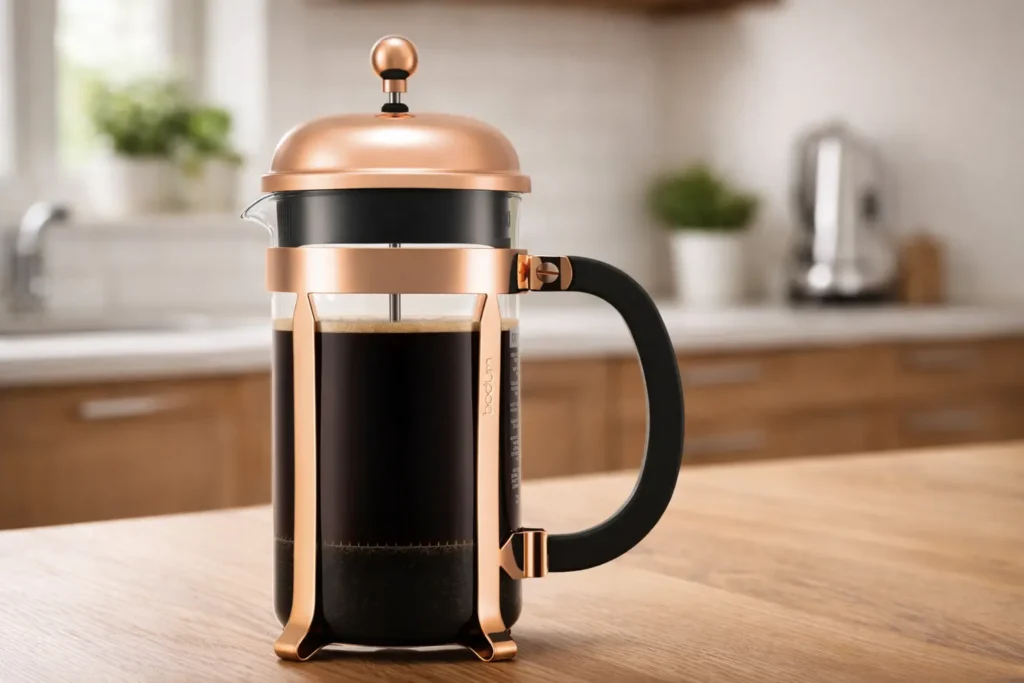
Brewer for Simplicity: Bodum Chambord French Press
If you want great coffee with almost no technique, the Bodum Chambord French press is the simplest route. Add coarse coffee and hot water, steep about four minutes, press, and pour. Full immersion is forgiving, the cup is rich and full-bodied, and any kettle works.
The trade-offs are some sediment in the cup and a glass carafe that needs careful handling. Pour all the coffee out right after pressing so it does not keep extracting. Pair it with a burr grinder set coarse to reduce sludge. Our French press guide covers more options.
Scale: The Cheapest Upgrade With the Biggest Payoff
A scale lets you repeat the same dose of coffee and amount of water every time, which turns brewing from guesswork into something you can adjust. If today’s cup used 18 grams of coffee and 288 grams of water, you can reproduce it tomorrow or change one variable at a time. Scoops and cup markings vary too much for that.
A coffee scale with a built-in timer, such as the Timemore Black Mirror, tracks both weight and brew time on one display, which is especially useful for pour-over. Any accurate kitchen scale that reads in grams is a good start if you already have one.
Kettle: Match It to the Brewer
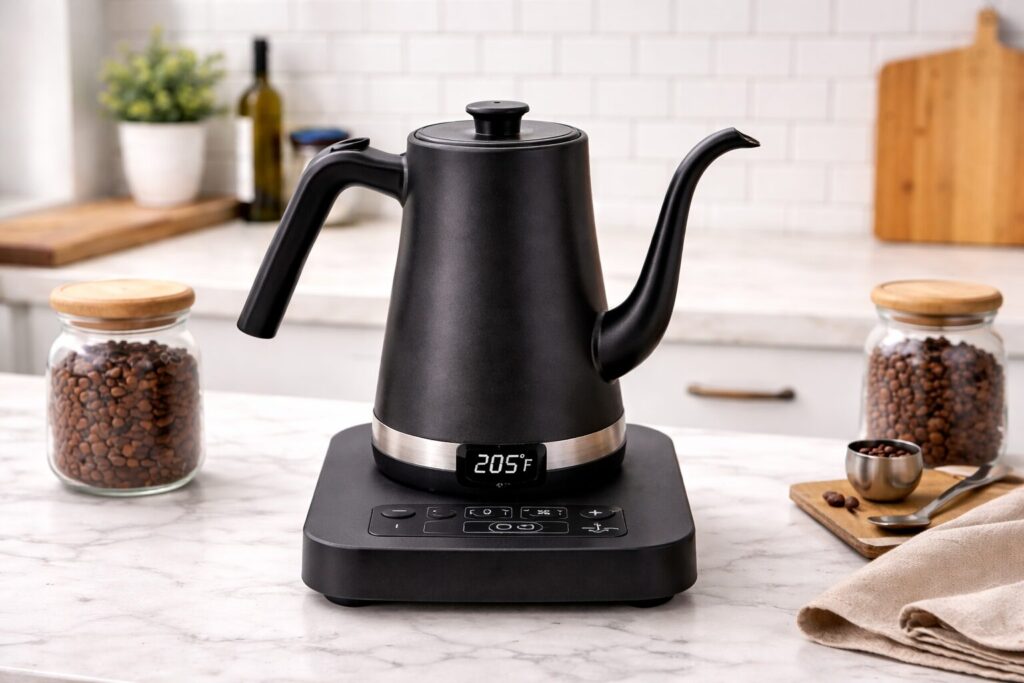
For French press, AeroPress, moka pot, and drip machines, any kettle works. A gooseneck kettle becomes worthwhile for pour-over because its narrow spout gives control over flow rate and where the water lands, which improves extraction and consistency.
Variable temperature is convenient but not essential when you are learning; water just off the boil works for most coffee. If you want both control and temperature presets, an electric gooseneck such as the Fellow Stagg EKG covers it, while a simple stovetop gooseneck is a lower-cost alternative.
Filters and Storage
Stick with paper filters made for your brewer at first; they are forgiving, produce a clean cup, and make cleanup easy. Rinse them with hot water before brewing to remove papery flavors and preheat the brewer. Reusable metal filters are an option later if you prefer more body.
Store whole beans in an airtight, opaque container away from heat and light, and buy amounts you will finish within a few weeks of the roast date. Freshness matters as much as gear, and no grinder can rescue stale coffee. Our bean storage guide covers the details.
Other Good First Brewers
The AeroPress is a strong alternative first brewer for one person. It brews a single cup in a couple of minutes, tolerates a wide range of grind sizes and recipes, travels well, and cleans up in seconds because the puck of grounds pops straight into the bin. It also makes a concentrated, espresso-style base for milk drinks, which appeals to latte drinkers who are not ready for an espresso machine.
An automatic drip machine makes sense for households brewing several cups at once. Look for one that reaches proper brewing temperature, ideally certified by the Specialty Coffee Association, and favor a thermal carafe if coffee will sit. A moka pot suits people who like strong, concentrated stovetop coffee, though it takes some practice to avoid bitterness.
Choosing Your First Coffee
Buy whole beans with a roast date printed on the bag and use them within a few weeks of that date. Medium roasts are the most forgiving starting point: they taste balanced across brew methods and are easier to dial in than very light roasts. Single-origin coffees from Colombia, Brazil, or Central America are dependable, while Ethiopian and Kenyan coffees show off fruit and floral notes once you are comfortable with pour-over.
Avoid oily, very dark roasts at first if you use a pour-over or burr grinder, since they can taste bitter and leave residue. Buying smaller bags more often keeps coffee fresh and lets you try different origins, which is one of the most enjoyable parts of learning.
Starter Setups by Routine
| Routine | Brewer | Grinder |
|---|---|---|
| One clean cup each morning | Hario V60 | KINGrinder K6 or Encore ESP |
| Rich coffee with minimal technique | Bodum Chambord French press | Encore ESP or OXO Brew |
| Coffee for a household | Automatic drip machine | Encore ESP or OXO Brew |
Add a scale to every setup, and a gooseneck kettle only for the pour-over route. Each setup covers the essentials without extras. If you are unsure which routine fits, start with the French press, since it is the most forgiving, and add a pour-over cone later if you want more clarity. Our brewing methods guide compares each method in more depth.
Where to Spend and Where to Save
Spend on the grinder. It affects every cup, it is the hardest thing to compensate for, and a good burr grinder lasts for years. Save on the brewer: simple manual brewers like the V60 and French press cost little and make excellent coffee in good hands. A basic scale is inexpensive and pays off immediately.
The kettle depends on your method; spend more only if you brew pour-over regularly. Avoid starter bundles that include a blade grinder, and be cautious about buying an espresso machine first, since espresso adds cost and complexity that make learning harder. Build gradually, and upgrade one piece at a time when a specific limitation shows up.
Common Beginner Gear Mistakes
Buying an espresso machine too early is the most expensive mistake; espresso needs a capable grinder and practice, and it is easier to learn the basics with filter coffee first. Using a blade grinder for pour-over undermines even the best brewer, and skipping the scale makes it nearly impossible to tell which change helped.
Buying too much at once spreads the budget thin and adds complexity before you know what you need. Ignoring water quality is another common miss, since coffee is mostly water and heavily chlorinated or very hard water can flatten flavor. Finally, many beginners use stale pre-ground coffee and blame the gear; fresh beans ground just before brewing fix that.
Your First Week With New Gear
Start with one coffee and one recipe so you can learn how your gear behaves. For pour-over or drip, weigh about 1 gram of coffee to 16 grams of water; for French press, use about 1:15 and a four-minute steep. Grind in the middle of the grinder’s suggested range for your method and note the setting.
Taste each cup and change only the grind between brews: finer if it tastes sour or thin, coarser if it tastes bitter or harsh. Within a few days you will find a setting you like, and that baseline makes every future bag easier to dial in. Our grind size guide and brew ratio guide are useful references.
Do Not Forget the Water
Coffee is about 98 percent water, so its taste and mineral content matter. If your tap water smells of chlorine or tastes off, a simple filter pitcher is an inexpensive improvement. Very hard water can dull flavor and build scale in kettles and machines, while very soft or distilled water can make coffee taste flat because minerals help extract flavor.
Filtered tap water is the practical default for most beginners. If you notice white scale in your kettle, descale it periodically with citric acid or a descaler, which also keeps electric kettles and drip machines heating properly.
Keeping Beginner Gear Clean
A little routine care keeps a starter setup tasting good. Rinse brewers right after use, because coffee oils turn rancid and taint the next cup. Brush out the grinder chute and burrs every week or two with daily use, and avoid washing burrs with water unless the manufacturer says it is safe. Wipe the scale with a damp cloth rather than running it under the tap.
French press screens and V60 cones need only warm, soapy water, and a weekly soak in a coffee-equipment cleaner removes stubborn oil film. Descale kettles and drip machines when scale appears. None of this takes more than a few minutes, and it protects both flavor and the life of your equipment.
When to Upgrade
Upgrade when a specific limitation appears, not because something newer exists. Common triggers are wanting to try espresso, which may call for a grinder with finer adjustment; brewing larger volumes than a manual grinder comfortably handles; or wanting more clarity than a French press offers, which points to a pour-over cone or a better filter.
When you do upgrade, the old gear rarely goes to waste: a manual grinder becomes a travel grinder, and a French press is useful for cold brew. Keep the scale and good habits, which carry over to every method. Before buying anything new, brew the same coffee a few times with your current setup and write down what you would change; if the answer is technique rather than equipment, the upgrade can wait, and the money is better spent on fresh beans.
Build Your Starter Setup
The Encore ESP is the grinder pick; the V60 is the brewer pick.
As an Amazon Associate, CoffeeGearHub earns from qualifying purchases.
Editorial bottom line: Start with one brewer, a burr grinder, a scale, fresh beans, and a kettle that suits the brewer. Put the most money into the grinder, keep the brewer simple, and add accessories only when they solve a specific problem.
Frequently Asked Questions
Is it worth buying coffee gear as a beginner?
A few well-chosen tools are. A burr grinder, a scale, and one good brewer improve flavor and consistency far more than a large collection of accessories, and they make learning faster because results are repeatable.
What coffee gear should beginners buy first?
Start with a brewer you will use daily and a burr grinder, then add a scale. A gooseneck kettle comes next if you brew pour-over. Fresh whole-bean coffee matters as much as any of these.
Do beginners need expensive coffee equipment?
No. Mid-range grinders, simple manual brewers, and basic scales produce excellent coffee. Spending more makes sense once you know which brew method you enjoy and which limitation you want to fix.
Should a beginner buy a blade or burr grinder?
A burr grinder. Blade grinders produce a mix of dust and chunks that extract unevenly, while burr grinders produce consistent particles, so grind adjustments have a predictable effect on taste.
Do I need a gooseneck kettle?
Only for pour-over, where controlled pouring improves extraction. French press, AeroPress, moka pot, and drip machines work fine with any kettle.
What is a good starting coffee ratio?
About 1 gram of coffee to 16 grams of water for pour-over and drip, and about 1:15 for French press. Weigh both, then adjust strength to taste.
Sources and Further Reading
Product specifications come from Baratza, OXO, KINGrinder, Hario, Bodum, Timemore, and Fellow published product information. Grinder guidance draws on Baratza’s published resources at baratza.com. Brew ratio and extraction concepts follow the Specialty Coffee Association’s brewing standards. CoffeeGearHub did not test this gear hands-on; this guide relies on published information and owner and reviewer reports.
CoffeeGearHub product shortlist
Continue with related products on CoffeeGearHub
Review product categories and current verified merchant offers on CoffeeGearHub before leaving the site.