
Best Grinders for Drip Coffee (2026 Buying Guide)
Editorial standards: grinders were compared on published specifications (burr size and type, adjustment system, grind range), manufacturer documentation, independent reviews, and how consistently each one grinds in the medium range drip coffee makers use. CoffeeGearHub does not claim hands-on testing where it has not occurred.
At a glance
What this drip coffee grinder guide covers
Why the grinder matters more than the drip machine, what to look for, manual versus electric, three picks from a value hand grinder to a step-up electric, starting grind settings, how much coffee to use for each carafe size, pairing a grinder with your machine, troubleshooting, and cleaning.
Editorial analysis
Drip coffee needs consistency more than ultra-fine adjustment
Drip coffee makers brew at a medium grind, nowhere near the fine end of a grinder’s range, so you do not need an espresso-capable grinder or tiny adjustment steps. What you do need is an even grind at medium, because a drip machine cannot compensate for a mix of dust and chunks the way a skilled pour-over brewer can.
That makes a solid entry-level burr grinder the right choice for most drip drinkers. The main decision is whether you grind by hand, which gives the most quality for the money but takes effort for a full carafe, or electrically, which is faster for the larger doses drip machines use.
The 30-Second Answer
For most drip coffee drinkers, the Baratza Encore is the best grinder: it grinds a full carafe dose quickly and evenly at medium, it is simple to use, and Baratza sells parts to keep it running. If you brew smaller batches and do not mind grinding by hand, the KINGrinder K6 gives better grind quality for less. The Baratza Virtuoso+ is the step up for people who want a sturdier build and a timer for repeatable doses.
Any of the three is a bigger upgrade to drip coffee than a more expensive coffee maker paired with a blade grinder.
Compare current options
Start with these representative choices
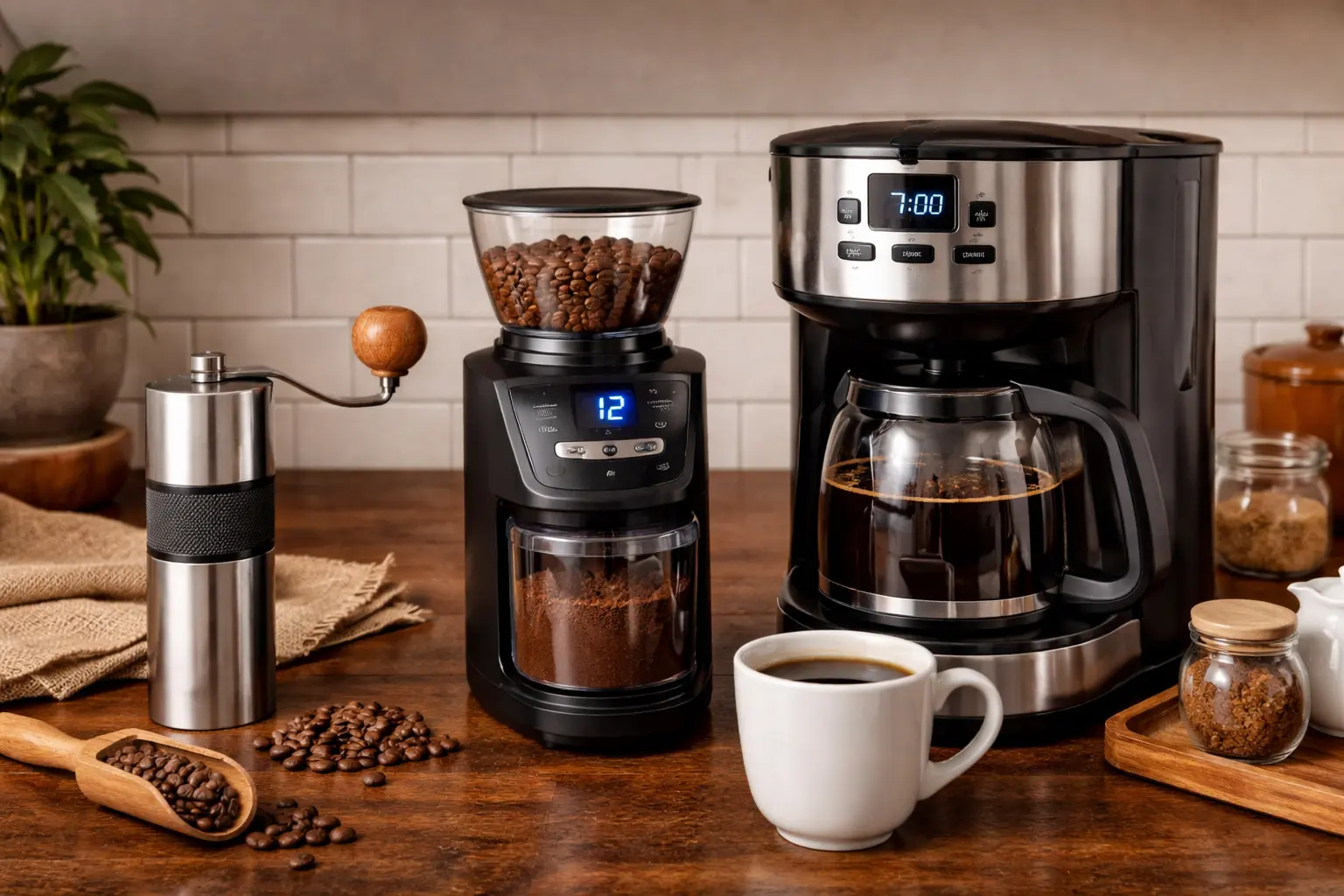
Three grinders for different routines: a value hand grinder, an easy everyday electric, and a step-up electric with a timer.
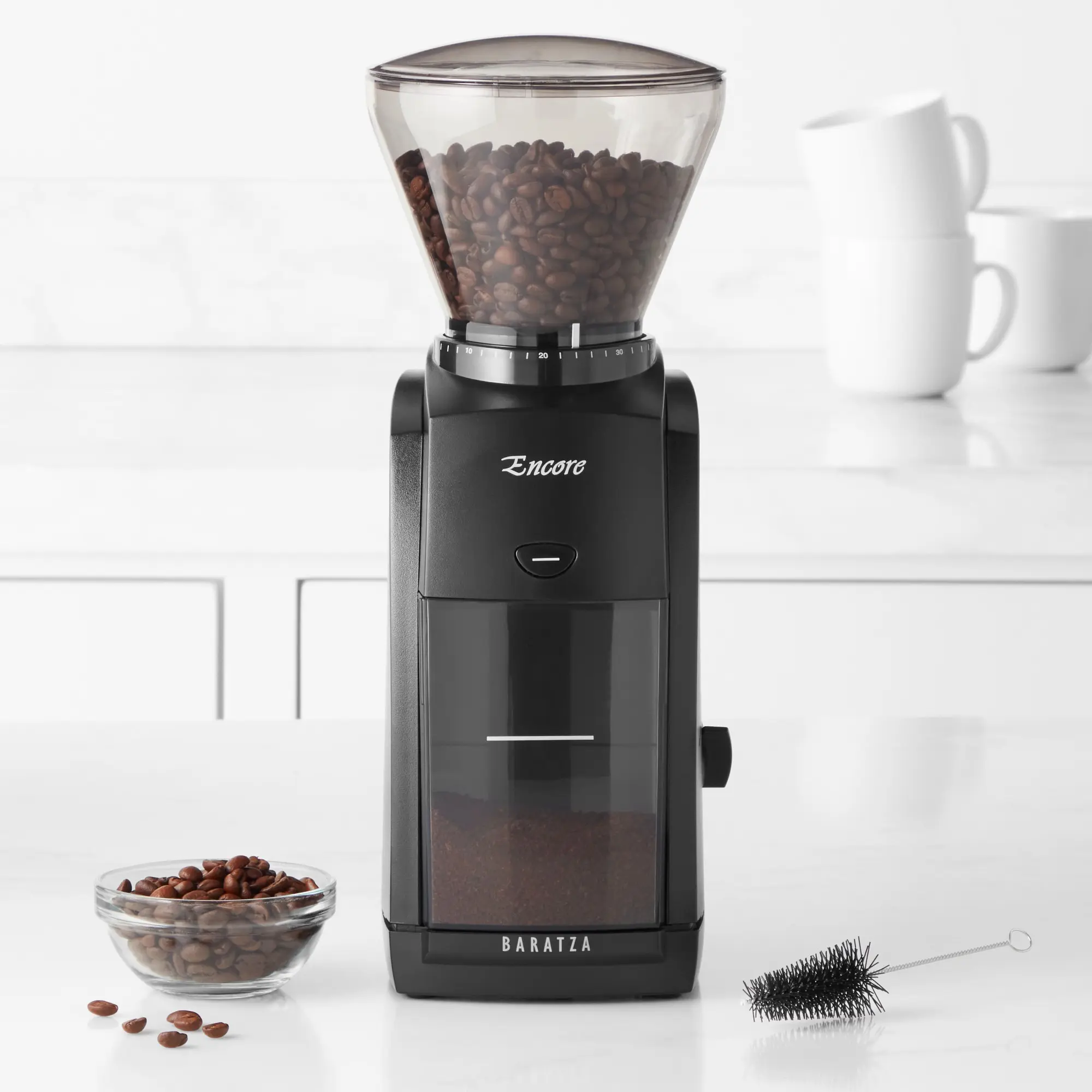
Baratza Encore — Best overall
40 mm conical burrs and 40 settings, with a simple on-off switch that makes grinding a full carafe dose quick.
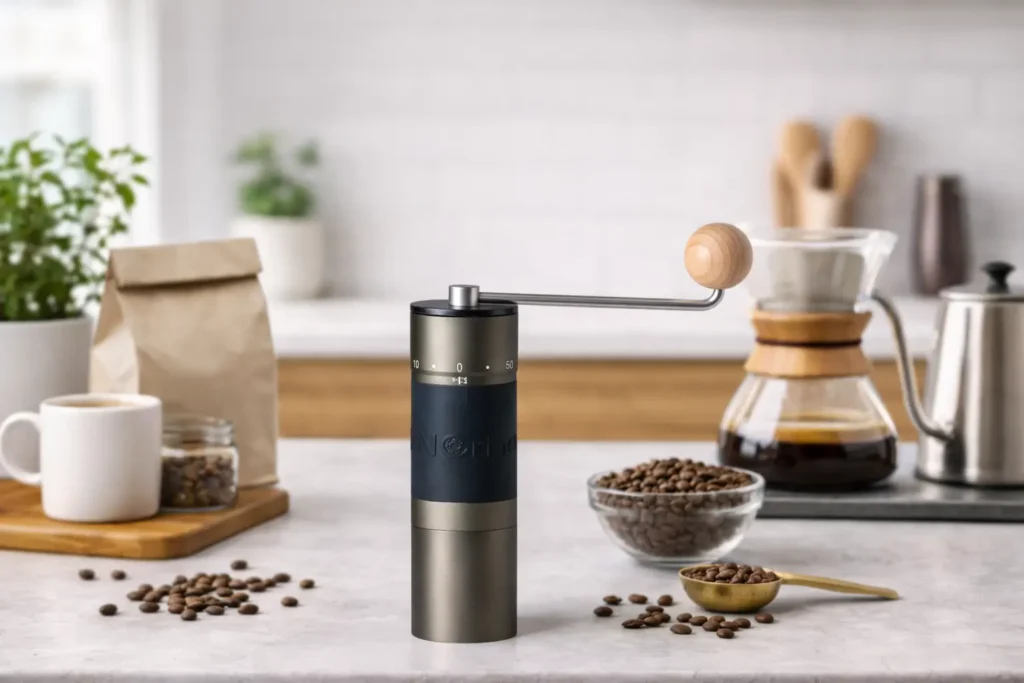
KINGrinder K6 — Best manual
48 mm conical burrs and a numbered external dial. Excellent grind quality for the money if you brew smaller batches.
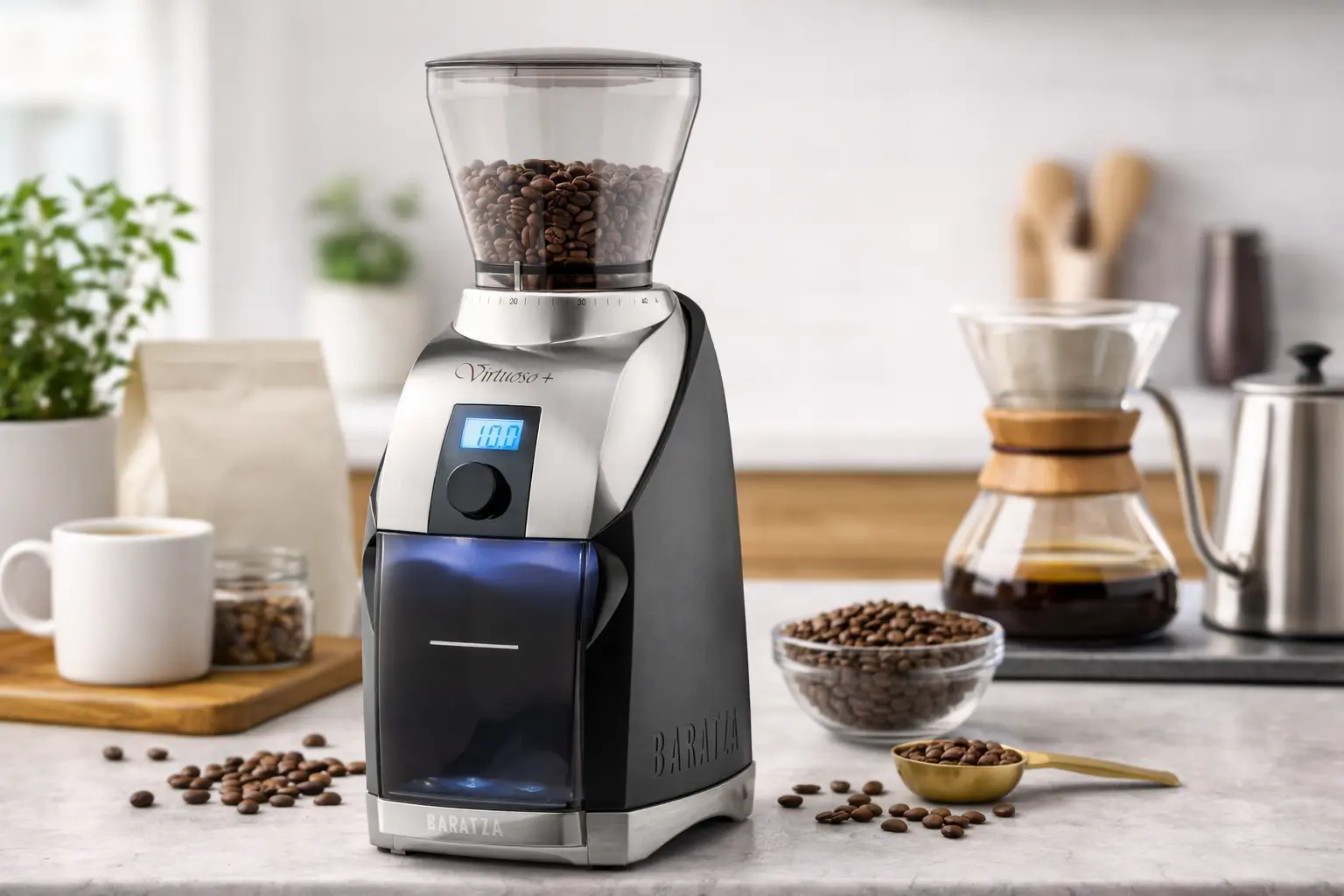
Baratza Virtuoso+ — Best step-up
40 mm conical burrs, a sturdier build, and a digital timer that repeats your grind time for consistent doses.
Affiliate disclosure: Amazon links may earn CoffeeGearHub a commission at no additional cost to you. Prices and availability can change.
Why the Grinder Matters Most in Drip Coffee
A drip coffee maker controls the water: it heats it, showers it over the grounds, and lets gravity pull it through the filter. What it cannot control is the coffee bed it is given. Water flows fastest through the path of least resistance, so if the grounds are a mix of dust and chunks, the fine particles over-extract and turn bitter while the coarse ones under-extract and taste sour. The result is a cup that is both harsh and weak, and no machine setting fixes it.
An even grind lets water extract every particle at a similar rate, which is what produces sweet, balanced drip coffee. That is why a modest burr grinder paired with an ordinary drip machine usually makes better coffee than an expensive machine fed by a blade grinder or stale pre-ground coffee. Fresh grinding matters too: ground coffee loses aroma within minutes to hours, so grinding just before brewing is one of the simplest ways to improve every pot.
Drip is also forgiving in a useful way. Because it brews at a medium grind and a long contact time, it does not need the ultra-fine precision of espresso or the tiny adjustment steps of a premium pour-over grinder. A solid entry-level burr grinder with even output at medium covers it well, which keeps the cost of better drip coffee modest.
What to Look For in a Drip Coffee Grinder
Burrs come first. Conical or flat burrs both work; what matters is that they are well made and held steady, so the grind is even at medium. Avoid blade grinders, which cannot produce a consistent particle size. Next, look at the adjustment range and steps around medium. You need enough settings to fine-tune between a slightly coarser grind for flat-bottom baskets and a slightly finer one for cone filters, but drip does not require the tiny steps espresso grinders offer.
Speed and capacity matter more for drip than for single-cup methods. A full carafe can use 50 to 80 grams of coffee, so an electric grinder with a decent hopper and a quick grind saves time every morning, while a hand grinder works best for smaller batches. Finally, consider repairability and cleaning. Grinders from brands that sell replacement burrs and parts last far longer, and a design that is easy to brush out keeps stale grounds from building up.
Manual vs Electric Grinders for Drip Coffee
A manual grinder gives the most grind quality for the money, because none of the budget goes on a motor. It is quiet, compact, and needs no outlet, and for two or three cups the grinding takes a minute or two. For drip, the limitation is volume: grinding enough for a full carafe by hand takes real effort, and doing it every morning gets old for most people. A hand grinder is ideal if you brew smaller batches or also want a grinder for travel, AeroPress, or pour-over.
An electric grinder is the practical choice for most drip households. It grinds a full carafe dose in seconds, often has a hopper so you can leave beans ready, and is easy for anyone in the house to use. Entry-level electric burr grinders from reputable brands grind evenly at medium, which is all drip needs. The trade-offs are cost, counter space, and noise. Our manual vs electric grinders guide compares them in more depth.
All Three Drip Coffee Grinders Compared
The table summarizes the three picks. Specifications come from the manufacturers; the notes on drip fit reflect each grinder’s burrs, adjustment, and workflow rather than a hands-on test.
| Grinder | Type and burrs | Adjustment | Best for |
|---|---|---|---|
| Baratza Encore | Electric, 40 mm conical | 40 settings | Most drip households |
| KINGrinder K6 | Manual, 48 mm conical | Numbered external dial | Small batches, value |
| Baratza Virtuoso+ | Electric, 40 mm conical | 40 settings plus digital timer | Step-up, repeatable doses |
Our Picks: Encore, K6, and Virtuoso+
The Baratza Encore is the grinder we would suggest to most drip coffee drinkers. Its 40 mm conical burrs grind evenly across the medium range, its 40 settings leave plenty of room to fine-tune for your machine and beans, and the workflow is as simple as it gets: turn it on, let it grind, turn it off. A front pulse button helps with small top-ups. It handles a full carafe dose comfortably.
Baratza sells replacement burrs and parts, so the Encore can be repaired instead of replaced, which is why it has stayed a standard recommendation for years. It is louder than a hand grinder and not designed for espresso, but drip does not need espresso-fine settings. For a household that brews a pot every morning, it is the easiest upgrade to make.
The KINGrinder K6 is the best manual grinder for drip coffee. Its 48 mm conical burrs are large for a hand grinder, so it grinds quickly and evenly at medium, and the numbered external dial makes it easy to set and return to a drip setting. For two to four cups, it delivers grind quality that rivals electric grinders costing considerably more.
The limit is a full carafe, which takes noticeable time and effort by hand. If you brew smaller batches, also make pour-over or AeroPress, or want a grinder you can take traveling, the K6 is excellent value. If you brew a large pot every day, choose an electric grinder instead.
The Baratza Virtuoso+ is the step up. It shares the Encore’s 40 mm conical burr size and 40 settings but adds a sturdier build and a digital timer that repeats your grind time to a tenth of a second. Once you know how long it takes to grind your usual dose, every pot starts the same way at the press of a button, which suits people who want consistency without weighing each time.
It costs more than the Encore, and the grind quality at medium is similar, so the upgrade is mostly about build, convenience, and repeatability. It is a good match for a premium drip machine or for households that also brew pour-over. Like the Encore, it is not intended for espresso.
Starting Grind Settings for Drip Coffee
Drip machines with flat-bottom baskets generally work best at a medium grind, about the texture of regular sand. Cone-shaped baskets, which hold a deeper bed of coffee, often do better a step or two finer. On the Baratza Encore and Virtuoso+, drip usually falls in the middle of the dial; Baratza’s manuals give a starting range, and the right setting within it depends on your machine and beans. On the KINGrinder K6, use KINGrinder’s published chart for drip as a baseline, counting clicks from the burrs touching.
Treat any chart as a starting point. Brew a pot, taste it, and move one or two steps at a time: finer if the coffee tastes sour, thin, or weak, and coarser if it tastes bitter or harsh or the basket overflows. Keep the dose and water the same while you adjust, and note the setting that works so you can return to it. Different beans, especially light versus dark roasts, may need a small adjustment.
How Much Coffee to Use for Each Carafe Size
A common starting point for drip coffee is a ratio of about 1:16 by weight, roughly 60 grams of coffee per liter of water, within a typical range of 1:15 to 1:17. The table gives approximate doses for common batch sizes at that ratio. Weighing the coffee and water is more accurate than using scoops or the carafe markings, which vary between machines.
| Water | Coffee at about 1:16 | Roughly makes |
|---|---|---|
| 500 ml | About 31 g | Two mugs |
| 750 ml | About 47 g | Three mugs |
| 1 liter | About 63 g | Four mugs |
| 1.25 liters | About 78 g | Five mugs |
Use a little more coffee for a stronger cup or a little less for a lighter one, and adjust the grind to match. If your machine brews poorly at small volumes, use a small-batch setting if it has one, or brew at least half a carafe so the bed of coffee is deep enough to extract evenly.
Pairing Your Grinder With the Right Drip Machine
A good grinder gets the most from a machine that brews at the right temperature and wets the grounds evenly. Machines certified by the Specialty Coffee Association meet standards for brewing temperature and time, which is why they make the most of a better grinder. Our best drip coffee makers guide covers certified options. With a basic machine, a burr grinder still improves the coffee, but the machine may limit how sweet and clear it can get.
Match the grinder to how you use the machine. If you brew a full carafe every morning, an electric grinder such as the Encore or Virtuoso+ keeps the routine quick. If you brew a few cups on a smaller machine, the K6 is enough. If you have a premium brewer and care about repeatability, the Virtuoso+ timer pairs naturally with programmable brewing. Our guide to better drip coffee covers the rest of the routine.
Troubleshooting Drip Coffee Grind Problems
If drip coffee tastes sour, thin, or weak, the grind is probably too coarse or the dose too small; go a step or two finer and check you are using enough coffee. If it tastes bitter, harsh, or dry, the grind is probably too fine, so go coarser. If the basket overflows or the brew takes much longer than usual, the grind is too fine for the machine’s flow rate. Change one thing at a time and brew a full test pot at each setting.
A cup that is bitter and sour at once points to an uneven grind, usually from a blade grinder or worn burrs. Flat, dull coffee with little aroma usually means stale beans or stale grounds stuck in the grinder, so use fresh, roast-dated beans and clean the grinder. If grind changes do not help and the coffee stays sour, the machine may not be reaching brewing temperature. Our drip coffee mistakes guide covers other common problems.
Cleaning and Maintenance
Coffee oils and fine particles build up on the burrs and in the chute, and stale residue ends up in your next pot. For electric grinders such as the Encore and Virtuoso+, brush out the burrs and chute every week or two with daily use and do a deeper clean monthly, removing the upper burr as the manual describes. Grinder cleaning tablets can help absorb oils between deep cleans. Avoid running rice through the grinder, which some manufacturers warn can strain the motor or damage burrs.
For the KINGrinder K6, disassemble and brush the burrs periodically, and wipe the catch cup. Avoid washing the burrs with water unless the manufacturer says it is safe, and dry them completely if you do. With regular cleaning, a quality burr grinder used for drip coffee can last many years, and replacement burrs from Baratza make the electric picks easy to keep running.
Our Recommendation
For most drip coffee drinkers, buy the Baratza Encore: it grinds a full pot evenly and quickly, it is simple, and it can be repaired. If you brew smaller batches and want the best quality for the money, choose the KINGrinder K6 and grind by hand. If you want a sturdier grinder with a timer for repeatable doses, step up to the Baratza Virtuoso+. Any of the three will improve your drip coffee more than a new machine paired with a blade grinder.
Start With the Grinder That Fits Your Morning Pot
The Baratza Encore suits most drip households; the KINGrinder K6 is the best value if you grind by hand.
As an Amazon Associate, CoffeeGearHub earns from qualifying purchases.
Editorial bottom line: Drip coffee needs an even medium grind more than fine precision. Choose a burr grinder that fits how much you brew, weigh your coffee, and adjust the grind a step at a time by taste.
Frequently Asked Questions
What is the best grinder for drip coffee?
For most people, the Baratza Encore. It grinds evenly at the medium setting drip machines need, handles full carafe doses quickly, and is repairable. The KINGrinder K6 is the best manual option, and the Baratza Virtuoso+ is the step up for a sturdier build and a timer.
Does a better grinder improve drip coffee?
Yes, often more than a better machine. An even grind lets water extract the coffee uniformly, giving a sweeter, cleaner cup. A blade grinder or very cheap burr grinder produces dust and chunks that make drip coffee bitter and weak at the same time.
What grind size is best for drip coffee?
Medium, roughly the texture of regular sand, for most flat-bottom drip machines. Cone-shaped baskets often work slightly finer. Start at medium and adjust a step at a time by taste. Our grind size guide explains the range.
Is a manual grinder good enough for drip coffee?
Yes for grind quality, but it takes effort for a full carafe. A hand grinder such as the KINGrinder K6 is ideal for a few cups; for a large pot every morning, most people prefer an electric grinder.
What is the right coffee-to-water ratio for drip coffee?
A common starting point is about 1:16, or roughly 60 grams of coffee per liter of water, within a range of about 1:15 to 1:17. Use more coffee for a stronger cup and less for a lighter one, and weigh it for consistency.
Should I upgrade my drip machine or my grinder first?
Usually the grinder, unless your machine cannot reach proper brewing temperature. A good burr grinder improves every pot, while a premium machine still struggles with an uneven grind. If you do upgrade the machine, look for SCA certification.
Sources and Further Reading
Specifications come from manufacturer product pages and manuals for Baratza (Encore and Virtuoso+) and KINGrinder (K6 adjustment documentation and grind chart). Ratio and brewing guidance follow the Specialty Coffee Association’s brewing standards; grind settings vary between individual grinders, machines, and beans, so treat them as starting points. CoffeeGearHub did not test these grinders hands-on; comparisons rely on published specifications and independent reviews.
CoffeeGearHub product shortlist
Continue with related products on CoffeeGearHub
Review product categories and current verified merchant offers on CoffeeGearHub before leaving the site.