
How to Brew Drip Coffee at Home: Ratio, Grind, Water, and 7 Upgrades (2026)
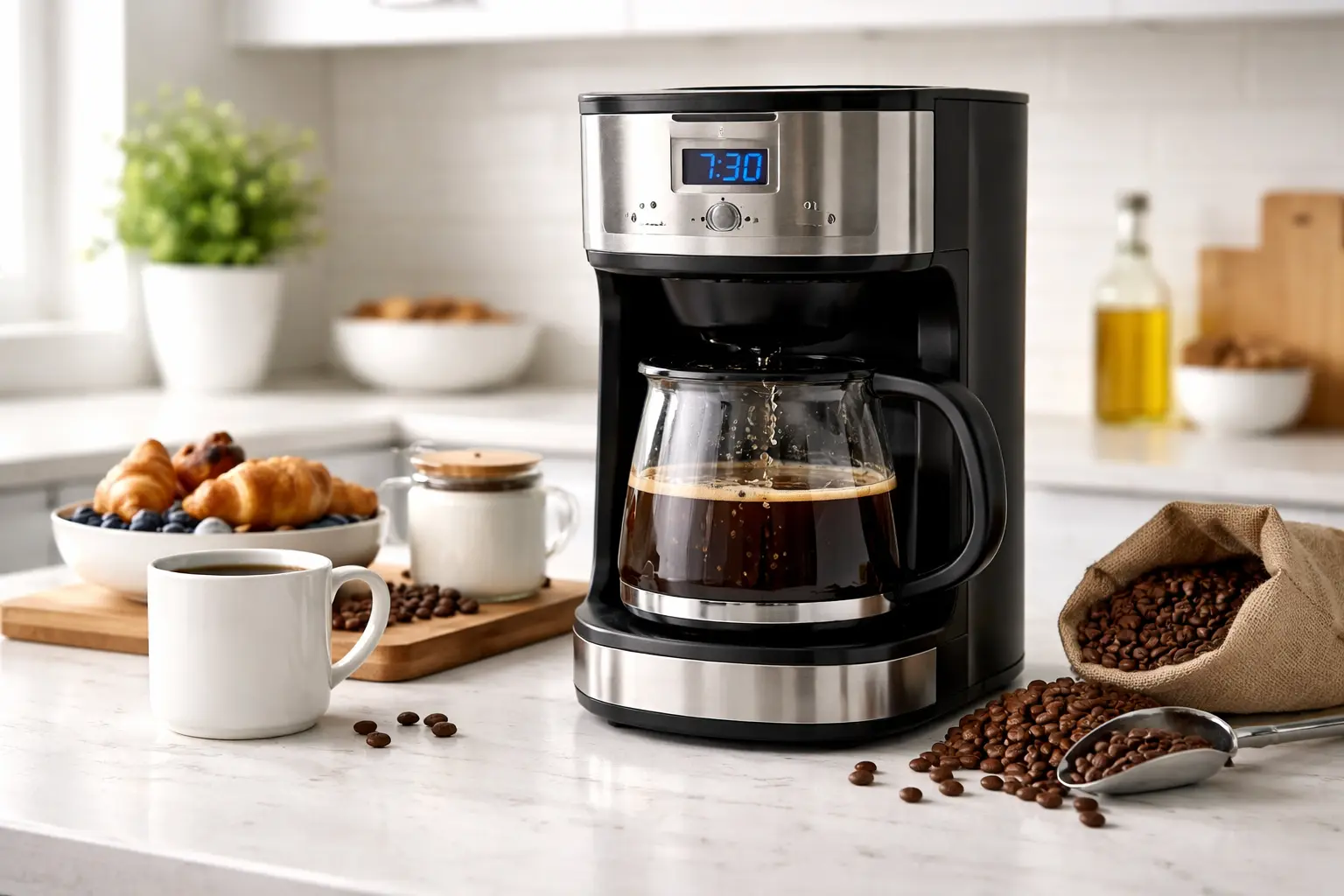
Editorial standards: this guide draws on Specialty Coffee Association brewing, water, and home-brewer certification standards, manufacturer documentation for the brewers and grinders mentioned, and owner and reviewer reports. Ratios and grind settings are starting points to adjust by taste. CoffeeGearHub does not claim hands-on testing where it has not occurred.
At a glance
Fix the inputs before you blame the machine
Why most drip coffee falls short, the five variables that control it, a step-by-step method, seven upgrades ranked by impact, beans, grind, ratio, water and temperature, maintenance and descaling, troubleshooting, and when a better machine is worth it.
Editorial analysis
Consistency beats complexity in automatic drip coffee
Learning how to brew drip coffee well starts with one fact: an automatic drip machine controls water temperature, flow, and contact time for you, so most of what you can change happens before you press start: the beans, the grind, the dose, and the water. Those inputs decide the ceiling for the cup, and many machines brew well once they are right.
A better brewer matters when it holds proper temperature and wets the bed evenly, which is what Specialty Coffee Association certification checks. But a certified machine with stale, blade-ground coffee and a guessed scoop still makes a mediocre pot, so work from the biggest bottleneck downward.
The 30-Second Answer
Use fresh whole beans, grind them medium on a burr grinder just before brewing, weigh about 55 to 60 grams of coffee per liter of water, use filtered water, serve from a thermal carafe, and descale regularly.
Those steps improve almost any machine. If the cup is still flat or uneven after that, a brewer that reaches 92 to 96°C and wets the grounds evenly, such as an SCA-certified model, is the next upgrade.
Compare current options
Start with these representative choices
A grinder upgrade and two capable brewers for when the basics are in place.
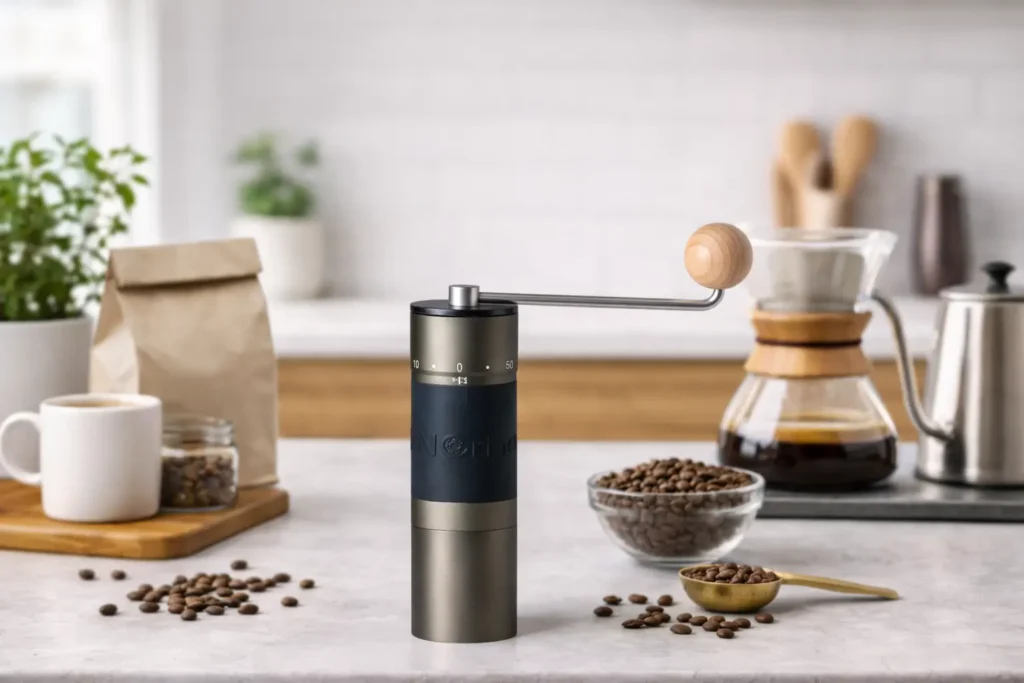
KINGrinder K6 — Grinder first
A manual burr grinder that gives drip coffee an even, adjustable medium grind.
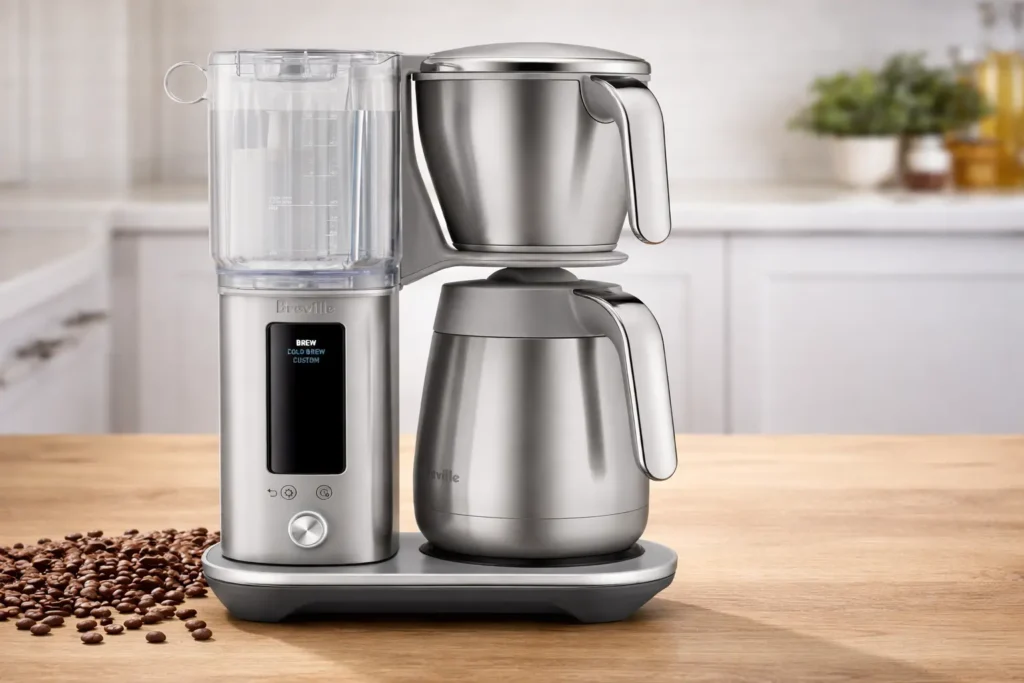
Breville Precision Brewer — More control
Adjustable temperature, bloom, and flow with a thermal carafe for flexible batch brewing.
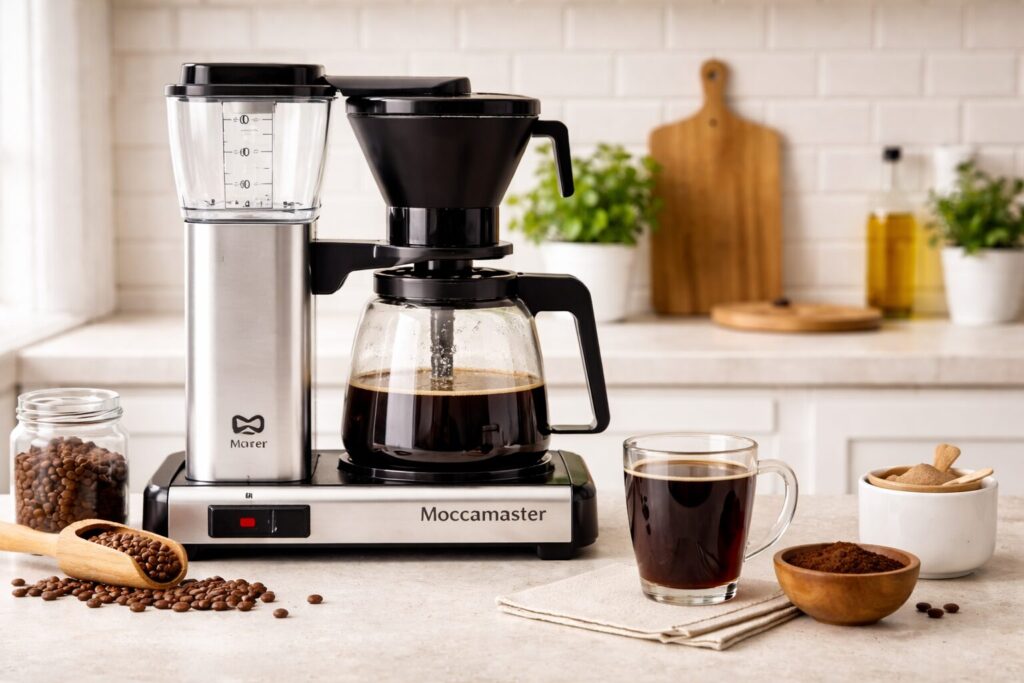
Moccamaster KBGV — Simpler workflow
A durable, SCA-certified brewer with a straightforward one-switch routine.
Affiliate disclosure: Amazon links may earn CoffeeGearHub a commission at no additional cost to you. Prices and availability can change.
Why Most Drip Coffee Falls Short
Automatic drip is the most common way people make coffee at home, and it is also the method most often blamed for mediocre cups. Usually the machine is not the main problem. The typical pot starts with pre-ground coffee that has been open for weeks, a scoop that underdoses the water, unfiltered tap water, and a glass carafe that keeps cooking the coffee on a hot plate. Each of those costs flavor, and together they make even a good brewer taste flat and bitter.
The good news is that every one of those problems is cheap to fix. Fresh beans, a burr grinder, a scale, filtered water, and a thermal carafe change the cup more than most machine upgrades. Once those are in place, the differences between brewers become easier to taste, and you can judge whether your machine is actually holding you back. A drip machine that heats water properly and spreads it evenly over the grounds will reward good inputs; one that runs cool or drips through a single hole will cap the result no matter what you feed it.
The Five Variables That Control Drip Coffee
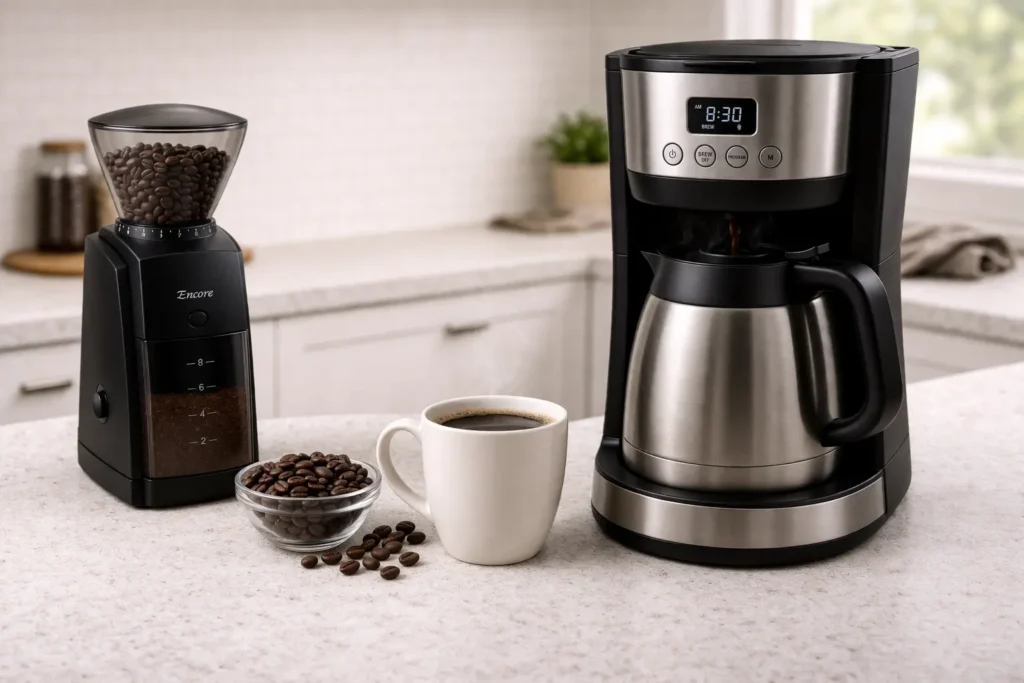
Freshness comes first. Roasted coffee loses aroma steadily, and grinding speeds that up dramatically by exposing far more surface area to air. Whole beans used within a few weeks of the roast date, ground just before brewing, give the machine something worth extracting. Pre-ground coffee from the grocery shelf has usually lost much of its aroma before you open it.
Grind size controls extraction speed. Drip machines are designed around a medium grind; too fine and the basket can overflow and the coffee turns bitter, too coarse and water runs through without extracting enough, leaving it sour and thin. Ratio controls strength, so it is the variable to adjust when a balanced cup tastes too weak or too strong.
Water temperature controls how efficiently water dissolves flavor. The Specialty Coffee Association recommends roughly 92 to 96°C, and many budget machines never get there. Water quality is the silent fifth variable: coffee is almost entirely water, so chlorine, off-tastes, or extreme hardness show up directly in the cup, and very hard water also builds scale inside the machine.
Step-by-Step: How to Brew Drip Coffee
This method for how to brew drip coffee works on almost any automatic brewer. It assumes a scale and a burr grinder, which are the two tools that make drip coffee repeatable. If you do not have them yet, follow the same steps with careful measuring and the freshest coffee you can buy, then add the tools when you can.
- Weigh the coffee. Start with about 55 to 60 grams per liter of water, so roughly 55 grams for a full one-liter batch.
- Grind medium, right before brewing. Aim for a texture like coarse sand and adjust from there by taste.
- Rinse the filter. Run hot water through a paper filter to remove paper taste and preheat the basket, then discard the water.
- Use fresh, filtered water. Fill the reservoir with cold filtered water measured to match your dose.
- Level the bed and brew. Shake the basket gently so the grounds sit flat, start the brew, and use the bloom setting if your machine has one.
- Stir and serve. Stir the carafe when brewing finishes, since early and late coffee differ in strength, then serve or keep it in a thermal carafe.
Taste the result and change one thing at a time. If the coffee is sour or thin, grind a little finer. If it is bitter or the basket nearly overflows, grind coarser. If it tastes balanced but too weak or strong, adjust the dose. Write down what you changed so the next pot starts from the best result rather than from scratch. Our drip coffee ratio guide lists doses for common batch sizes.
7 Drip Coffee Upgrades, Ranked by Impact
The first upgrade is a burr grinder with fresh grinding. It usually makes the biggest difference because a blade grinder creates fine dust and large chunks that extract at different rates, which produces a cup that is both bitter and sour. A burr grinder narrows that spread so the whole bed extracts evenly and grind changes respond predictably. The second is fresh beans with a visible roast date. Specialty roasters print the date; supermarket coffee often shows only a best-by date that can be many months out.
The third is a brewer that reaches the right temperature and wets the grounds evenly, which is what SCA certification checks. It belongs third rather than first because a certified machine cannot rescue stale, unevenly ground coffee. The fourth is weighing your coffee and water instead of using a scoop, which is free once you own a scale and fixes the most common error: too little coffee for the water.
The fifth is filtered water, which removes chlorine and off-tastes and slows scale build-up. The sixth is regular descaling, because mineral deposits slowly reduce heating efficiency and flow long before a machine stops working. The seventh is getting coffee off the warming plate. A glass carafe on a hot plate keeps cooking the coffee, and within about 20 minutes it tastes noticeably flatter and more bitter. A preheated thermal carafe, or pouring into a preheated insulated server, keeps it hot without that damage.
Work through these in order and stop when the coffee tastes the way you want. Many people find the first four solve most of their problems, and the machine upgrade becomes optional rather than urgent. If your current brewer runs cool, drips unevenly over the grounds, or has no way to keep coffee hot without a warming plate, that is when a better machine starts paying for itself.
Choosing Beans for Drip Coffee
Medium and medium-dark roasts are the most forgiving in drip machines because they extract easily at the temperatures many brewers reach and give chocolate, caramel, and nutty flavors that hold up well in a carafe. Light roasts can be excellent in drip, but they are denser and harder to extract, so they shine in machines that run hot enough and may need a slightly finer grind. Very dark roasts can taste smoky and bitter in a full pot, especially if the coffee sits.
Freshness matters more than origin. A good blend roasted two weeks ago will beat an expensive single origin that has been open for a month. Blends are designed to taste balanced and consistent across a batch, which suits everyday drip, while single origins are worth trying when you want to taste something specific. Buy amounts you will use within two to four weeks and store beans whole in an airtight container away from light and heat. Our coffee bean buying guide explains how to read roast dates and labels.
Grind Size for Drip Coffee
Medium is the reference point for drip, roughly the texture of coarse sand. That size lets water drain through a typical flat-bottom basket at a rate that gives a balanced brew for a full carafe. Cone-shaped baskets sometimes prefer slightly finer, and very small batches often taste better a little finer because the bed is shallower and contact time is shorter.
Burr grinders matter for drip just as they do for pour-over. Blade grinders cannot hold a consistent medium; they produce dust that clogs the filter and slows draining alongside chunks that under-extract. Even an entry-level burr grinder gives a more even bed and a cleaner, sweeter cup. Treat any grinder setting number as a starting reference for your own unit, then adjust by taste. Our coffee grind size guide explains the extraction science, and our burr vs blade comparison covers the grinder choice.
Coffee-to-Water Ratio and the Scoop Problem
The Specialty Coffee Association’s Golden Cup guidance works out to roughly 55 grams of coffee per liter of water, with a range either side for taste. In practice, many households use far less, because the scoop that comes with a machine and the cup markings on the carafe rarely match. Carafe cups are often five or six ounces rather than a full mug, and a level scoop of coffee can vary widely in weight depending on grind and roast.
A kitchen scale solves this permanently. Weigh your coffee once for your usual batch, note the number, and you will brew the same strength every morning. If you must use a scoop, weigh what your scoop holds with your current coffee so you know how many to use. Underdosing is one of the most common reasons drip tastes weak and bitter at the same time, because too much water is pulled through too little coffee.
| Batch size | Water | Coffee (about 1:17) |
|---|---|---|
| Two mugs | 500 g | 29–30 g |
| Half carafe | 750 g | 44 g |
| Full 1 L batch | 1,000 g | 55–60 g |
| Large 1.25 L batch | 1,250 g | 70–75 g |
Water Quality and Temperature
Coffee is almost all water, so whatever is in your tap ends up in your cup. Chlorine and other off-flavors are easy to remove with a pitcher or under-sink filter, and that alone often makes coffee taste cleaner. Very soft water can make coffee taste flat, while very hard water mutes acidity and builds scale faster. The Specialty Coffee Association publishes a water standard that is a useful reference if your coffee stays dull despite good technique. Avoid distilled water, which tends to taste flat and lifeless.
Temperature is where many inexpensive machines fall short. If water reaches the grounds well below about 92°C, extraction slows and the coffee tastes sour or thin even with fresh beans and the right ratio. SCA-certified brewers are tested to reach and hold the recommended range, which is why they tend to taste better with the same coffee. If your machine runs cool and cannot be adjusted, a slightly finer grind can partly compensate. Our water quality guide explains filtering and mineral content in detail.
Carafe, Holding, and Serving
What happens after brewing affects flavor more than most people expect. A glass carafe on a warming plate keeps heating the coffee, which drives off aroma and develops a stale, bitter edge, and the effect is noticeable within about 20 minutes. A thermal carafe holds temperature without added heat, so the last cup tastes much closer to the first. Preheating it with hot water before brewing helps it keep coffee hot for longer.
If your machine only has a glass carafe, turn off the warming plate after brewing and pour into a preheated insulated server or travel mug. Always stir the carafe before pouring, because coffee from the start of a brew is stronger than coffee from the end. And brew the amount you will drink in the next hour or so rather than a full pot that sits all morning.
Maintenance and Descaling
Daily care is simple. Discard grounds and the filter promptly, rinse the basket and carafe, and leave the lid open so the reservoir can dry. Coffee oils build up in baskets, carafes, and showerheads and turn rancid over time, adding a stale, bitter flavor to fresh coffee. Once a week, wash the removable parts with warm soapy water or a coffee equipment cleaner, paying attention to the spout and the area around the showerhead.
Descaling removes mineral deposits from the heating element and internal tubing. Follow the manufacturer’s interval, typically every one to three months depending on water hardness, and descale sooner if brewing slows down or the coffee tastes flatter than it used to. Use the descaler the manufacturer recommends, run a full cycle with no coffee, then run at least two cycles of clean water to flush it out. Many machines have a descale indicator; if yours does not, set a reminder.
Troubleshooting Drip Coffee
| Problem | Likely cause | Fix |
|---|---|---|
| Sour, thin, weak | Grind too coarse, water too cool, or too little coffee | Grind finer, weigh dose, check machine temperature |
| Bitter and harsh | Grind too fine, warming plate, or old coffee | Grind coarser, use a thermal carafe, buy fresher beans |
| Weak and bitter together | Too little coffee for the water | Increase dose toward 55–60 g per liter |
| Basket overflows | Grind too fine or filter folded wrong | Grind coarser, seat the filter properly |
| Flat, dull flavor | Stale beans, poor water, or scale | Fresh beans, filtered water, descale |
| Brewing slower than usual | Mineral scale build-up | Descale and flush with clean water |
Most drip problems trace back to one of three things: the dose, the grind, or the machine’s condition. Check them in that order, because weighing the coffee costs nothing, grind adjustments are quick, and maintenance fixes problems that build slowly enough to go unnoticed. If the coffee is still disappointing after all three are right, the brewer itself is the remaining variable.
Grinder and Machine Picks
A manual burr grinder such as the KINGrinder K6 gives an even, adjustable medium grind for drip at a modest cost, and its range also covers pour-over and espresso. Grinding enough for a full carafe by hand takes a minute or two, which many people do while the water heats.
If you would rather push a button, an electric entry-level grinder such as the Baratza Encore handles drip batches quickly and consistently, and Baratza publishes parts and repair guidance that keeps it running for years. Either option improves drip coffee more than most machine upgrades.
When the inputs are right and the machine is the limit, the Breville Precision Brewer Thermal offers adjustable temperature, bloom, and flow with a thermal carafe, which suits people who want to tune their coffee. The Technivorm Moccamaster KBGV takes the opposite approach, with a simple switch-on routine, strong temperature control, and a reputation for lasting many years.
For a more affordable SCA-certified option, the OXO Brew 9-Cup reaches proper brewing temperature and wets the grounds evenly with a showerhead, with a thermal carafe included. Our best drip coffee makers guide and Moccamaster vs OXO comparison go deeper on choosing a brewer.
Upgrade the Biggest Bottleneck First
Start with the grinder; upgrade the brewer once the basics are right.
As an Amazon Associate, CoffeeGearHub earns from qualifying purchases.
Editorial bottom line: Knowing how to brew drip coffee well is mostly about inputs, not the machine. Grind fresh on a burr grinder, use recently roasted beans, weigh about 55 to 60 grams per liter, use filtered water, keep coffee off the warming plate, and descale on schedule. If the cup is still limited after that, a brewer that reaches proper temperature and wets the bed evenly is the upgrade that pays off.
Frequently Asked Questions
What is the best coffee-to-water ratio for drip coffee?
A good starting point is about 55 to 60 grams of coffee per liter of water, close to the Specialty Coffee Association’s Golden Cup guidance. That is roughly 1:16 to 1:18. Adjust within that range for strength.
What water temperature is best for drip coffee?
Around 92 to 96°C at the coffee bed. Many inexpensive machines run cooler than that, which is one reason SCA-certified brewers, which are tested for temperature, often taste better.
How can I make drip coffee taste better without buying a new machine?
Grind fresh on a burr grinder, use beans roasted within the last few weeks, weigh your coffee and water, use filtered water, move coffee to a thermal carafe instead of a warming plate, and descale on schedule.
What grind size is best for drip coffee?
Medium, similar in feel to coarse sand. Grind a little finer if the coffee tastes sour or weak and a little coarser if it tastes bitter or the basket overflows.
How often should I descale a drip coffee maker?
Follow the manufacturer’s interval, typically every one to three months depending on water hardness. Hard water calls for more frequent descaling.
Why does my drip coffee taste good fresh but bad after 20 minutes?
A glass carafe on a hot warming plate keeps cooking the coffee, which turns it bitter and stale. A preheated thermal carafe holds temperature without that extra heat.
Sources and Further Reading
Brewing temperature, ratio, and extraction guidance follows the Specialty Coffee Association’s brewing standards, including its Golden Cup and home-brewer certification criteria. Grind guidance draws on Baratza published information, and machine details come from Breville, Technivorm, and OXO product documentation. CoffeeGearHub did not test these products in-house; recommendations draw on published information and owner and reviewer reports.
CoffeeGearHub product shortlist
Continue with related products on CoffeeGearHub
Review product categories and current verified merchant offers on CoffeeGearHub before leaving the site.
Continue Learning
Dial in drip coffee
Compare methods and gear