
Best Coffee Grinders for Moka Pot (2026 Buying Guide)

Editorial standards: grinders were compared on published specifications (burr size and type, adjustment system, grind range), manufacturer documentation, independent reviews, and how well each one handles the medium-fine range a moka pot needs. CoffeeGearHub does not claim hands-on testing where it has not occurred.
At a glance
What this moka pot grinder guide covers
Why grind matters so much in a stovetop brewer, what the right moka pot grind looks like, six electric and manual burr grinders that handle it well, how electric and manual grinders compare for moka pot, the specifications worth paying for, a step-by-step dial-in method, and a troubleshooting table for bitter, sour, or clogged brews.
Editorial analysis
Consistency matters more than chasing an exact setting
A moka pot works best with a medium-fine grind: finer than drip, coarser than espresso. What separates a good moka pot grinder from a poor one is not whether it can reach that zone, since almost any burr grinder can, but whether it produces an even grind there and lets you return to the same setting every morning.
A grinder that throws off lots of dust-like fines makes the brew harsh and the flow erratic even when the average particle size looks right. So the best coffee grinder for moka pot is one with decent burrs and small, repeatable adjustment steps around medium-fine. Manual grinders give the most grind quality for the money; electric grinders win on speed and convenience.
The 30-Second Answer
For most people, the Baratza Encore ESP is the best electric grinder for moka pot: its expanded fine range gives small steps right where a stovetop brewer lives, and Baratza sells parts to keep it running. If you are happy to grind by hand, the KINGrinder K6 is the best manual grinder for moka pot, with a numbered external dial that makes settings easy to repeat. The Fellow Opus suits households that brew several methods with one grinder.
Avoid blade grinders. Their mix of powder and chunks makes moka pot coffee bitter and sour at the same time, and no amount of heat control fixes it.
Compare current options
Start with these representative choices
Three starting points: an all-round electric grinder, a precise manual grinder, and a multi-method electric option. Three more picks for beginners, enthusiasts, and tight budgets follow below.
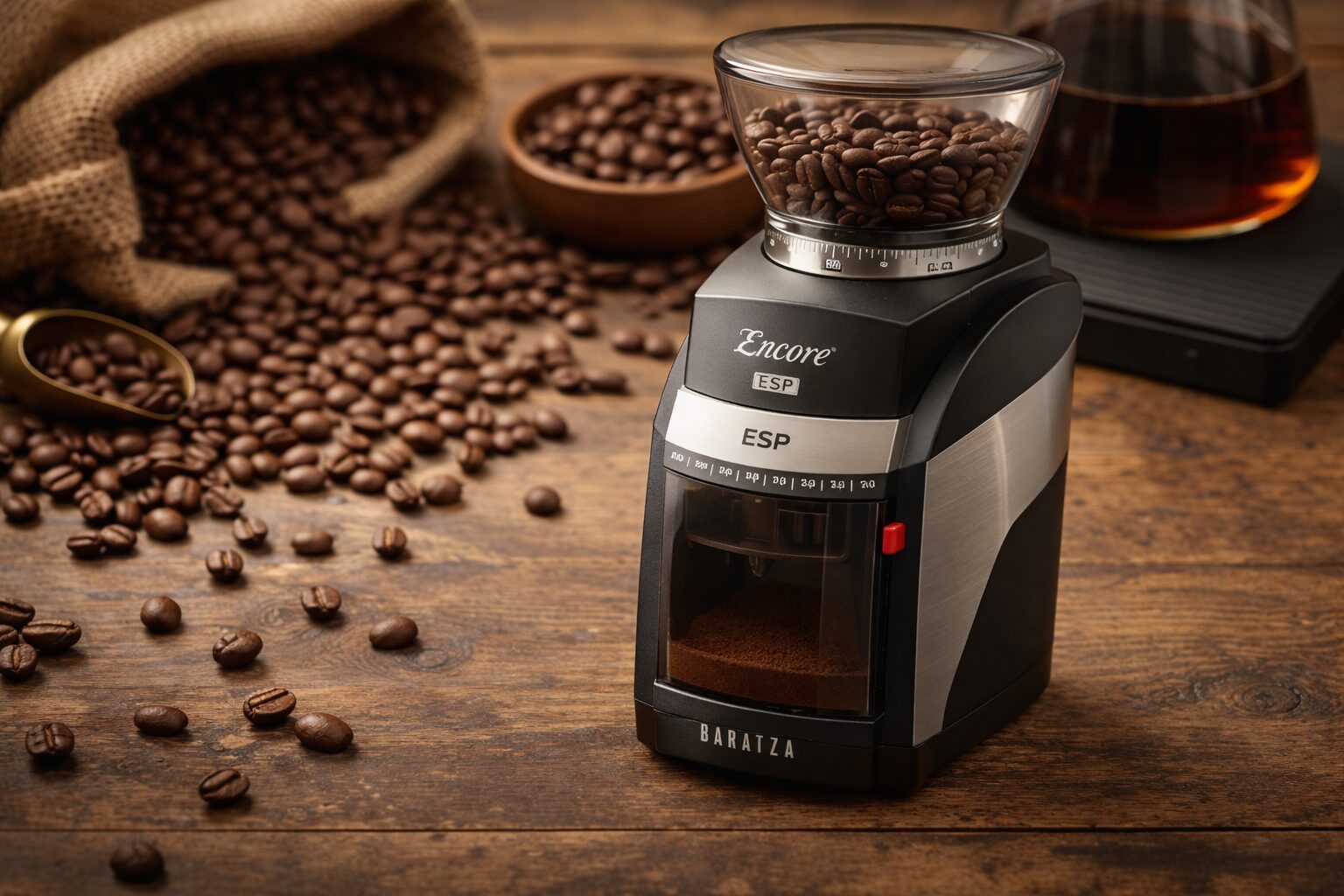
Baratza Encore ESP — Best electric
40 mm conical burrs and 40 settings, with the first 20 spread over a finer range, so dialing in moka pot is easy and repeatable.
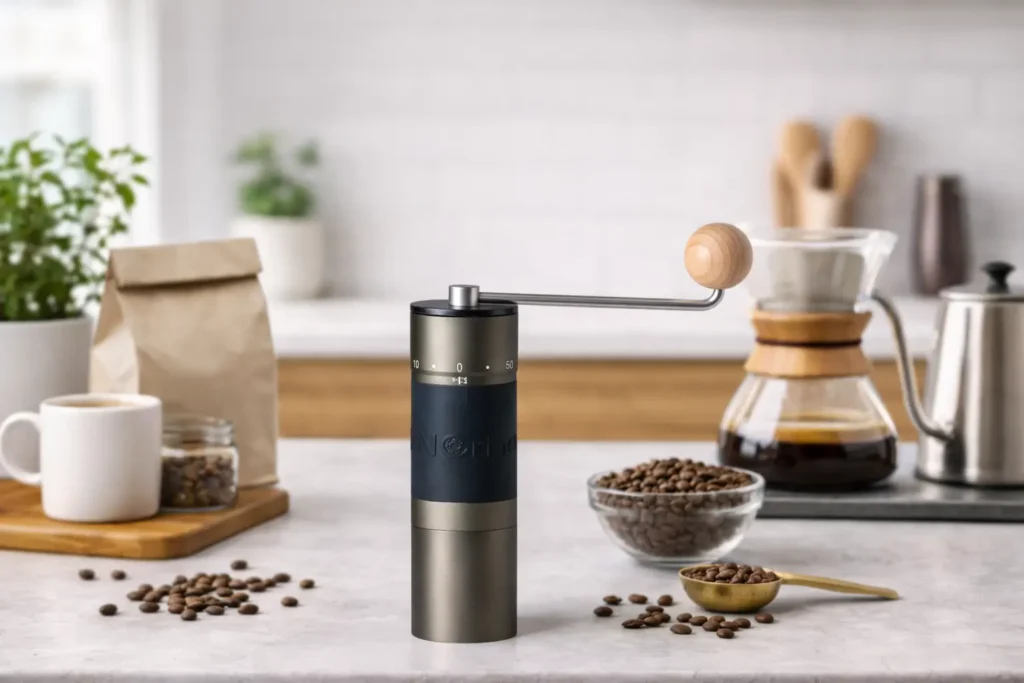
KINGrinder K6 — Best manual
48 mm conical burrs and a numbered external dial. Grinds a moka pot dose quickly and travels well with a stovetop brewer.
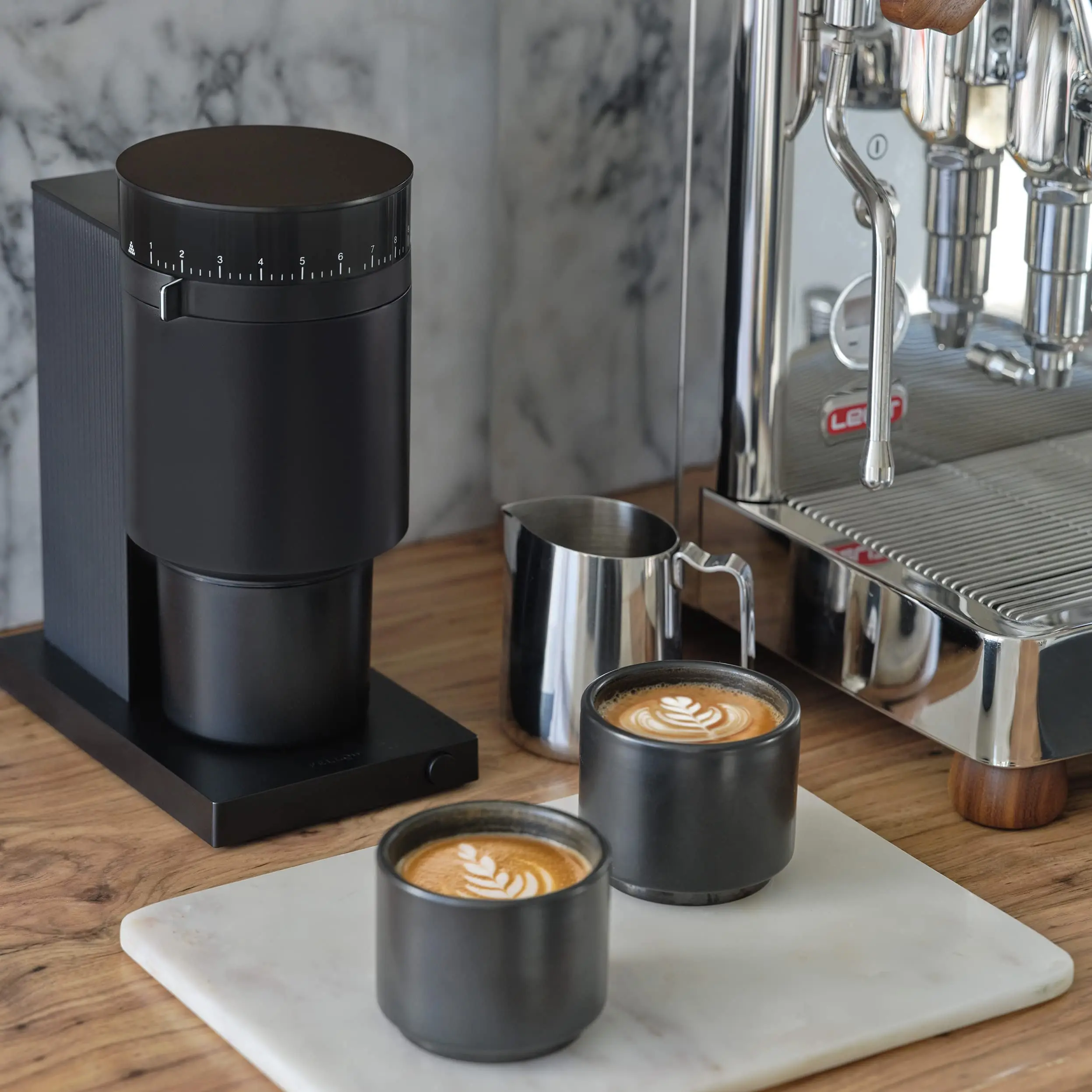
Fellow Opus — Best for several methods
41 main settings plus fine adjustment, from espresso to cold brew, with anti-static features that keep counters tidy.
Affiliate disclosure: Amazon links may earn CoffeeGearHub a commission at no additional cost to you. Prices and availability can change.
Why Grind Size Is the Biggest Variable in Moka Pot Brewing
A moka pot pushes hot water up through a compact bed of coffee using steam pressure from the lower chamber. That pressure is modest, usually described as around 1 to 2 bar, far below the roughly 9 bar of an espresso machine. Because the pressure is low and the brewer has no pump to compensate, the grind does much of the work of controlling how fast water moves through the coffee and how much flavor it picks up on the way.
Grind too fine and the bed resists the flow: water lingers, extraction runs long, and the coffee turns bitter and harsh. Push it further and the flow can stall entirely, building pressure until the safety valve releases. Grind too coarse and water rushes through without picking up enough, leaving a sour, thin cup. The target is medium-fine, a little coarser than espresso and a little finer than drip, and hitting it the same way every day is what a good grinder for moka pot is for.
Two habits from espresso cause most moka pot problems: grinding espresso-fine and tamping. A moka pot basket should be filled level and loose, with the rim brushed clean so the gasket seals. Neither fine grind nor tamping makes the coffee stronger; both mostly make it harsher.
Burr vs Blade: Why a Burr Grinder Is Essential for Moka Pot
A blade grinder chops beans with a spinning blade, and the size of the pieces depends on how long you run it and where each bean happens to be. The result is a mix of powder and chunks in the same batch. In a moka pot, the powder over-extracts and adds bitterness while the chunks under-extract and add sourness, so you get both faults in one cup. Fines can also pass through or clog the filter plate, leaving sludge in the cup or slowing the brew.
A burr grinder crushes beans between two burrs set a fixed distance apart, so particles come out much closer to the same size and the gap can be set and repeated. That consistency is why a modest burr grinder usually improves moka pot coffee more than a new brewer or pricier beans. Every grinder below uses burrs; the differences are in motor versus hand power, burr size, adjustment design, and how many brew methods each one covers.
All Six Moka Pot Grinders Compared
The table summarizes the six picks: three electric grinders for convenience and three hand grinders for value and portability. Specifications come from the manufacturers, and the notes on how each grinder handles the medium-fine range reflect its burr size and adjustment design rather than a hands-on test.
| Grinder | Type and burrs | Adjustment | Best for |
|---|---|---|---|
| Baratza Encore ESP | Electric, 40 mm conical | 40 steps, finer first half | Best electric overall |
| Fellow Opus | Electric, 40 mm conical | 41 settings plus fine ring | Several brew methods |
| OXO Brew Conical Burr | Electric, conical | 15 settings with micro-steps | Simple first burr grinder |
| KINGrinder K6 | Manual, 48 mm conical | Numbered external dial | Best manual overall |
| 1Zpresso J-Ultra | Manual, 48 mm conical | Fine external dial | Moka pot plus espresso |
| Timemore Chestnut C3 | Manual, 38 mm conical | Stepped internal dial | Budget manual |
Best Electric Grinders for Moka Pot: Encore ESP, Opus, and OXO
The Baratza Encore ESP is the electric grinder we would suggest to most moka pot brewers. It uses 40 mm conical steel burrs and 40 settings, but unlike the original Encore it spreads the first 20 steps over a finer range in small increments. That matters for a stovetop brewer: medium-fine sits right where the steps are smallest, so you can nudge the grind a little at a time instead of jumping between too fine and too coarse.
The coarser half covers drip, pour-over, AeroPress, and French press (see our best grinders for French press guide), so the Encore ESP works as a household grinder rather than a single-purpose tool. Baratza sells replacement burrs and parts, which keeps it repairable for years. Start in the upper part of the fine range for moka pot and adjust by taste; our Encore ESP review covers the settings in more detail.
The Fellow Opus is the pick for households that brew moka pot alongside espresso, pour-over, or cold brew. It pairs 40 mm conical burrs with 41 main settings and an inner ring for finer adjustment, and Fellow designed it to cover the whole range from espresso to cold brew. Anti-static features reduce the grounds that cling to the catch cup and spill onto the counter, a small daily benefit for anyone grinding every morning.
For a simpler first burr grinder, the OXO Brew Conical Burr Grinder offers 15 settings with micro-adjustments between them and a one-touch timer start. It has fewer steps in the medium-fine zone than the Encore ESP or Opus and less parts support than Baratza, but it is a clear upgrade from a blade grinder and easy to live with. It suits someone who brews moka pot and drip and does not want to think about the grinder once it is set.
Best Manual Grinders for Moka Pot: K6, J-Ultra, and Chestnut C3
Hand grinders are especially well matched to moka pot brewing. A typical stovetop pot uses a modest dose, so grinding by hand takes well under a minute, and none of the budget goes on a motor, which leaves more for good burrs. They are also quiet, need no outlet, and pack alongside a moka pot for camping or travel.
The KINGrinder K6 is the best manual grinder for moka pot for most people. Its 48 mm conical burrs are large for a hand grinder, so a moka pot dose grinds quickly, and the numbered external dial lets you read your setting at a glance and return to it exactly. KINGrinder’s own chart gives starting points by brew method; count clicks from the burrs touching, start in the medium-fine band, and adjust by taste.
The K6 can grind fine enough for espresso, but its strength is the filter-to-medium-fine range where moka pot sits. That makes it a natural partner for a stovetop brewer and an AeroPress. Our KINGrinder K6 settings chart lists starting points for each method.
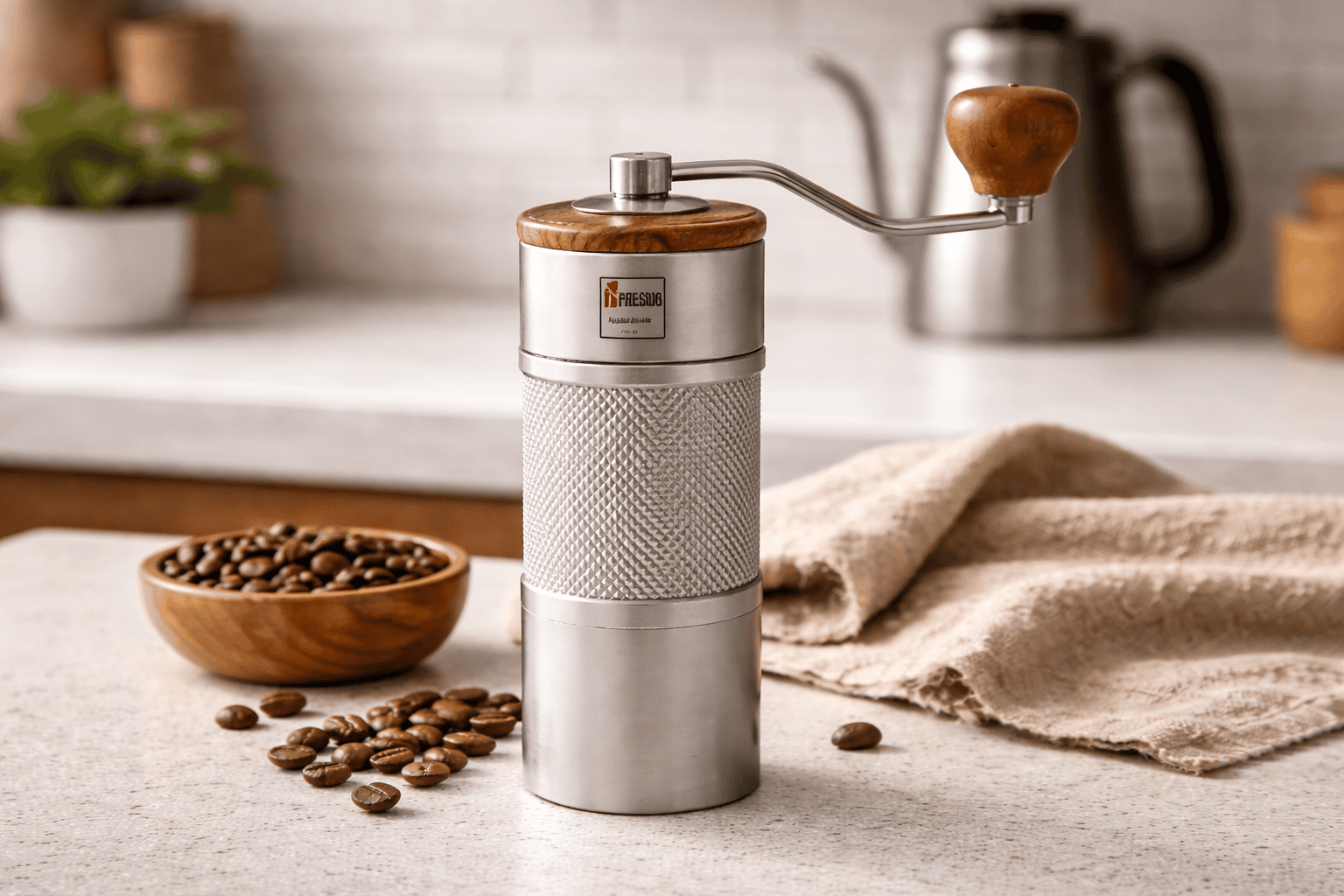
The 1Zpresso J-Ultra is the premium manual choice, aimed at people who want moka pot and espresso from one hand grinder. It uses 48 mm burrs and an external dial with very fine steps, which makes the small changes between a moka pot setting and an espresso setting easy to make and to reverse. It costs more than the K6 and is more grinder than a moka-pot-only brewer needs, but it is a good long-term choice if a home espresso machine is in your plans.
On a tighter budget, the Timemore Chestnut C3 is the entry point. Its 38 mm stainless-steel burrs and stepped internal dial handle medium-fine well, and the metal body feels sturdier than its price suggests. Smaller burrs mean more turns per dose and the internal dial is less convenient to read than an external one, but for someone moving from a blade grinder it is a large step up. Our best manual coffee grinders guide compares more hand grinders.
Electric vs Manual Grinders for Moka Pot
Both types can make excellent moka pot coffee, so the choice comes down to routine. An electric grinder is faster when you brew a large pot or several cups a day, and it is easier for anyone who finds hand grinding a chore. It needs counter space and an outlet, makes more noise, and puts part of its price into the motor, so a similar budget usually buys better burrs in a hand grinder.
A manual grinder is quiet, portable, and very good value for grind quality. For a small or medium moka pot, grinding by hand is quick enough that many people come to enjoy it as part of the ritual. The trade-off appears with larger pots, frequent brewing, or limited hand strength. If you brew a six-cup pot twice a day for a household, choose electric; if you brew one pot for yourself and like the idea of taking it camping, a hand grinder is hard to beat. Our manual vs electric grinders guide goes further.
Grinder Specs That Actually Matter for Moka Pot
Burr quality and adjustment design matter most. Conical and flat burrs can both make excellent moka pot coffee; what counts is that the burrs are well made and held in alignment, because wobble produces more fines. Larger burrs generally grind faster, which is welcome in a hand grinder. Look for small, repeatable steps in the medium-fine zone: a grinder with only a few big jumps there leaves you choosing between slightly too fine and slightly too coarse.
Retention, the coffee left inside the grinder after each use, matters a little for moka pot and more for espresso, since stale grounds from yesterday end up in today’s brew. Repairability matters for longevity; brands that sell burrs and parts make a grinder last years longer. Motor wattage, quoted speed, and hopper capacity are often emphasized in marketing but say little about grind quality, and storing a week of beans in a hopper is worse for freshness than keeping them sealed in a canister.
How to Dial In Your Grinder for Moka Pot
Dialing in means finding the setting on your grinder that gives a balanced cup with your beans. It usually takes two or three brews, and the setting then holds until you change beans. Change one variable per brew so you know what made the difference. For a deeper look at extraction and ratios that applies to any brewer, see how to dial in coffee at home.
- Start at medium-fine. Aim for a texture like table salt, finer than drip but clearly not espresso-fine.
- Fill the basket level, without tamping. Fill the lower chamber to just below the safety valve, fill the basket loosely, level it with a finger, and brush the rim clean.
- Brew on moderate heat. Use medium or medium-low heat and watch for a steady, even flow from the spout. Remove it when the stream turns pale or sputters.
- Taste after a minute. Very hot coffee hides defects. Bitter and harsh suggests going coarser; sour and thin suggests going finer.
- Adjust one or two steps and note the setting. Keep heat, dose, and water the same while you change the grind, and write down the setting once the cup tastes balanced.
Troubleshooting Grinder-Related Moka Pot Problems
Most moka pot flavor problems trace back to grind size, grind consistency, or heat. Adjust the grind first, then heat, before changing beans or equipment, and change only one thing per brew so the cause stays clear. The table pairs common symptoms with the grind problem most likely behind them.
| Symptom | Likely grind cause | What to try |
|---|---|---|
| Bitter, harsh, or burnt | Too fine, or too many fines | Go coarser one or two steps; lower the heat |
| Sour, thin, or sharp | Too coarse | Go finer one or two steps; fill the basket fully |
| Bitter and sour at once | Inconsistent grind | Switch from blade to burr; check for worn burrs |
| Slow flow, valve hissing | Far too fine or tamped | Go clearly coarser; fill loosely without tamping |
| Sludge in the cup | Excess fines | Go slightly coarser; clean the grinder and filter plate |
If results change from day to day, the cause is often an imprecise dose or a grinder whose setting drifts. Weighing the dose and using a grinder with clear, indexed steps solves most of it. Our moka pot troubleshooting guide covers problems that are not grind-related, such as gasket leaks and sputtering from high heat.
Our Recommendation
If you want an electric grinder that makes moka pot easy and also handles the rest of your brewing, buy the Baratza Encore ESP. If you are happy to grind by hand, the KINGrinder K6 is the best value and the best manual grinder for moka pot for most people. Choose the Fellow Opus if you brew several methods and want a tidy, wide-range electric grinder, the OXO Brew for the simplest start, the 1Zpresso J-Ultra if espresso is in your future, and the Timemore Chestnut C3 if budget comes first. Any of them will make better moka pot coffee than a blade grinder. Once the grinder is sorted, a heat diffuser and a 0.1 g scale are the next moka pot accessories and upgrades worth considering.
Start With the Grinder That Fits Your Routine
The Encore ESP suits most electric buyers; the KINGrinder K6 is the best value if you are happy to grind by hand.
As an Amazon Associate, CoffeeGearHub earns from qualifying purchases.
Editorial bottom line: For moka pot, the goal is a consistent medium-fine grind you can repeat every morning. Pick a burr grinder that gives small steps in that range, fill the basket without tamping, and adjust one step at a time by taste.
Frequently Asked Questions
What grind size is best for moka pot coffee?
Medium-fine, roughly the texture of table salt: finer than drip and slightly coarser than espresso. Start there, brew, and move one or two steps finer or coarser based on taste. See our moka pot grind size chart for method comparisons.
Can you use a blade grinder for a moka pot?
You can, but the results are inconsistent. A blade grinder makes a mix of powder and chunks, so some coffee over-extracts while the rest under-extracts, giving a cup that is bitter and sour at once. Any entry-level burr grinder is a bigger improvement than changing beans or moka pots.
Is the KINGrinder K6 good for moka pot?
Yes. Its 48 mm burrs grind a moka pot dose quickly, and the numbered external dial makes it easy to find and repeat a medium-fine setting. It is our recommended manual grinder for moka pot and travels well.
Can I use the same grinder for moka pot and espresso?
Often, yes. Moka pot sits just coarser than espresso, so grinders with a good fine range, such as the Baratza Encore ESP, Fellow Opus, or 1Zpresso J-Ultra, can cover both. Dedicated espresso brewers may still want a grinder with finer, stepless adjustment; our guide to whether you need a separate grinder for espresso explains when it is worth it.
How fine is too fine for a moka pot?
Espresso-fine is too fine. It slows or stops the flow, can clog the filter plate, raises pressure until the safety valve releases, and makes harsh coffee. Never tamp the grounds in a moka pot either; fill the basket level and brush off the rim.
Do I need an expensive grinder for moka pot?
No. A moka pot is more forgiving than espresso, so a well-made entry-level burr grinder or a mid-range hand grinder produces excellent results. Spend more only if you also want a grinder for espresso or premium pour-over.
Sources and Further Reading
Specifications come from manufacturer product pages and manuals: Baratza (Encore ESP), Fellow (Opus), OXO (Brew Conical Burr Grinder), KINGrinder (K6), 1Zpresso (J-Ultra), and Timemore (Chestnut C3). Moka pot operating guidance draws on Bialetti’s brewing instructions, and grind-size comparisons follow the Specialty Coffee Association’s brewing standards. Starting settings vary between individual grinders and beans. CoffeeGearHub did not test these grinders hands-on; comparisons rely on published specifications and independent reviews.
CoffeeGearHub product shortlist
Ready to choose your moka pot grinder?
Check current Amazon prices on our two top picks, or keep comparing with the guides below.