
Best Reusable K-Cup Filters (2026): Which Ones Fit Your Keurig
Editorial standards: filters were compared on published compatibility lists, construction, and how well each design suits the brewer generation it targets, using manufacturer listings and Keurig’s own brewer documentation. CoffeeGearHub does not claim hands-on testing where it has not occurred.
At a glance
What this reusable K-Cup guide covers
How reusable K-Cups work, how to match one to your Keurig generation, the difference between standard and MultiStream filters, mesh and build quality, the grind and cup-size settings that fix weak coffee, which beans work best, cleaning and replacement, and what you actually save.
Editorial analysis
Fit decides whether it works; grind decides how it tastes
Most disappointment with reusable K-Cups has two causes. The filter does not match the brewer, so water misses the coffee or the handle will not close properly. Or it does fit, but the cup size is too large and the grind too coarse for the small amount of coffee the basket holds.
So this guide starts with compatibility, then moves straight to grind and cup size. Get those right and an inexpensive reusable filter makes noticeably better coffee than most pods, from beans you choose yourself.
The 30-Second Answer
For a classic single-needle Keurig, a stainless dual-mesh filter such as the CAPMESSO Dual-Mesh is a solid choice. For a K-Supreme, K-Slim, or other MultiStream brewer, buy a filter built for the multi-needle lid, such as the CAPMESSO MultiStream pack. Confirm your exact model on the listing first.
Then use a medium grind, fill to the line without tamping, and start with the smallest cup size. A burr grinder like the Baratza Encore ESP makes the biggest difference to the taste once the filter fits.
Compare current options
Start with these representative choices
One filter for classic single-needle brewers, one for MultiStream models, and the grinder that gets the most out of either.

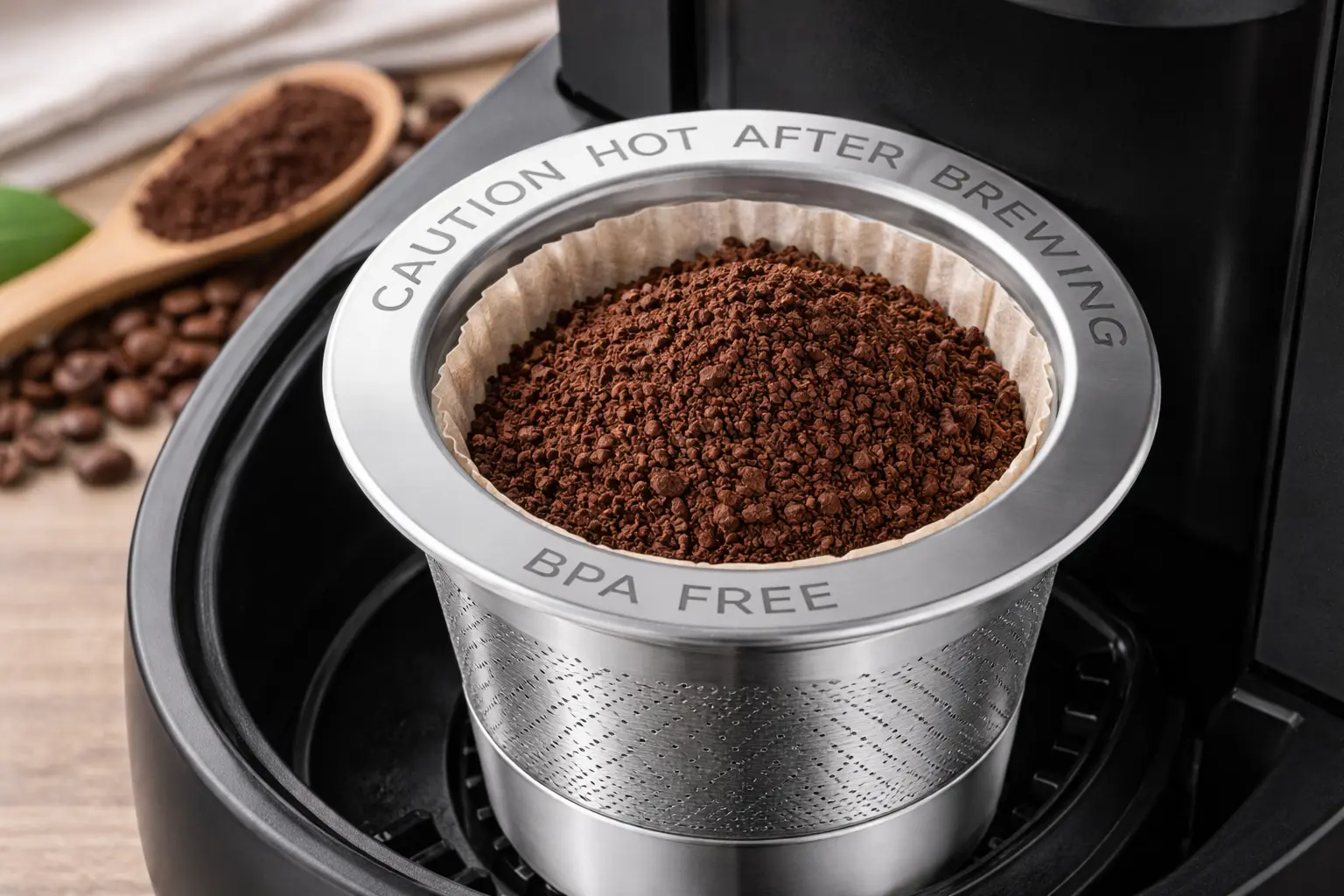
CAPMESSO Dual-Mesh — Classic brewers
A stainless dual-mesh filter for compatible single-needle Keurig machines, with less sediment than a single screen.

CAPMESSO MultiStream — Newer brewers
Built around the multi-needle lid of K-Supreme, K-Slim, and later K-Duo models, so water spreads evenly.
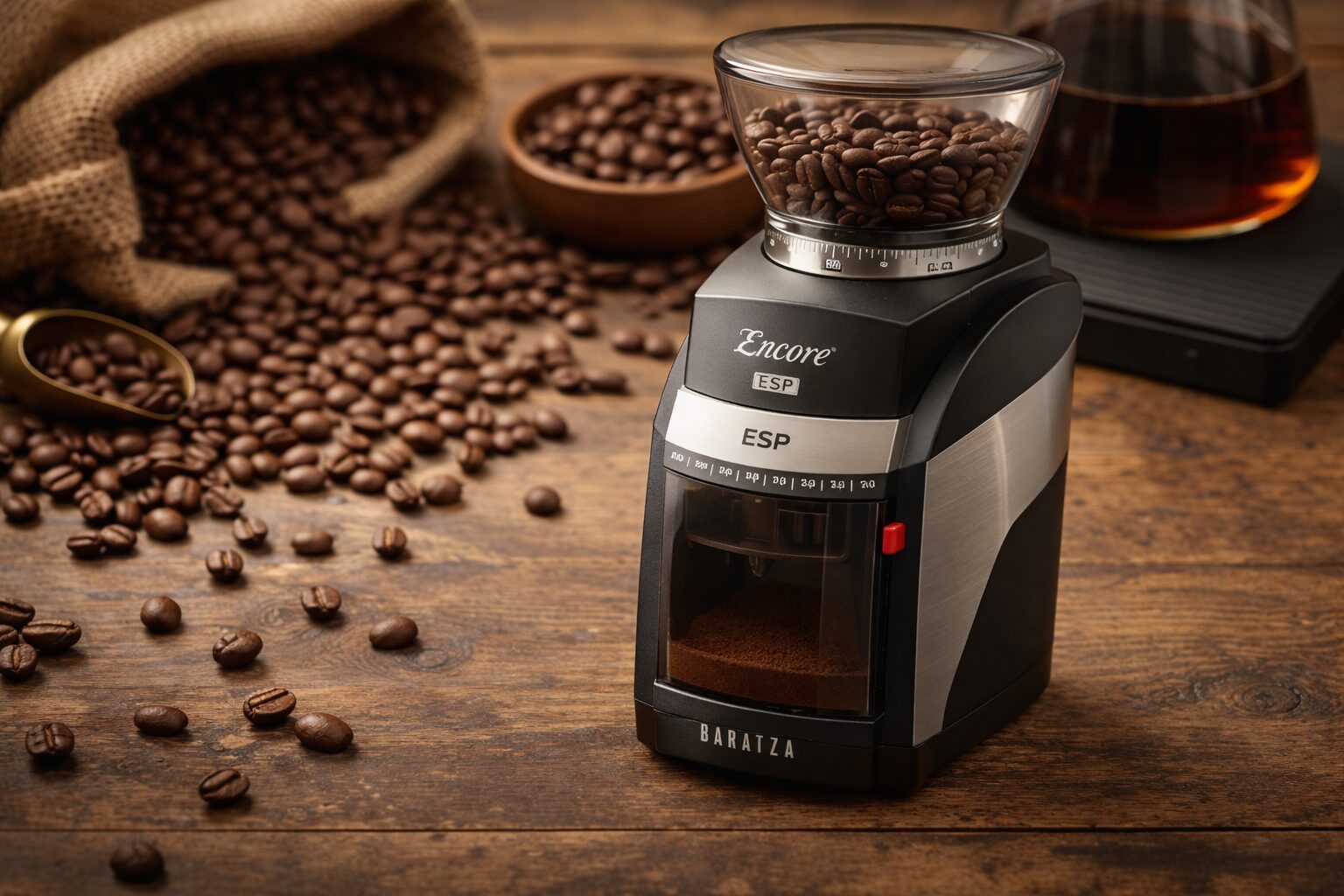
Baratza Encore ESP — Grind upgrade
An even medium grind is what turns a reusable filter from weak and muddy to full and clean.
Affiliate disclosure: Amazon links may earn CoffeeGearHub a commission at no additional cost to you. Verify compatibility with your exact brewer before ordering.
What a Reusable K-Cup Does, and What It Can’t
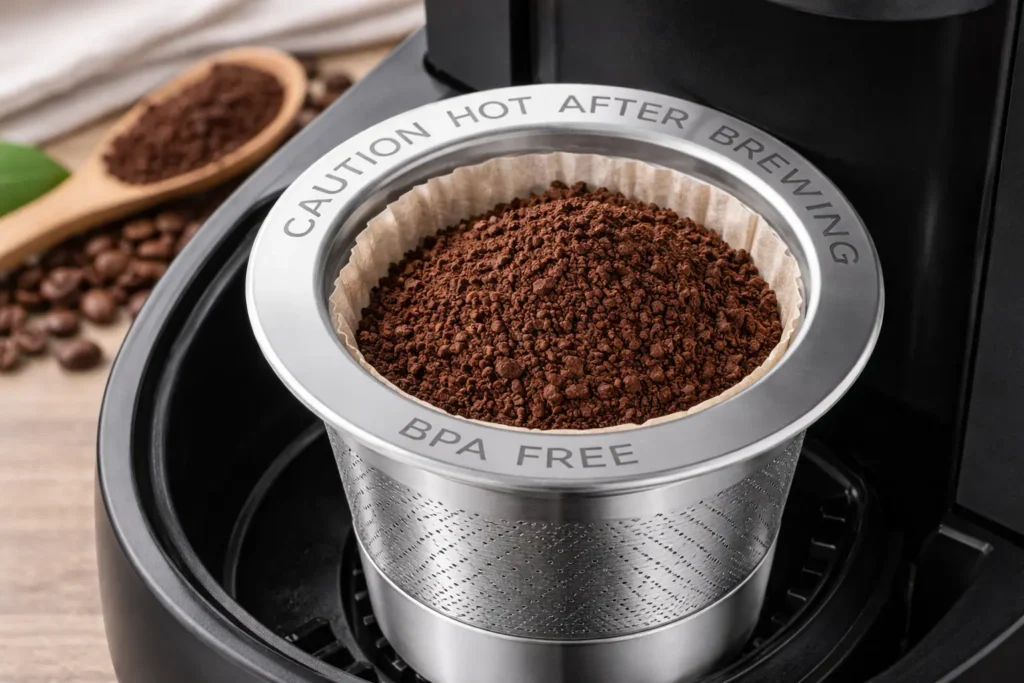
A reusable K-Cup is a small refillable basket with a mesh screen and a lid. You fill it with your own ground coffee, drop it into the brewer where a pod would go, and brew as usual. The Keurig still controls the water temperature, volume, and flow; the filter simply replaces the sealed pod with coffee you chose and ground yourself.
That swap brings three real advantages. Fresh coffee tastes better than pre-ground coffee sealed months earlier. You can use any roast or origin, not only what is sold in pod form. And once the filter is paid for, coffee bought by the bag usually costs less per cup than individual pods while creating far less packaging waste.
What a reusable filter cannot do is change the machine. A Keurig brews quickly with modest contact time, so it will not match a well-made pour-over or produce espresso. It also asks a little more of you: grinding or scooping coffee, and emptying and rinsing the basket afterward. For most people that adds under a minute, but if hands-off convenience is the whole reason you bought a Keurig, pods remain the simpler choice.
Match the Filter to Your Brewer First
Compatibility matters more than any other feature, because Keurig has changed its pod holder, lid shape, and needle layout across generations. Classic Keurig brewers push water into the pod through a single needle at the top. Newer MultiStream machines, including the K-Supreme family and some later K-Slim and K-Duo models, use several needles to spread water across the coffee. A filter with a single opening in a MultiStream brewer can block some needles, leading to uneven brewing, weak coffee, or overflow.
The fix is simple but easy to skip. Find the model name on the brewer itself, usually on the base or behind the water reservoir, and check it against the filter maker’s compatibility list. Treat the word “universal” in a listing as a starting point, not a promise, unless your model is actually named. Keurig also sells its own My K-Cup Universal reusable filter and publishes which of its brewers it fits, which makes it a sensible fallback if a third-party listing is vague about your machine.
| Your brewer | Filter to look for | Watch out for |
|---|---|---|
| Classic single-needle models | Standard reusable filter listing your model | Lids that sit high or need force to close |
| K-Supreme family and other MultiStream models | Filter built for the multi-needle lid | Single-opening lids that block needles |
| Older 2.0-era brewers | Filter that names the 2.0 model or includes an adapter | Fit restrictions around the pod holder |
| Unsure of your model | Keurig’s own My K-Cup Universal | Buying before checking the base label |
Whatever you buy, never force the brewer handle closed. If the basket rocks, sits proud of the holder, or needs pressure to latch, take it out and recheck the model. Forcing a poorly fitting filter can bend the entrance needle or damage the holder.
The Picks: Standard Format and MultiStream
For classic single-needle brewers, the CAPMESSO Dual-Mesh filter is a sturdy option. Its stainless construction holds up to daily use better than a thin plastic frame, and the double layer of mesh catches more fine particles than a single screen, which means less sediment at the bottom of the mug. It is a good match for people who want a durable filter and already grind their own coffee.
Check the listing for your model before buying, since CAPMESSO targets particular brewer generations with each design. If you own several Keurigs, or are not sure which generation yours is, that compatibility check matters more than the choice of brand.
For MultiStream brewers, the CAPMESSO MultiStream pack is designed around the multi-needle lid used by the K-Supreme family, K-Slim, and later K-Duo models. Because the lid lets every needle reach the coffee, water spreads across the whole bed instead of tunnelling through one spot, which is exactly what MultiStream brewing is meant to do.
A multi-pack also suits a household where several people brew in a row: fill two or three filters at once and rinse them together afterward. CAPMESSO also lists a K-Supreme-specific version if you want a single filter matched to that brewer.
If neither third-party listing clearly names your brewer, Keurig’s own My K-Cup Universal filter is the fallback, because Keurig documents which of its machines it fits. It is often less refined in its mesh than stainless dual-screen designs, but guaranteed fit is worth more than a finer screen. Our best Keurig machines guide lists which current models use MultiStream.
Mesh and Build: What Changes the Cup
The screen is where reusable filters differ most in the cup. Fine mesh holds back more particles, giving a cleaner cup with little sediment, but it slows the flow and can clog faster with very fine grounds or oily dark roasts. Coarser mesh drains freely and keeps more of the coffee’s oils and body, with a little more grit at the bottom of the mug. Neither is wrong; a slightly finer screen suits people who dislike sediment, while a more open one suits people who like the fuller texture of French press.
Dual-mesh designs try to get both: a supporting outer layer with a finer inner screen. In practice they usually produce less sediment than a single screen without choking the flow, which is why they are a good default. Marketing words such as “ultra-fine” are not standardized, so judge a filter by its actual construction and compatibility rather than its adjectives.
Build quality matters too. All-stainless baskets last longer and do not absorb coffee odors the way some plastics can, though they come out of the brewer very hot. Plastic-frame filters are lighter and cheaper but can warp over time. Look closely at the lid hinge and the seal around the rim, because those parts take the most wear and are usually what fails first.
Grind Is the Setting That Fixes Most Weak Cups
A Keurig brews quickly, so the grind has to give water enough resistance to pick up flavor in that short time. Start with a medium grind, about the texture of the coffee used in a drip machine. If the cup tastes thin and watery, go a step finer. If the filter drains slowly, the coffee tastes bitter, or there is sludge in the mug, go a step coarser.
Consistency matters as much as the setting. A blade grinder produces a mix of powder and chunks: the powder clogs the mesh and adds bitterness while the chunks under-extract, so the cup ends up both muddy and weak. A burr grinder such as the Baratza Encore ESP grinds evenly and repeatably, which makes a bigger difference to reusable-pod coffee than any filter upgrade.
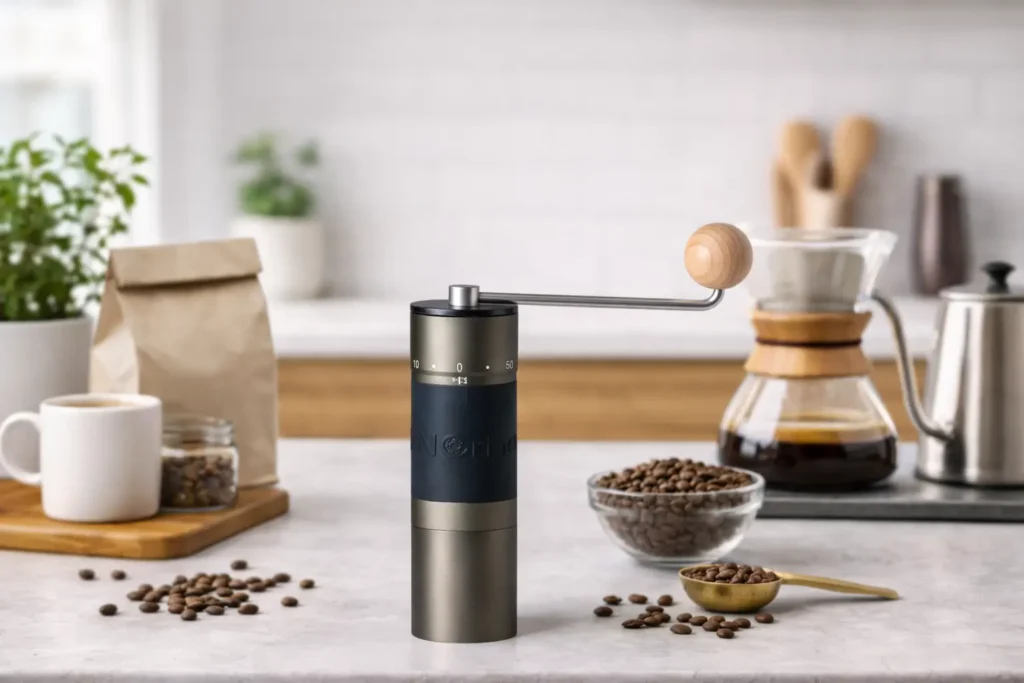
A reusable K-Cup holds a small dose, so a hand grinder is also practical here. The KINGrinder K6 grinds a single-cup dose in well under a minute, and its numbered external dial makes it easy to return to the medium setting that works. It is quiet enough for early mornings and takes no counter space.
If you buy pre-ground coffee instead, choose bags labeled for drip or automatic coffee makers rather than espresso grinds, which are too fine for a reusable filter. Our coffee grind size guide shows how each setting looks and what it is used for.
Dose and Cup Size Decide the Strength
The single most common reason reusable K-Cup coffee tastes weak is a cup size that is too large for the basket. A reusable filter holds less coffee than most people would use for a big mug of drip coffee, so a 10- or 12-ounce setting stretches it too far. Start with the smallest cup size your brewer offers, taste the result, and step up only if the coffee is still strong and balanced.
Fill the basket to its marked line, level the grounds with a fingertip, and leave the top loose. Tamping or overfilling packs the bed so water cannot spread through it evenly, and it can push grounds against the lid where they block the needles or leak around the seal. Underfilling is safer but produces a lighter cup, so if you want more strength, adjust the grind finer before adding coffee past the line.
If your brewer has a Strong button, use it once the grind and dose are working. It changes how water is delivered to lengthen contact time, which helps a little. It cannot rescue stale coffee, an oversized cup, or a filter that does not fit. For more ways to get a bolder cup, see our guide to making stronger coffee with a Keurig.
Which Coffee Works Best
Freshness is where a reusable filter beats a pod most clearly, so buy whole beans with a roast date when you can and grind just before brewing. Store the rest in an airtight container away from heat and light. Even good pre-ground coffee from a freshly opened bag will usually taste brighter than a pod sealed months earlier.
Medium and medium-dark roasts are the most forgiving in a Keurig’s short brew cycle. They extract easily and give the rounded, chocolatey cup most Keurig owners expect. Very light roasts are denser and harder to extract, so they can taste sour or thin unless you use a smaller cup and a finer grind. Very dark, oily beans brew easily and taste bold but leave more residue on the mesh, so rinse the filter promptly after using them.
A reusable filter also opens up single origins and small roasters that never appear in pod form, which is one of the best reasons to own one. Our best coffee for Keurig guide suggests both pods and bagged coffees that suit the brewer.
Cleaning, Care, and When to Replace
Reusable filters work best when they are emptied soon after brewing. Let the basket cool for a minute, knock the grounds into compost or the trash, and rinse it under the tap from the outside in so water pushes trapped grounds out of the mesh rather than deeper into it. Check under the lid and around the seal, where wet coffee likes to hide.
Coffee oils build up slowly and eventually slow the flow and add a stale taste. Every week or two, soak the filter in warm water with a little mild dish soap, brush the mesh gently with a soft brush, and rinse well. Avoid abrasive pads, which can tear fine screens. Dishwasher safety varies by model, so check the listing before putting one on the top rack.
Replace the filter when the mesh tears, the rim warps, or the lid no longer closes firmly, because a damaged basket leaks grounds into the cup and the brewer. Remember that the brewer still needs its own care: a clogged exit needle or mineral scale weakens every cup no matter how clean the filter is. Our guide to cleaning and descaling a coffee maker covers the routine.
What You Actually Save
A reusable filter costs about as much as a small box of pods, and the saving comes afterward, from buying coffee by the bag instead of by the pod. How much you save depends on the coffee you choose and how much you load. Value ground coffee in a reusable filter usually costs well under what branded pods do per cup. Specialty whole beans can cost about as much per cup as pods, but they deliver much fresher, more flavorful coffee for the money.
The waste reduction is real but worth stating honestly. A reusable filter still needs water and soap to clean and will eventually wear out, but it replaces a single-use pod every time you brew. For a household that drinks a few cups a day, that is a large amount of packaging avoided over a year. If you like a cleaner cup and do not mind a little waste, small paper liners made for reusable K-Cups catch fines and make cleanup quicker.
The practical takeaway is that reusable filters pay off for people who brew most days and are willing to spend a minute on cleanup. For an occasional cup, pods remain more convenient. Our Keurig vs drip coffee maker comparison looks at running costs across brewers in more depth.
Our Recommendation
Start with compatibility: a standard filter such as the CAPMESSO Dual-Mesh for classic single-needle brewers, a MultiStream filter such as the CAPMESSO MultiStream pack for the K-Supreme family and other multi-needle models, and Keurig’s own My K-Cup Universal when a listing does not clearly name your brewer. Then brew a smaller cup, use a medium grind, and fill to the line without tamping. If you want the biggest improvement in taste, pair the filter with an even burr grinder like the Baratza Encore ESP.
Pick the Filter That Matches Your Keurig
Classic single-needle brewers suit a standard dual-mesh filter; K-Supreme and other MultiStream models need a multi-needle lid.
As an Amazon Associate, CoffeeGearHub earns from qualifying purchases.
Editorial bottom line: The best reusable K-Cup filter is the one listed for your exact Keurig. Once it fits, a medium grind, a smaller cup size, and a basket filled to the line without tamping matter more to the taste than mesh or materials.
Frequently Asked Questions
Do reusable K-Cups work in every Keurig?
No. Pod-holder shape and needle layout changed across Keurig generations, and MultiStream brewers such as the K-Supreme family use several inlet needles. Match the filter to the exact model printed on your brewer and confirm it on the filter maker’s compatibility list.
Why is my reusable K-Cup coffee weak?
Usually the cup size is too large for the amount of coffee the basket holds, or the grind is too coarse. Brew a smaller cup first, then grind slightly finer. Increase the dose only up to the fill line.
What grind should I use in a reusable K-Cup?
Start with a medium grind similar to drip coffee. Go a step finer if the cup is thin, and a step coarser if it drains slowly, tastes bitter, or leaves sediment. See our grind size guide for reference.
Can I use a paper filter inside a reusable K-Cup?
Yes, small disposable paper liners made for reusable K-Cups exist. They catch fines and make cleanup faster, at the cost of some body and a little added waste.
Are reusable K-Cups dishwasher safe?
Many are top-rack safe, but it varies by model and material. A quick rinse after each brew and an occasional soak in warm soapy water keeps the mesh clear either way.
Does a reusable K-Cup void the Keurig warranty?
Keurig sells its own reusable filter, so using one is a normal way to brew. Damage caused by a poorly fitting third-party filter is a different matter, so use one listed as compatible with your model and never force the handle closed.
Sources and Further Reading
Brewer generations, MultiStream design, and the My K-Cup Universal filter are described from Keurig’s published product information and brewer manuals. Filter construction and compatibility come from the CAPMESSO product listings, and grinder details from Baratza and KINGrinder documentation. Grind and extraction guidance follows the Specialty Coffee Association’s brewing standards. CoffeeGearHub did not test these filters hands-on; recommendations rely on published specifications and compatibility lists.
CoffeeGearHub product shortlist
Continue with related products on CoffeeGearHub
Review product categories and current verified merchant offers on CoffeeGearHub before leaving the site.