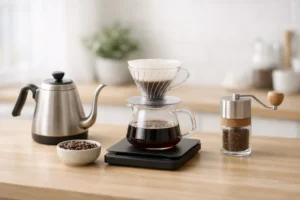
Last Updated: February 2026 • 25–30 min read • Pillar Guide: Bean Selection + Roast Science + Brewing Fundamentals
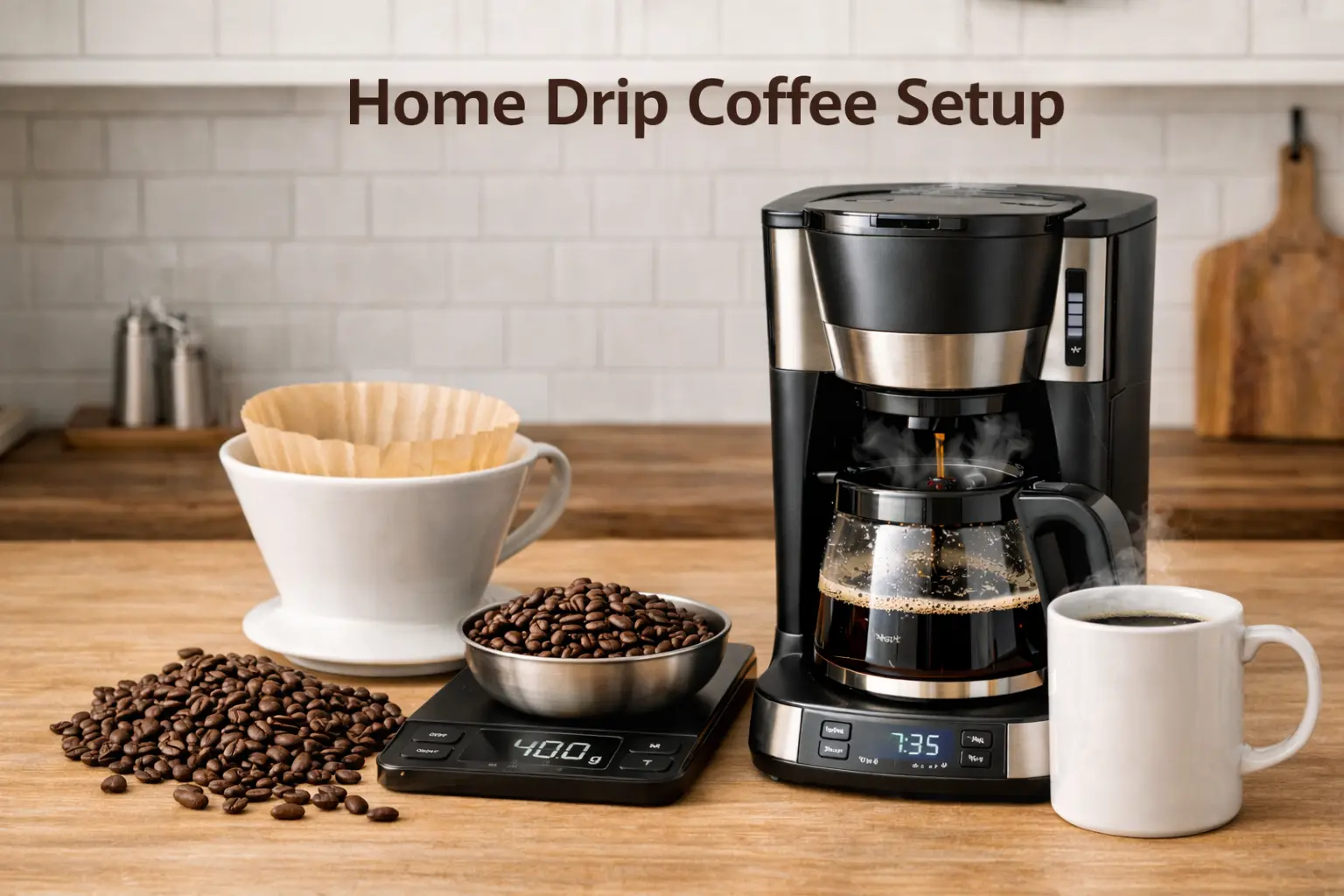
✍️ Editorial note: This guide is researched and written by the editors at CoffeeGearHub.com using roast science, grinder manufacturer specifications, and established specialty-coffee community knowledge. Recommendations reflect research consensus and hands-on brewing experience. All product links are affiliate links — we may earn a commission at no cost to you.
The 30-Second Answer
For most home drip machines, start with a fresh medium or medium-dark roast that leans chocolatey or nutty. These roasts extract evenly at typical brew temperatures, tolerate small grind variations, and taste good both black and with milk. If you want the fastest path to a great cup without tinkering, choose a blend over a single-origin — blends are engineered for consistency. Upgrade to whole bean and a burr grinder before you upgrade your machine.
- Best starting roast: medium to medium-dark (balanced, forgiving)
- Best flavor style: chocolate, nuts, caramel — not sharp acidity
- Biggest single upgrade: whole bean + burr grinder beats any new machine
Who This Guide Is For — Jump to What You Need
☕ Complete Beginner
Read the What Makes Beans Good for Drip section, then go straight to Top Picks.
🔧 Troubleshooter
Jump to Common Mistakes or the FAQ for bitter/weak/watery fixes.
☑️ Quick Decider
Use the Quick Pick Selector or Comparison Table to find your match fast.
🔬 Coffee Nerd
Read Arabica vs Robusta, Roast Science, and Origin Flavor Profiles.
Table of Contents
What Makes Coffee Beans “Good” for Drip Coffee?
Drip coffee makers are “fixed” systems: the machine decides your water temperature, flow rate, and brew time. Unlike a pour-over or AeroPress, you can’t compensate in real time. That means your beans need to extract evenly and taste good across small variations in grind, dose, and water temperature.
Four characteristics predict whether a bean will perform well in a home drip machine:
✅ Balanced Roast Level
Medium and medium-dark roasts extract evenly at the 90–96°C range most home brewers use. Very light roasts often need higher heat to unlock sweetness; very dark roasts can turn harsh and coat grinders in oils.
✅ Forgiving Flavor Profile
Chocolate, caramel, nuts, and mild fruit tolerate a slightly-off grind or ratio and still taste pleasant. Delicate floral or high-acid profiles punish inconsistency — better suited to specialty brewers where you control more variables.
✅ Bag-to-Bag Consistency
Blends are often more consistent than single-origin coffees because they’re formulated to hit a flavor target every season regardless of harvest variation. For daily drip brewing, that reliability matters more than rarity.
✅ Low Bitterness Risk
Very oily dark-roast beans (French or Italian roast) can taste smoky and bitter in drip brewers, and the oils can gunk up burr grinders over time. Avoid visibly oily beans unless your machine runs at lower temperatures.
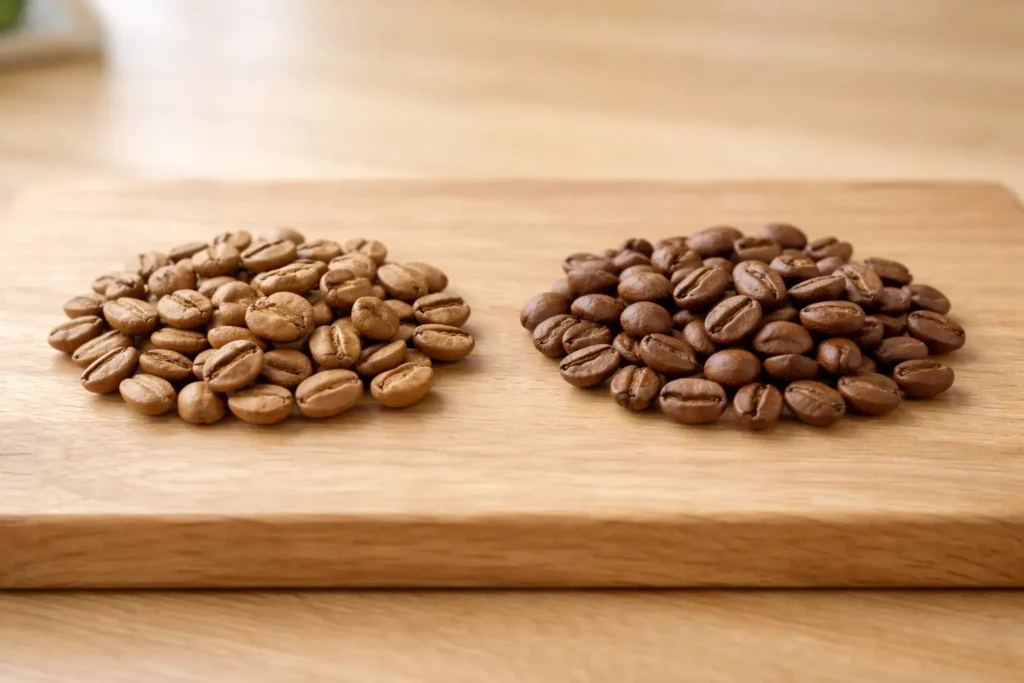
If your drip coffee tastes bitter or watery, beans are only one piece of the puzzle — grind size and ratio matter just as much. Use our coffee grind size chart and the drip coffee ratio guide to lock in consistent results.
Arabica vs Robusta for Drip Coffee
Most specialty and grocery-shelf coffee is labeled “100% Arabica,” but Robusta (and Arabica-Robusta blends) are common too — especially in Italian-style espresso blends and budget pre-ground brands. Here’s what the difference actually means for your drip cup.
| Bean Type | Flavor Profile | Caffeine | In Drip Coffee | Best Use Case |
|---|---|---|---|---|
| 100% Arabica | Nuanced, sweet, fruity/chocolatey, mild acidity | Lower (~1.5%) | Clean, smooth, flavorful — best for specialty drip | Most home drip brewing |
| 100% Robusta | Earthy, harsh, rubbery, very strong | Higher (~2.7%) | Can taste harsh and flat on its own | Rarely used alone in home drip |
| Arabica + Robusta blend | Bold, crema-heavy, extra caffeine kick | Higher than pure Arabica | More body and punch; less delicate | If you want strong, bold drip coffee |
💡 Bottom line: For most home drip brewing, 100% Arabica delivers the most flavor complexity and the least harshness. If you want maximum caffeine or an extra-bold cup, a quality Arabica/Robusta blend (like Lavazza Qualità Rossa) can be a great choice — just expect less sweetness and more punch.
Roast Science: Why Roast Level Matters More in Drip
During roasting, green coffee beans undergo chemical changes that determine how they’ll extract. The key insight for drip brewing: roast level changes the bean’s density and porosity, which controls how fast water pulls flavor compounds through a fixed-flow system.
| Roast Level | Bean Density | Extraction Behavior | In a Basic Drip Machine | In an SCA-Certified Brewer |
|---|---|---|---|---|
| Light | Dense / hard | Extracts slowly; needs high heat | Often tastes sour or underdeveloped | Can shine with bright, fruity clarity |
| Medium | Balanced | Consistent extraction across temps | Reliable and pleasant | Excellent — origin character shows |
| Medium-Dark | More porous | Extracts readily; forgiving | Rich, bold, very consistent | Good — can taste slightly flat vs lighter |
| Dark / French | Very porous, oily | Fast extraction; bitterness risk | Often smoky/bitter unless dialed carefully | Can work with lower temp settings |
The practical takeaway: if you’re brewing on a standard Mr. Coffee-style machine that brews in the 85–92°C range, medium to medium-dark is your sweet spot. If you’re using an SCA-certified brewer (Breville Precision, Technivorm, OXO 9-Cup) that hits 93–96°C consistently, you can go lighter without the sourness risk.
How to Choose Beans Based on Your Drip Machine
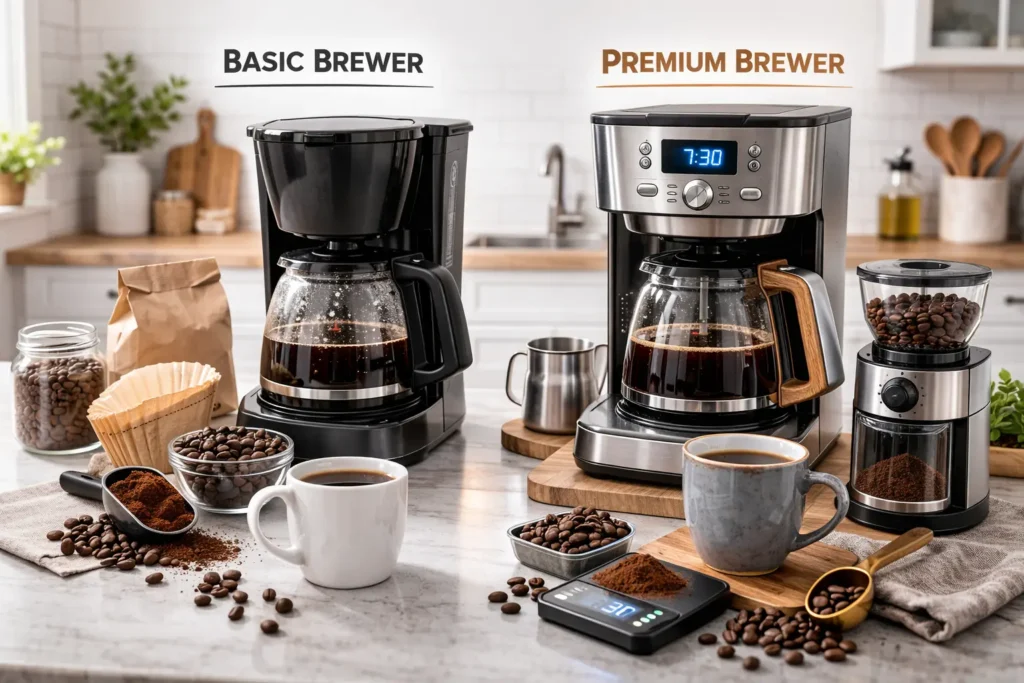
Standard Drip Machines
(Mr. Coffee, Black+Decker, Hamilton Beach, most sub-$80 brewers)
- Brew temperature: typically 85–92°C (variable)
- Best roast: medium to medium-dark
- Best profiles: chocolate, nuts, caramel
- Favor blends over single-origin light roasts
- Avoid very oily dark roasts (French/Italian)
SCA-Certified / Premium Brewers
(Breville Precision, Technivorm Moccamaster, OXO 9-Cup, Bonavita 8-Cup)
- Brew temperature: 93–96°C, consistent
- Best roast: light-medium to medium-dark all work
- Origin character shows up more clearly
- Freshness becomes noticeably more important
- Worth trying single-origin medium roasts here
Freshness, Grind, and Water: The Three Multipliers
Here’s the honest truth: if you’re using stale beans, a blade grinder, and hard water, even the “best” beans will taste average. The good news is you can fix all three quickly and cheaply. See our guide 10 Drip Coffee Mistakes (And How to Fix Every One).
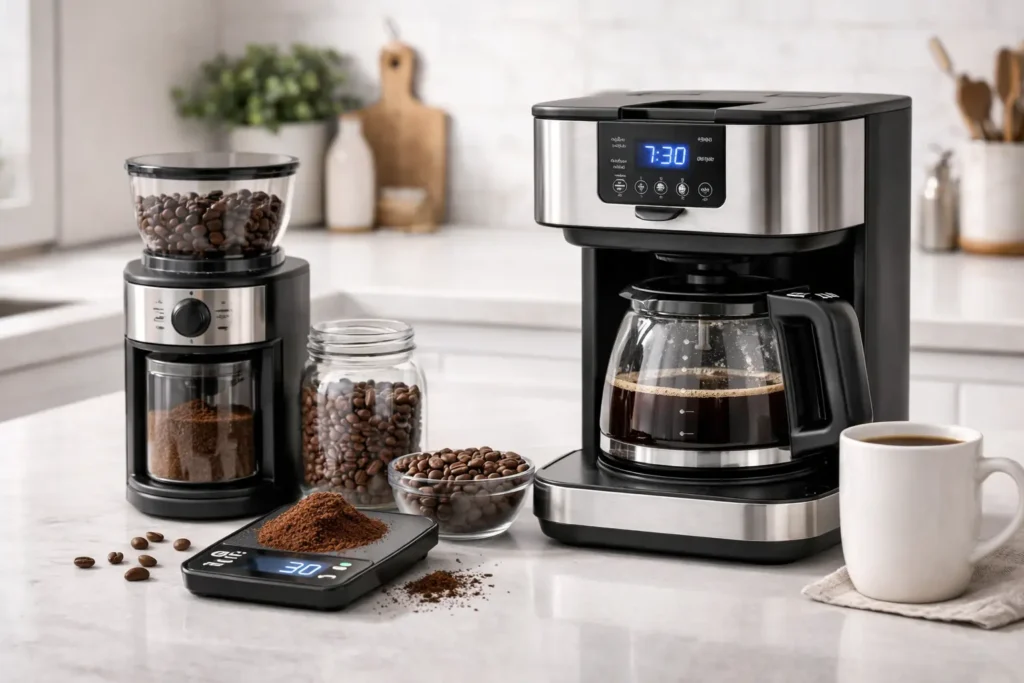

A Burr Grinder: The #1 Upgrade
Grinding fresh immediately before brewing is the single biggest improvement you can make to drip coffee quality — more impactful than upgrading your coffee maker. A burr grinder creates consistent particle sizes, which means even extraction and noticeably sweeter, cleaner cups.
- Dramatically reduces bitterness from uneven extraction
- Preserves aromatics that disappear within 30 minutes of grinding
- Entry-level burr grinder
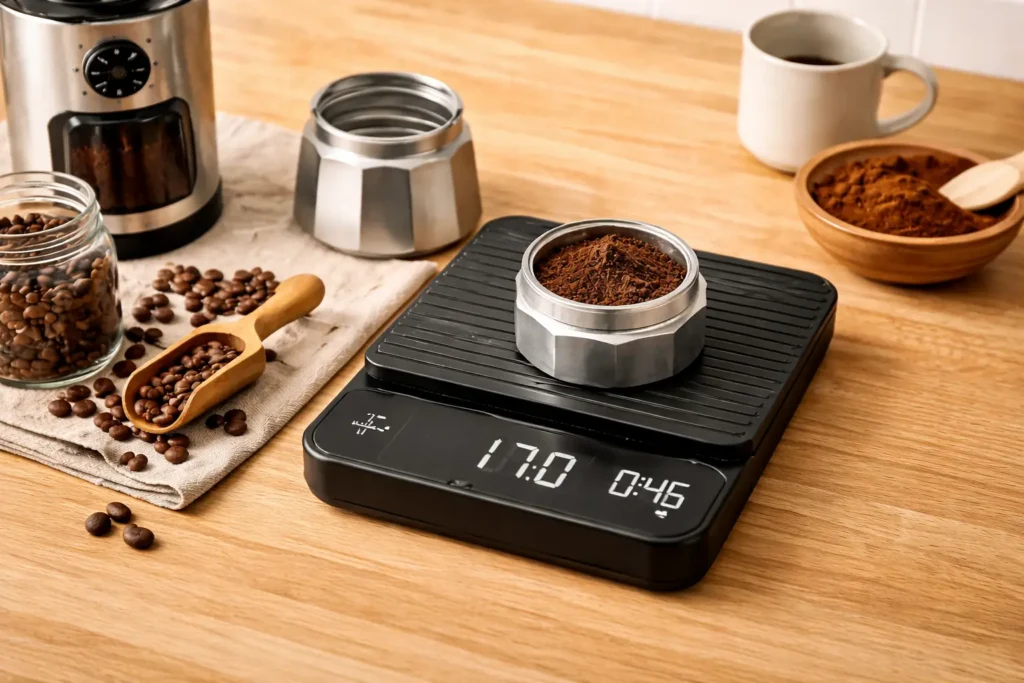
A Digital Scale: Consistency Every Time
Scoops are inconsistent — they vary by 20–30% depending on how packed the grounds are. A basic digital scale eliminates this variable entirely and makes your ratio repeatable cup after cup.
- 0.1g resolution is ideal; 1g resolution is still far better than scooping
- Makes troubleshooting easy — you know exactly what you used
- Works for all brew methods, not just drip
Disclosure: CoffeeGearHub may earn from qualifying purchases.
💧 Water matters more than most people think: if your coffee tastes harsh, chalky, or flat no matter what beans you buy, your water is likely the culprit. Chlorinated tap water kills aroma; very hard water creates chalky, flat flavor; very soft water produces weak, sour cups. A basic filtered pitcher makes a noticeable difference. See our water quality for coffee guide.
How We Chose These Picks
We evaluated each bean against four criteria: (1) extraction consistency across both standard and premium drip machines, (2) flavor clarity and pleasantness at typical home brew temperatures, (3) bag-to-bag repeatability over multiple purchases, and (4) wide availability so you can actually find and reorder them. We also considered roaster transparency, freshness indicators on packaging, and long-term community reputation in specialty coffee circles. We excluded very oily dark roasts that perform poorly in most home grinders, and ultra-light single-origins that require precise temperature control to avoid sourness.
Best Coffee Beans for Drip Coffee Makers
These picks are consistent, easy to brew, and widely available. We’ve prioritized reliability over novelty — you should be able to buy these repeatedly and get the same great cup every time.
🏆 BEST OVERALL · Mid-Range
Peet’s Coffee Major Dickason’s Blend
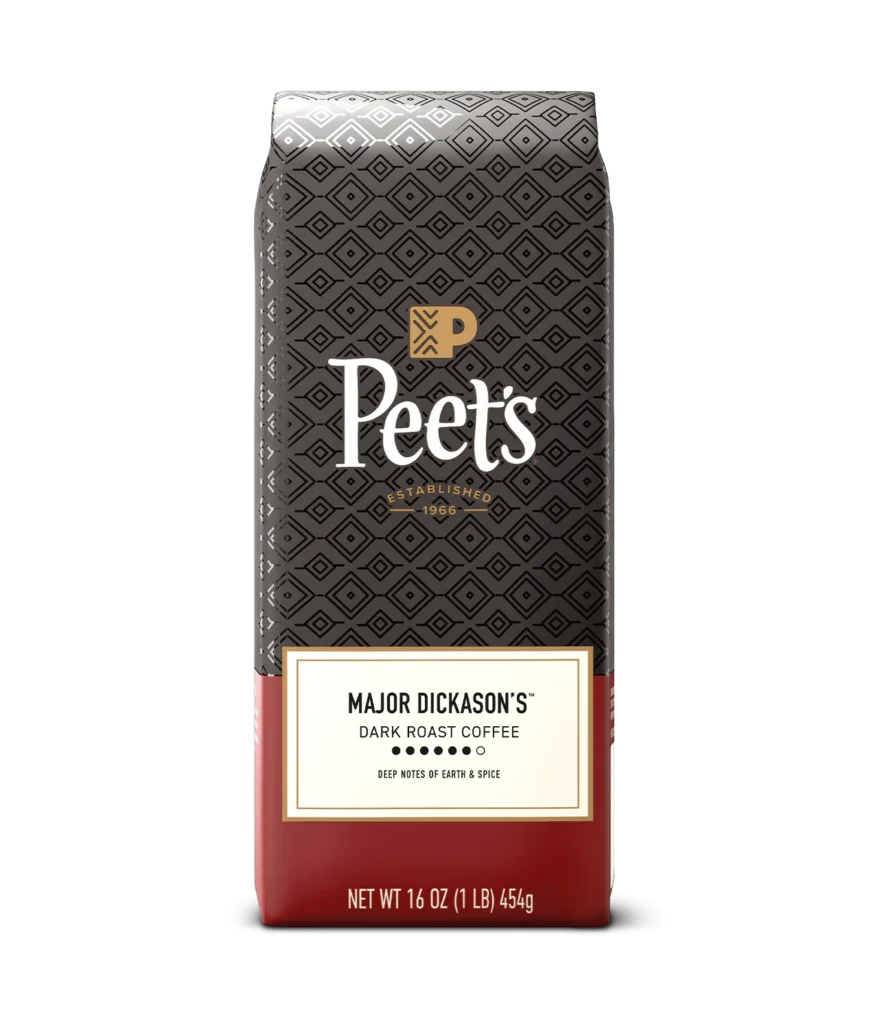
Major Dickason’s is the gold standard for rich, reliable drip coffee. It’s bold without being aggressively bitter — a medium-dark blend that extracts beautifully in standard home brewers and holds up equally well black or with milk. Of all the beans in this guide, this is the one most likely to satisfy a wide range of tastes without any tinkering.
| Roast | Medium-dark |
| Flavor | Dark chocolate, toasted nuts, gentle spice |
| Price tier | Mid-range |
| Best for | Standard drip machines, “set it and forget it” brewing |
| Not ideal for | Those who want bright, fruity or light-roast character |
Disclosure: CoffeeGearHub may earn from qualifying purchases.
⭐ BEST SMOOTH + BALANCED · Mid-Range
Lavazza Qualità Rossa
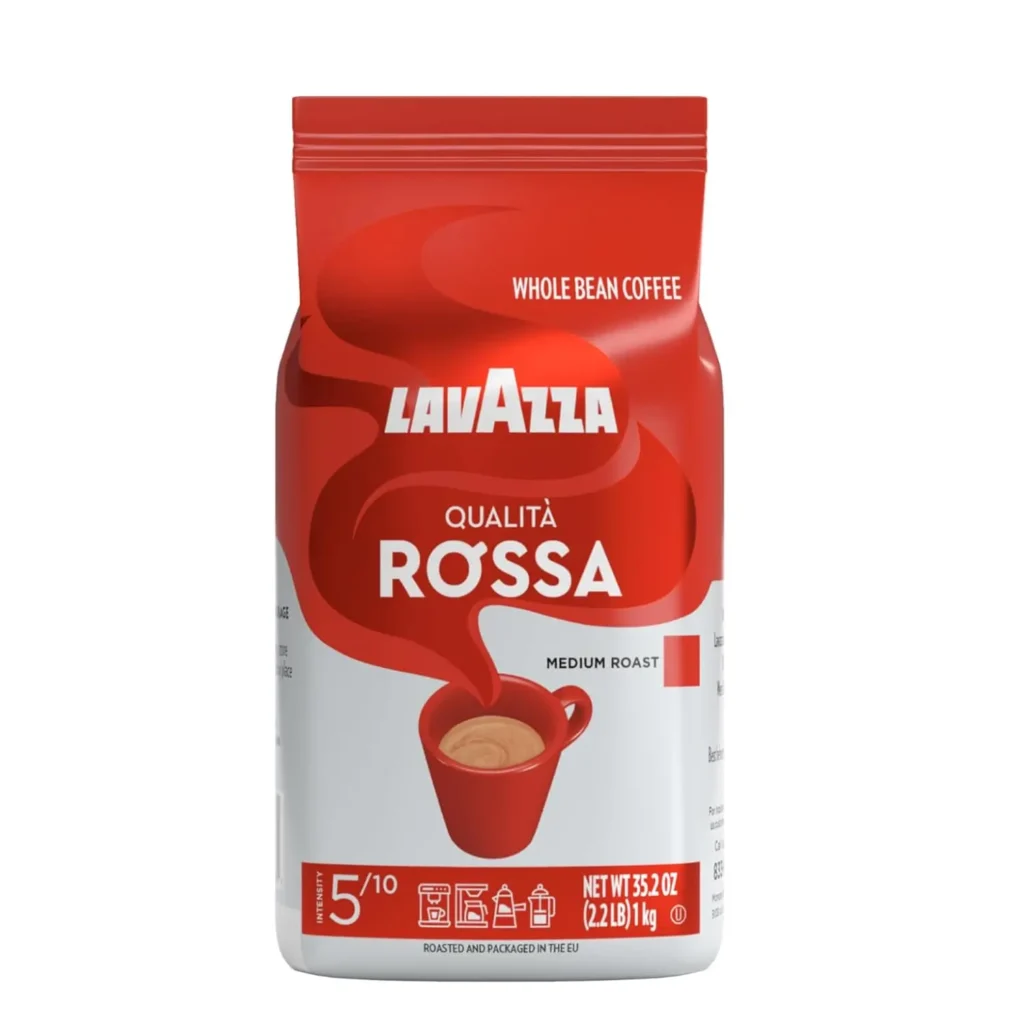
Qualità Rossa is the “easy button” for drip coffee — smooth, familiar, and remarkably consistent batch after batch. It’s an Arabica/Robusta blend, which gives it more body and caffeine than pure Arabica options while keeping the flavor approachable. It’s a great pick when you’re brewing large batches or want a mellow cup that doesn’t require any thought.
| Roast | Medium |
| Flavor | Cocoa, mild dried fruit sweetness, smooth body |
| Price tier | Mid-range |
| Best for | Large batches, everyday brewing, those who want smooth and uncomplicated |
| Not ideal for | Specialty coffee fans who want pure Arabica nuance |
Disclosure: CoffeeGearHub may earn from qualifying purchases.
☕ BEST “NOT TOO DARK” · Mid-Range
Stumptown Founder’s Blend
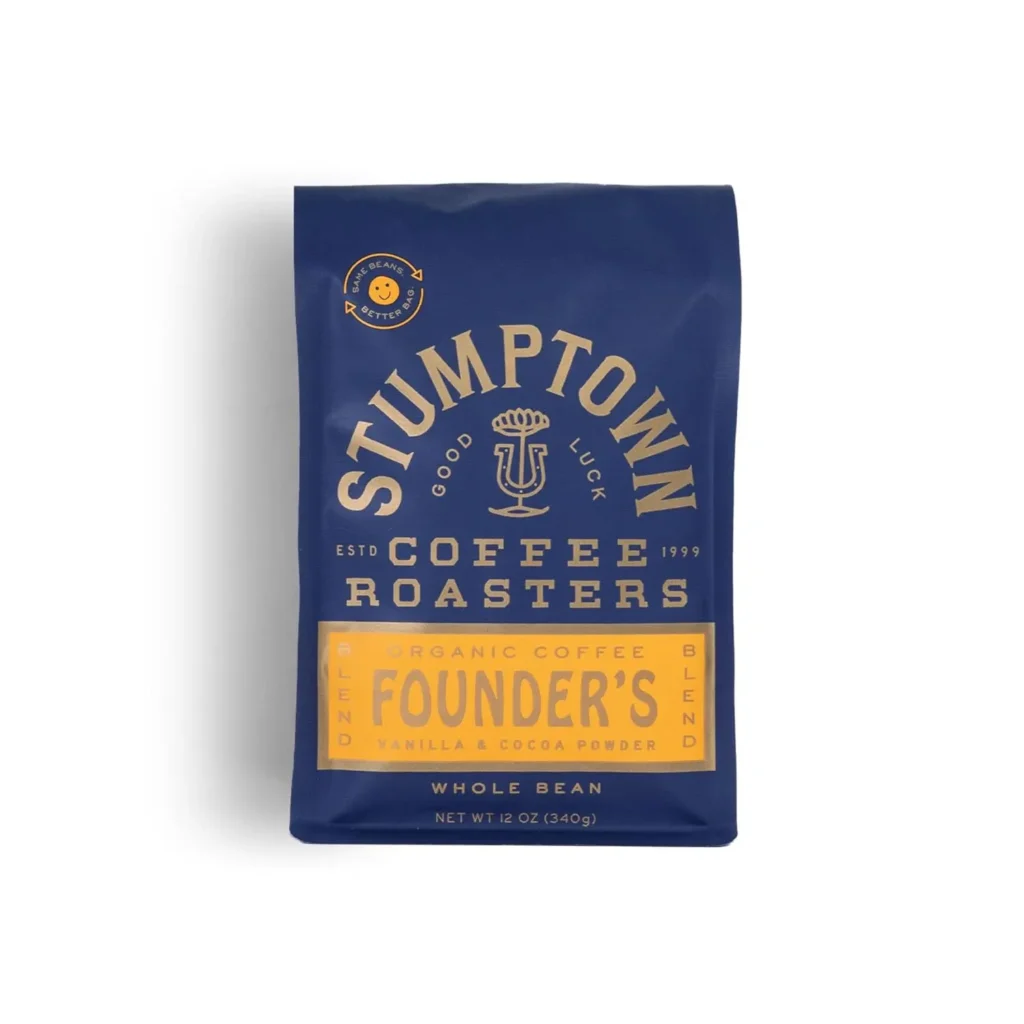
Founder’s Blend hits the sweet spot between classic “diner coffee” bold and modern specialty brightness. It’s a good bridge roast — clean, balanced, and noticeably more interesting than supermarket standards without requiring a specialty brewer to taste good. It shines particularly well in SCA-certified brewers that hit higher water temperatures.
| Roast | Medium |
| Flavor | Toffee sweetness, cocoa, light citrus lift |
| Price tier | Mid-range |
| Best for | SCA-certified brewers, drinkers who want balanced sweetness without dark roast weight |
| Not ideal for | Basic machines where bright acidity can come out thin or sour |
Disclosure: CoffeeGearHub may earn from qualifying purchases.
💰 BEST BUDGET WHOLE BEAN · Budget
Eight O’Clock Coffee Original
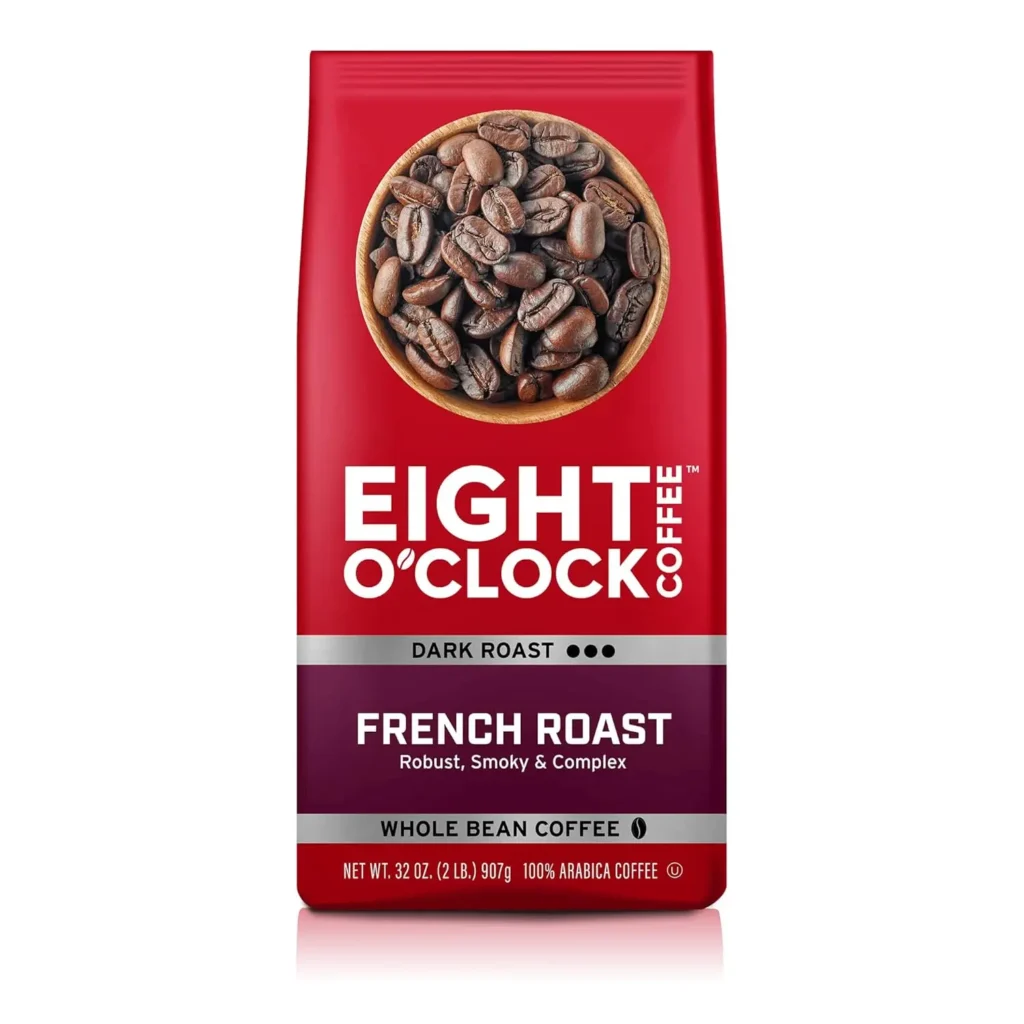
For the price, Eight O’Clock is one of the most dependable grocery-shelf whole-bean options available. You won’t get the nuance of a specialty roaster, but you will get a pleasant, consistent drip cup that’s easy to drink daily. It’s the ideal first step up from pre-ground Folgers — same accessibility, noticeably better flavor when you grind fresh.
| Roast | Medium |
| Flavor | Mild cocoa, soft sweetness, clean finish |
| Price tier | Budget |
| Best for | Beginners who want an affordable upgrade from pre-ground |
| Not ideal for | Specialty coffee fans or premium brewer owners looking for complexity |
Disclosure: CoffeeGearHub may earn from qualifying purchases.
🌿 BEST GENTLE CUP · Mid-Range
Kicking Horse Coffee (Medium Roast Options)
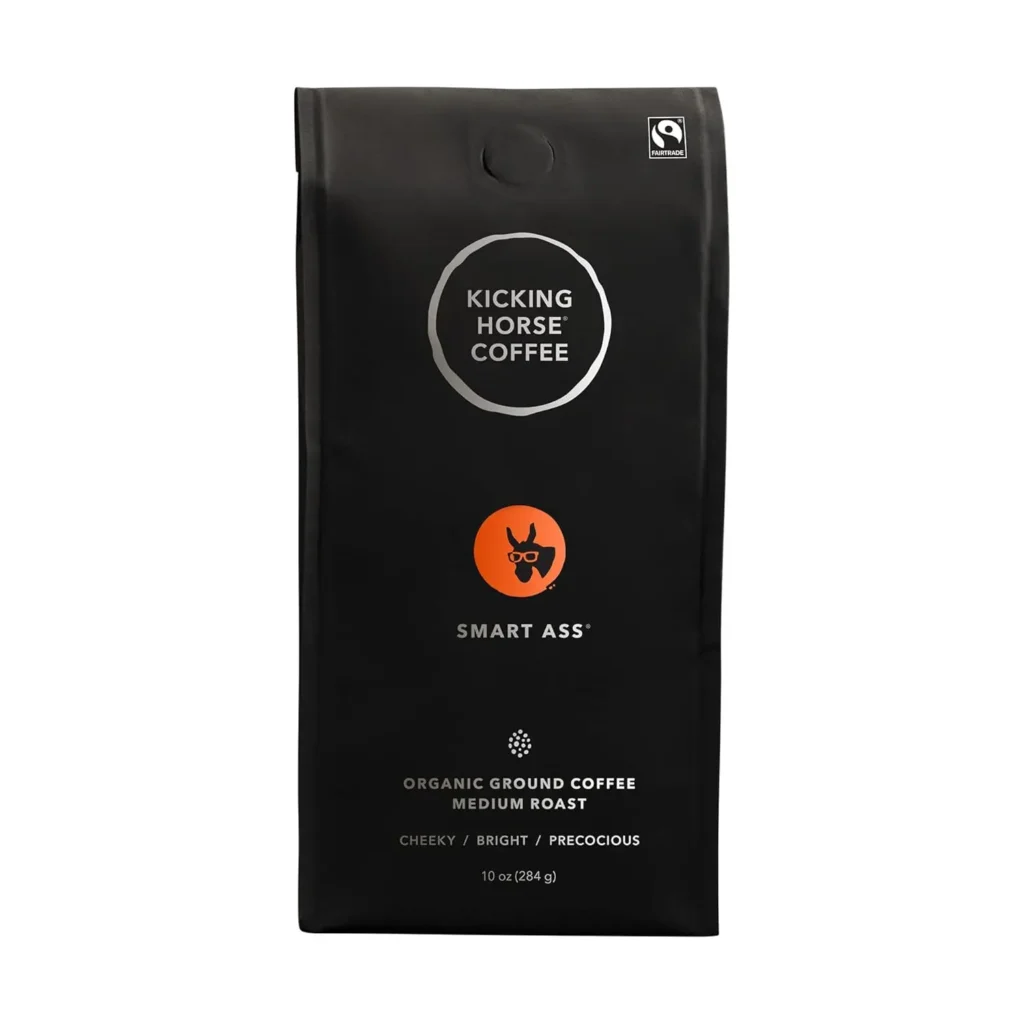
“Low acid” can be misleading — all coffee contains acids — but some coffees simply feel gentler because they’re balanced, smooth, and lack sharp brightness. Kicking Horse medium roast options land reliably in that comfort zone. They’re organic and fair-trade certified, which matters to many buyers, and the flavor profile is consistently approachable across batches.
| Roast | Medium (varies by bag) |
| Flavor | Smooth cocoa, mild sweetness, gentle finish |
| Price tier | Mid-range |
| Best for | Sensitive stomachs, those who find most coffee “too sharp” |
| Not ideal for | Those who prefer bold, intense drip coffee |
Disclosure: CoffeeGearHub may earn from qualifying purchases.
🌙 BEST DECAF · Mid-Range
San Francisco Bay Coffee – Decaf
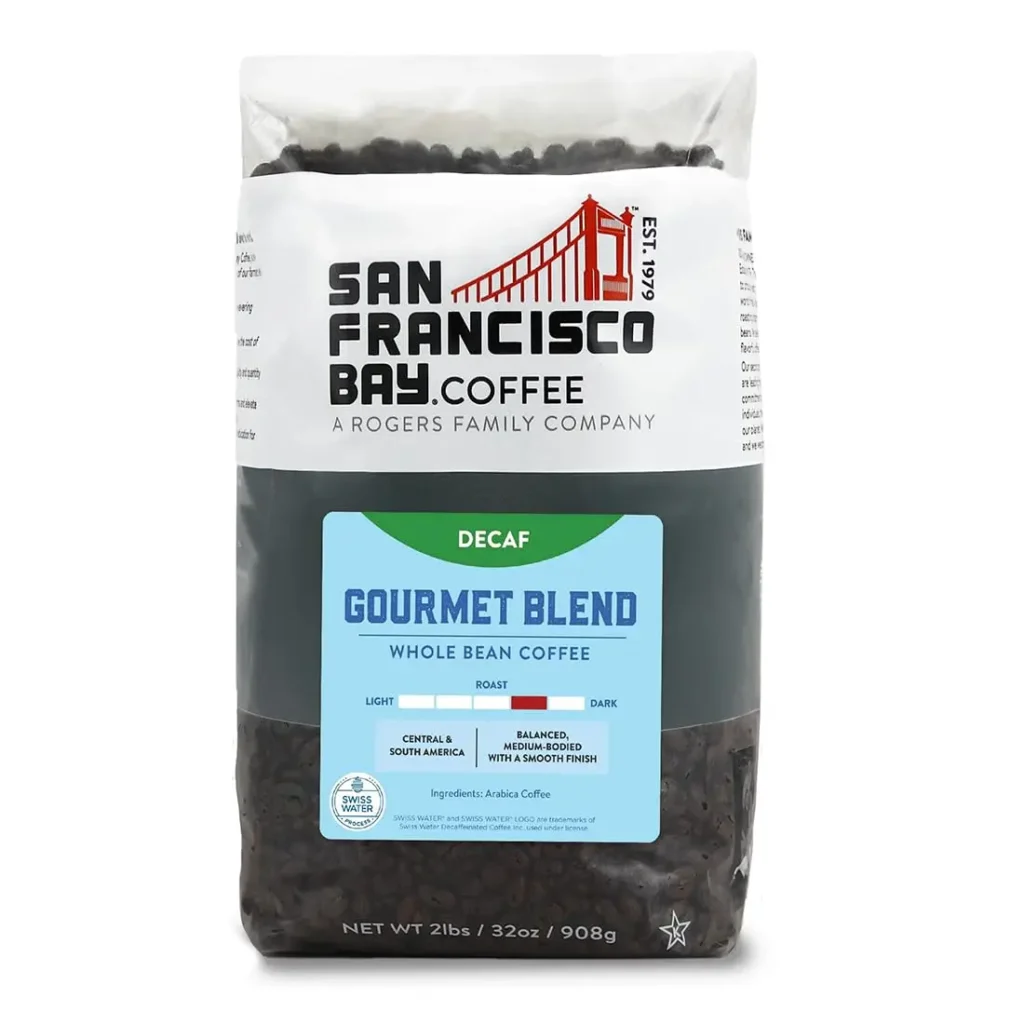
Decaf quality varies dramatically. The San Francisco process uses only water (no chemical solvents) to remove caffeine, which tends to produce a cleaner, less rubbery-tasting cup than many cheap decafs. Look for a whole-bean San Francisco medium roast — brands like Volcanica, Kicking Horse, and Lifeboost all offer solid choices. Grind fresh just as you would with regular beans.
| Roast | Usually medium |
| Flavor | Cocoa-forward, mild sweetness, smoother than budget decafs |
| Price tier | Mid-range |
| Best for | Evening drip coffee without sacrificing taste; caffeine-sensitive drinkers |
| Not ideal for | Those expecting full-caffeine intensity — decaf always tastes slightly softer |
Disclosure: CoffeeGearHub may earn from qualifying purchases.
Quick Pick Selector
Not sure which to start with? Use this as your fast guide:
- I drink it black and want rich, bold flavor → Peet’s Major Dickason’s
- I want smooth, easy, no-fuss daily coffee → Lavazza Qualità Rossa
- I want something more interesting without going light roast → Stumptown Founder’s Blend
- I’m on a budget and just want better than pre-ground → Eight O’Clock Original
- Coffee feels harsh on my stomach / I want a gentle cup → Kicking Horse Medium
- I want decaf that actually tastes like coffee → Swiss Water Process whole bean (medium roast)
Side-by-Side Comparison Table
| Coffee | Roast | Flavor Style | Price Tier | Best Machine Type | Best For |
|---|---|---|---|---|---|
| Peet’s Major Dickason’s | Medium-dark | Bold, chocolatey | Mid ($) | Standard + premium | Classic rich drip, black or with milk |
| Lavazza Qualità Rossa | Medium | Smooth, cocoa, mild fruit | Mid ($) | Standard | Easy daily batches, smooth drinkers |
| Stumptown Founder’s | Medium | Balanced, toffee, light citrus | Mid ($$) | SCA-certified | Cleaner, more modern cup |
| Eight O’Clock Original | Medium | Simple, dependable, soft | Budget ($) | Standard | Budget whole bean upgrade |
| Kicking Horse Medium | Medium | Gentle, smooth cocoa | Mid ($) | Standard + premium | Sensitive stomachs, gentle cup |
| Swiss Water Decaf | Medium | Smooth, cocoa-forward | Mid ($) | Standard + premium | Evening / caffeine-free brewing |
Origin Flavor Profiles: A Quick Reference
If you’ve moved past beginner stage and want to explore single-origin coffees in your drip machine, this quick reference helps you predict flavor before you buy. Stick to medium roast for any origin you’re brewing on a standard machine.
| Origin | Typical Flavor Notes | Acidity | Best Drip Roast | Notes |
|---|---|---|---|---|
| Colombia | Caramel, mild fruit, nuts, cocoa | Medium-low | Medium | One of the most forgiving origins for drip |
| Brazil | Chocolate, nuts, low acidity, earthy | Low | Medium to medium-dark | Excellent base for drip blends; smooth and consistent |
| Ethiopia | Berries, citrus, floral, bright | High | Medium (with caution) | Best in SCA-certified brewers; can taste sour on basic machines |
| Guatemala | Dark chocolate, brown sugar, mild spice | Medium | Medium to medium-dark | Reliable and complex without being fussy |
| Sumatra | Earthy, full body, low acidity, herbal | Low | Medium-dark | Unusual flavor profile — love it or leave it |
| Costa Rica | Honey, mild citrus, clean finish | Medium | Medium | Approachable, well-balanced, beginner-friendly single origin |
How to Store Coffee Beans (and Why It Matters)
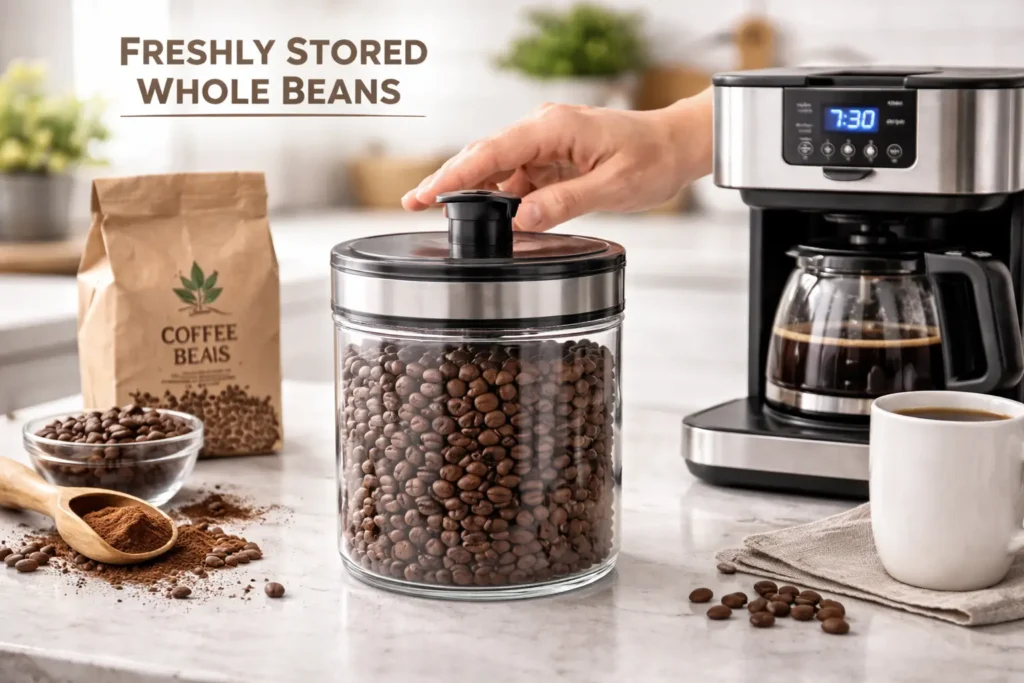
Even the best beans taste flat if stored incorrectly. Coffee’s biggest enemies are oxygen, moisture, heat, and light — and most people unknowingly expose their beans to all four.
✅ Do This
- Store in an airtight container away from sunlight
- Keep at room temperature (not in the fridge — condensation kills flavor)
- Buy in smaller quantities more frequently rather than one large bag
- Aim to use within 2–4 weeks of opening
- Look for a roast date on the bag (not just “best by”)
❌ Avoid This
- Storing in the original bag once opened (not truly airtight)
- Putting beans in the refrigerator (absorbs food odors; condensation stales them fast)
- Leaving near the stove, window, or any heat source
- Pre-grinding a week’s supply in advance
- Buying beans with no roast date — “best by” dates alone are meaningless
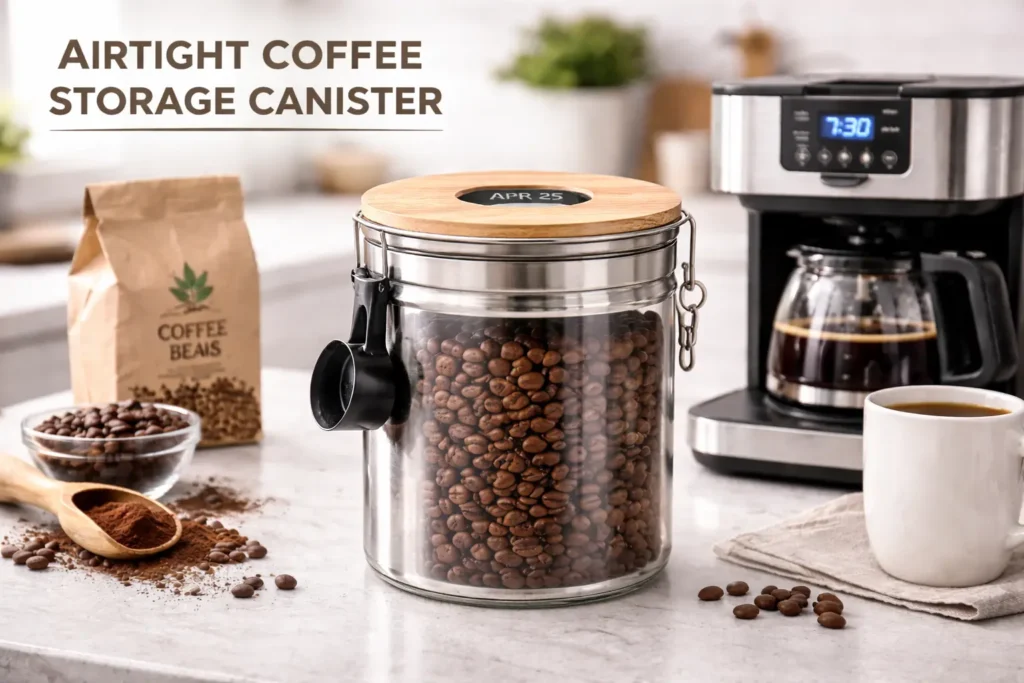
Airtight Coffee Storage Canister
A proper airtight canister with a one-way CO₂ valve preserves sweetness and aromatics dramatically longer than the original bag. It’s one of the cheapest, highest-impact upgrades you can make to daily coffee quality.
Disclosure: CoffeeGearHub may earn from qualifying purchases.
A Simple “Best Results” Recipe for Drip Coffee
A reliable starting point that works with most beans in this guide. Keep every variable fixed except grind when you’re dialing in a new bag.
Baseline Recipe
- Ratio: 1:16 (62g coffee to 1000g water)
- Grind: medium (drip setting on a burr grinder)
- Water: filtered if possible, cold start
- Filter: paper (rinse with hot water first)
Taste → Fix Order
- Bitter: grind coarser or use less coffee
- Sour / thin: grind finer, use fresher beans, or check water temp
- Weak but balanced: increase dose — don’t change grind
- Harsh no matter what: check your water quality
Need the full chart and more fixes? Use our pillar guide: Drip Coffee Ratio (Simple Chart + Fixes).
Common Mistakes When Buying Beans for Drip
| Mistake | What Happens | Fix |
|---|---|---|
| Buying very light roasts for basic machines | Often tastes sour or underdeveloped — basic brewers don’t get hot enough to unlock light roast sweetness | Stick to medium or medium-dark until you have an SCA-certified brewer |
| Choosing very oily dark roasts | Can taste smoky/bitter; oils coat and clog burr grinders over time | Avoid beans with visibly shiny, oily surfaces (French/Italian roast) |
| Buying beans with no roast date | Could be 6–12 months stale — tastes flat and cardboard-like no matter how good the origin | Look for a printed roast date, not just “best by” |
| Storing beans in the fridge | Beans absorb food odors and moisture, ruining flavor within days | Room temperature airtight canister only |
| Pre-grinding a week’s worth | Ground coffee goes stale within 20–30 minutes of grinding — a week’s pre-ground tastes hollow | Grind only what you’re brewing right now |
| Using a blade grinder | Creates boulders + fines: bitter and sour simultaneously, impossible to fix with ratio or recipe changes | Any entry-level burr grinder is a dramatic improvement |
FAQs: Best Coffee Beans for Drip Coffee Makers
What roast is best for drip coffee?
Medium and medium-dark roasts are best for most home drip coffee makers. They extract evenly at typical brew temperatures (85–93°C) and are far less likely to taste sour (too light) or smoky and bitter (too dark). If you have an SCA-certified brewer that hits 93–96°C consistently, you can go slightly lighter without sourness risk.
Are blends or single-origin coffees better for drip?
For beginners and standard machines, blends are almost always more consistent and forgiving. Blends are formulated to hit a flavor target regardless of harvest variation. Single-origin coffees can be excellent — especially in premium brewers — but very bright light roasts can taste sharp or sour unless your machine brews hot enough and your grind is dialed in precisely.
How fresh should coffee beans be for drip coffee?
As a general rule, aim for whole beans that are roughly 7–28 days after roast date. That said, freshly opened sealed beans still beat a bag that’s been open for two months. Always prioritize a sealed, recently opened whole bean over old pre-ground, regardless of the brand.
Is Arabica always better than Robusta for drip coffee?
Not always. 100% Arabica delivers more nuance, sweetness, and complexity in most drip situations. However, quality Arabica/Robusta blends (like Lavazza Qualità Rossa) offer more body, higher caffeine, and a bold, satisfying cup. Avoid cheap bulk Robusta, which can taste harsh and rubbery — but a well-crafted blend is a legitimate and enjoyable choice.
Can I use pour-over beans in a drip machine?
Yes, but with a caveat: very light pour-over roasts may taste sour or thin in basic drip brewers that don’t reach high enough temperatures. Medium roasts that are sold for pour-over typically perform well across most drip machines.
Why does my drip coffee taste bitter?
Bitterness is most often caused by a grind that’s too fine, too much coffee, beans roasted very dark, or old/stale beans. Start by adjusting grind coarser, then check your ratio using our drip coffee ratio guide. If bitterness persists, check your beans’ roast date.
Why does my drip coffee taste weak or watery?
Weak coffee usually comes from too little coffee (check your ratio), a grind that’s too coarse, or stale beans that have lost their soluble compounds. Use a scale to confirm your dose, try grinding slightly finer, and make sure your beans aren’t more than a month past roast.
Is whole bean really better than pre-ground for drip?
Yes, dramatically so. Ground coffee begins going stale within 20–30 minutes of grinding as oxygen degrades the aromatic compounds. Pre-ground that’s been sitting in a bag for weeks or months can taste flat and dull even from a great roaster. Grinding fresh immediately before brewing is the single highest-impact change you can make to drip coffee quality.
Should I subscribe to a coffee service or buy from grocery stores?
Both can work. Grocery shelf beans are convenient and some (like Peet’s or Stumptown) are genuinely good. Subscription services from specialty roasters (like Trade, Atlas, or Counter Culture) typically ship fresher beans with roast dates and origin transparency, which matters more as your palate develops. For most beginners, grocery whole bean is a fine starting point.
Continue Learning
DRIP COFFEE CLUSTER
Ready to upgrade your grinder? A burr grinder improves drip coffee quality more than any new machine. See our picks at every budget.
☕
Written by the CoffeeGearHub Editorial Team
CoffeeGearHub is a specialty coffee equipment resource run by home brewers and coffee enthusiasts. Our guides are researched using published roast science, grinder manufacturer specifications, and established specialty-coffee community knowledge. We evaluate beans against real home brewing scenarios — not just spec sheets — and update our pillar content regularly. About CoffeeGearHub →