
Cortado vs Macchiato (2026): Milk, Strength, Size, and How to Make Each
Editorial standards: drink definitions are based on traditional café usage, published barista references, and CoffeeGearHub’s existing milk-drink and espresso guides. Café menus vary, so we describe the most common versions. CoffeeGearHub does not claim hands-on testing where it has not occurred.
At a glance
What this cortado vs macchiato comparison covers
What separates the two drinks, why one tastes stronger without containing more caffeine, how they relate to the flat white, Gibraltar, and latte macchiato, why menus disagree, how to make both at home, the gear that helps, and which to order.
Editorial analysis
Both are small and strong; the milk is what separates them
A cortado and a macchiato both start with espresso and add only a little milk, which is why they are so easy to mix up. The difference is how much milk. A cortado cuts espresso with roughly an equal amount of warm, lightly textured milk. A traditional macchiato only marks the espresso with a spoonful of foam.
So a macchiato tastes almost like straight espresso with the edge softened, while a cortado is a balanced, smooth half-and-half. Chain coffee shops add to the confusion, because their caramel macchiato is a different drink altogether.
The 30-Second Answer
A cortado is espresso with about an equal amount of steamed milk and very little foam, usually 4–5 oz in a small glass. A macchiato is espresso topped with just a dollop of milk foam, usually 2–3 oz in a demitasse. The macchiato tastes stronger; the cortado is smoother. With the same shots, both have the same caffeine.
Order a macchiato if you like espresso and want it slightly softened. Order a cortado if you want a short, coffee-forward milk drink that is smoother than espresso but far stronger-tasting than a latte.
Compare current options
Start with these representative choices
Gear that covers both drinks at home. Our best milk frothers and beginner espresso machines guides compare more options.
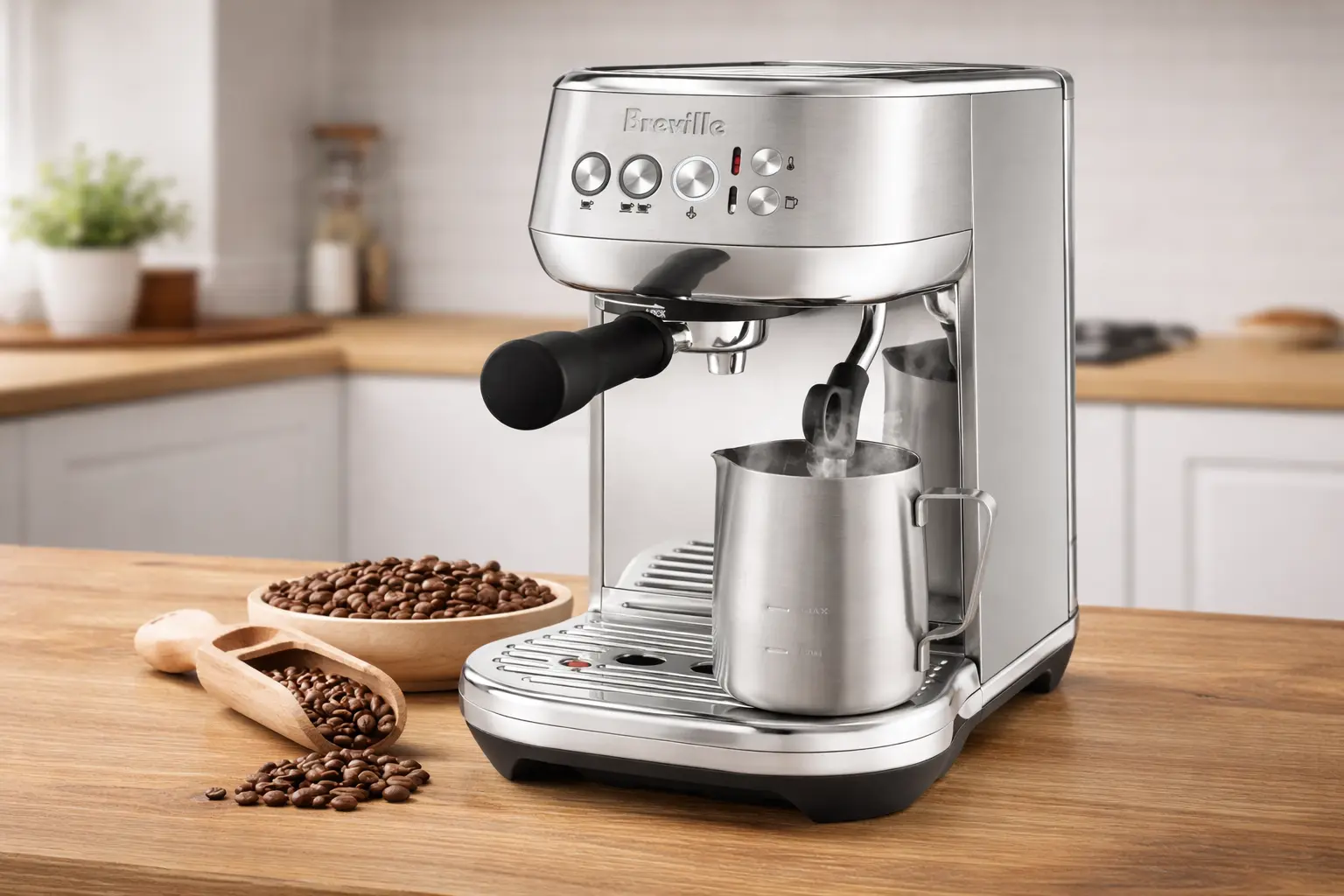
Breville Bambino Plus — Espresso plus auto milk
A compact espresso machine with an automatic steam wand that lets you set milk temperature and texture. Easy for small, lightly textured cortado milk.
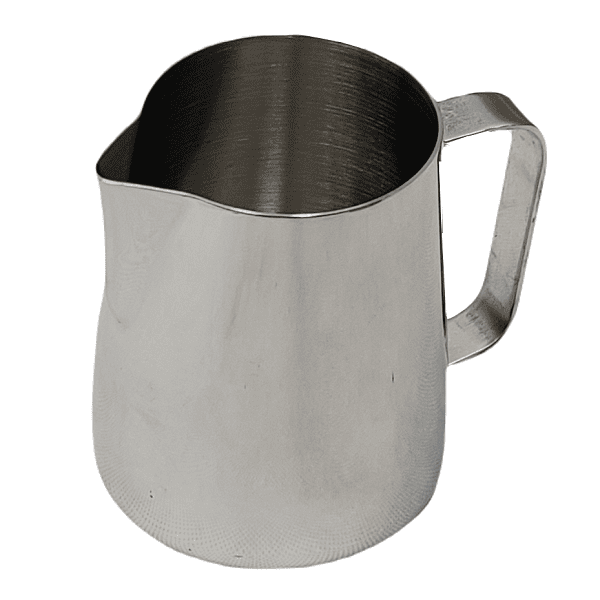
Rattleware 12 oz Pitcher — Right size for small drinks
A small stainless pitcher that makes it easier to steam the little milk a cortado or macchiato needs without overheating it.
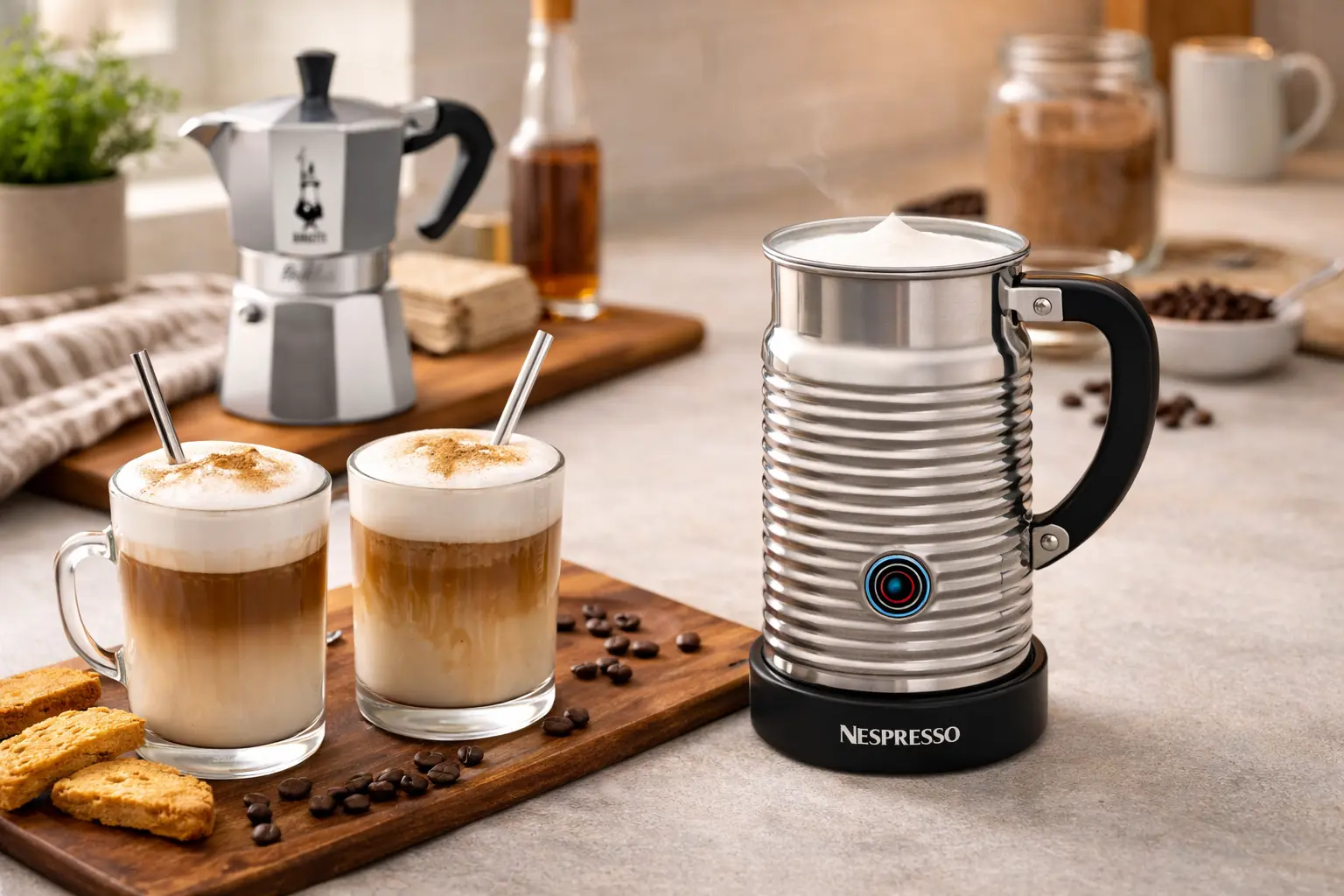
Nespresso Aeroccino — Foam without a steam wand
A one-button frother for warm milk or foam. Useful with a Nespresso, moka pot, or AeroPress concentrate if you do not have a steam wand.
Affiliate disclosure: Amazon links may earn CoffeeGearHub a commission at no additional cost to you. Prices and availability can change.
Cortado vs Macchiato Side by Side
Put the two drinks next to each other on a café counter and the difference is obvious before you taste anything. The macchiato sits in a tiny demitasse, dark espresso with a small white island of foam in the middle. The cortado comes in a short glass, tan from top to bottom, with only a thin pale layer on the surface. Both start from the same espresso, and that shared base is why they are confused so often on menus and in conversation.
| Cortado | Macchiato | |
|---|---|---|
| Milk | About equal to the espresso, lightly steamed | A spoonful of foam |
| Typical size | About 4–5 oz, small glass | About 2–3 oz, demitasse |
| Taste | Balanced, smooth, coffee-forward | Almost espresso, with a soft edge |
| Caffeine | Same as the shots used | Same as the shots used |
Everything in the table follows from a single variable: how much milk goes into the cup. A macchiato treats milk as a garnish, so the espresso keeps nearly all of its intensity, acidity, and bitterness. A cortado treats milk as an equal partner, so it rounds those edges off and adds sweetness and body. Size, glassware, and texture are simply the practical consequences of that choice, and once you see it that way, the rest of this comparison falls into place.
The Macchiato Is Espresso, Lightly Marked
Macchiato is Italian for “stained” or “marked,” and the traditional espresso macchiato, sometimes written caffè macchiato, is exactly that: a shot of espresso marked with a spoonful of milk foam. It is served in a warm demitasse and comes to about 2–3 oz. The foam softens the first sip and takes a little of the bite off the crema, but the drink still tastes very close to straight espresso from the second sip on.
That makes the macchiato a drink for people who already like espresso. It is not a gentler introduction for someone who finds a shot too harsh; the milk is simply too small a share of the cup to change the character much. Some cafés make a slightly larger long or double macchiato, but the idea holds: the milk is a mark on the espresso rather than a main ingredient. If your shot is sour or bitter, a macchiato will show it, which is why dialing in the espresso matters so much, and our espresso brew guide covers the basics.
The Cortado Is a Half-and-Half Drink
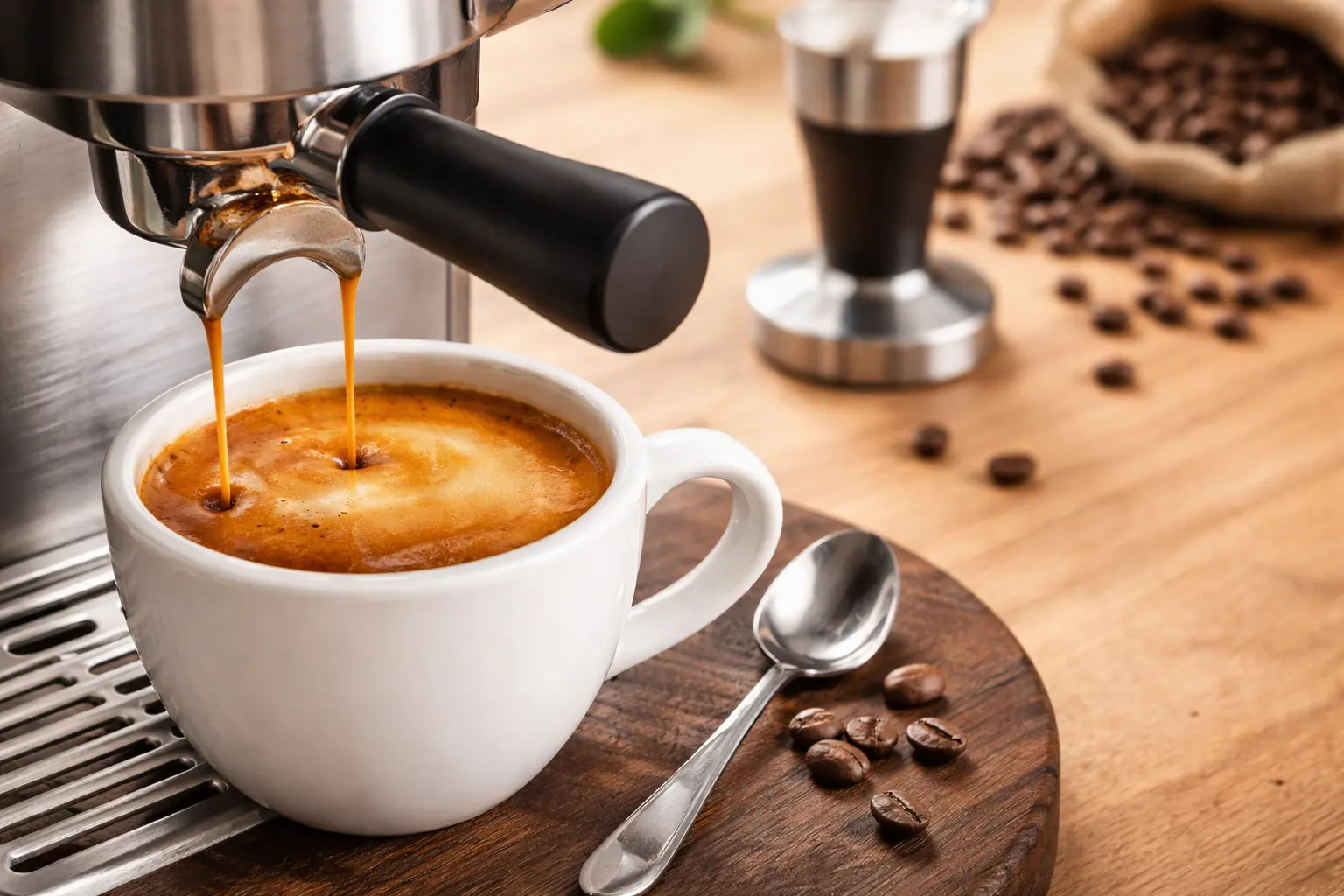
The cortado comes from Spain, and its name comes from cortar, “to cut.” It is espresso cut with roughly the same volume of warm milk, which tames the intensity and acidity of the shot without burying it. The milk is steamed with very little air, so it stays silky and nearly flat, with at most a thin layer of fine microfoam on top. The result is a short drink of about 4–5 oz, served in a small glass, that tastes unmistakably of coffee but goes down smoothly.
Shot size varies. Most specialty cafés in the U.S. build a cortado on a double shot, while traditional Spanish versions often use a single. Either way, the proportion is what defines it: roughly half espresso, half milk. That balance is why the cortado has become the default order for people who find espresso too sharp but think a latte drowns the coffee. It sits in the middle of the milk-drink range, closer to espresso than a flat white and far closer than a latte or cappuccino.
Strength Is About Taste, Not Caffeine
The most common question about these two drinks is which one is stronger, and the honest answer depends on what you mean. If you mean caffeine, neither is stronger. Milk does not add or remove caffeine, so a double-shot cortado and a double-shot macchiato contain essentially the same amount. The caffeine comes entirely from the espresso, and both drinks use the same espresso.
If you mean how strong the drink tastes, the macchiato wins easily. With only a spoonful of foam, it delivers the full concentration of the shot, so the coffee flavor, bitterness, and acidity all come through. The cortado dilutes that same shot with an equal volume of milk, which lowers the perceived intensity, adds lactose sweetness, and softens the finish. It is the same reason a latte tastes mild even when it is built on a double shot: the coffee is all there, just spread through more liquid.
This matters when you are choosing between them for a reason other than flavor. If you want a lighter caffeine hit, ask for a single shot in either drink rather than switching from one to the other. If you want a drink that tastes strong without being straight espresso, the macchiato is the better fit. Our espresso brew ratio guide explains how dose and yield change the strength of the shot itself, which affects both drinks equally.
Where the Flat White, Gibraltar, and Latte Macchiato Fit
Several neighboring drinks overlap with these two, and a few share their names. The table places them on the same scale, from almost all espresso to almost all milk.
| Drink | What it is | How it differs |
|---|---|---|
| Gibraltar | A cortado served in a 4.5 oz Gibraltar glass | Essentially a U.S. café name for a cortado |
| Flat white | Double shot with about 4 oz of silky microfoam, 5–6 oz cup | More milk than a cortado, smoother texture |
| Latte macchiato | Steamed milk with espresso poured on top, tall glass | Mostly milk; the opposite of an espresso macchiato |
| Cappuccino | Espresso, steamed milk, and thick foam, 5–6 oz | Much more foam than either |
The flat white is the drink most often confused with a cortado, and the difference is quantity and texture. A flat white uses more milk, steamed into a glossy microfoam, in a slightly larger cup, so it is creamier and a little milder. A cortado is smaller and closer to half and half. The latte macchiato is the one to watch on menus, because it reverses the macchiato idea entirely: it starts with a tall glass of steamed milk and marks it with espresso, so it drinks like a layered latte. For the larger milk drinks, our latte vs cappuccino vs flat white guide goes into more detail.
Why Café Menus Disagree
If you have ordered a macchiato and received something very different from what this guide describes, you are not imagining it. These drink names travel, and they change as they go. The biggest source of confusion is the chain-store caramel macchiato, which is a vanilla latte layered with espresso and topped with caramel sauce. It is sweet, tall, and mostly milk, and it shares nothing with the Italian espresso macchiato except the idea of espresso marking milk. Many people now expect any macchiato to look like that.
Regional versions add more variety. In Cuban cafés, a cortadito is espresso brewed or mixed with sugar and then cut with steamed milk, so it is noticeably sweeter than a Spanish cortado. In Portugal, a pingado is espresso with just a drop of milk, landing somewhere between a macchiato and a cortado. Italian bars distinguish a macchiato caldo, marked with hot foam, from a macchiato freddo, marked with a splash of cold milk. In the U.S., the Gibraltar is simply a cortado named after its glass.
The practical solution is one question: how much milk goes in? The answer tells you immediately whether a café’s macchiato is the traditional espresso version or a larger chain-style drink, and whether its cortado is half milk or closer to a small flat white.
Small Drinks Expose the Milk
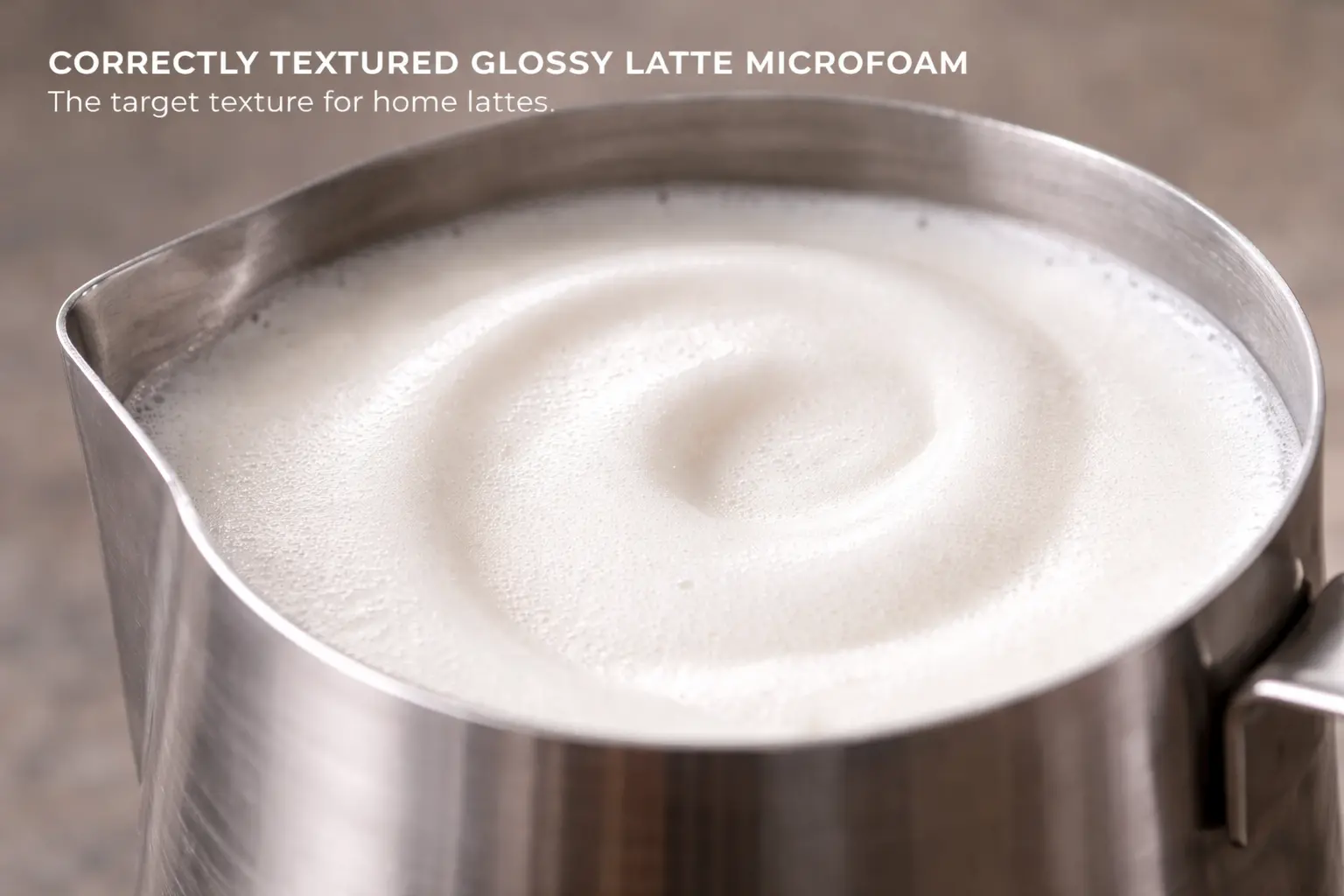
With so little milk in the cup, every flaw in it shows. In a large latte, slightly overheated or bubbly milk disappears into the volume. In a cortado, it is half the drink, and in a macchiato, it is the first thing your lips touch. Texture is the first thing to get right. A cortado wants milk steamed with very little air, only a second or two of stretching, then rolled until it is glossy and nearly flat. A macchiato wants a little more air, so the foam is light enough to sit on top of the espresso. In both cases the bubbles should be tiny and shiny, never large and soapy.
Temperature is the second. Milk tastes sweetest at roughly 55–65°C (130–150°F); above about 70°C (158°F) it starts to taste cooked and its foam breaks down faster. Small volumes heat very quickly, which is the main reason a small pitcher such as the Rattleware 12 oz helps: in a large pitcher, the few ounces you need barely cover the steam tip and overheat before you can texture them.
The type of milk matters too. Whole milk gives the sweetest, most stable microfoam and is the classic choice for both drinks. Two-percent milk foams easily but tastes a little thinner. Among plant milks, barista-style oat milk steams the most like dairy because it is formulated with added fats and stabilizers; soy foams well but can separate if overheated, and almond tends to give a thinner foam that mutes the espresso unless you use a barista blend. Our how to steam milk guide walks through wand position and aeration step by step.
Making Both at Home
The two drinks share a workflow until the milk goes in, so learning one teaches you most of the other. Start every time with a properly pulled shot, because neither drink hides a sour or bitter espresso. For a cortado, the steps are short:
- Pull a double shot of about 18 g in and 36 g out into a warm 4–5 oz glass.
- Steam 3–4 oz of cold milk in a small pitcher, aerating for only a second or two, until it is glossy and about 55–65°C.
- Pour about 2 oz into the espresso, so the glass ends up roughly half and half with a thin layer of foam.
A macchiato uses the same shot, pulled into a warm demitasse instead. Steam a small amount of milk with a little more air than you would for a cortado, so the foam is light and holds its shape, then spoon or pour one or two dollops onto the center of the espresso. Stop there. The moment you add more, you are drifting toward a cortado. Weighing the shot keeps both drinks consistent from day to day; a compact scale such as the Timemore Black Mirror Basic 2 fits on most drip trays, and our best espresso scales guide compares other options.
No espresso machine? You can make close versions with a strong concentrate. An AeroPress brewed short and strong works well; our AeroPress espresso-style concentrate recipe is a good starting point. A moka pot also gives a bold base, and a Nespresso espresso capsule is the easiest route. Pair any of them with a frother such as the Nespresso Aeroccino, or see our guide to frothing milk without a steam wand for seven methods using gear you already own. The taste will differ from café espresso, but the proportions still apply.
The Gear That Makes Small Milk Drinks Easier
Good cortados and macchiatos need three things: a well-pulled shot, a grinder fine enough for espresso, and a way to steam a small amount of milk with control. Our picks come from published specifications and our existing reviews, not hands-on testing, and the right choice depends mostly on how much milk technique you want to learn.
The Breville Bambino Plus is the easiest route to consistent milk. Breville states it reaches extraction temperature in about three seconds, and its automatic steam wand offers three temperatures and three texture levels; you set the pitcher under the wand and it steams and stops on its own. That takes the guesswork out of small volumes, though the included pitcher is larger than ideal for a single cortado and the machine needs a separate espresso-capable grinder. Our Bambino Plus review covers it in depth.
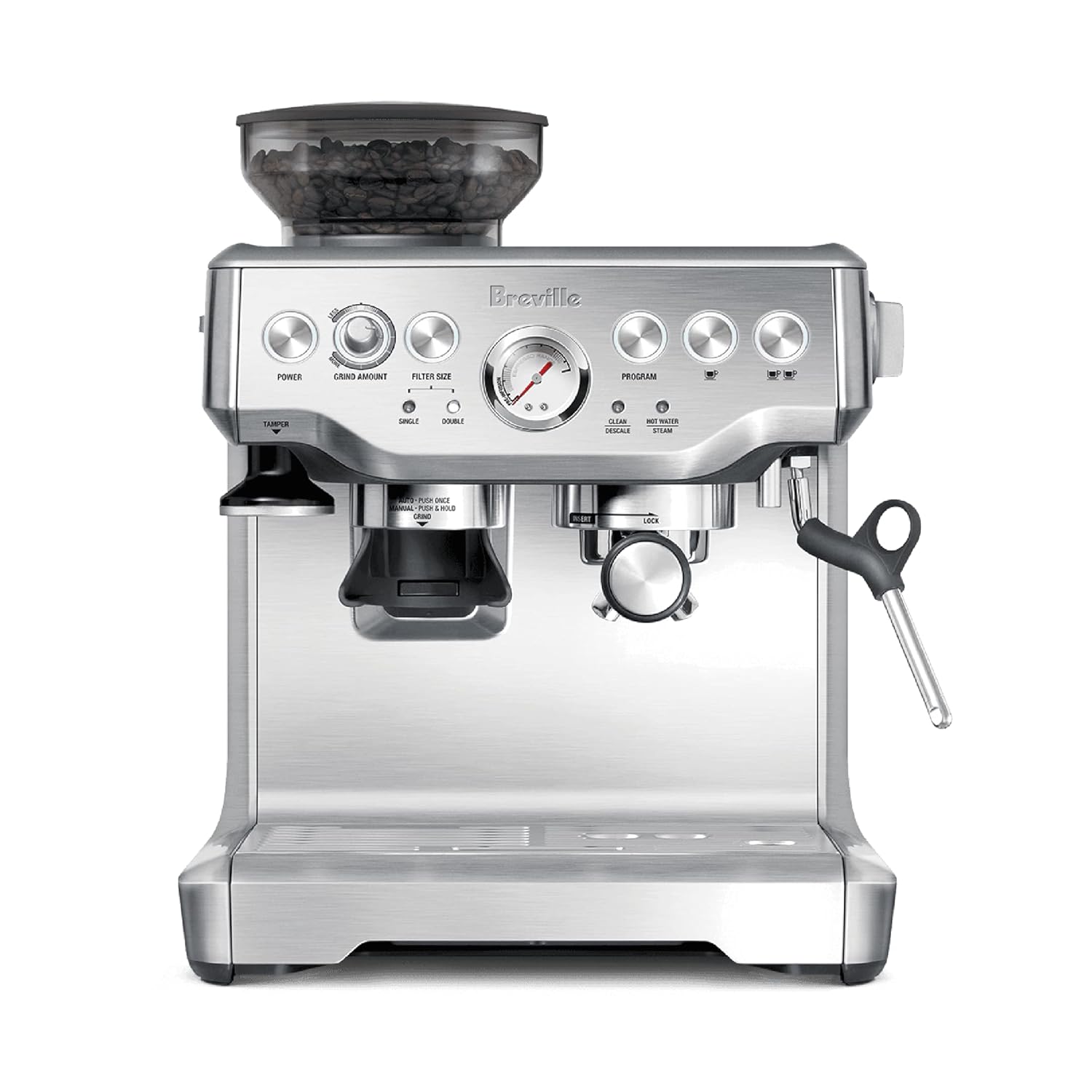
If you would rather buy one box, the Breville Barista Express puts a conical burr grinder on top of the machine, along with a pressure gauge and a manual steam wand. It solves the most common beginner mistake, buying a grinder that cannot grind fine enough for espresso, and the manual wand builds real milk skills, although small volumes take some practice. Our Bambino Plus vs Barista Express comparison explains which suits which kind of home barista.
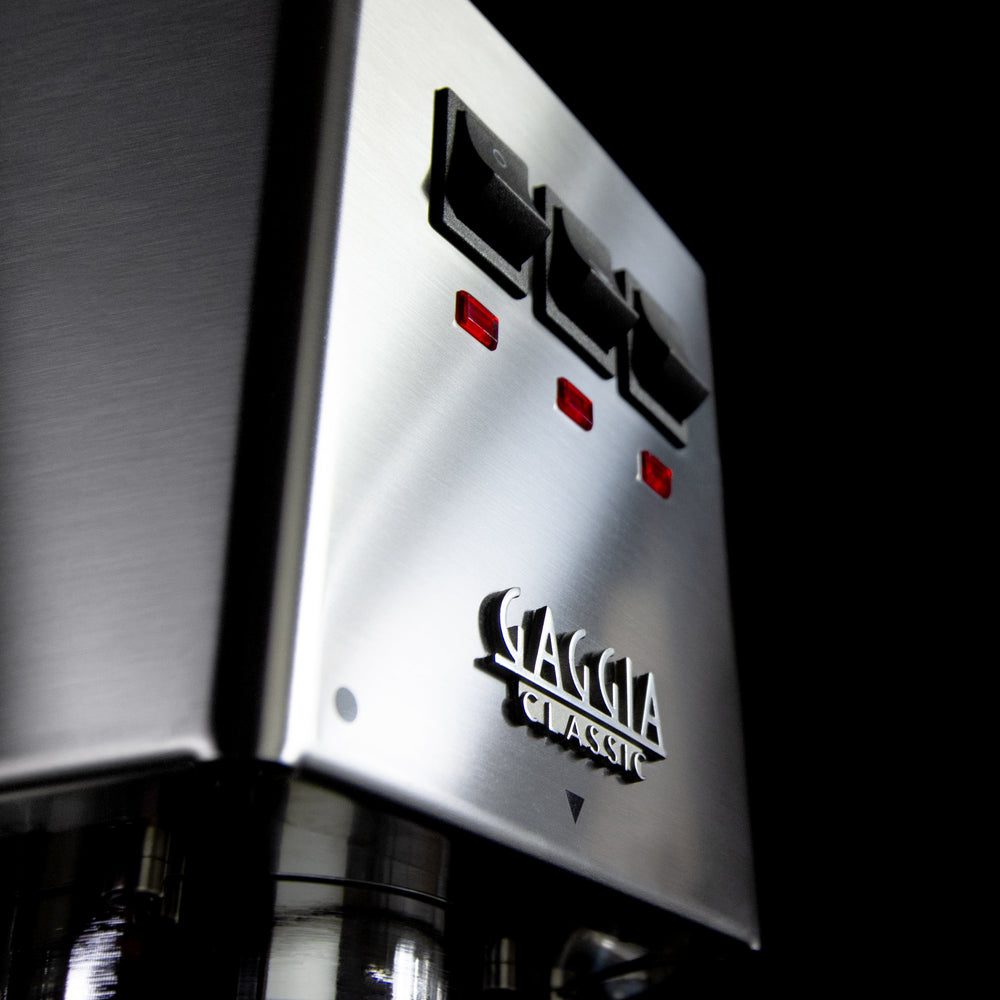
For people who want to learn milk the way baristas do, the Gaggia Classic E24 offers a commercial-size 58 mm portafilter, a capable manual steam wand, and wide accessory support. It asks for more patience, with a longer warm-up and a single boiler that makes you wait between shot and steam, but it rewards practice. Pair it, or the Bambino Plus, with an espresso-capable grinder such as the Baratza Encore ESP, which adds finer steps in the espresso range while still covering filter grinds.
Our Recommendation: Which Should You Order?
Order a macchiato if you usually drink straight espresso and want a slightly softer first sip, or if you want the smallest, most coffee-forward drink on the menu. It is the right choice when the espresso itself is the point and the milk is only there to round off the edge. Just confirm the café means the traditional version, not a tall caramel drink.
Order a cortado if you find espresso too intense but think a latte buries the coffee. It is the more balanced drink, smooth enough to sip slowly while still tasting clearly of espresso, and it is the better choice with a lighter or more acidic roast, where a little milk helps. If you want something sweet, neither is really the answer; a cortadito or a flavored latte will suit you better.
At home, the cortado is the more forgiving drink to learn, because the milk covers small flaws in the shot. The macchiato is the better test of your espresso. Either way, a decent shot and a small pitcher of well-steamed milk are what make the drink.
Make Both at Home
An espresso machine with a good steam wand and a small pitcher covers cortados and macchiatos. A frother works if you brew strong coffee another way.
As an Amazon Associate, CoffeeGearHub earns from qualifying purchases.
Editorial bottom line: A macchiato is espresso with a mark of foam: intense and short. A cortado is espresso cut with an equal splash of lightly steamed milk: smooth but still coffee-forward. Same caffeine for the same shots; the only difference is how much milk you want.
Frequently Asked Questions
How many calories are in a cortado vs a macchiato?
A macchiato adds only a spoonful of foam, so it has barely more calories than the espresso itself. A cortado uses about 2 oz of milk, which with whole milk adds roughly 35–40 calories. Both are far lighter than a latte.
Can I make a cortado with a Nespresso machine?
Yes, a close version. Brew an espresso capsule into a small glass and add about the same amount of warm, lightly frothed milk from a frother such as the Aeroccino.
What glass is a cortado served in?
Usually a small 4–5 oz glass. In the U.S., the 4.5 oz Gibraltar glass is so common that some cafés call the drink a Gibraltar.
Can you order an iced cortado or iced macchiato?
Many cafés make an iced cortado with espresso and an equal amount of cold milk over ice. An iced macchiato at a chain is usually a layered iced latte, so ask how much milk goes in.
Can you pour latte art on a cortado?
A small heart or tulip is possible, because a cortado has a thin layer of microfoam. A traditional macchiato has too little milk for a pattern and usually gets just a dot of foam.
Is a cortado made with a single or a double shot?
Both are common. Most specialty cafés in the U.S. use a double shot, while traditional Spanish cortados often use a single. A macchiato follows whatever shot size the café uses.
Sources and Further Reading
Drink definitions follow traditional café usage and CoffeeGearHub’s existing guides, including latte vs cappuccino vs flat white and how to steam milk. Espresso parameters follow our espresso brew ratio guide and the Specialty Coffee Association standards. Machine details come from manufacturer specifications. Café recipes vary by region and shop.
CoffeeGearHub product shortlist
Continue with related products on CoffeeGearHub
Review product categories and current verified merchant offers on CoffeeGearHub before leaving the site.