
Espresso Grind Size Guide
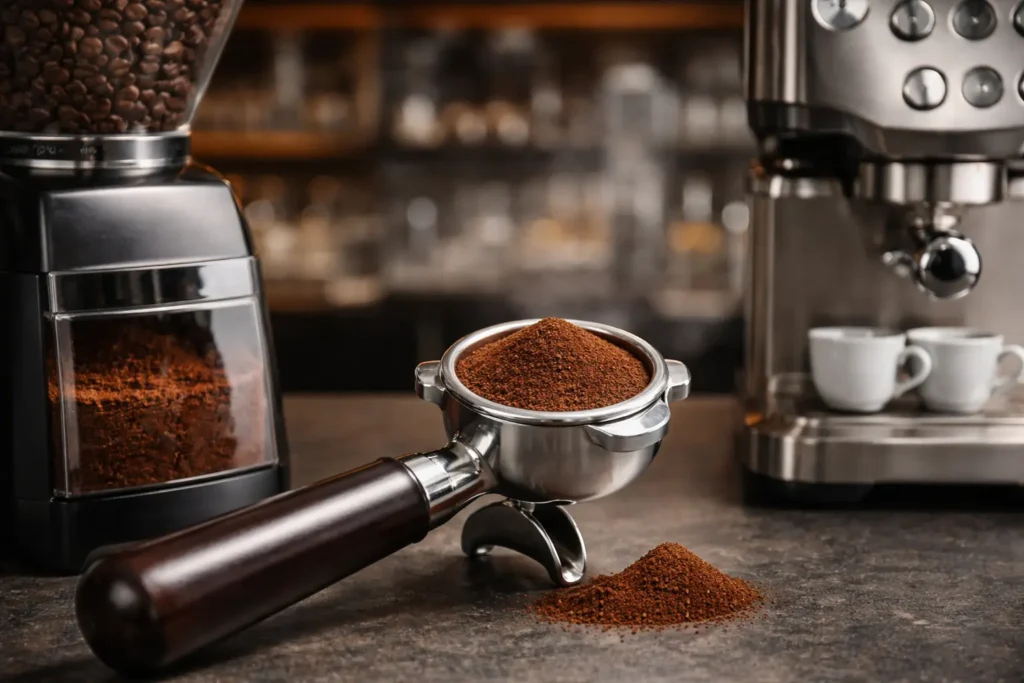
Editorial standards: this guide treats grinder numbers as model-specific references and shot time as a diagnostic. It avoids universal click charts and fixed “correct” time windows that do not transfer across grinders and coffees.
At a glance
What this guide covers
What fine grind means, how to diagnose finer versus coarser, model-specific setting logic, roast tendencies, grind drift, puck-prep interactions, grinder examples, accessories, and troubleshooting.
Editorial analysis
The useful “chart” is directional, not numerical
Grinder numbers do not transfer between models. The reliable method is to hold dose and target yield stable, observe flow, taste the shot, and move the grinder a small amount in the direction the result indicates.
The 30-Second Answer
Espresso needs a fine grind, but there is no universal visual texture or grinder number. Start in your grinder maker’s espresso range, hold dose and target beverage yield stable, record how long it takes to reach that yield, taste the shot, and adjust finer or coarser in small steps. Use time as a flow diagnostic—not as a universal correctness window.
What “Fine” Actually Means for Espresso
“Fine” is a relative description, not a calibrated grind size. Two grinders can produce very different particle distributions at settings that look similar on their dials, and two coffees can need different settings on the same grinder.
The useful definition is functional: the grind should create enough puck resistance that you can reach a repeatable beverage yield without choking the machine or racing through the puck, while producing a balanced taste.
Lock These Variables Before Diagnosing Grind
| Variable | Starting approach | Why it matters |
|---|---|---|
| Dose | Use a basket-appropriate dose and keep it stable | Dose changes puck depth and resistance |
| Yield | Use a repeatable target; around 1:2 is a neutral baseline for many coffees | Gives you the same endpoint for flow comparison |
| Puck preparation | Distribute consistently and tamp level | Uneven prep can imitate a grind problem |
| Temperature | Use machine default or coffee guidance initially | Prevents taste changes from masking grind changes |
| Warm-up | Follow machine guidance | Keeps the system more repeatable |
Two adjustment styles
Stepped electric vs manual fine-step grinding
The correct grinder is the one that gives you enough control near espresso fineness in a workflow you will actually use.
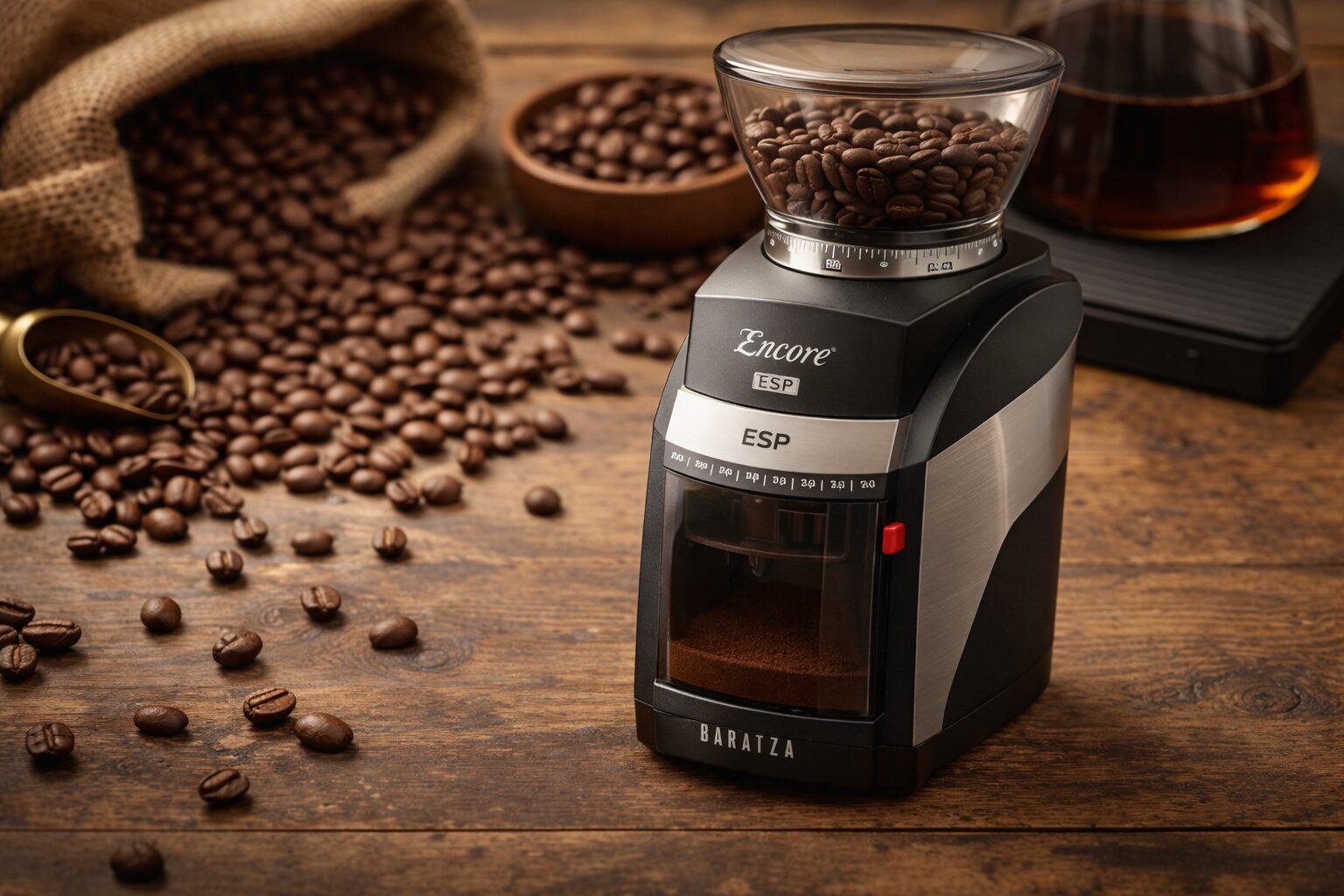 Baratza Encore ESPStepped electric grinder with extra adjustment resolution in its espresso range.Check current Amazon offer →
 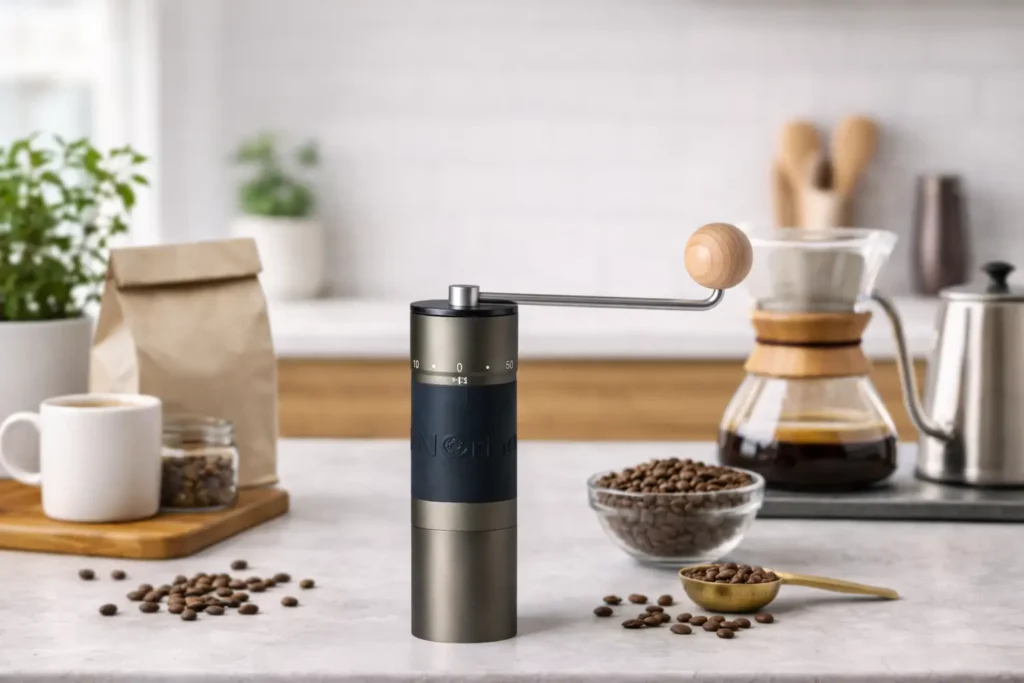 KINGrinder K6Manual grinder with fine external steps for users comfortable hand-grinding.Check current Amazon offer →
Affiliate disclosure: Amazon links may earn CoffeeGearHub a commission at no additional cost to you. Prices and availability can change.
Espresso Grind Diagnosis: Finer or Coarser?
| What you observe | Check first | Grind move if other variables are stable |
|---|---|---|
| Target yield arrives much faster than your successful baseline | Dose, puck damage, channeling | Finer |
| Target yield arrives much slower than baseline | Overdosing, blocked basket/group | Coarser |
| Machine nearly chokes | Basket fill, cleanliness | Coarser |
| Fast shot tastes thin/sharp | Yield and puck prep | Usually finer |
| Slow shot tastes harsh/drying | Yield, temperature, cleanliness | Usually coarser |
| Time changes shot to shot at the same setting | Dose, distribution, tamp, retention, warm-up | Fix consistency before moving the grinder |
The Espresso Grind Dial-In System
1. Pick a repeatable baseline
Use the same dose, target beverage yield, basket, puck preparation, and machine routine.
2. Start in the grinder maker’s espresso range
If the manufacturer publishes an espresso range, use it as a starting reference. Do not translate settings from a different grinder model.
3. Pull one diagnostic shot
Measure dry dose and beverage yield, record time to target yield, and taste. One shot gives you direction; it does not need to be good.
4. Move one small step
Finer generally slows flow; coarser generally speeds it. On a stepless grinder, make a small, repeatable collar movement rather than a large turn.
5. Purge when the grinder requires it
Retention can mix old and new settings. Learn how much coffee your grinder needs to clear after an adjustment.
6. Stop adjusting grind once flow is controllable
If the shot reaches the target yield repeatably but taste still needs work, adjust yield or temperature rather than endlessly chasing the grinder.
7. Log the winning setting
Record coffee, dose, yield, grinder setting, time, and taste. That becomes the next session’s baseline.
Grinder Setting References: Use Model-Specific Guidance
Numbers do not transfer across grinders. Even two units of the same model can differ slightly because of calibration, burr wear, and zero point.
| Grinder | Useful manufacturer-style reference | How to use it |
|---|---|---|
| Baratza Encore ESP | The lower-numbered range is designed for higher-resolution espresso adjustment; the upper range covers broader filter settings | Start within the espresso range, then move one step at a time |
| KINGrinder K6 | External click adjustment with an extra-fine reference zone near the fine end | Use the maker’s chart as a start, then re-dial the actual coffee |
| Stepless espresso grinders | No fixed click count | Make small collar movements and mark/record the successful position |
If a grinder’s manual or official chart conflicts with a number you found on a generic chart, use the grinder maker’s information as the starting point.
Roast Level and Grind: Tendencies, Not Click Rules
Roast level changes coffee structure and solubility, so it can change the setting that produces useful flow. But there is no universal rule such as “light roast = exactly two clicks finer.”
| Roast tendency | What you may notice | How to respond |
|---|---|---|
| Darker roast | May flow differently at the same dose because the beans are less dense and more soluble | Re-dial from your normal range; avoid assuming a fixed direction |
| Medium roast | Often works near your established baseline | Start from the last successful setting and adjust by flow |
| Lighter roast | May require a different grind/yield/temperature combination | Change one variable at a time and use taste as the endpoint |
Grind Drift: Why the Setting Changes During a Bag
It is normal to make small adjustments even when you did not change the machine. Coffee degasses and ages; humidity changes; burrs warm during repeated use; retained grounds can mix old and new settings; dose can drift.
If the shot slowly starts reaching the same target yield faster or slower, first confirm dose and puck preparation, then make a small grind correction.
Puck Preparation Can Look Like a Grind Problem
A grinder can be correctly set while the shot still runs badly because the puck is uneven.
Useful puck-prep sequence
- Weigh a basket-appropriate dose.
- Distribute the grounds evenly; use WDT if it improves consistency.
- Level the bed and tamp level until fully compressed.
- Keep the basket rim clean and lock in consistently.
- Brew promptly after puck preparation.
| Symptom | Could be grind | Could be puck prep |
|---|---|---|
| Fast overall flow | Yes—too coarse | Yes—low dose or channeling |
| Very slow overall flow | Yes—too fine | Yes—overdose or blocked basket |
| Spurting / uneven streams | Sometimes | Often—distribution or tamp issue |
| Shot-to-shot inconsistency | Possible retention/setting drift | Often dose/prep inconsistency |
Current Grinder Examples for Espresso Control
Baratza Encore ESP — stepped electric adjustment
A practical all-rounder when you want an electric grinder with dedicated extra resolution near espresso settings and a broader filter range.
KINGrinder K6 — manual fine-step adjustment
A manual option for users who want fine external adjustment and are comfortable with the extra effort of hand-grinding espresso.
Two Accessories That Make Grind Changes Easier to Read
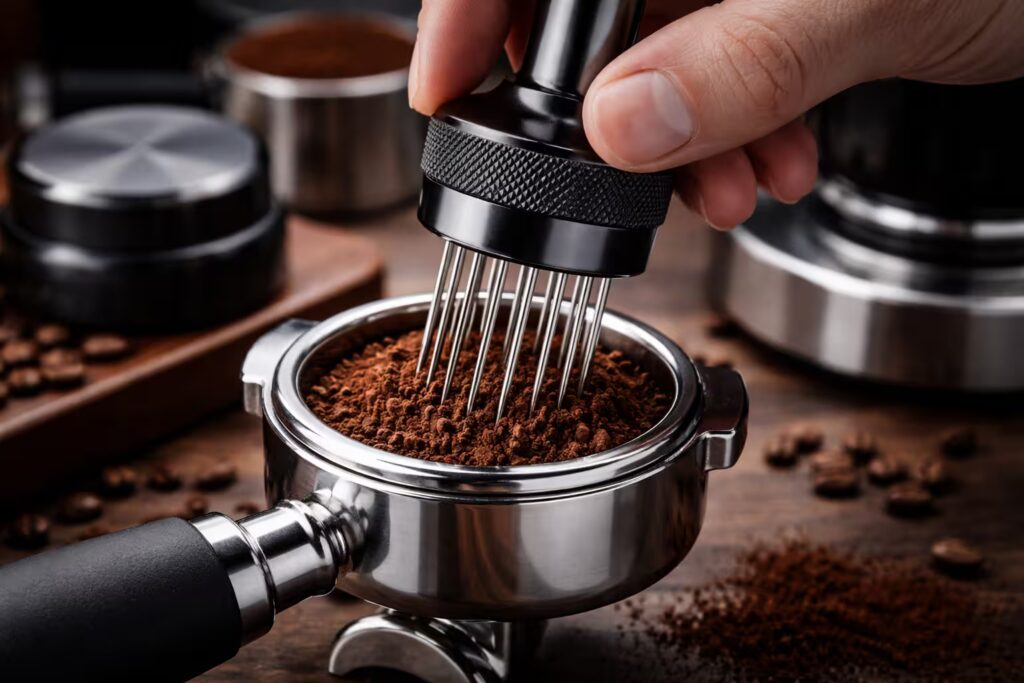
WDT tool — distribution consistency
A thin-needle WDT tool can help break clumps and make the coffee bed more uniform. It does not replace a good grinder, but it can reduce puck-prep noise while you test grind changes.
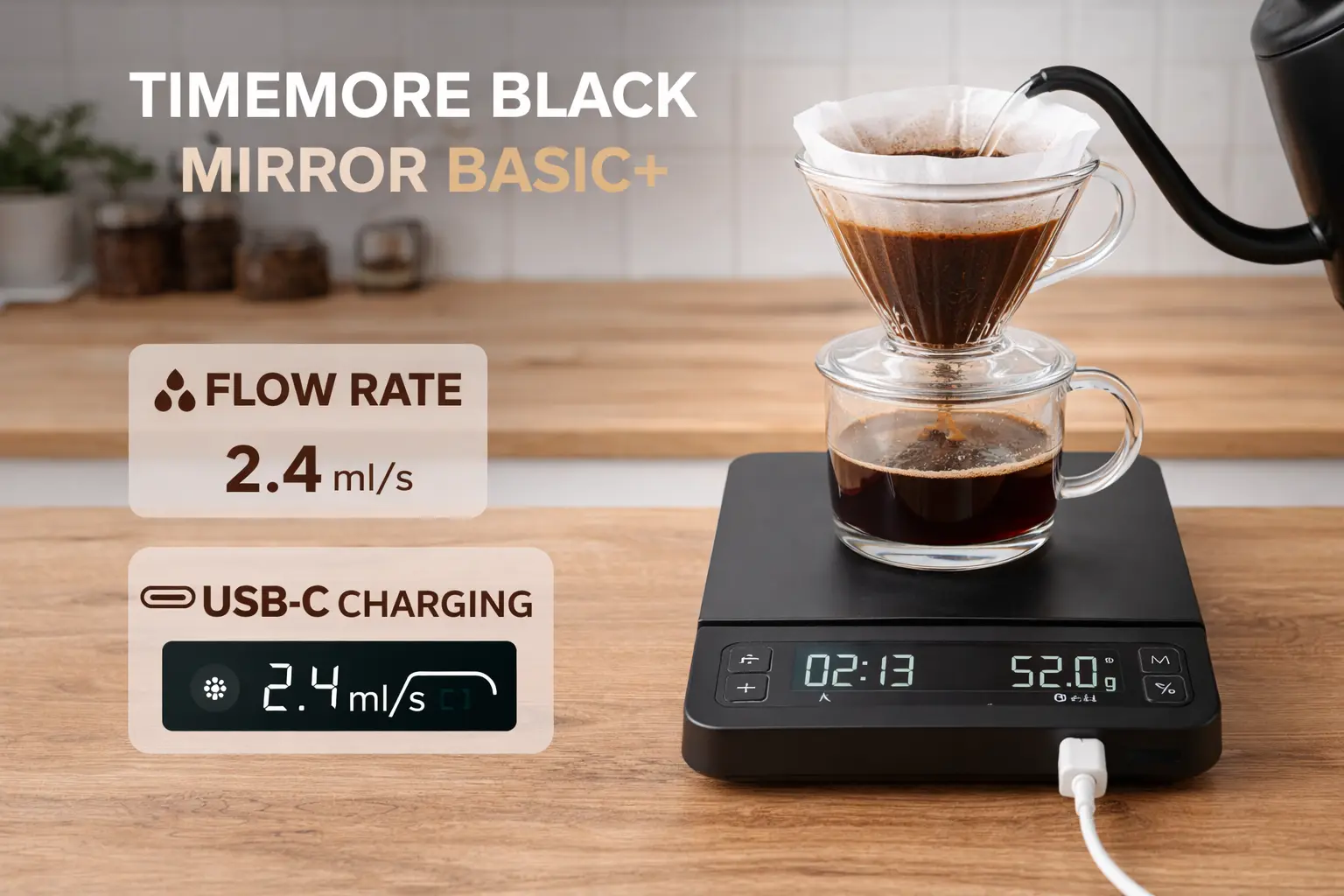
0.1g scale — dose and yield control
A compact scale makes grind diagnosis much clearer because dose and beverage yield stop drifting in the background.
Troubleshooting Espresso Grind Problems
| Problem | Likely causes | Useful next test |
|---|---|---|
| Fast, thin shot | Coarse grind, low dose, channeling | Verify prep, then grind finer |
| Slow or choked shot | Fine grind, overdose, blockage | Verify basket/cleanliness, then grind coarser |
| Sour despite controlled flow | Yield, temperature, coffee, channeling | Consider longer yield or higher temperature one change at a time |
| Harsh despite controlled flow | Yield, temperature, roast, cleanliness | Consider shorter yield or lower temperature |
| Same setting, changing time | Dose, coffee age, humidity, retention, prep | Standardize dose/prep, then make a small grind correction |
| No useful setting exists | Grinder calibration/range or incompatible basket workflow | Check burr calibration and whether the grinder is designed for non-pressurized espresso |
Final Takeaway: Use Grind to Control Flow, Not to Chase a Number
Espresso grind size is not a universal texture, click count, or dial position. It is the setting that gives you controllable, repeatable flow for your dose, basket, coffee, and machine.
Start in the grinder’s espresso range, hold dose and target yield stable, adjust in small increments, and stop moving the grinder once flow is under control. Then use yield, temperature, and taste to finish the recipe.
FAQs: Espresso Grind Size
How fine should espresso be?
What grinder setting should I use?
When should I grind finer?
When should I grind coarser?
Why does my setting change during a bag?
Does roast level change grind size?
Can puck preparation look like a grind problem?
CoffeeGearHub shortlist
Compare grinders and measurement tools
Use these CoffeeGearHub pages to compare a grinder, scale, and the related dial-in workflow.
Continue Learning
In this guide
- The 30-Second Answer
- What “Fine” Actually Means for Espresso
- Lock These Variables Before Diagnosing Grind
- Espresso Grind Diagnosis: Finer or Coarser?
- The Espresso Grind Dial-In System
- Grinder Setting References: Use Model-Specific Guidance
- Roast Level and Grind: Tendencies, Not Click Rules
- Grind Drift: Why the Setting Changes During a Bag
- Puck Preparation Can Look Like a Grind Problem
- Current Grinder Examples for Espresso Control
- Two Accessories That Make Grind Changes Easier to Read
- Troubleshooting Espresso Grind Problems
- Final Takeaway: Use Grind to Control Flow, Not to Chase a Number
- FAQs: Espresso Grind Size
- Continue Learning