
Gaggia Classic Pro E24 Review (2026): Is the Classic Still Worth Buying?
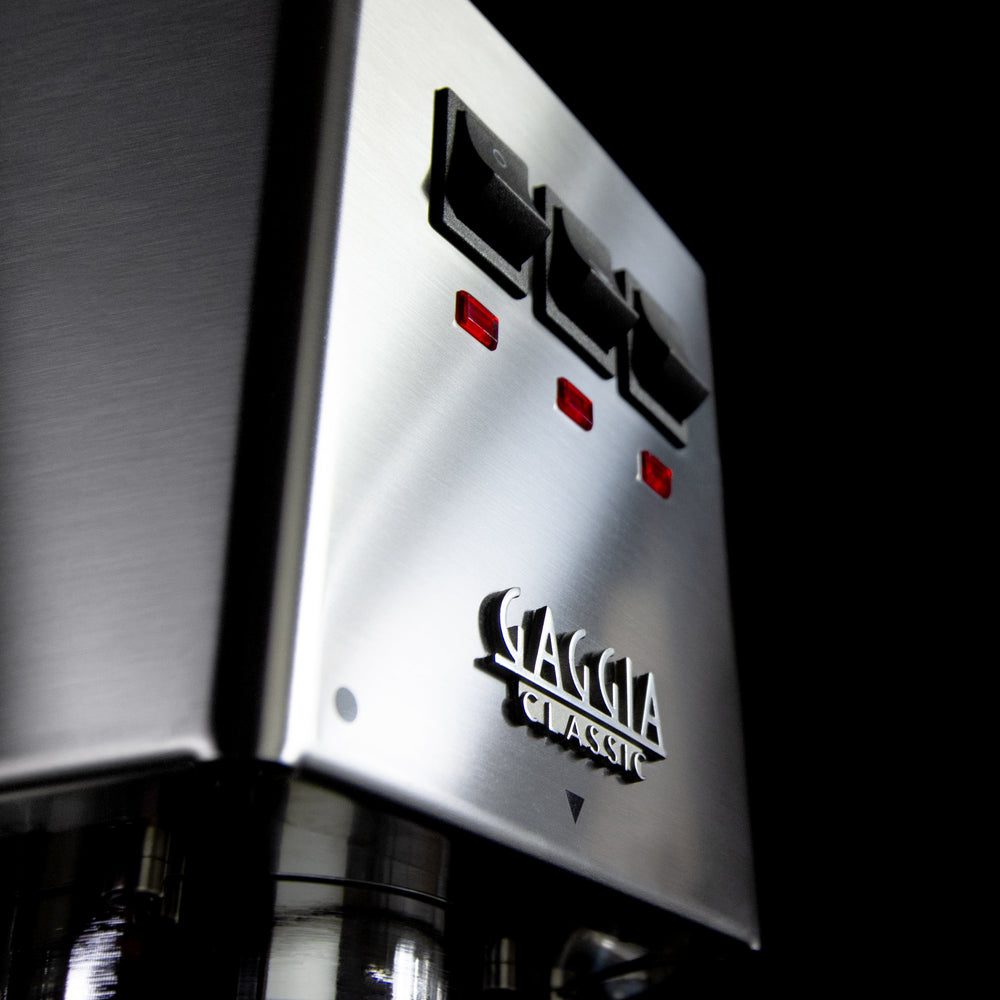
Editorial standards: this review synthesizes Gaggia’s published specifications, measured results and long-term impressions from independent reviewers including Coffee Kev, Tom’s Guide, and Homes & Gardens, owner reports, and the machine’s version history. Every score below is tied to a cited source. CoffeeGearHub does not claim hands-on testing where it has not occurred.
At a glance
What this Gaggia Classic Pro review covers
A scored verdict, how the Classic changed from the 2019 Pro to the 2024 E24, what independent reviewers measured, espresso and temperature behavior, steaming, daily workflow, the grinder you will need, long-term reliability and the Boilergate episode, how it compares with Breville’s Bambino Plus and Barista Express, and who should buy it.
Editorial analysis
A machine built to last and to be learned
The Gaggia Classic has been in production in some form since 1991, and its appeal has barely changed: a commercial-style 58 mm group, a strong steam wand, a stainless body, and parts you can buy and fit yourself. Few machines at its price are built to last as long or are as easy to repair.
What it does not do is help you. There is no PID, no pre-infusion, no automatic milk, and no grinder in the box. The 2024 E24 update makes the machine more stable and better built, but it remains a tool for people who want to learn espresso rather than press a button.
The 30-Second Answer
The Gaggia Classic Pro E24 earns a 7.7/10 research score: it has one of the highest espresso ceilings and best build qualities at its price, a powerful steam wand, and outstanding serviceability. Buy it if you want to learn espresso properly and keep a machine for years. Skip it if you want convenience; the Breville Bambino Plus is far easier to live with.
Budget for a capable espresso grinder, a scale, and a better tamper alongside it. Our Bambino Plus vs Gaggia Classic Pro comparison covers the most common decision buyers face.
Compare current options
Start with these representative choices
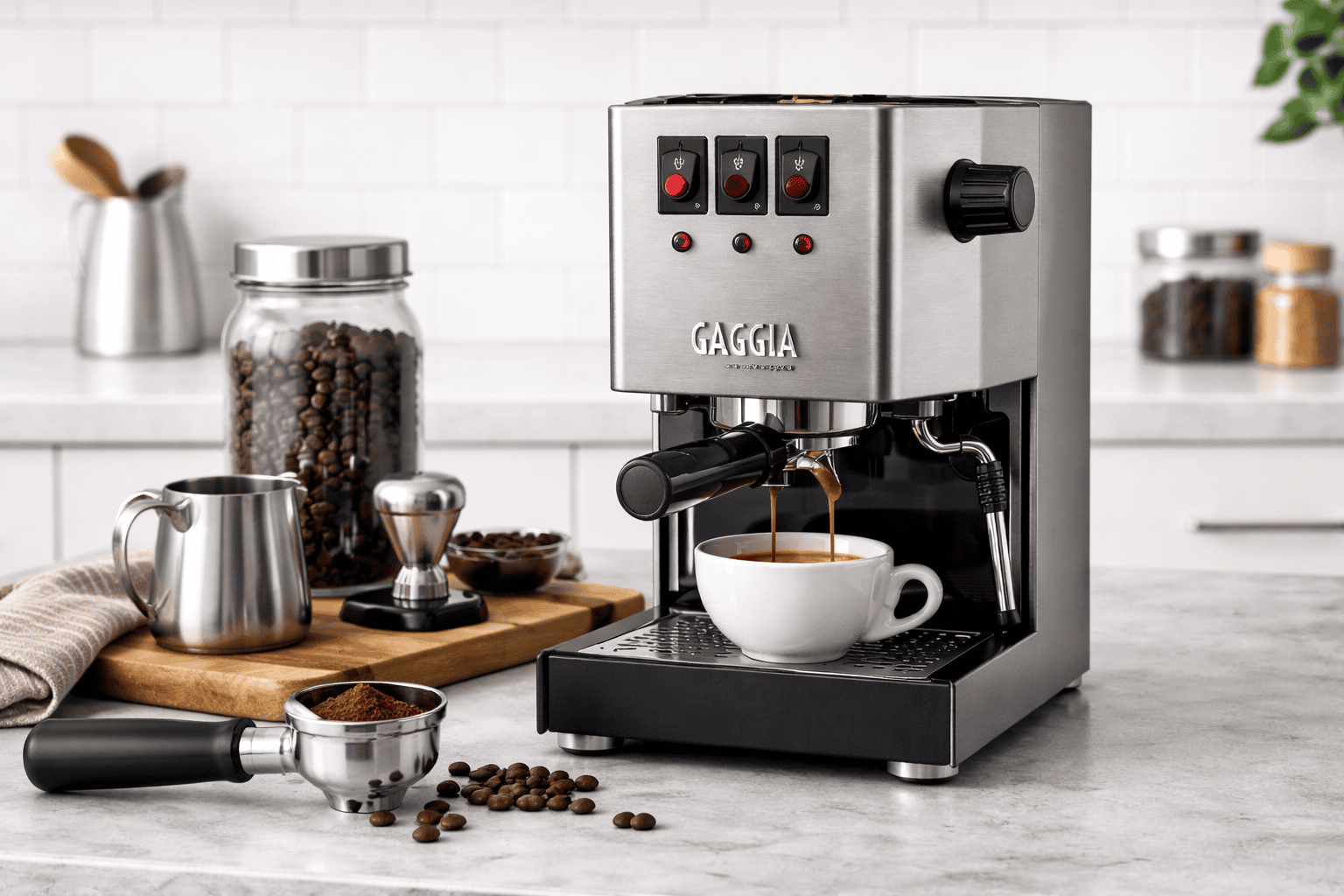
The Gaggia and the two machines it is most often compared with. Our best espresso machines for beginners guide covers more options.
Gaggia Classic Pro E24 — Best for learning and longevity
58 mm commercial-style group, brass boiler, 3-way solenoid, and a powerful steam wand in a serviceable stainless body.
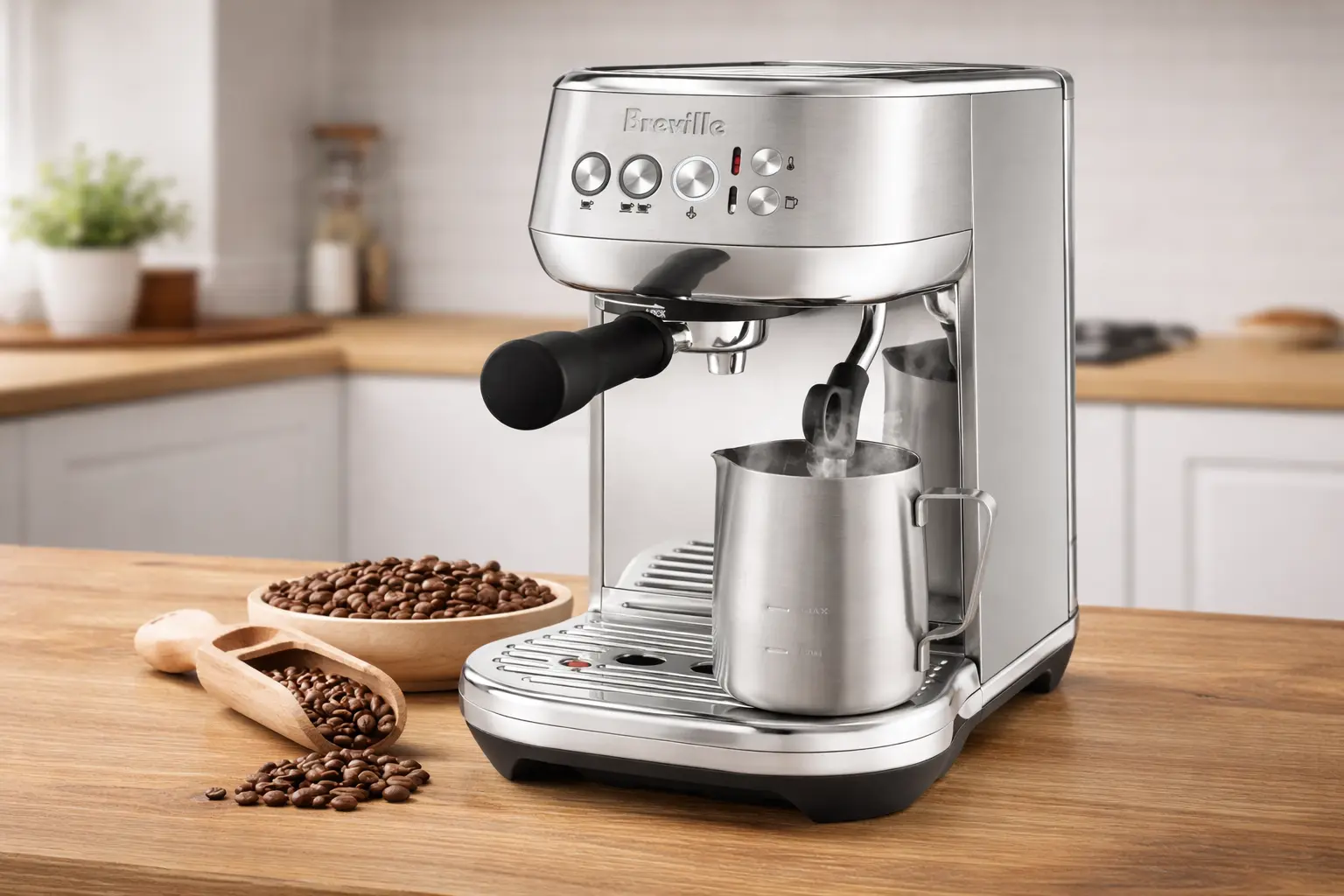
Breville Bambino Plus — Easiest alternative
Three-second heat-up, PID temperature control, pre-infusion, and automatic milk texturing in a compact body.
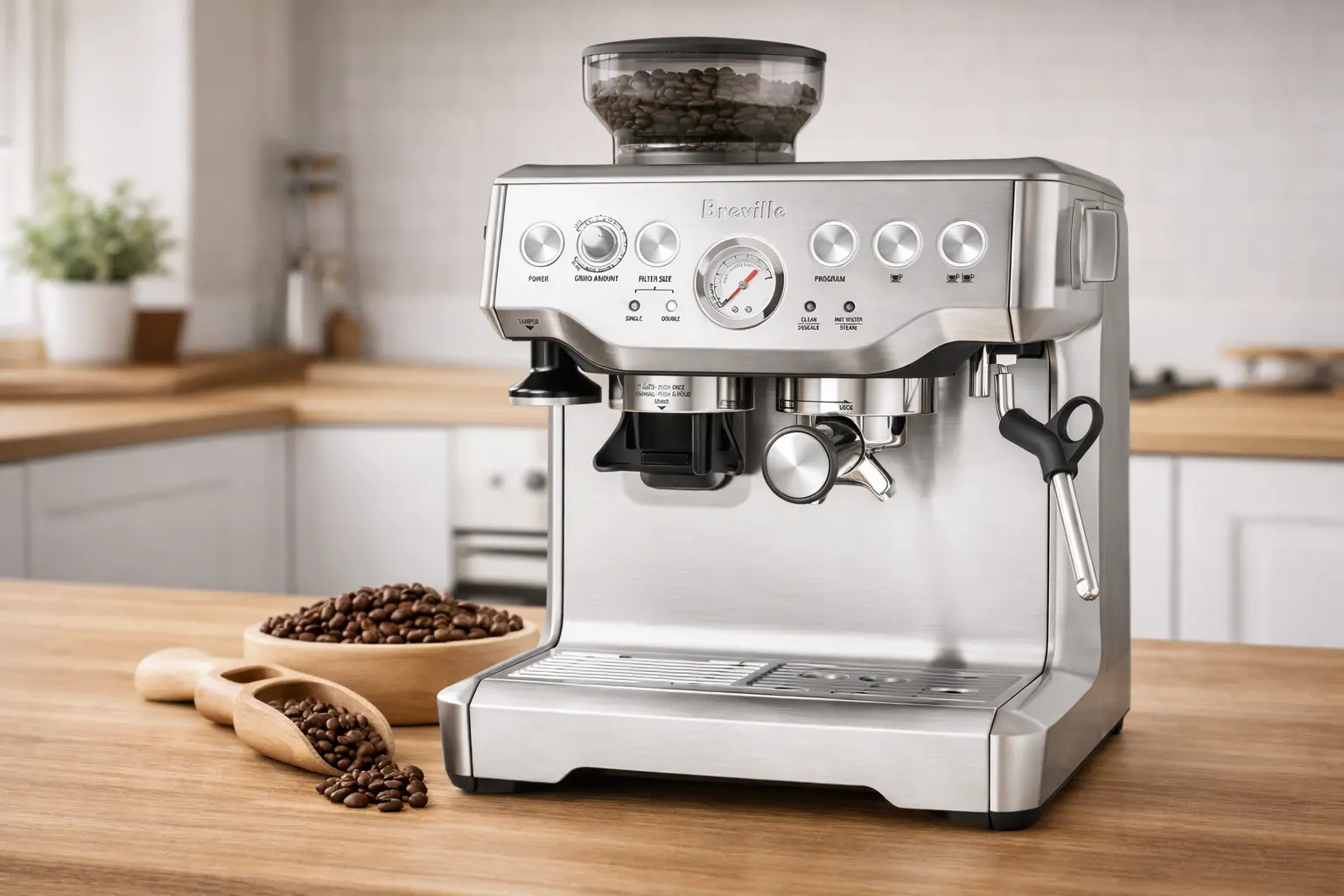
Breville Barista Express — All-in-one
A built-in conical burr grinder, PID, and manual steam wand in one machine for buyers who want a single purchase.
Affiliate disclosure: Amazon links may earn CoffeeGearHub a commission at no additional cost to you. Prices and availability can change.
Our Research-Based Score
CoffeeGearHub research score
7.7 / 10 overall, weighted toward espresso quality
We do not test espresso machines ourselves, so this score is built from what independent reviewers measured and reported. Coffee Kev’s side-by-side timings of the E24 and the 2023 Evo Pro, Tom’s Guide’s hands-on review of the E24, and Homes & Gardens’ review of the earlier Classic Pro supply the performance evidence; Gaggia’s specifications and the machine’s well-documented version history fill in the rest. Espresso potential carries the most weight, because that is why people buy a Classic, and ease of use carries enough weight to keep the score honest for beginners.
The pattern is clear. The Gaggia scores near the top for what it can produce and how long it will last, and near the bottom for how much it helps you along the way. That split should decide whether it belongs on your counter.
From Classic Pro to E24: Versions and Specifications
Gaggia has revised the Classic several times, and listings do not always say which version you are getting, so it helps to know the history. The 2019 Classic Pro kept the 3-way solenoid valve that dries the puck after each shot, and added a commercial-style steam wand. The 2023 Classic Evo Pro upgraded to a brass group, a solid stainless portafilter, and a stainless dispersion plate, but its coated aluminum boiler led to the coating problem owners nicknamed Boilergate. A 2024 Evo Pro dropped the coating, and the E24, launched the same year, replaced the aluminum boiler with a larger brass one. When buying used, check the model label and boiler material before you pay, because the differences between versions affect both temperature behavior and the Boilergate risk.
| Spec | Classic Pro (2019) | Classic Evo Pro E24 |
|---|---|---|
| Portafilter | 58 mm | 58 mm, solid stainless |
| Group | Chrome-plated brass | Lead-free brass (CW510L) |
| Boiler | Aluminum, about 80 ml | Brass, just over 100 ml |
| Pump | Vibratory, rated 15 bar | Vibratory, rated 15 bar |
| Brew pressure (OPV) | Varies by market | Varies by market and version |
| Water tank | 2.1 L | 2.1 L |
| Steam wand | Commercial-style | Commercial-style |
Two specifications matter most in practice. The 58 mm portafilter is the commercial standard, so baskets, tampers, and distribution tools from any brand fit, which is a real advantage over the 54 mm Breville machines. The brass boiler in the E24 holds heat better than aluminum, and both Coffee Kev and Tom’s Guide found temperature swings noticeably reduced compared with earlier versions.
Brew pressure is the one specification to check on your unit. Gaggia has shipped different factory over-pressure valve settings by market and version, and some older machines ran well above the 9 bar most espresso recipes assume. If yours does, an inexpensive 9-bar spring is one of the most common and simplest modifications.
What Independent Reviewers Measured
Published measurements of the Classic are scattered, but the ones that exist point the same way. The table collects the most useful.
| Source | Model | Key findings |
|---|---|---|
| Coffee Kev | E24 vs Evo 2023 | Steamed 170 ml in 30 s and 350 ml in 62 s (Evo: 33 s and 74 s); recommends 10–15 min warm-up |
| Tom’s Guide | E24 | Temperature stability better than expected; wand needs 20–30 s to build steam after a shot; occasional thin shots without a short routine |
| Homes & Gardens | Classic Pro | Espresso served at 196°F; first shot ran fast and bitter; called it a machine that requires barista skill |
Read together, the results describe a machine whose limits are mostly about technique rather than hardware. The E24 steams faster and runs more stably than its predecessors, but every reviewer still describes a learning curve, and the novice result from Homes & Gardens, a fast, bitter first shot, is exactly what happens when grind and dose are not yet dialed in. Our how to dial in espresso guide shows how to fix that.
Espresso Quality and Temperature Control
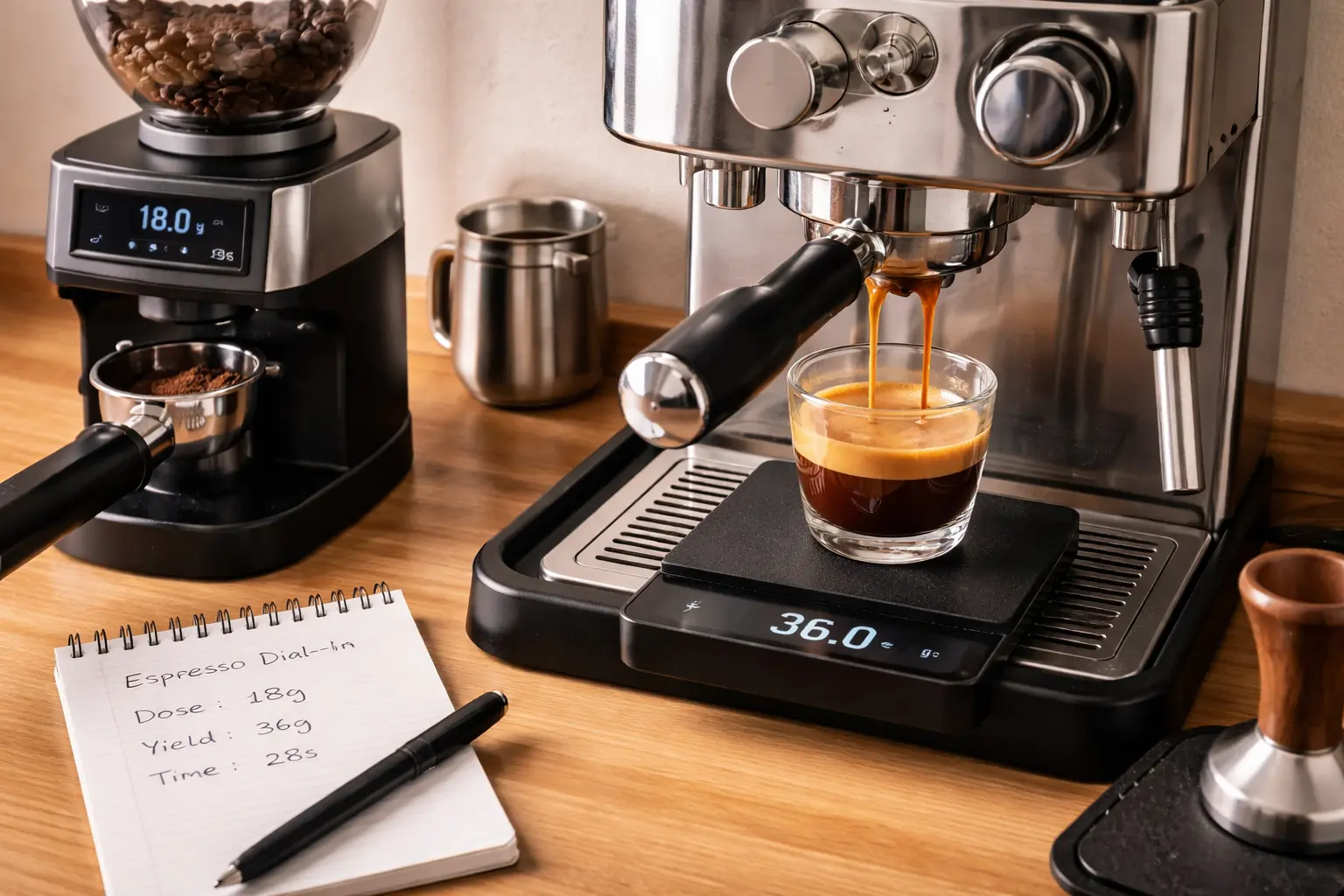
With the right grind and a standard basket, the Classic can pull shots that compete with machines costing far more. The 58 mm group spreads water across a wide, shallow puck, and the 3-way solenoid releases pressure the instant the shot ends, leaving a drier puck and less disturbance to the coffee bed. Those are features normally found on commercial machines, and they are a large part of why the Classic has such a loyal following.
The weak point is temperature. The boiler is small and controlled by thermostats rather than a PID, so brew temperature drifts between heating cycles. The E24’s larger brass boiler narrows those swings, and Tom’s Guide found it steadier than expected, but a simple routine still helps: let the machine warm for 10 to 15 minutes, run a short flush before each shot, and pull the shot soon after the ready light comes on. Enthusiasts often add a PID kit later, which removes the routine entirely.
Start with a standard double basket, an 18 g dose, and about 36 g out in 25 to 35 seconds, then adjust grind by taste. Our espresso brew ratio and espresso troubleshooting guides cover the next steps.
Milk Steaming: Powerful, but Manual
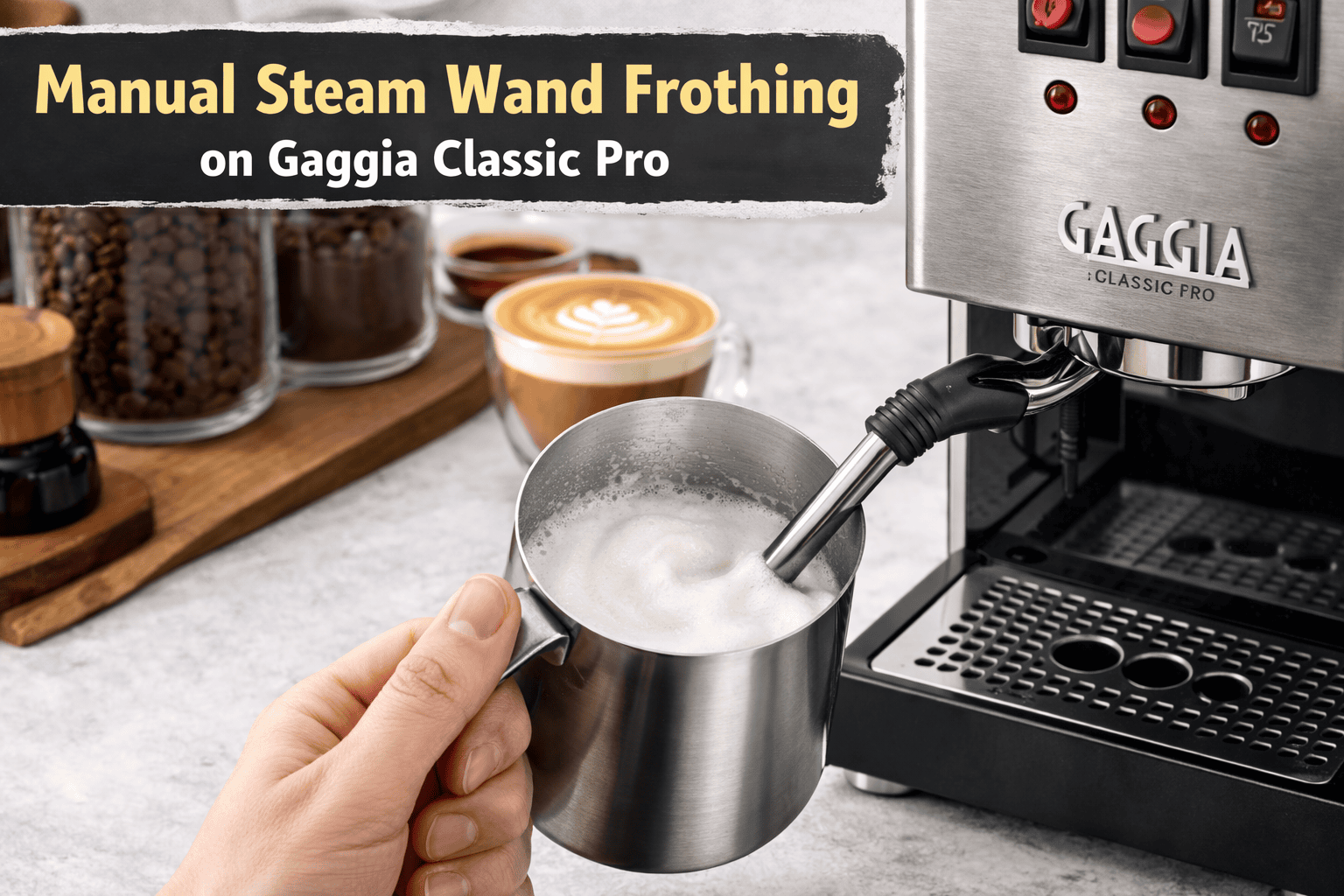
The commercial-style steam wand is one of the Classic’s strengths. Coffee Kev timed the E24 steaming 170 ml of milk in 30 seconds and 350 ml in 62 seconds, faster than the 2023 Evo, and Tom’s Guide described the wand as far stronger than thermoblock rivals. With practice it produces genuine microfoam for latte art.
Because the Classic has one boiler, you switch between brewing and steaming. After a shot, the wand needs roughly 20 to 30 seconds to build steam pressure; Coffee Kev found about 30 seconds after switching to steam to be the sweet spot rather than waiting for the light. Purge the wand first to clear condensed water, and wipe and purge it again after every use. A proper pitcher, such as the Rattleware 12 oz pitcher, makes texturing far easier. Our how to steam milk guide walks through the technique step by step.
What Daily Use Looks Like
A Classic morning goes like this: switch on, wait 10 to 15 minutes while the group and portafilter warm, grind and dose, tamp, flush the group briefly, and pull the shot. For a milk drink, flip to steam, wait about half a minute, purge, steam, and purge again. It takes a few minutes longer than a fast-heating machine such as the Bambino Plus, and every step is manual, which some people enjoy and others find tedious within a week.
Reviewers also flag a few practical gaps. The machine ships with a basic plastic tamper, which Tom’s Guide found awkward, and no cleaning accessories, so most owners add a 58 mm tamper, a knock box, a blind basket for backflushing (our best espresso accessories guide covers each), and a 0.1 g scale such as the Timemore Black Mirror Basic 2. Cleaning is straightforward: purge the group after each session, backflush with water regularly, descale on a schedule matched to your water hardness, and replace the group gasket when shots start leaking. Our espresso machine maintenance guide sets out a schedule, and filtered water from a Brita pitcher slows scale buildup.
The Grinder You Will Need
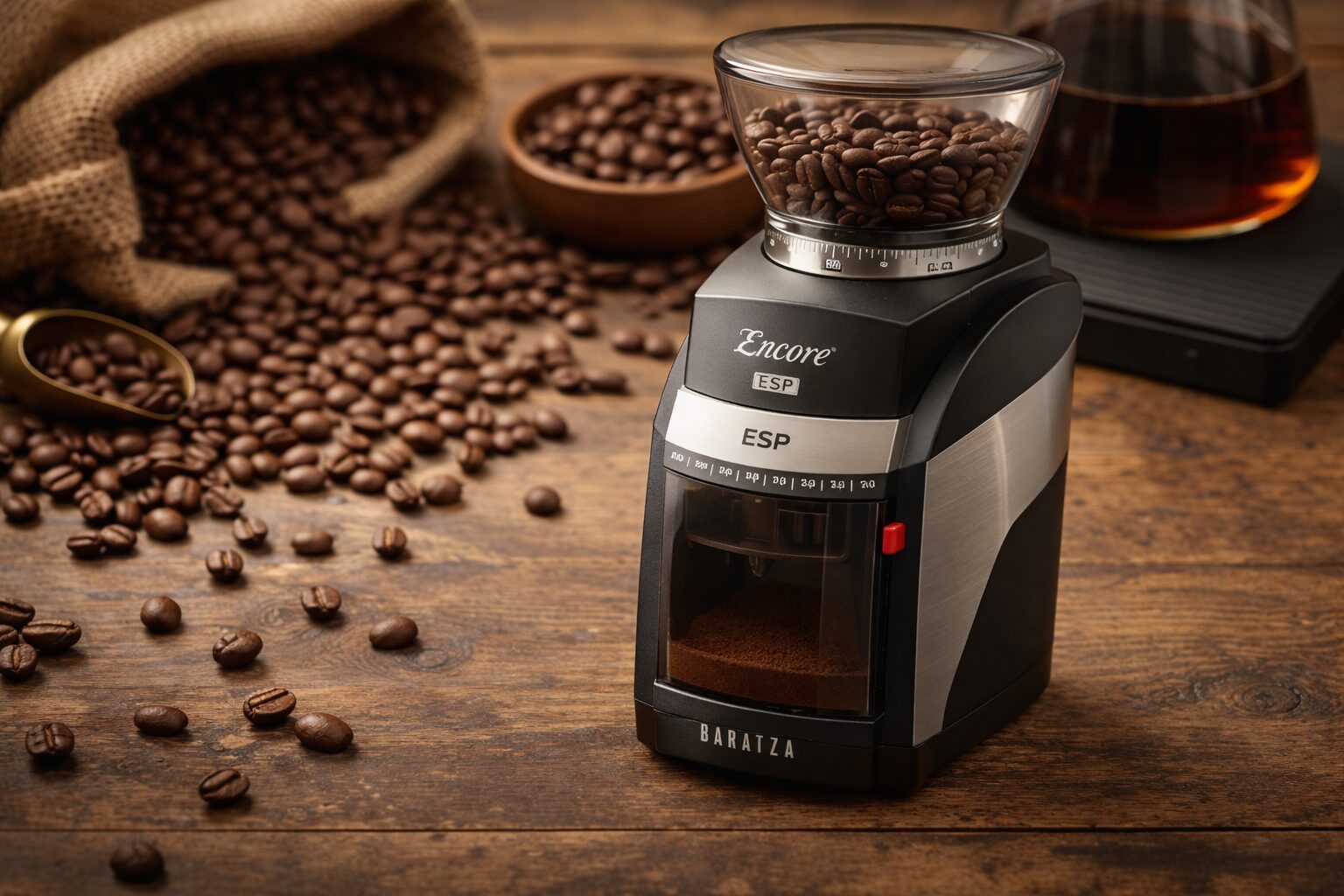
The Classic has no grinder, and it exposes a weak one immediately. Pre-ground coffee and blade grinders cannot produce the fine, consistent grind that standard baskets need, so shots run fast and sour. Budget for an espresso-capable burr grinder from the start; it matters more to the cup than the machine.
The Baratza Encore ESP is an approachable choice with fine adjustment in the espresso range, and the Breville Smart Grinder Pro is a widely available alternative with many grind settings. Our best espresso grinders guide compares more, and our do you need a grinder for espresso guide explains why this matters so much.
Long-Term Reliability, Boilergate, and Resale
Durability is the Classic’s strongest argument. Reviewers describe it as built like a tank: mostly stainless steel, with standard, widely available parts and a layout that makes repairs realistic for owners and local technicians alike. Coffee Kev notes that Classics tend to hold their value on the used market, which reflects both their longevity and their popularity with home baristas who like to modify them.
The one notable blemish is Boilergate. Some 2023 Classic Evo Pro machines had an aluminum boiler with a coating that did not adhere properly, and flakes appeared in the water. Gaggia offered fixes or replacements, the 2024 Evo Pro dropped the coating, and the E24’s uncoated brass boiler avoids the problem altogether. If you buy used, confirm the year and boiler type; if you buy new, the E24 sidesteps the issue.
Routine wear items are the usual ones for any espresso machine: group gaskets, shower screens, and scale buildup in the boiler and solenoid if descaling is neglected. All are inexpensive and easy to replace on a Classic, which is exactly why so many are still in service years after purchase. Warranty terms vary by region, so check the listing before you buy.
Upgrades and Modifications
Part of the Classic’s appeal is what owners do with it after purchase. Because the layout is simple and the parts are standard, it has one of the largest modification communities of any home espresso machine. The most common change is a 9-bar OPV spring on units that ship with higher pressure, which takes a few minutes and costs little. Next is a PID kit, which replaces the thermostat-driven temperature swings with stable, adjustable brew temperature and removes the need for a warm-up flush routine.
More ambitious owners fit pressure-profiling or open-source controller projects such as Gagguino, which add pressure and temperature control that rivals far more expensive machines. None of this is required to make good espresso, and modifications can affect your warranty, but the option is a real reason the Classic keeps its value: a machine bought today can grow with your skills rather than being replaced.
Simpler upgrades help just as much day to day. A precision basket, a properly sized 58 mm tamper, a dosing funnel, and a scale with a timer make shots more repeatable, and a better steam tip can make texturing smaller amounts of milk easier. Because the 58 mm standard is shared with commercial machines, all of these are widely available from many brands.
Gaggia Classic Pro vs Breville Bambino Plus and Barista Express
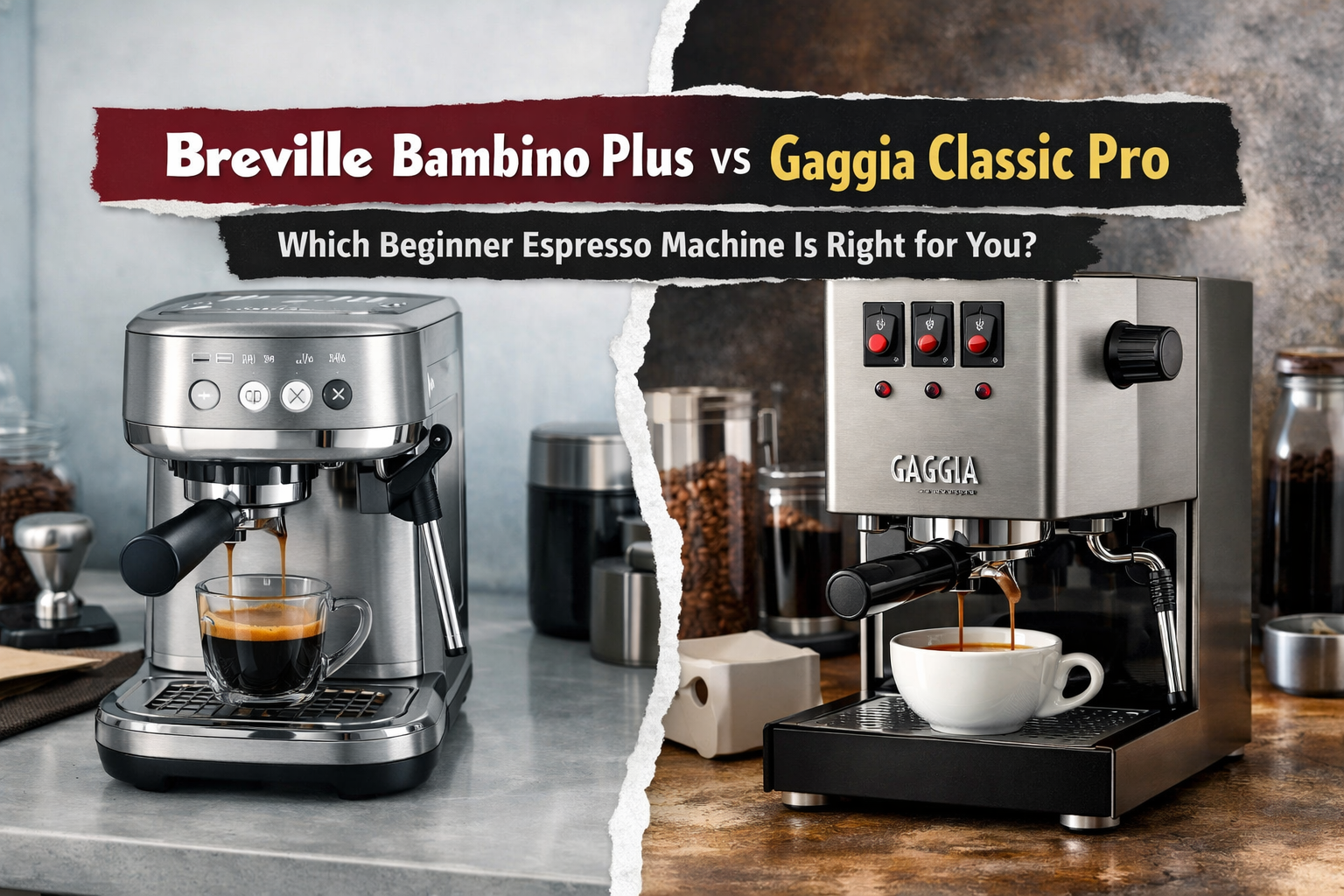
The Breville Bambino Plus is the Classic’s opposite. It heats in about three seconds, uses PID temperature control and pre-infusion, and can texture milk automatically, so beginners get consistent results quickly. Its 54 mm portafilter and plastic-heavy build are less durable and less modifiable, and it is harder to repair. Choose the Bambino Plus for convenience and the Classic for longevity and control; our Bambino Plus vs Gaggia Classic Pro comparison goes deeper.
The Breville Barista Express adds a built-in grinder, PID, and pre-infusion, so it is a single purchase with fewer extra costs. Its grinder is adequate rather than excellent, and you cannot upgrade it separately later. If you want one box and a guided start, the Express makes sense; if you would rather buy a better grinder and a machine that will last, the Classic plus a dedicated grinder is the stronger long-term setup. Our Barista Express review covers it in detail, and our Barista Pro vs Barista Express comparison covers its faster sibling.
Who Should Buy the Gaggia Classic Pro E24
Buy the Gaggia Classic Pro E24 if you want to learn espresso properly, value a machine you can repair and upgrade for years, and are happy to build a routine around warm-up, temperature, and manual steaming. Paired with a good grinder, it delivers a cup ceiling and build quality that few machines at its price can match.
Skip it if you want café drinks with minimal effort, have little time in the morning, or do not want to buy a separate grinder and accessories. The Breville Bambino Plus is the easier choice for convenience, and the Barista Express suits buyers who want everything in one box.
Build a Classic Espresso Setup
The Gaggia Classic Pro E24 rewards a good grinder and a little practice with café-quality shots for years.
As an Amazon Associate, CoffeeGearHub earns from qualifying purchases.
Editorial bottom line: The Gaggia Classic Pro E24 earns a 7.7/10 research score: excellent espresso potential, a powerful steam wand, and outstanding durability, offset by no PID, a real learning curve, and the need for a separate grinder. Buy it to learn and keep; choose the Bambino Plus for convenience.
Frequently Asked Questions
Is the Gaggia Classic Pro good for beginners?
It can be, if you want to learn espresso properly and do not mind a learning curve. It has no PID, pre-infusion, or automatic milk, so beginners who want convenience are better served by the Breville Bambino Plus.
What is the difference between the Gaggia Classic Pro and the E24?
The E24 is the 2024 update. It keeps the 58 mm portafilter and steam wand but adds a solid brass group, a brass boiler about 25 to 30 percent larger than the old aluminum one, and a stainless portafilter and dispersion plate, which reduces temperature swings.
What was Gaggia Boilergate?
Some 2023 Classic Evo Pro machines had a coated aluminum boiler whose coating flaked into the water. Gaggia offered fixes or replacements, later models dropped the coating, and the E24 uses an uncoated brass boiler that avoids the issue.
Do I need to temperature surf the Gaggia Classic?
Less than with older models, but a short routine still helps: let the machine warm for 10 to 15 minutes and flush briefly before each shot. A PID mod removes the need entirely.
What grinder should I pair with a Gaggia Classic Pro?
A grinder built for espresso with fine adjustment, such as the Baratza Encore ESP or Breville Smart Grinder Pro. Our best espresso grinders guide compares options.
Is the 9-bar OPV mod necessary?
It depends on your machine. Gaggia has shipped different factory pressure settings by market and version, and some North American Evo models come set near 9 bar. If yours runs high with standard baskets, a 9-bar spring is an inexpensive, quick change.
Sources and Further Reading
Version history and long-term impressions follow Coffee Kev’s Gaggia Classic Pro review and Coffee Kev’s E24 comparison, including steaming times. Additional testing and impressions come from Tom’s Guide’s E24 review and Homes & Gardens’ Classic Pro review. Specifications follow Gaggia and retailer listings, including CHOICE’s product listing. Brewing guidance follows CoffeeGearHub’s espresso brew ratio and dial-in guides.
CoffeeGearHub product shortlist
Continue with related products on CoffeeGearHub
Review product categories and current verified merchant offers on CoffeeGearHub before leaving the site.